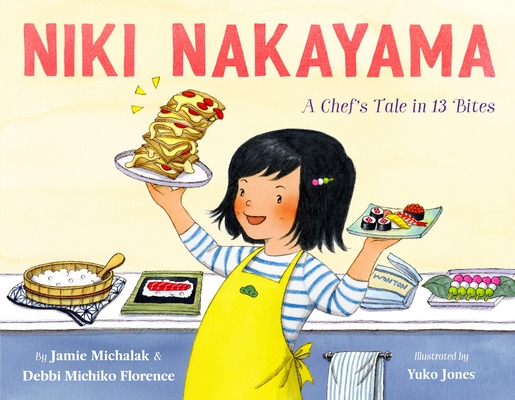
Niki Nakayama: A Chef’s Tale in 13 Bites by Jamie Michalak

Cover image for Niki Nakayama.

Niki Nakayama: A Chef’s Tale in 13 Bites by Jamie Michalak & Debbi Michiko Florence, illustrated by Yuko Jones (9780374313876)

Told in a series of meals and food, this is the story of how she rose to become a great Japanese-American chef. Starting with growing up in LA to parents who came from Japan, eating American food with a Japanese influence. Niki wanted to do her own thing, deciding not to go into the family seafood warehouse business and showing her family that she could be as successful as her older brother was expected to be. After high school, she traveled to Japan and discovered the art and flow of the kaiseki feast, a series of dishes that told a story. She went to culinary school, worked as the lone woman in a sushi restaurant, and then went on to learn kaiseki, even though no women did that either. Niki returned to LA to open a restaurant, first serving sushi to prove to her family she could do it, and then finally, opening the kaiseki restaurant she always wanted.

Using the food itself to form the structure for this picture book biography makes for a delicious journey through Nakayama’s life. Her family may not have believed in her, but Nakayama had enough determination and resilience herself to make it. Powered by her love of food and its ability to bring people together, her story shows how small steps in a journey can become destinations and life callings.

The illustrations are bright and full of foodie warmth. They focus on Nakayama herself both with her family and on her journeys. The food is central too, dishes that are colorful, steaming, luscious. Using clever frames of restaurant doorways, prep counters and plates, the illustrations always come back to Nakayama and her food.

A brilliant look at an inspiring figure in food who did it her own way. Appropriate for ages 4-7.

Reviewed from e-galley provided by Farrar Straus Giroux.
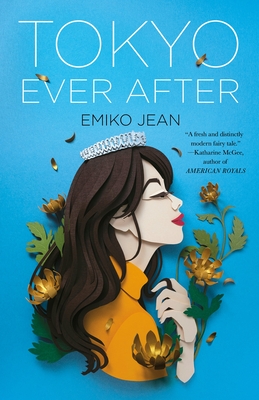
Tokyo Ever After by Emiko Jean

Cover image for Tokyo Ever After.

Tokyo Ever After by Emiko Jean (9781250766601)

Izumi has never felt that she was either Japanese enough or American enough. She is caught in between. It doesn’t help that her father is an unknown and unnamed person. When one of Izzy’s friends discovers a clue in Izzy’s mother’s room, they soon discover that Izzy is the illegitimate daughter of the Crown Prince of Japan. After Izzy reaches out to him, she is soon whisked off to spend time with him in Japan. But being a princess isn’t what Izumi pictured. Her life is suddenly full of rules to follow, language lessons, etiquette lessons and strict schedules. Even ducking into a bathroom when she lands in Japan creates a schedule crisis and makes the tabloid news. Izumi is surrounded by jealous cousins, a bossy handmaiden, and a hot bodyguard. But finding true love isn’t easy when you are a princess and the world is watching.

It would be easy to dismiss this book as a Japanese remake of the Princess Diaries, but this novel is much more than that. Readers are on a journey to Japan along with Izzy. They will learn about traditions, folk tales, the royal family and more. The settings are beautifully described and Jean brings both Tokyo and Kyoto to full realization with her writing. Izzy’s search for where she belongs is complicated and very personal.

Izzy is a marvelous character. She’s a girl more comfortable in t-shirts, hoodies and leggings than in fitted dresses selected by her handmaiden. Surrounded by a new life, she struggles to figure out where she fits even though she suddenly looks like everyone else around her. As she learns Japanese language and customs, she retains her snarky attitude, much to the dismay of some of her handlers while also learning when to hold her tongue to have the impact she wants.

A fairy tale grounded in Japanese culture and identity with a sequel on the way. Appropriate for ages 12-15.

Reviewed from e-galley provided by Flatiron Books.

Displacement by Kiku Hughes

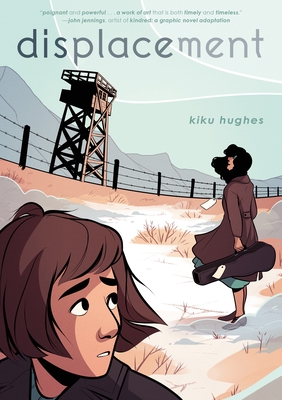
Displacement cover image

Displacement by Kiku Hughes (9781250193544)

This historical graphic novel takes a modern-day teen and puts her back in time. Kiku is vacationing with her mother in San Francisco, when she first travels through time back to World War II. As the mists form around her, she finds herself watching her grandmother play her violin as a teen. It happens again the next morning, when Kiku finds herself joining the line of Japanese-American people heading for the internment camps. Those experiences were shorter. But then Kiku finds herself back in time for a longer period as she experiences the internment camps herself. She lives near her grandmother, but can’t bring herself to actually meet her face to face. As Kiku witnesses and actually lives the experiences of Japanese-Americans in the internment camps, seeing how they suffered, the restrictions, the injustice but also the communities that were formed in the camps.

Hughes uses a dynamic mix of modern and historical in this graphic novel. She takes the sensibilities of a modern teen and allows readers to see the world through Kiku’s eyes. When Kiku is stuck in time, readers get to experience the full horror of the internment camps and what our country did to Japanese-Americans. Hughes ties our current political world directly to that of the camps, showing how racist policies make “solutions” like internment camps more likely to happen. She also keep hope alive as well, showing Kiku making friends and also developing a romantic relationship with a girl she meets.

The art is done in full color throughout. The color palette does change between modern day and the internment camps, moving from brighter colors to more grim browns, grays and tans. Hughes uses speech bubbles as well as narrative spaces that let Kiku share her thoughts. There are no firm frames here, letting colors dictate the edges of the panels.

Timely and important, this is a look at what we can learn from history and stop from happening now. Appropriate for ages 12-15.

Reviewed from copy provided by First Second.

We Are Not Free by Traci Chee

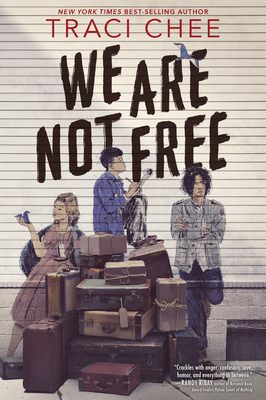
We Are Not Free by Traci Chee

We Are Not Free by Traci Chee (9780358131434)

Brace yourself for this teen novel that brings you along with fourteen teens who are taken into the Japanese detention camps in the United States during World War II. The teenagers have all grown up together in Japantown in San Francisco. But when Pearl Harbor is bombed, their lives are destroyed when their families are relocated to the detention camps. Told in each of their voices, the story revolves around their daily lives in the camp, the intolerable racism and injustice that they face, and how they navigate still being Americans.

Chee moves from her successful fantasy trilogy to this incredibly impactful story of a group of friends who are taken from their lives. Her writing is exceptional, moving from straightforward storytelling to passages that sing with poetic touches to direct verse. All of it screams of the injustice, demanding that people see what actually happened in the camps and the impossible decisions faced by the Japanese Americans who were held there. She also very successfully moves to the battlefields of World War II, breaking lives and hearts.

Fourteen voices are a lot to manage as an author, but Chee does it with such a deep understanding of each character that readers can simply allow the characters to flow around them at first. By the end of the book, readers will have connected with each of the characters both from their own perspectives and from the adjoining stories of the other characters that include them as well. It is deftly done, capturing readers into this powerful story and making it impossible to look away or deny.

Incredibly eloquent and compelling, this historical fiction for teens is one that can’t be missed. Appropriate for ages 13-17.

Reviewed from e-galley provided by HMH Books for Young Readers.

Review: A Place to Belong by Cynthia Kadohata

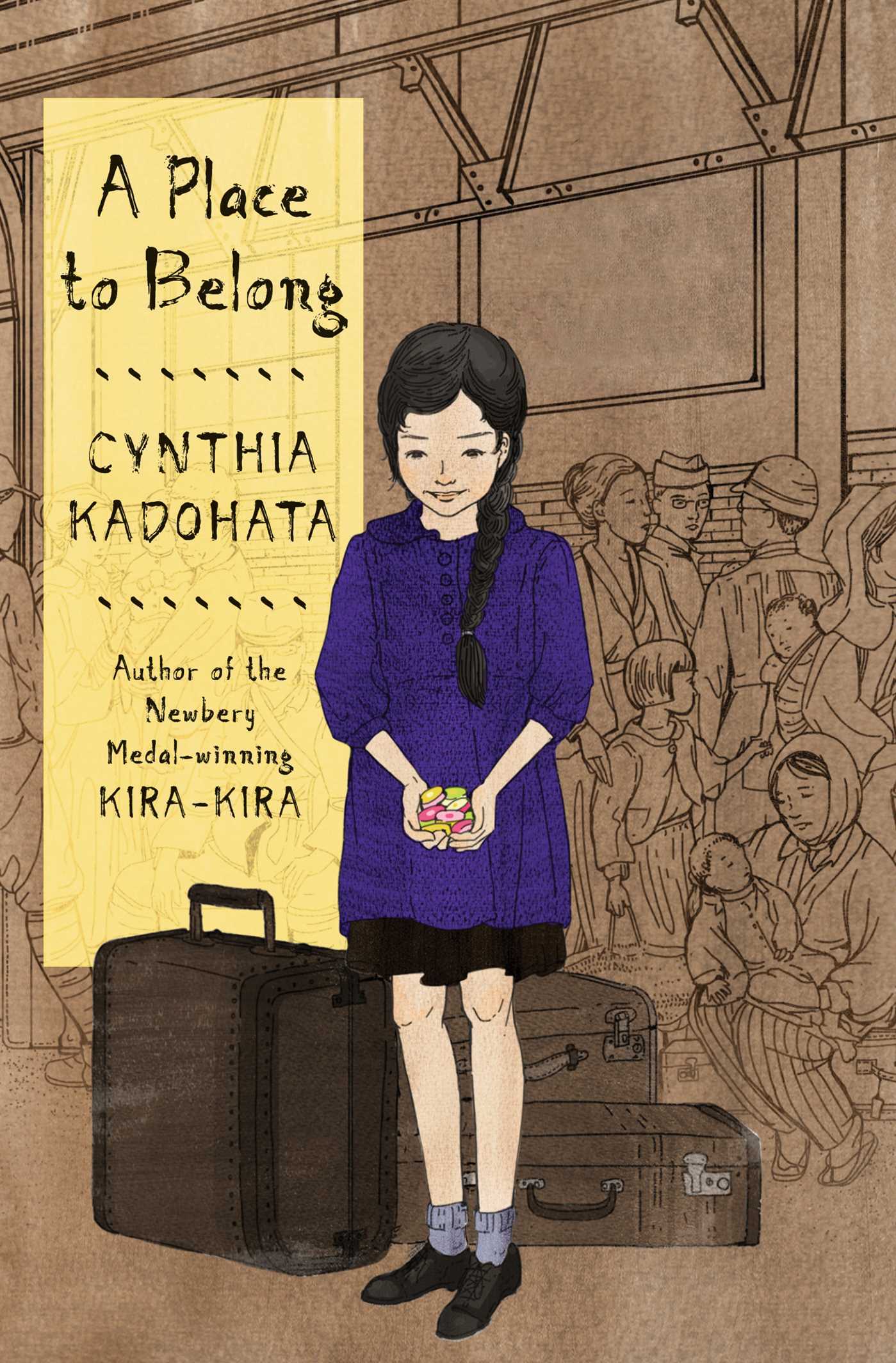
A Place to Belong by Cynthia Kadohata

A Place to Belong by Cynthia Kadohata, illustrated by Julia Kuo (9781481446648)

Award-winning author Kadohata tells the story of a Japanese-American family forced to return to Japan after World War II because of their Japanese ancestry. After spending years in an internment camp in the United States, twelve-year-old Hanako and her family move to Japan to live with her paternal grandparents. They travel by ship first and then train until they reach the decimated city of Hiroshima, where her grandparents’ farm lies outside. All of Japan is poor and hungry, with black markets and children begging on the streets. Hanako meets her grandparents for the first time, discovering that her grandfather is very like her little brother who is five years old. Her grandmother is stooped over from the hard work in the fields. Hanako must face learning a new language, attending a new school in a different country, and trying to find a way forward for her entire family. It’s a lot of pressure, but Hanako learns steadily to adjust and change.

Kadohata’s novel for children tells the untold story of Japanese Americans forced to repatriate to their country of origin and renounce their American citizenship. It also gives an unflinching look at the aftermath of World War II in Japan, particularly with its setting near Hiroshima. That dark setting is juxtaposed against the warmth and beauty of discovering loving grandparents and building a new relationship. Yet there is a constant sense of loss in the book and a teetering feeling that things may suddenly change at any moment.

As always, Kadohata’s prose is beautiful. She vividly depicts Japanese life during the 1940’s and the unending work of being a tenant farmer. In the midst of all of the sorrow, loss and confusion, she places a loving family who are willing to sacrifice for one another and for brighter futures for the next generation. Through this family, there is intense hope broadcast on the page.

An important and vital book about the horrors of war and its aftermath on individual families. Appropriate for ages 9-12.

Reviewed from copy provided by Atheneum.

Review: Ojiichan’s Gift by Chieri Uegaki

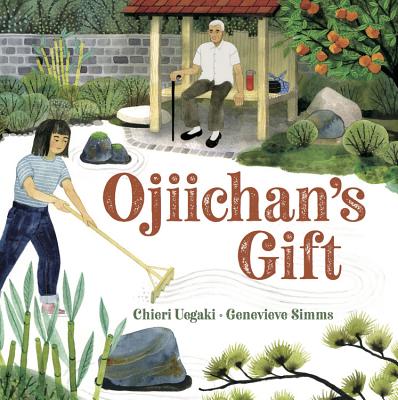
Ojiichan's Gift by Chieri Uegaki

Ojiichan’s Gift by Chieri Uegaki, illustrated by Genevieve Simms (9781771389631)

When Mayumi was born, her grandfather who lived in Japan built her a garden. It was a garden without tulips or flowers. Instead it was a garden of stones of all sizes. Around the edge, the garden had bushes and trees as well as a space for Mayumi to have a meal with her grandfather. As Mayumi grew up, she learned more and more about taking care of her garden alongside her grandfather. But then one summer, her grandfather could not care for his home or the garden anymore. When they arrived, the house was dusty and the garden was overgrown. Her grandfather had to use a wheelchair now. Mayumi is very angry and takes her anger out on the rocks of the garden, trying to topple the largest over. When she is unable to tip it over, she kicks the smaller rocks around. As her anger subsides, she rakes the garden back into order again and has an inspiration of what she can do to help both herself and her grandfather with this transition.

Uegaki was inspired to write this book by her own father who was a traditional Japanese landscaper and gardener. She captures with nicely chosen details the essence of a Japanese rock garden with its order, natural elements and upkeep. She also shows how a garden can create connections between in a long-distance relationship with a grandparent. She manages to have a strong point of view without being didactic at all, instead allowing the reader and Mayumi to experience the results of the garden without extra commentary.

The illustrations by Simms add to the understanding of the Japanese garden. Done in beautiful details, they offer images of the rocks, the moss, the gravel, and all of the elements. Using different perspectives for her images, she shows views from alongside the garden as well as from above. The same is true of the grandfather’s house as views change from outside looking in to the reverse.

A charming look at the connections between grandfather and granddaughter built through a garden. Appropriate for ages 4-6.

Reviewed from e-galley provided by Kids Can Press.

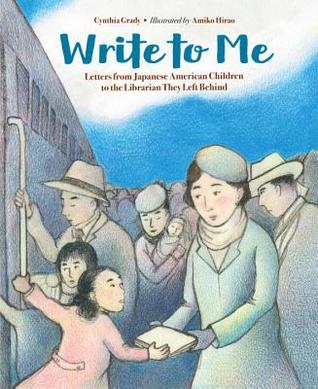
Write to Me by Cynthia Grady

Write to Me by Cynthia Grady

Write to Me: Letters from Japanese American Children to the Librarian They Left Behind by Cynthia Grady, illustrated by Amiko Hirao (9781580896887)

This nonfiction picture book tells the true story of a librarian who stayed in touch with the children she served even after they were moved forcibly away. After the bombing of Pearl Harbor, Japanese Americans were sent to prison camps. As a librarian in San Diego, Clara Breed served many children of Japanese descent. Before the children left, she gave them books and postcards to correspond with her. While they were gone, she continued to send them small things, even visiting once and delivering boxes of books. The children wrote to her during the three years they were gone as she offered them a way to stay connected to the outside world.

This book shows the Japanese internment in a way that children will understand. The letters shared in the book are excerpts from actual children’s letters written to Miss Breed during this time. They reflect the different ages of the children, their focus on everyday moments and their strong connection to books and their librarian. It is a book that shows how importance and life changing kindness is.

The illustrations  are done in pencil on paper and have a softness and glow to them. They do not shrink from showing the desolation of the internment camps and the sorrow and fear of those being placed in them.

A very timely nonfiction book that will show young readers a horrific point in American history and how just one person can make a difference. Appropriate for ages 6-9.

Reviewed from digital galley received from Charlesbridge and Edelweiss.

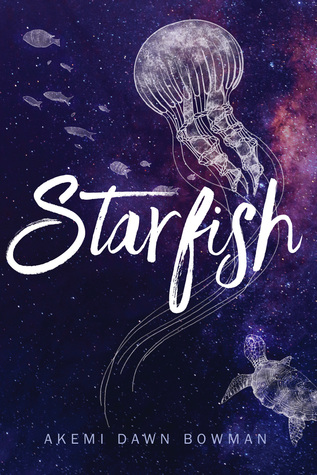
Starfish by Akemi Dawn Bowman

Starfish by Akemi Dawn Bowman

Starfish by Akemi Dawn Bowman (9781481487726)

Kiko struggles to find her own voice in many ways. She can’t seem to be herself in crowds, even small ones. She certainly can’t tell her mother what she actually thinks, particularly when her mother lets her uncle return to their home after Kiko had accused him of molesting her as a child. It is only in her art that Kiko tells her own story and speaks the truth. She plans to finally get away from her mother by attending art school in New York City. When she doesn’t get in, Kiko is trapped in a life of seeing her molester in her home, being with her horrible mother, and seeing her best friend head off to school. That is when a childhood friend comes back into her life and she begins to see what a future filled with art and honesty looks like.

I read only the first few lines of this debut book and realized that I had tumbled into the world created by a very talented storyteller. It is a world of abusive mothers, where the abuse is emotional rather than physical. Bowman draws the abuse clearly and subtly, allowing readers to realize the depths of the damage along with Kiko herself as her mother not only fails to protect her but also hurts her directly. It is a world of art, where art pieces end each chapter, the image capturing the emotions that Kiko was just feeling with an accuracy that lets you see it before your eyes.

This is a book that explores being different, particularly Kiko, who is half Japanese and half Caucasian, looking different than her blonde mother. Her mother has specific cruelties related to Kiko’s appearance that are particularly awful. As Kiko begins to think for herself, readers will be able to start breathing along with her and see just how strong Kiko is as a young woman on her own.

A book that celebrates individuality, art and survival, this novel is fresh and deeply moving. Appropriate for ages 15-18.

ARC provided by Simon & Schuster.

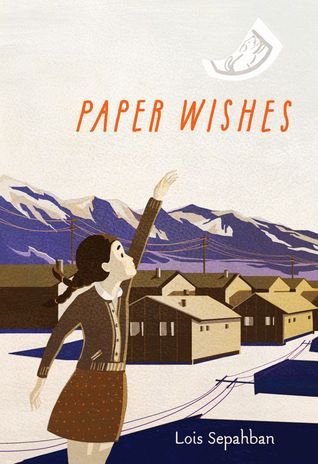
Paper Wishes by Lois Sepahban

Paper Wishes by Lois Sepahban

Paper Wishes by Lois Sepahban

Manami loves her home on Bainbridge Island where she can walk with her grandfather and his dog on the beach. Everything changes when Pearl Harbor is bombed in 1941. Manami and her family along with the other Japanese Americans are gathered up and forced to move to internment camps far from the sea. Manami’s grandfather has arranged for someone to care for his dog, but Manami cannot bear to leave him behind so she hides him in her coat. But she is not allowed to bring the dog with them. Heartbroken, when they reach the camp, Manami stops speaking entirely, unable to force words past her dusty throat. Manami keeps hoping that their dog will find them, sending pictures on the wind to him.

Told in spare and elegant prose, Sephaban captures the devastating impact of World War II policies on Japanese Americans. Losing all of their property and belongings except what they can fit into one suitcase each, the families work to put together a semblance of a life for themselves and their children. Sepahban sets this story in a prison camp that had a riot break out and one can feel the tension building. This novel manages to show the impact of loss of civil rights and also be a voice for moving forward to embracing diversity and differences.

Manami is an amazing character. Her pain is palpable on the page, her voice buried under guilt and compounded by their internment in the camp. Everything changes for her in one moment, taken from the place she loves, removed from the life she has been living. Manami has to find a way to make a new life, but it is devastating for her as she is unable to forgive herself for what she has done.

Beautiful writing, a complex heroine and a powerful story make this short historical novel worth reading and sharing. Appropriate for ages 9-12.

Reviewed from e-galley received from Farrar, Straus and Giroux and Edelweiss.