A Hat for Mrs. Goldman by Michelle Edwards

a-hat-for-mrs-goldman-by-michelle-edwards

A Hat for Mrs. Goldman by Michelle Edwards, illustrated by G. Brian Karas (InfoSoup)

Sophie first got a hat knit by Mrs. Goldman when she was a tiny baby. Now Sophie helps by making pom-poms for Mrs. Goldman’s hats. She learns about doing good deeds or “mitzvahs” for people. When Mrs. Goldman and Sophie head outside into the blustery weather to walk her dog Fifi, everyone has something knit to keep them warm except for Mrs. Goldman. So Sophie decides to knit a hat for Mrs. Goldman. It takes some time to knit and meanwhile there are more cold walks. When it’s done though, the hat isn’t perfect. It is lumpy and has holes where there shouldn’t be any. Sophie though has a plan that will make this a hat worthy of Mrs. Goldman.

This picture book is pure bliss. Edwards has created a vivid friendship between a grandmotherly neighbor and a young girl. There is kindness throughout, both in terms of the knitting but also the small kindnesses done for one another. Little details bring the world fully alive, like Sophie’s knitting that she started with Mrs. Goldman smelling of chicken soup, such a warm and homey smell.

The illustrations by Karas are lovely. They show the hard work that Sophie puts in, her frustrations and her successes. They show the cold walks and the fierce winds, the attempts at wearing scarves. They show the joy of completion and then the dismay at seeing that the hat is not perfect. And finally, they show the real hat that is glorious and unique.

A lovely book sure to warm up your own chilly fall and winter days. Appropriate for ages 4-6.

Reviewed from library copy.


10 Best Picture Books on Kindness

After the election results, I thought I’d turn to children’s books for comfort. They show me that we teach children to be thoughtful, kind and decent. My hope is that we can start to look beyond our differences in America and see the humanity and value in everyone.  One critical element in that is kindness:

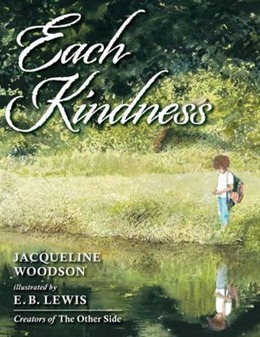
Each Kindness 18475599

Each Kindness by Jacqueline Woodson (my review)

Highly recommended, this is a powerful book that is worth sharing and discussing.

The Farmer and the Clown by Marla Frazee (my review)

A masterpiece of wordless storytelling, this is a radiant picture book made to be shared.

17383707 17263567

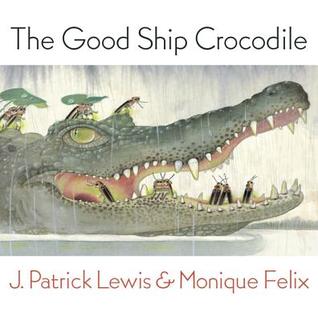
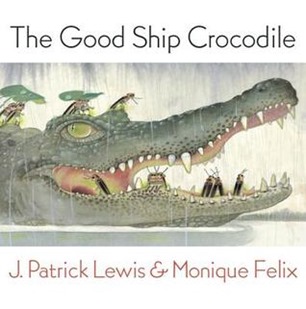
The Good Ship Crocodile by J. Patrick Lewis (my review)

Beautifully told and illustrated, this is a strong addition to any story time on crocodiles or kindness.

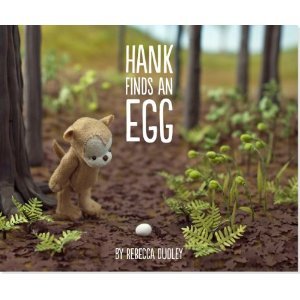
Hank Finds an Egg by Rebecca Dudley (my review)

Beautiful and charming, this little book is sure to become a favorite.  Time to curl up with your own little bear and enjoy.

22718660 I Am a Bear by Jean Francois Dumont

The House That Jane Built: A Story about Jane Addams by Tanya Lee Stone, illustrated by Kathryn Brown (my review)

This biography is a glimpse of an incredible woman whose legacy lives on in the United States and will serve as inspiration for those children looking to make a difference in the world around them.

I Am a Bear by Jean-Francois Dumont (my review)

A book that will help talk about homelessness and that offers a way forward, kindness.

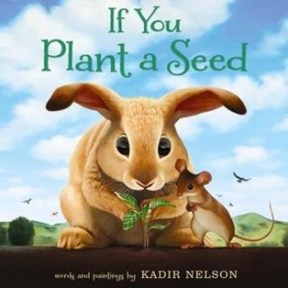
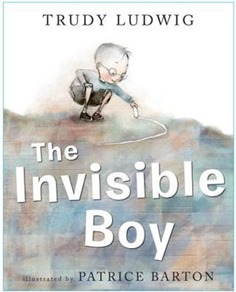
if you plant a seed invisible boy

If You Plant a Seed by Kadir Nelson (my review)

Community, sharing and kindness come together in this splendidly illustrated picture book that is sure to be enjoyed along with other spring gardening books.

The Invisible Boy by Trudy Ludwig, illustrated by Patrice Barton (my review)

A superb book about bullying and exclusion, this can be used to start discussions in a classroom or with a single child.

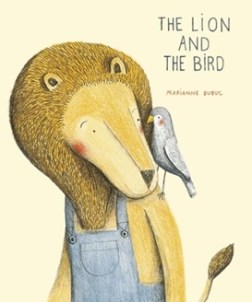
lion and the bird Oskar and the Eight Blesssings by Richard Simon

The Lion and the Bird by Marianne Dubuc (my review)

A noteworthy picture book, this new title by Dubuc is charming and warm.

Oskar and the Eight Blessings by Richard Simon (my review)

A lovely holiday book that is about more than either Christmas or Hanukkah but about home and hope.


Review: Zen Socks by Jon J. Muth

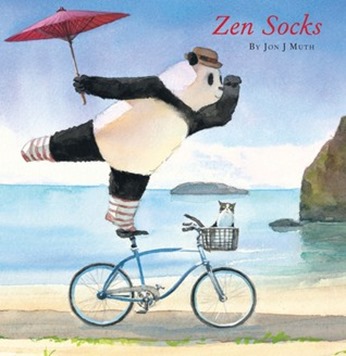
Zen Socks by Jon J Muth

Zen Socks by Jon J. Muth (InfoSoup)

Stillwater, the giant panda, returns for another picture book filled with Buddhist wisdom. The book takes a look at different ways to reach wisdom. The first section of the book looks to sharing a story as a way to learn. It’s a story about learning too, about the importance of patience, practice and hard work. The next story focuses more on action as a learning tool, about being a bad guy and being a good person, and more positive ways to manage conflict. The final part of the picture book is about taking action to help even if you think your small action won’t make any difference to the world.

The entire book shines with Stillwater’s quiet and wise presence. His guidance is done with subtlety and kindness, modeling the way that parents can inspire different ways of thinking in their children. The stories while based on old tales are also effortlessly modern in their presentation here. These are lessons that transcend any age and remain all the more true in our current world.

Muth’s illustrations are luminous and lovely. They are filled with light and humor, inviting children outdoors to play and explore without ever mentioning it as a goal. As in all of his Zen books, Stillwater is a major presence that demonstrates the importance of having a child’s mind in his playfulness and also being engaged in his community as he teaches the children new ways to see the world.

Another brilliant Zen book, this picture book will be embraced by Buddhists and others looking for some quiet wisdom in our busy world. Appropriate for ages 4-6.

Reviewed from copy received from Scholastic.

Review: If You Plant a Seed by Kadir Nelson

if you plant a seed

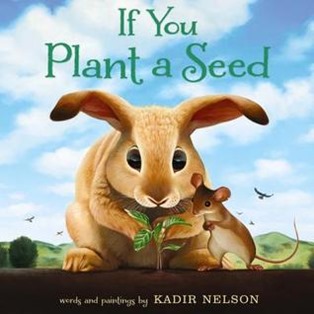
If You Plant a Seed by Kadir Nelson

Award-winning Nelson tells a story about the power of sharing in this simple and striking picture book. The story begins with a rabbit and a mouse planting a tomato seed, a carrot seed and a cabbage seed in their garden. Then the two wait through all kinds of weather for the seeds to sprout and grow. Until finally, they have three lovely plants and are able to feast on their bounty. Then the birds arrive and silently ask for the rabbit and mouse to share. But no sharing happens and instead there is a struggle and the plants are destroyed. One small red tomato survives and the mouse offers it to the birds. The birds in turn repay that kindness with seeds of their own which then sprout into a much larger and more diverse garden for them all to enjoy, along with even more animals.

Nelson’s writing here is simple but also to the point. He shows young readers what is happening in the story. Using the symbolism of the garden throughout, he explains the importance of sowing the seeds of kindness rather than selfishness and finally how beautiful it is in the end when you do that. There is little subtlety here and the symbolism is beautifully integrated into the story as a whole.

As always, Nelson’s illustrations are pure delight. His animals shine on the page, showing emotions clearly and beautifully both in their eyes and the positions of ears and tails. Other details bring the entire scene to life. Perhaps my favorite page is the birds silently watching the rabbit and mouse feast on the produce. It’s funny and yet the tension is clear too. The entire book is filled with small lovely moments like this told in images rather than words.

Community, sharing and kindness come together in this splendidly illustrated picture book that is sure to be enjoyed along with other spring gardening books. Appropriate for ages 3-5.

Reviewed from library copy.
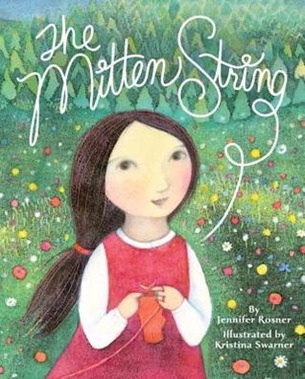
Review: The Mitten String by Jennifer Rosner

mitten string

The Mitten String by Jennifer Rosner, illustrated by Kristina Swarner

Released October 28, 2014.

Ruthie’s family was known for their wool and the mittens they created from it.  They sheared their own sheep, prepared their own wool, spun their own yarn.  At night, Ruthie and her mother knitted together, with Ruthie in particular making mittens.  On market days, they traveled to town to sell their fabric and knitting.  One day, they found a woman on the road with her baby where their wagon had broken down.  The woman wrote on a slate to communicate, because she was deaf.  She used sign language with her little son.  Ruthie’s family offered her a place to stay for the night and Ruthie noticed a deep blue piece of yarn around the woman’s wrist.  That night, she saw how the women used the yarn to tie herself gently to her baby so that she would know if he needed anything in the night.  Ruthie had a great idea and quickly went to work creating a mitten on a string with one sized for an adult and the other for a baby.  In return for her kindness, the woman gave Ruthie her string of yarn of the deepest blue and then also showed Ruthie what plant to use to create the blue dye. 

As Rosner says in her author’s note, this book is inspired by her great-great-aunt Bayla who was deaf and used the trick of tying a string to her baby’s wrist from her own.  She also offers a knitting glossary at the end along with some knitting-related sign language signs.  I appreciate that while this book is about a woman who is deaf, she is also a very capable person.  The family may offer her help, but it is more about her circumstances than about her deafness.  It is a pleasure to have a book about a disability address it in such a positive way.

Swarner’s art has the softness of yarn.  Done in the same rich, deep colors that Ruthie knits her mittens out of, the entire world is soft and warm.  There are small touches throughout that add details of homeliness and kindness.  From the different sizes of mittens around the home to the flowers all over the grass. 

This is a picture book about kindness and caring for one another with a brilliant blue thread of love woven throughout.  Appropriate for ages 4-6.

Reviewed from e-galley received from Random House Books for Young Readers and Edelweiss.

Review: The Good Ship Crocodile by J. Patrick Lewis

good ship crocodile

The Good Ship Crocodile by J. Patrick Lewis and Monique Felix

Snout was a crocodile who lived on a river.  During the rainy season, the water level would rise and other animals would get into trouble.  The fireflies could not fly in the falling rain, so they asked Snout to carry them to the other side of the river.  Across they went, riding on his back and even in his mouth.  Day after day, Snout carried animals across the river to safety.  Finally, when the sun came out again, Snout realized that he could no longer see his home because he had drifted far downstream.  Now it was Snout’s turn to ask the other animals for help returning to his home.

Lewis served as U.S. Children’s Poet Laureate from 2011-2013 and in this picture book, you can see his skill with words on every page.   Lewis creates an entire world here, including an unusually kind crocodile.  His words are so simple and uncomplicated, yet they create a sturdy structure for the story.  He doesn’t offer rationalizations for why this crocodile is so kind, but clearly shows that doing kindness for others will inspire them to do it for you when you need it most.

The illustrations in this book are breathtaking.  Felix creates a crocodile that looks wonderfully real, particularly in the very close up images.  As the crocodile takes different animals across the river, the text goes silent, allowing time for the reader to mentally make the journey too.  It also builds a great tension where readers will wonder if he will snap his jaws shut at any moment. 

Beautifully told and illustrated, this is a strong addition to any story time on crocodiles or kindness.  Appropriate for ages 3-5.

Reviewed from library copy.
Review: Each Kindness by Jacqueline Woodson

each kindness

Each Kindness by Jacqueline Woodson, illustrated by E. B. Lewis

During a snowy winter, a new girl came to class.  Maya wore ragged clothes and a broken shoe that wouldn’t keep her foot dry in winter snow.  The new girl was put next to Chloe, who refused to even look at her, moving far away in her seat and looking out the window.  Day after day, Chloe never smiled or looked back.  Maya kept trying, offering her new jacks she got for her birthday, but the girls all refused to play.  Maya ended up playing alone.  Then Maya was gone, her seat empty.  That day, the class learned about kindness, about the way it ripples like a pebble dropped into water.  The children were each given a small stone to drop in and tell the class about a kindness they had done.  Chloe couldn’t think of any, her mind filled with the way she had treated Maya.  As the days went by, Chloe hoped that Maya would return so that she could smile back.  But then they heard that Maya had moved away.  Chloe would not be able to return that smile.

Woodson does not pull back on her message here.  She speaks directly to the sort of bullying that groups of girls are best at, ignoring and dismissing.  Readers will immediately feel for Maya, who has done nothing at all to earn the scorn of the girls, except wear the wrong clothes.  But Woodson also makes sure that we feel for Chloe too, using her as the narrator for the story.  This works particularly well in the latter part of the book, where she is hopeful she will be able to right the wrong she has done. 

Lewis’ art is realistic and quite simply amazing.  He shows us through his images Maya’s side of the story, starting with her refusal to look at the class when introduced, her hopeful smile before Chloe turns away, and her isolation as the seasons change.  After Maya leaves, Chloe is shown as the isolated one, alone on a blank white page, solitary in nature. 

The power of this book is in the ending, where it does not wrap up happily with Maya returning and being embraced by the Chloe and her friends. Instead, it ends realistically with deep regrets and hope that Chloe will respond differently next time. This is a book sure to trigger discussions when shared with a class. I can see talking about bullying, kindness and differences.

Highly recommended, this is a powerful book that is worth sharing and discussing.  Appropriate for ages 6-8.

Reviewed from copy received from Penguin.