Review: The Only Child by Guojing

The Only Child by Guojing

The Only Child by Guojing (InfoSoup)

Based on the author’s childhood growing up in China, this is the haunting story of a child left alone at home who decides to take the bus to her grandmother’s house. But when she gets off the bus, she discovers that she is alone in a woods. She sees a stag in the woods and follows him until they reach a body of water. When the little girl slips into the deep water, the stag offers one of his antlers to rescue her and the two travel on together. Out further in the water, there is a light in the clouds and the clouds form stairs for them to climb. They enter a cloud world, filled with other creatures. Although the little girl is having fun, she does miss her family who are frantically searching for her back on earth. But how is she going to ever get back to them from high above in the clouds?

The author’s note that begins this book is crucial to understanding the story. A generation of single children in China led to them living profoundly lonely lives, sometimes left alone at home for the day. That loneliness seeps through every page here, even the joyous ones ache with it. This mash up of a wordless picture book and a graphic novel is exceedingly successful, offering a glimpse into a magical world of animals and clouds that show this small child the love and attention she is seeking at home. This story is hauntingly told with a magnificent heart that shines on each page.

The artwork here is soft and subtle, exuding a warmth even in the falling snow. The pencil drawings are detailed and lush. Guojing plays with light and dark, hope and loneliness throughout the book. The child is central in the book, shining on the page alongside her animal companions. The world of clouds is beautifully textural and playful, hugging the child and supporting her. This art is exceptional and communicates far more than words could.

A ravishingly gorgeous book, this graphic novel will be adored by a wide range of ages. Appropriate for ages 5-9.

Reviewed from copy received from Schwartz & Wade.

Review: The Sleeper and the Spindle by Neil Gaiman

The Sleeper and the Spindle by Neil Gaiman

The Sleeper and the Spindle by Neil Gaiman, illustrated by Chris Riddell (InfoSoup)

When a group of dwarfs travels through their tunnels in the mountain to another land, they discover that a sleeping curse is spreading across the world and will soon threaten the kingdom they live in. It all originated with one castle, an angry fairy and a young princess. The dwarfs return through the mountain and let their queen know of the danger. Though it is about to be her wedding day, she goes with them. They discover a land falling fast asleep and that the sleepers will follow them slowly. The castle has a hedge of thorns around it that seems impenetrable. Inside the castle is an old woman who is the only one left awake. She knows that no one can pass the thorns and considers killing the beautiful girl asleep on the bed to lift the curse, but she doesn’t. It is the queen alone who can figure out how to pass the thorns and who will recognize the evil for what it actually is.

Gaiman takes the Grimm story of Sleeping Beauty and makes it lush and incredibly beautiful. His prose is gorgeous, lingering on small things and building a world that is filled with a deadly magic. The queen herself is a great character, much more interested in being a heroine than a queen and having adventures rather than a gorgeous wedding dress. Gaiman does not cringe away from a woman saving another woman, and then he does an amazing twist to the story. One that readers will be shocked by and one that allows it all to click into place, hauntingly.

Riddell’s illustrations are done in pen and ink, made shimmering by touches of gold throughout. Yet it is truly his art which shines here, the details of people asleep as spider’s weave webs across their faces, the dark beauty of the queen and the blonde beauty of the sleeping girl. There is also a beauty to the old woman that is unique and special and to the dwarfs too with their roughened features. The setting too is brought clearly to life as they traverse it.

A glorious new feminist version of Sleeping Beauty that twists and turns before a very satisfying ending. Appropriate for ages 8-11.

Reviewed from library copy.

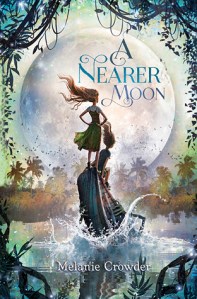
Review: A Nearer Moon by Melanie Crowder

Nearer Moon by Melanie Crowder

A Nearer Moon by Melanie Crowder (InfoSoup)

Luna lives in a swamp that was formed when a dam formed in the river by fallen trees. She lives with her mother, grandmother and little sister Willow in a village on stilts above the swamp water. Everyone in the village knows not to drink the swamp water, particularly the water near the slick. But when Luna has Willow out on her boat with her, water accidentally gets into her mouth. The water was helped by a creature who lives deep in the muck of the swamp. Now Willow only has a few weeks to live, since everyone exposed to the water dies at the exact same time after drinking it. Luna is desperate to find a way to save her sister, even going so far as to offer herself to the creature under the water. But that creature too has her own story that is wrapped around Luna and Willow’s. It too is a story of sisters and also a loss so deep that it poisons. In her desperation can Luna find a way to save her sister?

Crowder writes so beautifully. The setting of the swamp comes alive with her words, the creatures of the swamp, the trees, the colors, the smells and the subtle beauty. She takes what could have been a desolate poison swamp and instead wraps it in beauty and wonder. The magic that permeates the story is deep and dark, and keeps the humans trapped in the swamp with it. It’s lovely to see a fantasy book use magic in a way that is twisted and corrupted and yet entirely organic and realistic too.

The parallel stories of the two sets of sisters is delicately balanced. There is the main story of Luna and Willow, two human sisters who adore one another and the place they live. Then there are the water sprite sisters, Perdy and Gia. The sprites are trying to leave this world and build a door to another place that doesn’t have humans in it. Gia spends her time near the door, waiting for it to be complete while Perdy explores far and wide. But disaster happens once the door is completed and Gia is unable to call Perdy home fast enough.

Lushly written and filled with details that bring the swamp to life, this novel is a magnificent fantasy read. Appropriate for ages 9-12.

Reviewed from library copy.

Review: Castle Hangnail by Ursula Vernon

Castle Hangnail by Ursula Vernon

Castle Hangnail by Ursula Vernon (InfoSoup)

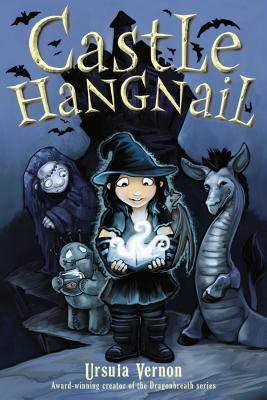
The creator of Dragonbreath and Hamster Princess has an illustrated novel filled with sorcery, witches, magic and minions. The minions of Castle Hangnail are worried. If they don’t find a witch, wizard, sorceress or vampire to run the castle, it will be decommissioned and sold off by the Board of Magic. But the minions did not expect a twelve-year-old girl to show up on their doorstep, especially one that does not seem as wicked a witch as she should. Molly sets out to prove herself, taking on the list of requirements set by the Board of Magic. She is a natural witch and uses her magic to successfully turn a donkey into a dragon, though the spell does last a lot longer than expected. She also befriends the moles in the garden, vanquishes weeds alongside a local gardener, and tries to find a solution to the castle’s failing plumbing. But despite her success, Molly has been lying all along and her lies are about to tumble down around her and may have her leaving Castle Hangnail for good (or evil).

This novel works exceptionally well. Vernon captures a diverse set of characters. There is the guardian of the castle who is doubtful about Molly from the start, the animated suit of armor who would fight anyone who threatens the castle except that his knees seize up, Pins the animated fabric doll who is a great tailor, and his pet goldfish who suffers from being a hypochondriac. Against this wild cast Molly is refreshingly normal. She’s a girl who is not squeamish about bats or insects, enjoying that liking them counts as being wicked. She is clever in her solutions to the list of requirements and figures out how to use her uneducated power to accomplish great things.

The book is also illustrated, adding to the delight for the reader. There are just enough illustrations to have the book still be a novel but also to break up the blocks of text very nicely for young readers. Readers will enjoy seeing what Pins looks like, what a dragon-donkey appears as, and the little bat who is sent to stay with Molly because he likes being awake during the day. All of this adds to the friendly and fascinating menagerie of characters throughout the book, with Molly the wicked witch being the foil for all of it.

Filled with humor and a strong sense of home, this fantasy novel for children has enough action and magic to win the day. Appropriate for ages 8-11.

Reviewed from copy received from Dial Books.

Review: Scarecrow Magic by Ed Masessa

Scarecrow Magic by Ed Masessa

Scarecrow Magic by Ed Masessa, illustrated by Matt Myers (InfoSoup)

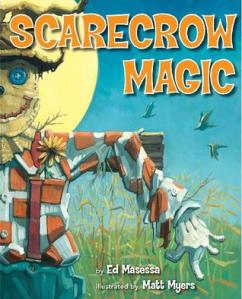
A shivery and wonderfully strange autumn read, this picture book explores what happens on the night of a full moon. It all starts with the moon bright in the sky and a scarecrow that starts to move. Magic is building all around, and creatures begin to emerge from the ground and the shadows. As the others arrive, the scarecrow unties himself, removes his clothes and then his skin! As a skeleton, he dashes around ready to play. He jumps rope with a vine, takes a dip in the pond, bowls with pumpkins, plays hide-and-seek. At snack time they all feast on worms and slug balls. By the time the sun rises, it’s all tidied up and Scarecrow is back to work on his post.

This picture book is not sweet and quiet, rather it’s a wild raucous picture book that has some darkness mixed in. So it may not be for every child and may not be ideal for right before bed. There is joy in a picture book that takes a autumn figure like a scarecrow and unveils the skeleton underneath. The magic at play all around in a rural area is also a treat to see come alive. The book is written in rhyme that bounces and dashes along, carrying this zingy story forward even faster. Halloween is not mentioned at all, but this would be a great pick for a read aloud at a Halloween event where scary darkness is to be expected and embraced.

Myers sets a great tone with his illustrations, creating a wonderful glow of the moon and a deep darkness of night. The skeleton’s white bones pop on the page as he gallivants around. The dark purples, blues and greens capture nighttime in the country. Against that backdrop, the strange creatures who come from the shadows and the ground are a mix of friendly and fearsome that works very well. They are just enough to be creepy but not really frightening.

Jaunty rhyme, a spooky night and one wild skeleton make for a treat of a book for a Halloween read. Appropriate for ages 4-6.

Reviewed from library copy.

Review: Baba Yaga’s Assistant by Marika McCoola

Baba Yagas Assistant by Marika McCoola

Baba Yaga’s Assistant by Marika McCoola, illustrated by Emily Carroll

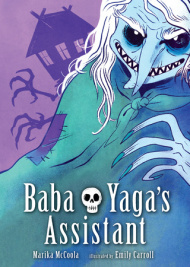
A modern teen meets the legendary Baba Yaga in this graphic novel that mixes traditional Russian folklore with modern-day mixed families. Masha was raised primarily by her grandmother who told her stories of her own time with Baba Yaga in her house that walks on chicken legs as well as stories of other children who lived with the old witch. So when Masha sees an ad in the paper for an assistant, she sets off to take the job with some confidence, a lot more than she feels about her father’s new girlfriend and her daughter. Baba Yaga sets Masha through a series of tests like outwitting a huge bear, cleaning the filthy house, and even getting inside in the first place. But when the daughter of her father’s girlfriend shows up as one of the children ready to become Baba Yaga’s dinner, Masha intervenes and saves all of the children, even if they don’t want her help. But that act alone may have cost her the assistant position and her adventures with Baba Yaga.

McCoola’s story is a dark and dangerous tale, one that does not laugh at the legends of Baba Yaga, but instead makes her all the more frightening. Still there is a great sense of humor throughout. The story closely relates to other tales of Baba Yaga and her house. In fact, the characters refer to other tales, other adventures and use that knowledge to escape their situation. It’s a clever use of traditional stories to create a robust modern tale of adventure and magic.

The illustrations by Carroll embrace the darkness of the story. My advanced reader copy was entirely in black and white, so I can’t speak to the colors of the final version, but the drawings have a modern edge to them that makes them exciting and fresh. A different style is used when there are flashbacks to the other stories, making sure that readers know that it is a different tale. The final pages of my copy contain some character studies for the illustrations that make for fascinating reading too.

Dark, dramatic and great fun, this graphic novel is a memorable mix of old and new into something amazing. Appropriate for ages 9-12.

Reviewed from ARC received from Candlewick Press.

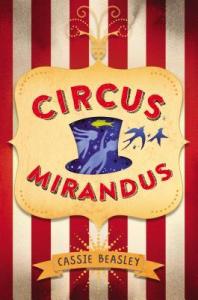
Review: Circus Mirandus by Cassie Beasley

Circus Mirandus by Cassie Beasley

Circus Mirandus by Cassie Beasley

Grandpa Ephraim has been telling Micah stories of Circus Mirandus since he was a small child. It is the story of a circus that is so magical that adults cannot find it, only children who need to. You can’t get in without a ticket, but you never know what form that ticket will take. Once inside, you get to see acts like a flying birdwoman and a man who creates entire worlds in seconds. But now Grandpa Ephraim is sick and probably dying. Micah’s great-aunt Gertrudis has arrived to take care of both of them and that means no disturbing his grandfather and no talk of magic at all. When a talking and thinking parrot appears, Micah knows that the circus is real and then finds out that the most powerful man at the circus promised his grandfather a miracle that his grandfather saved. Now Micah knows exactly how to save his grandfather. He has to find the circus and use that miracle to stop him from dying and he has to do it quickly!

Beasley has written a terrific read one that nods to books like Charlie and the Chocolate Factory in the way that an entire magical world is placed adjacent to our own, one that is just close enough to glimpse at times. She has also created a book which while it pays homage to classic children’s literature also modernizes it and mixes in magic too. The story arc works particularly well here, built on a strong tale that is filled with marvelous and amazing creatures and beings. The result is a book that is very readable and one where you aren’t quite sure what’s going to happen next, in the best possible way.

Micah is a very likable protagonist. He struggles to make friends and when he does their friendship takes time to grow. It feels very organic and the two of them are not natural friends who see the world the same way. Instead it is much more like making a real friend where it is the willingness to be friends that makes a huge difference and a decision to stop arguing when you don’t agree. It is these parts of the book that are so realistic, where the relationships shine, that make the book as strong as it is. Without these clever human elements the book would be too frothy and light. These keep it grounded and real.

A magical book filled with real people alongside the mystical ones, this book for young readers will be enjoyed almost as much as a visit to Circus Mirandus itself. Appropriate for ages 9-12.

Reviewed from ARC received from Dial Books.

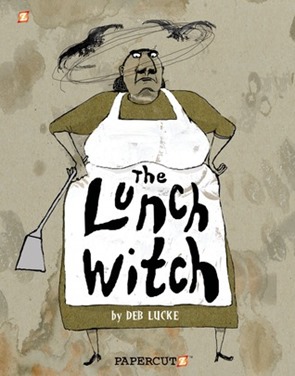
Review: The Lunch Witch by Deb Lucke

lunch witch

The Lunch Witch by Deb Lucke

What is a witch to do when no one believes in magic anymore? She has her family’s potion recipes and cauldron, but that’s about it. Then she realizes that there is one perfect job for someone who creates horrible brews – being a lunch lady! So Grunhilda becomes a lunch lady, one who scares all of the children. But Madison isn’t scared of Grunhilda despite the fact that she is the one person who knows that she is not what she seems. Madison has enough knowledge to blackmail the witch, but that’s a dangerous course even when the witch wants to help you. Grunhilda finds a kinship with Madison, but her horrible ancestors are maddened to find their magic being used for good, so they step in and cause all sorts of trouble for both Madison and Grunhilda.

Lucke’s story is a delightful mix of horrible potions, bats that don’t listen, nasty dead ancestors with too many opinions, and amazingly also two people who may just become friends through it all. Lucke creates a story around Grunhilde that offers her back story and makes her transformation to an almost-good witch believable and organic. Madison too has her own story, one that also makes the story work well and makes her own role and connection ring true.

The art of this graphic novel is gorgeously strange and wild. Each chapter leads in with a differently stained page, from oily splotches to actual tomatoes. The pages too are dark and stained, as if Grunhilda herself had been using the book in her kitchen. Against that the white of aprons and speech bubbles pops. Other subtler colors are also used and create a subtle effect against the dark page.

A funny and heartfelt story of unusual friendships created during the most unusual of times. Appropriate for ages 7-9.

Reviewed from library copy.

Review: The League of Beastly Dreadfuls by Holly Grant

league of beastly dreadfuls

The League of Beastly Dreadfuls by Holly Grant

Anastasia started her day by attending a funeral alongside her father, a funeral at the compost pile for her father’s dead venus flytrap. Other than that unusual start to the day which ended with her mother bellowing for waffles from her bedroom, Anastasia was an entirely average girl. There was simply nothing special about her at all. But then at school that morning everything changed when she is kidnapped by two old women calling themselves her “great aunties.” She finds herself trapped in an old Victorian house that was once St. Agony’s Asylum for the Criminally Insane. She is fed only Mystery Lumps and no dinner. She is forced to clean the asylum and at night she is locked into her room. Slowly though Anastasia starts to put together the mystery of her great aunties and what is actually going on in the creepy asylum. An escape plan begins to brew when she meets the frightening gardener and his brother, but can they get past the electrified fence and the guard poodles?

Grant has created a marvelous farce of a book that is filled with broad humor. She also manages to combine that humor with real scares, devious villains, and a nearly hopeless situation. Grant’s use of a quite ordinary young woman as a protagonist adds to the fun, making the scares work better even though they are done just as broadly as the humor is. It is that sense of joy in the situation and the delight that Grant writes with that makes this book such fun to read.

Anastasia is an average girl but also a strong heroine. There are moments in the middle part of the book where readers will want to shake her awake and make her realize what is happening, but in once she realizes she is certainly up to investigating the mystery. The other characters are great fun, including the two horrible aunties who are purely awful in the very best way. The two boys arrive later in the story along with other great characters and they add to the twists and turns of the tale.

A great mix of Victorian and modern fantasy, humor and horror, this book will appeal to fans of Roald Dahl. Appropriate for ages 9-12.

Reviewed from digital galley received from Edelweiss and Random House.