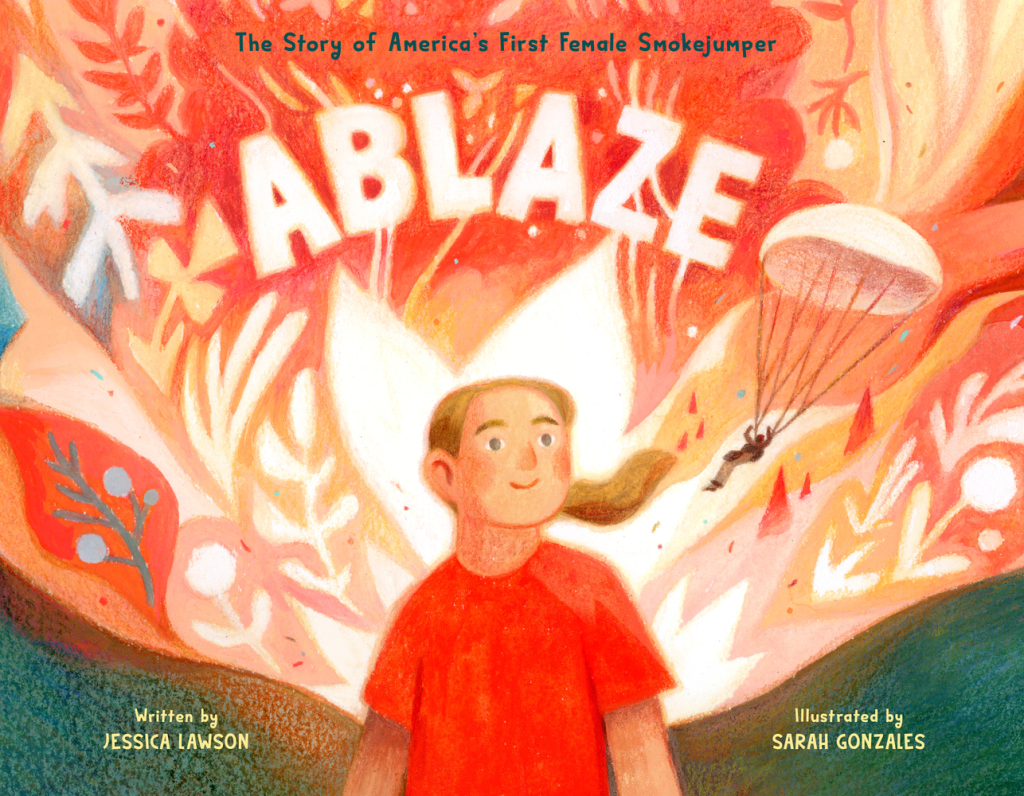
Ablaze: The Story of America’s First Female Smokejumper by Jessica Lawson, illustrated by Sarah Gonzales (9780593463659)
Deanne loved spending time in nature with her family as a young child. It was a love that continued throughout her life. When wildfires started spreading in California, Deanne applied for a job with the U.S. Forest Service. She was hired by them to fight fires. She had found exactly what she loved. It was a physical job with long hours and risks. But Deanne wanted to do more: she wanted to become a smokejumper. So, at age 26, she started taking the required physical tests. She passed them, but was found to be too small for their requirements. Deanne fought the decision, filing a formal complaint. Months later, she was allowed to take the tests and soon passed them to become the first female smokejumper in the nation.
Deanne is the epitome of resilience and determination. The book focuses on her willingness to take risks but also on her level-headed approach to gaining new skills as she pushes the envelope of society’s biases toward women. The writing here is approachable and evocative. It shares how Deanne was feeling as she hit each obstacle and overcame them. The illustrations are full of flame colors, smoke and fire. It brings the dangers and the drama directly to the reader.
Bravery, resilience and character are all on display in this great picture book biography. Appropriate for ages 4-8.
Reviewed from e-galley provided by Penguin Young Readers.

The Black Mambas: The World’s First All-Woman Anti-Poaching Unit by Kelly Crull (9798765627259)
The Black Mambas are an anti-poaching unit that works in South Africa on the Olifants West Nature Reserve. The unit was started when animals in the reserve began to disappear, particularly rhinos and pangolins. The unit is the first all-women anti-poaching unit in the world and despite doubts from family members became very successful. The book explores how the unit was created, what sorts of training they go through, and what they do on a daily basis to protect the wildlife in the reserve. One particularly dramatic series of images shows the women tracking poachers and successfully stopping them. Told via photographs, the book celebrates the impact these women have had on their community and the success of the reserve.
A stirring tale of women successfully stepping out of traditional roles. Appropriate for ages 5-10.
Reviewed from library copy.
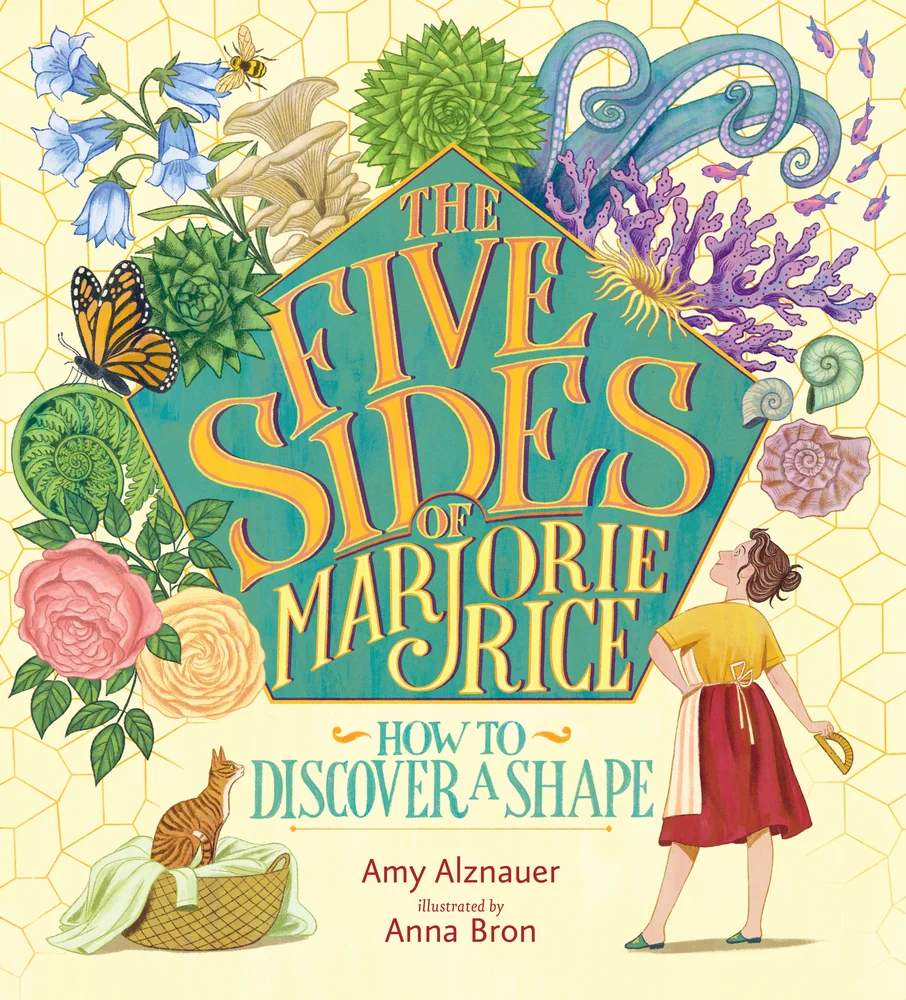
The Five Sides of Marjorie Rice: How to Discover a Shape by Amy Alznauer, illustrated by Anna Bron (9781536229479)
Marjorie Rice grew up loving shapes, enchanted by the golden rectangle. She studied art and geometry, but her parents wanted her to be a secretary. Meanwhile, others were discovering five-sided shapes that could fit together, creating a seamless pattern. They each declared they had found them all. Majorie was raising children, doing art, helping with math, and discovered the question of five-sided shapes in her son’s Scientific American magazine. Marjorie started to work on the problem, despite it being declared as solved. Her first discovery was declared the tenth tiling pentagon, but she wasn’t done yet!
This picture book tells the story of an amateur mathematician who discovered tiling shapes that others couldn’t. These were questions from the beginning of math and design, solved by a mother of five working out of her home. It is an inspiring story of resilience, tenacity and patience. The illustrations in the book invite readers to look at five-sided shapes themselves, seeing them elongate and shrink and they fit together.
It’s a book that makes mathematics something tangible and beautiful. Appropriate for ages 5-9.
Reviewed from library copy.
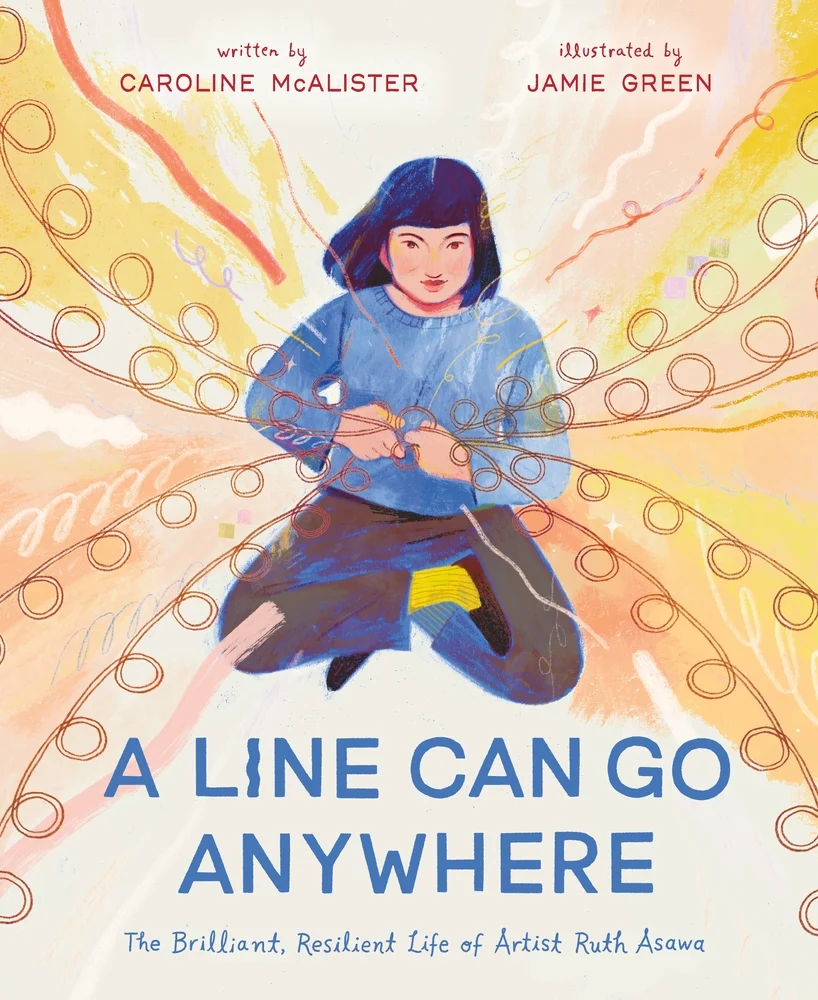
A Line Can Go Anywhere: The Brilliant, Resilient Life of Artist Ruth Asawa by Caroline McAlister, illustrated by Jamie Green (9781250310378)
Ruth Asawa was raised on her family’s vegetable farm in California. She attended Japanese school on Saturdays and won an award in her regular school for a poster she made of the Statue of Liberty. Her life was divided in half, but soon that was to become even more clear. When Pearl Harbor was attacked, her father was taken away. Two months later the rest of the family entered imprisonment. Ruth started to draw her life in the camps. At age 20 after the end of the war, she started to create the wire sculptures that she would become known for. Eventually she was asked to create the memorial for those imprisoned in the Japanese internment camps.
Told in poetic language that uses the image of lines repeatedly, this nonfiction picture book pays a deep and respectful homage to this Japanese-American artist. Asawa rises again and again, despite the racism that impacted her childhood and teen years. The use of art to create conversation and connection is clear in this book. The illustrations are done in charcoal, watercolor and digital media. They capture the lines, the wire, the connectivity and the inhuman conditions of the camps.
A book that celebrates survival and the way art can carry a spirit through its darkest days. Appropriate for ages 5-9.
Reviewed from e-galley provided by Roaring Brook Press.

 Waking Brain Cells