You’re Invited to a Moth Ball by Loree Griffin Burns

Cover image for You’re Invited to a Moth Ball

You’re Invited to a Moth Ball by Loree Griffin Burns, photographs by Ellen Harasimowicz (9781580896863)

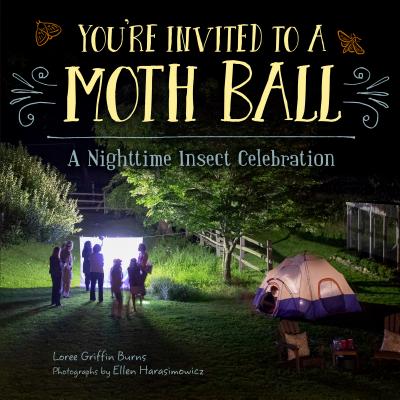
Combining detailed instructions, plenty of encouragement and vivid photography, this book invites families and classes to create their own nighttime moth ball. The first steps are understanding moths and then putting together the supplies and tools you will need: including a sheet, rope, UV collecting light, and your own camera and flashlight. Prepare the screen and then also make sure you have a snack, one for the moths of course! Now you have two types of bait: light and nectar. Patience is part of the process, as more moths will come as the night gets later and darker. Take your time, be gentle, and marvel at these creatures that live all around us.

Burns offers such a merry invitation to readers in this book, making it feel like a true celebration of insects that we often take for granted or don’t even think about. Her encouragement to do research is appreciated, dedicating time in her set up of the moth ball to model reading books and learning about the creatures you are going to view. Her instructions are child-centered, creating a process that children can do themselves and participate in directly.

The photographs also center on the children managing the entire process themselves. When night falls, the magic in the photos happens as children carry their own lights, the moths arrive and the real party begins. The images of the moths themselves show their proboscis, furry bodies and amazing wings.

A grand project to immerse children and families into wildlife, insects and spending the night outside. Appropriate for ages 5-9.

Reviewed from library copy.

Review: Moth: An Evolution Story by Isabel Thomas

Moth An Evolution Story by Isabel Thomas

Moth: An Evolution Story by Isabel Thomas, illustrated by Daniel Egneus (9781547600205)

This nonfiction picture book explains a specific process of evolution by following the story of the Peppered Moth. The moths emerge from their cocoons after the long winter, quickly seeking shelter from predators. At first, most of the moths had speckled black and white wings. It allowed them to better hide in the bark of the woods. The ones that happened to be born with dark wings got eaten by predators. So the speckled moths were able to survive to lay their eggs. But then the world around them changed with more soot and pollution covering the bark of the trees and other objects. Now it was the dark moths that survived best and could lay their eggs. Steadily, the moths started to become darker and less speckled. Now though, pollution is lessening and there is no longer as much soot. So the speckled moths are returning alongside the dark moths.

The tale of the Peppered Moth shows many elements of evolutionary process, including natural selection and adaptation. Both of those concepts are more fully described in the final pages of the book but are fully realized in the main part of the book as well. Thomas does a lovely job with the prose, giving the reader just enough information to allow the story to unfold before them. She limits the amount of words on the page, making this accessible for quite young children.

The illustrations are marvelous, inviting readers into the darkness of a moonlit woods as the moths emerge from their cocoons. The pages fill with moths of different mixtures of black and white. When day comes, more predators enter the pages. As the pollution enters, the world becomes dark and filled with dots and specks of dirty soot. The moths glow against the new darkness, or hide well, depending on their color. It’s a stirring and rich look at evolution happening right before your eyes.

Beautifully written and illustrated, this is a very special nonfiction picture book. Appropriate for ages 5-8.

Reviewed from copy provided by Bloomsbury Children’s Books.