3 Beginning Readers Worth Browsing

Elena Camps by Juana Medina (9781536216424)

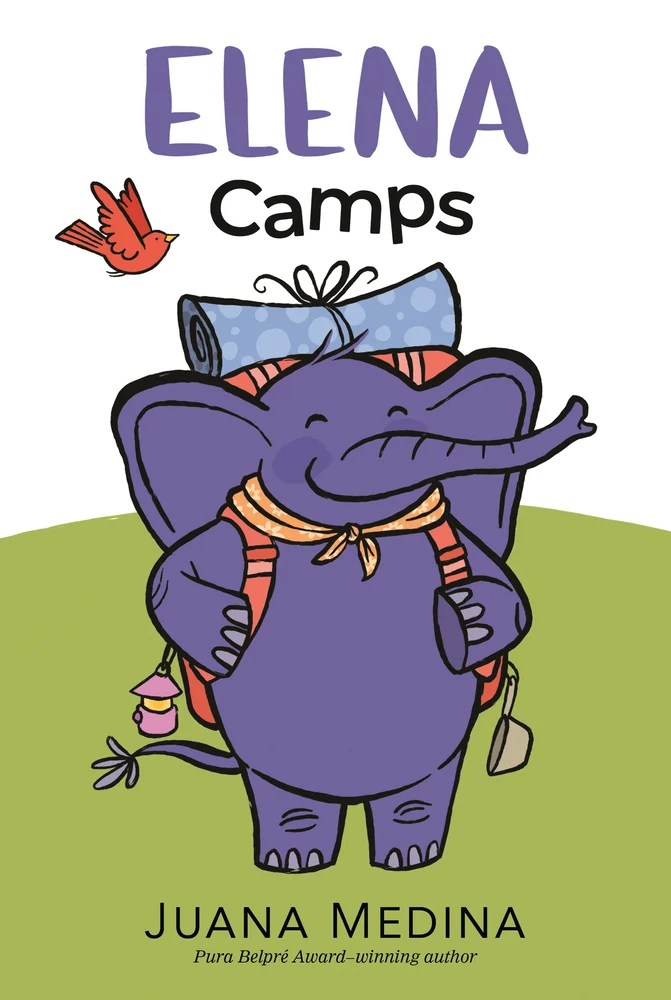
Elena has a new tent that she can’t wait to set up and camp in! But when she tries to set it up, it doesn’t work as easily as she expects. With huge GA-BUNKs and GA-BANGs it keeps going wrong. She tries three times, but nothing works. Elena gets angry and stomps around. Sharp-eyed readers will see the instructions in many of the pictures well before a little bird mentions to Elena that they are there. Elena decides to accept the bird’s help and read the instructions and soon she is ready to camp. 

Released simultaneously in a Spanish edition, this second Elena book is just right for beginning readers. Elena’s tries to get a tent set up all on her own are shown with a broad sense of humor and the message of accepting a little help when you need it is shared frankly with readers. The illustrations are colorful and Elena the purple elephant pops on the page next to her yellow tent. 

A fun and friendly beginning reader. Appropriate for ages 4-6.

Reviewed from library copy.

Mouse and Spoon: Owlets and Tarts by Cynthia Rylant, illustrated by Janna Mattia (9781665962193)

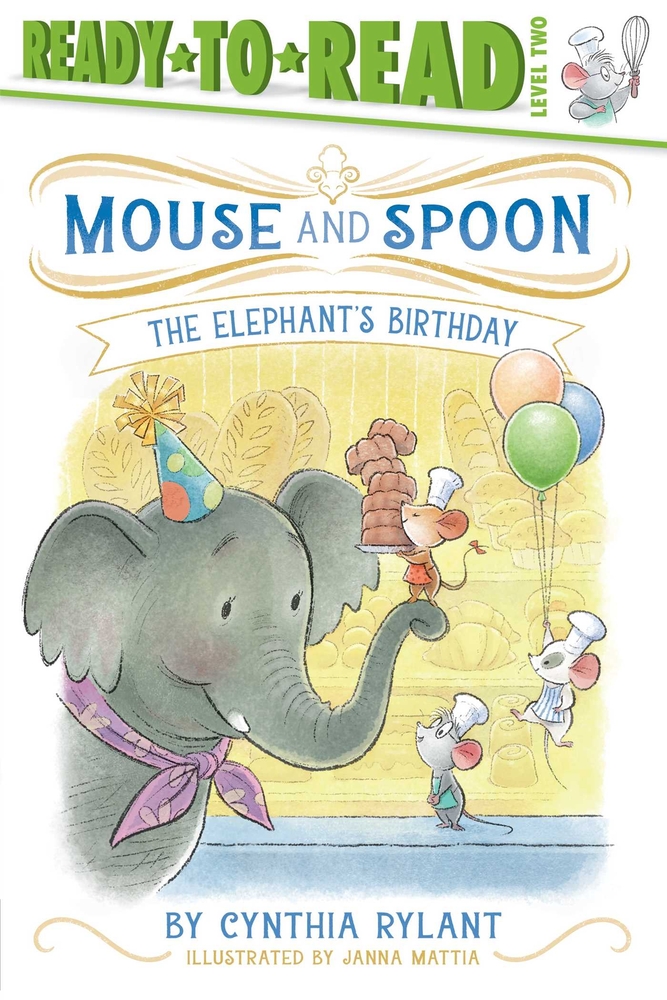
Mouse and Spoon: The Elephant’s Birthday by Cynthia Rylant, illustrated by Janna Mattia (9781665962162)

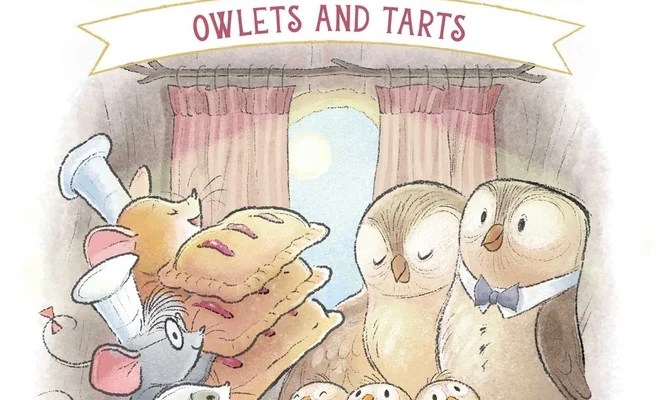
Powerhouse easy-reader creator Rylant returns with a new easy-reader series called Mouse and Spoon. Set in a bakery owned by three mouse siblings, each book focuses on a different special order that the mice must make. In Owlets and Tarts, the mice make Pillow Tarts to help the young owlets fall asleep as well as Half-Moon Buns for the owl parents. For the elephant, the request is for pound cake for the elephant’s birthday and banana bread for the monkeys. Now the mice just have to figure out how to make enough cake for an elephant! 

There is a lovely rhythm to both of these books, marking them as a pair. They start in similar ways, introducing the mice and their bakery, so it doesn’t matter what order you read them in. Then the special order arrives and the mice have to figure out how to do it. Told in very simple words and with a lovely softness to the illustrations, this easy-reader series is perfectly sweet. 

A new Rylant series to devour! Appropriate for ages 4-6.

Reviewed from library copies.

3 Picture Books to Make Your Heart Soar

Papilio by Ben Clanton, Corey R. Tabor and Andy Chou Musser (9780593693254)

Three well-known children’s book creators have come together to each tell part of the story of the caterpillar, chrysalis and butterfly life stages. Papilio starts life bursting out of her egg. She eats leaves but then falls to the ground. She can’t reach the enticing strawberry above her without some help from a friendly mouse. In her chrysalis, she is safe and sound or so she thinks. A robin gets a bit too interested in her and it’s that same friendly mouse who rescues her. Finally, as a butterfly she finds getting to the flower a little more challenging than she thought. Luckily, the mouse is there again to lend a paw. Seeing the stages done in different but supportive art styles is a real pleasure.

Young readers will enjoy the energy and action in each stage. Appropriate for ages 3-5.

Reviewed from library copy.

To See an Owl by Mathew Cordell (9780593649893)

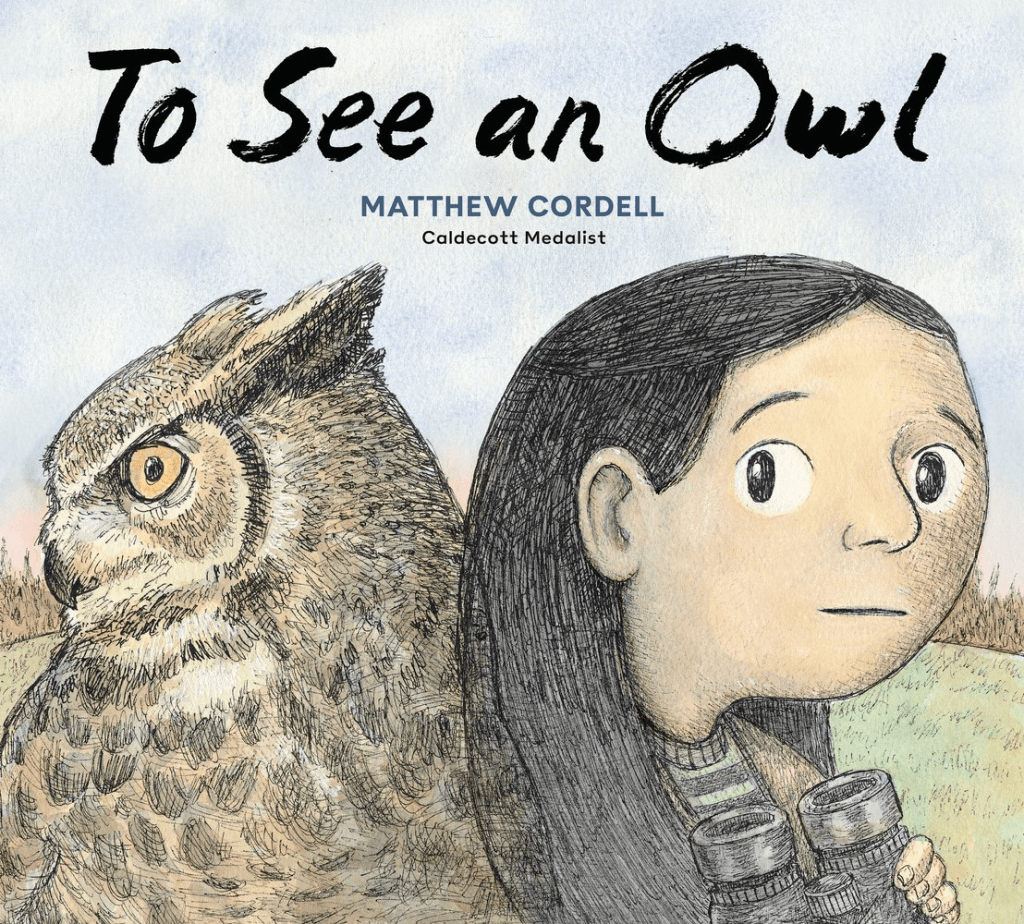
Janie loves owls and dreams of being able to see one in the wild. Her teacher this year is a birder and his favorite birds are owls too. She tries to find an owl, learning about whitewash and pellets, listening hard and keeping an eye out. She even heads into the woods at night with her mother, but no owl is found. Months go by and Janie brings in her collection of owl information and shares it with her class. Her teacher is amazed and shows her on a map where he saw a pair of great horned owls. Could this be the clue that Janie needs?

This quiet picture book speaks to the importance of persistence and patience when entering nature. Watching Janie’s knowledge grow organically throughout the book is a treat. Cordell’s signature fine-lined drawings offer a glimpse of nature, Janie’s family and her search for the elusive owl. 

Appropriate for ages 4-7.  Reviewed from library copy.

Wind Watchers by Micha Archer (9780593616550)

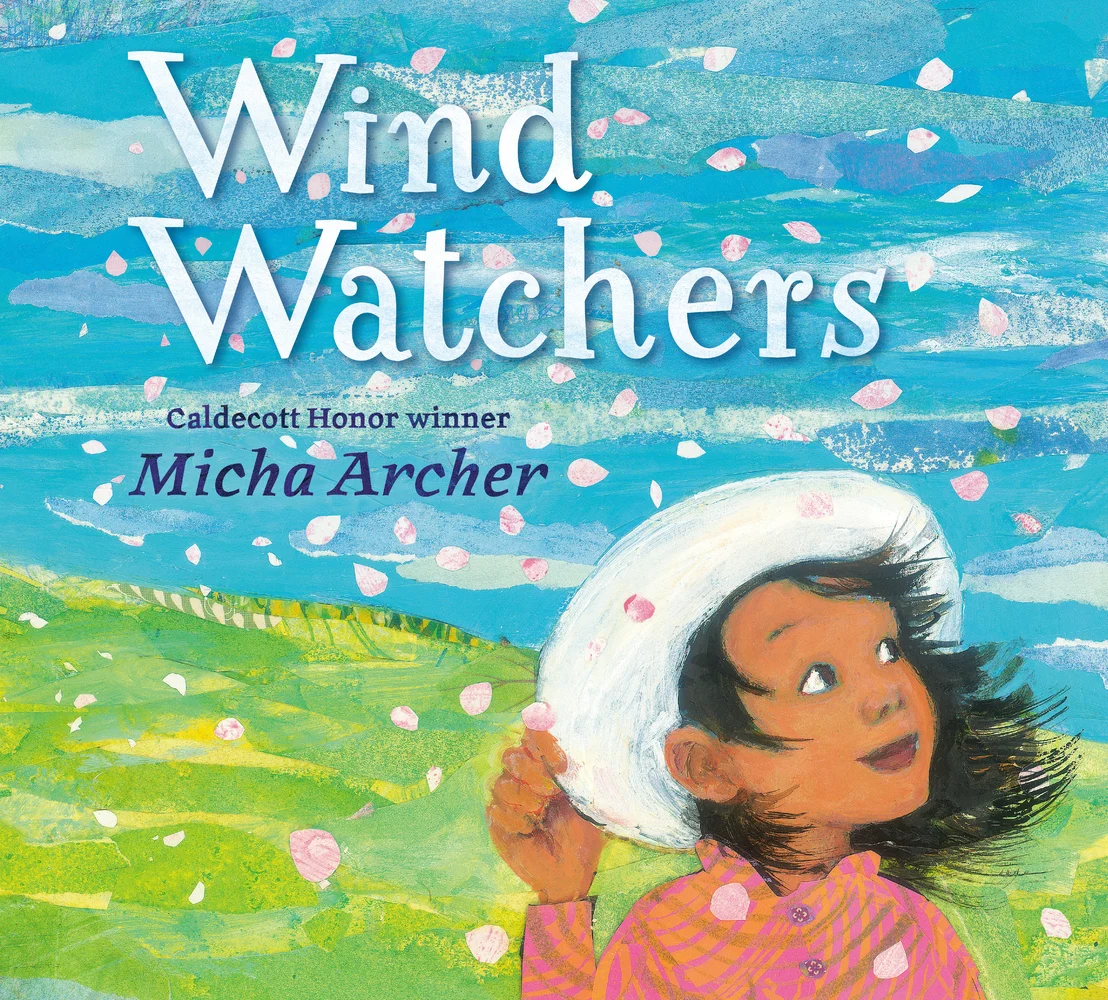
Wind blows in a variety of ways. Fluttering spring blossoms, bringing spring showers. It helps fly kites and ripples the pond on hot days. Sometimes Wind brings a surprise thunderstorm. In fall, Wind scatters seeds and blows leaves off trees. Winter wind brings icy cold and blizzards. Celebrate the seasons with this joyful interaction between children and the wind. Written and illustrated by Archer, a Caldecott Honor winner, the illustrations are done in inks and collage. The nature scenes and the rain fall are particularly striking and will draw young readers in. 

Appropriate for ages 3-5. Reviewed from library copy.

Whoo-Ku Haiku by Maria Gianferrari

Whoo-Ku Haiku by Maria Gianferrari

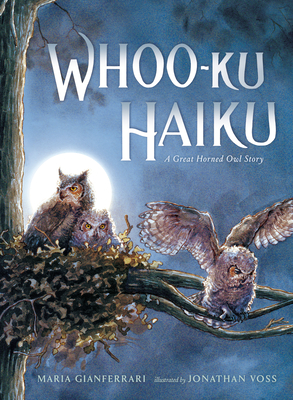
Whoo-Ku Haiku by Maria Gianferrari, illustrated by Jonathan Voss (9780399548420)

The story of a great horned owl family is told in dramatic fashion using only haiku poems in this picture book. A pair of great horned owls find a squirrel’s nest and claim it as their home. The mother bird lays three eggs in the nest, losing one when the crows attack her. Now there are two eggs left to guard and keep warm. Soon two owlets emerge from their eggs, eating the prey that Mama and Papa bring to them. The woods has lots of dangers like hunting hawks and foxes waiting for an owlet to fall. Mama is there to protect them though, until it is time for them to take wing and find a home of their own.

Through her series of haiku poems, Gianferrari creates moments that build on one another into a full story of the first months of egg laying and owlets growing up. Focusing on the strength and power of the most commons owls in North America, along with their exceptional parenting skills, the book also reveals the dangers they face despite their size.

Voss’ illustrations are a gorgeous match to the beauty of the poetry. Illustrated in sepia ink and watercolor, with digital color added, these illustrations captures the various moments with skill and drama. The quiet moments are just as powerful as the action ones, filled with dappled forest light and the incredible creatures.

A marvelous book of nature poetry for children. Appropriate for ages 6-9.

Reviewed from e-galley provided by G. P. Putnam’s Sons.

Review: Tanna’s Owl by Rachel and Sean Qitsualik-Tinsley

Tanna’s Owl by Rachel and Sean Qitsualik-Tinsley, illustrated by Yong Ling Kang (9781772272505)

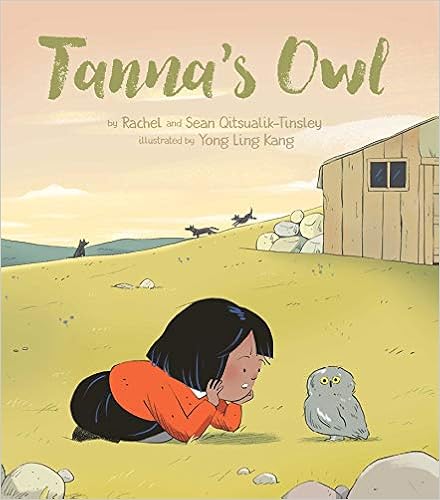
Based on the story of the owl one of the author’s cared for as a child, this picture book offers a glimpse of life in the Arctic as an Inuit family. Tanna’s father came back from hunting with a baby owl. It was so ugly, it was somehow also cute. The owl had to be fed two or three times a day, so Tanna and her siblings caught lemmings to feed it. The owl, named Ukpik (or owl in Inuktut), lived in her father’s workshop. When the owl was hungry she would stomp her feet, sway back and forth, and chomp her beak. Soon Ukpik wanted even more to eat and everyone was tired of catching lemmings, so they started to feed her other types of meat, including caribou and fish. Her beak was very sharp, so now she had to be fed with gloves on. When summer ended, Tanna had to return to school in another community. She didn’t return home until the next summer. That’s when she found out that Ukpik had been set free. But maybe the large white owl that she saw around their home was Ukpik coming back to visit.

The authors clearly share both sides of caring for a wild animal. There is the initial joy of learning about the animal and starting to be able to understand their needs and ways of communication. Then there is the drudgery of the ongoing care. At the same time, there is a delight in being that close to a wild creature, of knowing it needs to learn to fly away someday, and knowing you are helping in some way. The book also shows modern Inuit life complete with an unusual way of attending school. 

The art is large and bold with the images fully filling both of the pages. Readers will get to see the transformation of the owl from small and gray to a graceful white bird. They will also get glimpses of the Inuit home and the wide-open setting of the Arctic.

An inspiring picture book for kids who dream of caring for wild animals themselves. Appropriate for ages 4-6.

Reviewed from e-galley provided by Inhabit Media.

Owl Bat Bat Owl by Marie-Louise Fitzpatrick

Owl Bat Bat Owl by Marie-Louise Fitzpatrick

Owl Bat Bat Owl by Marie-Louise Fitzpatrick (9780763691615, Amazon)

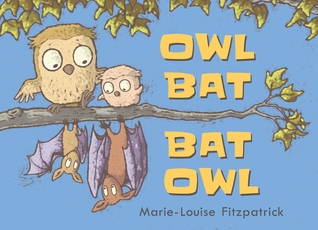
An owl family is contentedly sleeping on a sunny day on a branch high in a tree. Then a family of bats arrives to hang below them on the same branch. The owls are awakened and slide down to another part of the branch, the parent owl clearly upset. Meanwhile, one of the owlets and one of the baby bats start to make friends and the little owl hangs upside down with the bat family. Both parents disapprove and everyone settles back into their own families, until they are disturbed by a strong wind blowing in. Soon baby owls and bats are being flung off the branch and the adult bat and owl are panicking as they search for their children. This might just be what the families need to get along!

This wordless picture book is nicely done with clear facial expressions on the animals that help the story be easily related to. The connection between the youngest of the animals is also very helpful, showing how bridges can be built by the youngest in the world. While this book is simple, it speaks to the importance of integration, diversity and wider community.

Turn the book upside down for a bit of a bat perspective on the world! Appropriate for ages 2-4.

Reviewed from library copy.

Review: Hoot Owl Master of Disguise by Sean Taylor

hoot owl master of disguise

Hoot Owl, Master of Disguise by Sean Taylor, illustrated by Jean Jullien

A very hungry owl uses a unique approach to find his dinner in this silly picture book. Hoot Owl is a master of disguise, so he as he hunts in the dark night, he switches into different costumes to trick his prey. First, he sees a rabbit and so he puts on his carrot disguise. It doesn’t work to tempt the rabbit, so he moves on to a lamb. Hoot Owl disguises himself as a mother sheep to lure the lamb closer, but that doesn’t work either. Maybe a pigeon will be fooled by his clever birdbath costume? Nope. Then finally, he finds something to eat that can’t move away – pepperoni pizza! But will his waiter costume work?

The voice of owl as the narrator for the story is so much fun to read aloud. He is brazen, confident and sure that eventually his unique approach to hunting will work out. Never daunted by disappointment, he moves on to the next meal quickly and eagerly. Throughout, Hoot Owl expresses himself in metaphors and playful language. The night is “black as burnt toast” and his eyes “glitter like sardines” when they see the pizza.

Jullien’s illustrations are bold and gorgeous. The colors are bright and fun, the orange of owl popping against that black night sky. Hoot Owl’s personality shines on the page, his head peeking out from various angles as he hunts his prey.

This playful picture book is a great read aloud, bright, funny and impressive. Appropriate for ages 3-5. 

Reviewed from library copy.

Review: The Midnight Library by Kazuno Kohara

midnight library

The Midnight Library by Kazuno Kohara

The Midnight Library only opens at night.  Then a little librarian and her three owl assistants help all sorts of animals find the right books.  The library was quiet and peaceful until a band of squirrels showed up looking for a place to practice.  Luckily, the library had an activity room where they could play music without disturbing anyone else.  It was quiet again until it started to rain, but it was raining inside the library.  It was Mrs. Wolf crying about something she read in a book.  The librarian and her assistants helped her finish the story and reach the happy ending.  Finally, it was time to close for the night and there was one very slow patron who would not leave, but the little librarian solved that situation happily too.  This is a clever and creative look at libraries and their services in a way that children will easily relate to.

Kohara is author of several other picture books all done in her signature style.  Here she cleverly takes a library and adds mystery by making it open at night.  The addition of animals as patrons also creates an interesting twist.  I also appreciated a library being depicted as a place that you can play music.  So often the focus is on the quiet and solitude, but this is one happening library!

Kohara uses the colors on the cover of the book throughout the story.  The deep blues and blacks are enlivened by the bright yellow-orange that forms most of the background.  Her use of printmaking techniques creates thick lines with an organic dappling effect.  These prints feel like woodblocks but have lines that swirl and curve unlike most block prints.

Clever, lively and great fun, this picture book is perfect for sleepy library fans.  Appropriate for ages 2-4.

Reviewed from library copy.

Review: Lindbergh by Torben Kuhlmann

lindbergh

Lindbergh: The Tale of a Flying Mouse by Torben Kuhlman

Translated from the original German, this picture book takes a mouse-sized look at Charles Lindbergh’s flight.  A little mouse loved to spend time reading human books but when he emerged from reading he discovered that all of the other mice had left Europe for America.  He was left alone.  He tried to board a steamer ship to cross the Atlantic, but there were cats waiting and guarding the door.  Then the little mouse had a great idea, he would fly across the Atlantic.  His experiments proved dangerous as the cats and owls emerged to hunt him down.  The little mouse did not give up he kept redesigning the wings, the engine, the frame.  But would it be enough to get him across the Atlantic to freedom?

The story of this book is entirely captivating, even for those not interested in airplanes or flight.  It is both a celebration of the small overcoming the powerful and also of ingenuity overcoming adversity.  It also shows how much of a force resilience in when solving a problem.  Even better, the book itself is a history lesson about human (and mouse) flight and how it progressed from wings to full aircraft.

Kuhlman’s art is radiant.  He creates pages with no words that are panoramas of cities, of train stations, of clock towers.  Other pages are filled with mice, owls and cats from various perspectives that add drama.  Then on other pages, you can see his skill with drafting and the diagrams of various inventions.  The art here takes the book to another level, creating a world where you believe that a mouse was the first to fly across the Atlantic. 

Beautiful and memorable, this picture book celebrates flight, ingenuity and perseverance.  Appropriate for ages 5-7.

Reviewed from library copy.

Review: Little Owl’s Orange Scarf by Tatyana Feeney

little owls orange scarf

Little Owl’s Orange Scarf by Tatyana Feeney

Little Owl lived with his mother on the edge of Central Park.  He loved lots of things like ice cream and riding his scooter, but he did not like his new scarf.  First of all, it was orange.  Second, it was itchy.  Third, it was way too long.  So Little Owl avoided wearing it whenever he could, but his mother kept on finding it and having him wear it anyway.  Nothing worked!  Then Little Owl took a class trip to the zoo and came back without his scarf.  It was lost for good this time.  So Little Owl helped his mother make his new scarf.  He loved it.  First of all, it was blue.  Second, it was soft.  Third, it was just the right size.  It was even perfect for visits to the zoo.

Feeney has struck just the right tone with this picture book.  Happily, it does not come off as whining but as a child who just does not like an article of clothing.  His attempts to lose the scarf or at least give it away are clever and cute.  The working together with his parent to create a new scarf is a smart turn in the story that leads to satisfaction for everyone.  When the little twist at the end is revealed, the story is entirely satisfying.

The art is kept very minimal and simple.  I must mention that the orange in the hardcover version I have is much more bright and intense than the cover above shows.  The entire book is done in black lines, orange and teal, making the colors very important.  The black lines are done with curls and playfulness that add to the light touch of the story as a whole.

Light and fun, this is a book that will work well at toddler story times, especially on winter days with scarves of their own.  Appropriate for ages 2-4.

Reviewed from copy received from Random House Children’s Books.