Review: Chirp by Kate Messner

Chirp by Kate Messner

Chirp by Kate Messner (9781547602810)

Mia is moving to Vermont where her grandmother has a cricket farm. Her arm is still recovering from being broken after a fall from a balance beam, but her mother insists that she go to summer camps. Mia chooses to attend a maker camp and also a warrior camp that will have her climbing rock walls and swinging from rings. As Mia makes new friends and finds new fans for her grandmother’s cricket treats, she is also helping by making a business plan for her grandmother’s farm. There are strange things happening at the farm though as disaster after disaster befalls the delicate crickets. Her grandmother insists that she is being sabotaged, but could her grandmother actually be losing her memory? Mia and her friends tackle the mystery, build up the business, and learn to speak out along the way too. 

Messner writes a middle grade novel that neatly embeds sexual harassment and abuse information into the story. In fact, that is at the heart of Mia’s injury and also at the heart of many women and girls that are in the book too. This book is deeply about survival as a girl, a woman and as a cricket. It’s about finding your voice, using your power and finding ways to get justice. It is also about the incredible bravery it takes to be a survivor, whether you have spoken out yet or not. 

Messner has written a compelling mystery to solve alongside the social justice. There are great suspects, more than one potential reason for the problems, and finally a dramatic resolution as well. Add in a science competition and you have one amazing Vermont summer filled with the crunch of crickets.

A great look at friendship, speaking out and taking back power. Appropriate for ages 9-12.

Reviewed from ARC provided by Bloomsbury Children’s Books.
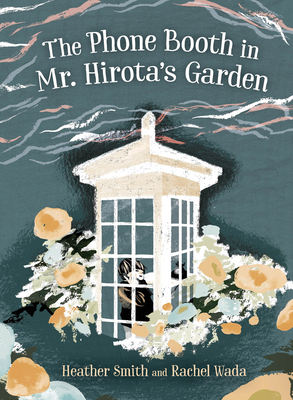
Review: The Phone Booth in Mr. Hirota’s Garden by Heather Smith

The Phone Booth in Mr Hirota's Garden by Heather Smith

The Phone Booth in Mr. Hirota’s Garden by Heather Smith, illustrated by Rachel Wada (9781459821033)

Makio loved spending time with his neighbor, Mr. Hirota in his garden that looked down upon the harbor. He could see his father at work along the shore. Then one day, the tsunami came. It took away Makio’s father and Mr. Hirota’s daughter. Everyone in the village lost someone that day. Silence descended upon the town along with their grief. A noise came that was Mr. Hirota building a phone book in his garden. A phone booth with an old-fashioned phone and no wires connecting it anywhere. Painted white, the booth gave the mourners an opportunity to reconnect with their lost family members, sharing their days from a phone booth on the hill overlooking the harbor.

This picture book is based on a true story of a Japanese man who built a phone booth in his garden to speak with his dead brother, which was then used by thousands of mourners in Osaka to speak to their dead relatives after the tsunami. The tale here is told with a deep grace and empathy that shines on every page. The dramatic impact of the wave both on the land and on the people who live there is shown clearly. The grief afterwards is palpable on the page too.

The illustrations were inspired by Japanese traditional techniques using watercolors, black ink and pencils as well as digital assembly. The resulting images are filled with a powerful mix of light and dark with the black ink giving a dramatic and strong impact.

A beautiful and aching story of loss and community. Appropriate for ages 5-7.

Reviewed from library copy.

Review: Nya’s Long Walk by Linda Sue Park

Nya's Long Walk by Linda Sue Park

Nya’s Long Walk by Linda Sue Park, illustrated by Brian Pinkney (9781328781338)

This is a companion picture book to the author’s novel A Long Walk to Water. It shows the plight of people in the South Sudan as they search for clean and safe water sources within walking distance of their homes. The book focuses on Nya and her little sister Akeer. The two head out on a two-hour walk to get water for their family. But today, Akeer is not merry and active along the way. She drags behind and eventually is revealed to be sick and unable to walk any farther. It is a two-hour walk back home, and Nya has to dump much of the precious water back out to be able to also carry Akeer on her back. She finds that even when she thinks she can’t make it all the way back to the village, she can take one more step.

Park’s writing is captivating in picture book format, a lovely combination of pared down writing with dramatic content. Readers will believe that Akeer is simply going slowly at first, until her waterborne illness is revealed. The difficult decision to leave just enough water behind to make the walk possible is gut wrenching. The long and difficult walk is a gripping series of pages that show human resilience and strength vividly.

Pinkney’s art is full of movement and lines. They twirl around the characters who stand out on the page that has bright sunlight and brown dirt. The lines form halos around both of the girls, dancing on to mark their path and show the way.

A look at the impact of unclean water and the health crisis happening in South Sudan, this book also offers solutions. Appropriate for ages 4-6.

Reviewed from library copy.

Review: Amy Wu and the Perfect Bao by Kat Zhang

Amy Wu and the Perfect Bao by Kat Zhang

Amy Wu and the Perfect Bao by Kat Zhang, illustrated by Charlene Chua (9781534411333)

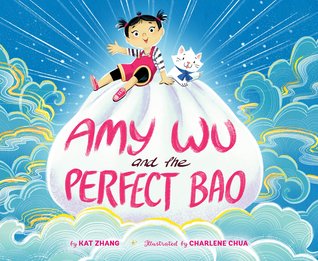
Amy can do a lot of things like brush her teeth and tie her shoes. But the one thing she can’t do is make the perfect bao, a steamed dumpling. So she sets out one day to make the perfect bao. It’s an all-day effort by her entire family. Her father makes the bao dough, and Amy helps him pound the dough and let it rise. Her mother makes the filling, and Amy helps her too. Then everyone sits down at the table to form the bao, including Amy’s grandmother. When things don’t go right for Amy, everyone offers her advice on how to do it. That’s when Amy realizes that the dough has been cut for adult hands. When her grandmother cuts the dough into smaller pieces for Amy, suddenly she too can make perfect bao! In the end though, all of the bao, perfect or not, taste delicious.

Zhang takes the universal story of a young person not being as good at something as they want to be and wraps it in a delicious bao package. Readers are invited into Amy’s Chinese-American home and she leads readers through the process of making bao. The frustrations of learning and perfecting a process are openly shared. The discovery that Amy makes that solves the problem is nicely portrayed as well and I appreciate that the child is the one who realizes her own solution.

The art by Chua is wonderfully bright and vivacious. Amy is shown as an optimist throughout, even as she is trying to brush her teeth and tie her shoes at the same time. The backgrounds in the illustrations suit the mood of the moment, moving from gold to orange to blue.

A tasty treat of a book that will leave readers hungry for more. Appropriate for ages 3-5.

Reviewed from copy provided by Aladdin.

Review: Home in the Woods by Eliza Wheeler

Home in the Woods by Eliza Wheeler

Home in the Woods by Eliza Wheeler (9780399162909)

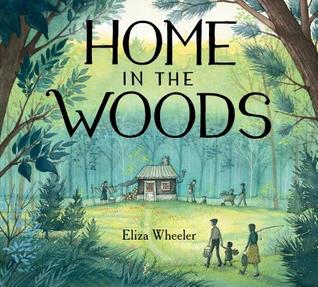
After her father dies, a girl, her mother and seven siblings move into a tar-paper shack in the woods. The shack is worn but inside they discover a root cellar with a pump that offers clean water. The family plants a garden with seeds they brought with them and find a large berry patch too. In autumn, Mum walks to town to get work doing chores and all of the children pitch in at home. They can their harvest so that it will last through the winter. In winter, the boys go hunting and often return home empty handed. But when they get a turkey, the family feasts. When spring arrives, the family starts to trade baked goods for eggs and milk from neighbors and the little shack looks like home now.

Wheeler takes a story from her own family history during the Great Depression and turns it into this heartwarming story of determination and resilience in the face of incredible poverty. The focus here is on how the entire family worked together to meet the challenge, each sibling taking on duties and roles that suited their age and ability. The stalwart mother is also shown as an incredible cook, a source of hope and the reason the family survived.

Wheeler’s illustrations ensure that hope is the focus of this picture book. While drab and dirty at first, the little shack is transformed just by the people who inhabit it. Games are simple and done without any real toys, even the baby finding leaves and sticks the perfect things to play with. The jewel-like canned foods enliven the darkness of the root cellar, promising safety in the cold.

A brilliant historical picture book. Appropriate for ages 5-8.

Reviewed from e-galley provided by Nancy Paulsen Books.

Review: The Feather by Margaret Wild

The Feather by Margaret Wild

The Feather by Margaret Wild, illustrated by Freya Blackwood (9781760124212)

A giant white glowing feather floats down into a dystopian world where the sky is always gray. Two children find it and take it to the village, amazed by how light it is to carry. The children know it doesn’t belong inside. The adults in the village though want to contain its beauty, but before they can, the feather changes. It becomes dirty and dull, absorbing the weight of their ideas and thoughts. The villagers disperse, angry at being tricked. The children carry the heavy feather back with them, caring for it through the night until in the morning it is brilliant once more. The children decide to set it free, and as the feather floats skyward, it leaves behind a promise of blue skies.

Wild’s story is deep and wondrous, rather like the feather itself. The gigantic nature of the feather, its ability to remind people of blue skies and fresh breezes, makes it magical. And yet, it can be squandered by needing to own that magic, to contain it. The dulling of the feather is a profound answer to that selfishness. The children’s own willingness to care for the feather cleanses it once more. It’s a lovely analogy about selflessness, sharing joy, and finding hope together.

Blackwood’s illustrations are glorious. She creates a feather that is both light and weighty, radiant and white. It lights the world around it, then absorbs the darkness into itself in a way that is heartbreaking. Her vision of the gray world is haunting and aching for a brightening, a possibility.

A picture book that will spark discussion about hope, change and making a difference in your world as a child. Appropriate for ages 4-6.

Reviewed from library copy.

Review: Lubna and Pebble by Wendy Meddour

Lubna and Pebble by Wendy Meddour

Lubna and Pebble by Wendy Meddour, illustrated by Daniel Egneus (9780525554165)

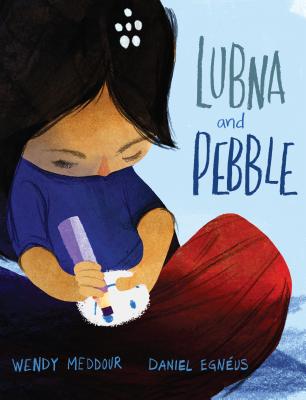
Lubna and her father have come to a refugee camp. As they arrived, Lubna found a smooth pebble. Pebble becomes her closest friend as she and her father make a new home in the camp. Pebble listens to all of Lubna’s stories of the war and her family. Pebble’s drawn on eyes and smile are friendly even in the cold nights. Lubna’s father finds her a box and towel for Pebble, so Pebble is warm at night too. When Amir arrives at the camp, he won’t speak to anyone. But when Lubna shows him Pebble, he introduces himself. Soon Lubna and Amir are close friends, though Lubna assures Pebble that they are still best friends. Lubna’s father finds them a new home in a different country, and Amir is very sad. Perhaps Pebble can help him out.

Meddour gently depicts a very personal side of the refugee crisis. Showing a more universal experience of refugees fleeing a war-torn country, the book really allows readers to deeply feel the loneliness and fright of a young child caught in this situation. At the same time, the book doesn’t go into the personal losses in detail, they are alluded to rather than fully realized, which is ideal for young children. The use of a pebble as a friend is also incredibly moving, showing the poverty and the isolation of a child in a very concrete way.

The in the picture book is filled with deep colors and also depicts light shining upon Lubna as she makes her way towards a new life. Throughout the book there is a sense of hope and that is also conveyed in the images in the book, with open skies, deep imaginary worlds, and even the smile of Pebble.

An accessible and heartfelt look at the refugee crisis. Appropriate for ages 4-6.

Reviewed from library copy.

Review: Sweety by Andrea Zuill

Sweety by Andrea Zuill

Sweety by Andrea Zuill (9780525580003)

Sweety is a naked mole rat, though fortunately for the pictures in the book mole rats like to wear clothes. But Sweety is not like the other naked mole rats. She loves to spend her time identifying fungi and does her school book reports in interpretive dance. She doesn’t have any friends because as her grandmother tells her, she’s a “square peg” and she doesn’t fit in. Happily, Sweety has her Aunt Ruth, who also didn’t fit in as a child. Ruth encourages Sweety to just be herself and that eventually she will find other like her who are different too. Sweety wonders how to find others without being too desperate, and in the end, she manages to do exactly the right thing.

Zuill has created a picture book that is entirely heart warming and charming. Sweety is a marvelous character, someone who is not only different in her interests but also looks different than the others around her. The large headgear that she wears adds to that as well as her bald head. My favorite part of the book is the wry look at popularity and the literal single hair that separates beauty from being different. These moments appear throughout the book and encourage readers to see Sweety as an individual.

A great picture book with one big personality. Appropriate for ages 3-5.

Reviewed from e-galley provided by Schwartz & Wade.

Review: When Grandma Gives You a Lemon Tree by Jamie L. B. Deenihan

When Grandma Gives You a Lemon Tree by Jamie L. B. Deenihan

When Grandma Gives You a Lemon Tree by Jamie L. B. Deenihan, illustrated by Lorraine Rocha (9781454923817)

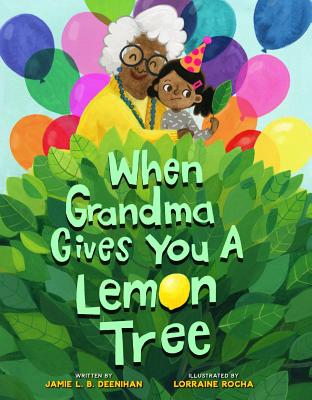
A little girl had made a list of what she was hoping to get for birthday gifts. On the list were items like a phone, a computer and a drone. But her grandmother got her a lemon tree. In this twist on the adage that when given lemons you should make lemonade, the narrator of the book offers the girl some advice on how to handle her gift. The advice includes what face to make when given the gift and details on how to care for her lemon tree including cautioning her not to hurt it. As the girl follows the advice, she discovers a connection to her lemon tree even before it bears its first crop of lemons for her. As she literally makes and sells lemonade from her lemons, the girl now has to decide how to spend her cash. She returns to the original list, but adds a new number, one that the lemon tree has taught her all about.

The clever twist on the adage is well done, creating a scaffold for the entire story. While the narrative of the book focuses entirely on advice, the illustrations show how the girl chooses to follow it. The narrative is humorous and offers choices for the main character in how she can react to options in her life. Throughout, as is appropriate for a book based on making lemonade, the spin is to be more positive and never sour.

The illustrations are fresh and funny. The family is depicted as African-American and the story is set in an urban area. This gives the lemon tree a great canvas to offer change and the main character a great place to offer lemonade. The illustrations are funny and bright.

A great spin on an old saying, this book is a breath of positivity. Appropriate for ages 3-5.

Reviewed from copy provided by Sterling Children’s Books.