I Wish I Didn’t Have to Tell You This by Eugene Yelchin – Book Recommendation

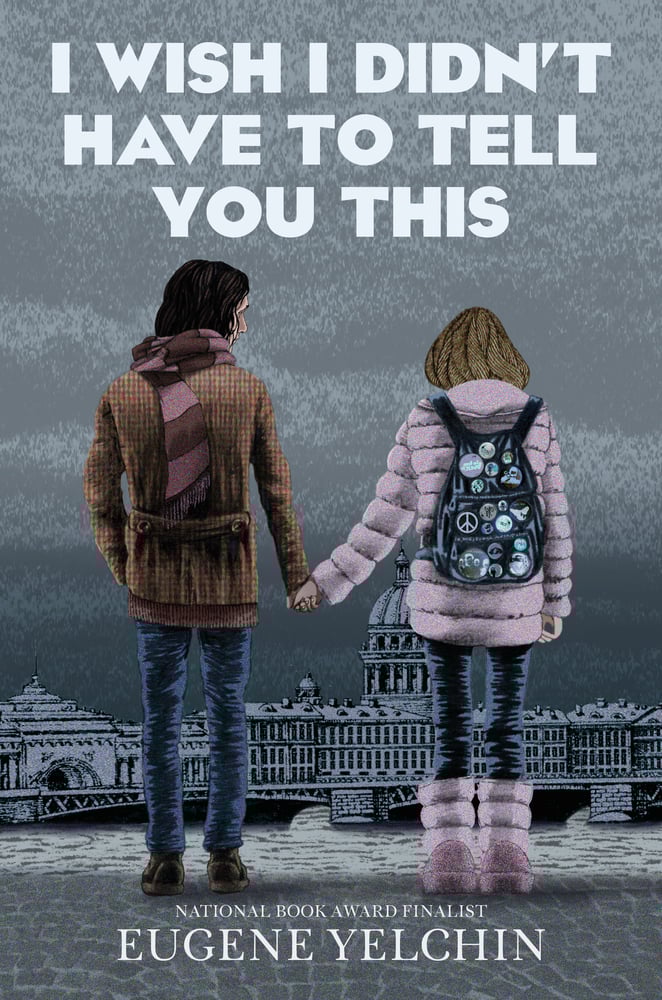
I Wish I Didn’t Have to Tell You This by Eugene Yelchin (9781536215533)

This incredible sequel to The Genius Under the Table continues Yelchin’s biographical story in graphic format. Yevgeny is living in Leningrad with his mother and grandmother in the same tiny apartment. He is now older, working on his art and doing scenery and design for theater. At an illegal art show, he first meets Lizzy, an American college student working on social justice issues. As the war in Afghanistan begins, Yevgeny is threatened with being drafted, escaping only by heading to Siberia to do theater design there. But there he finds himself institutionalized and abused. 

A grim look at Soviet Russia with a first-hand account of the atrocities that happened at the hands of the KGB and in the name of Mother Russia. Yelchin’s black and white graphic format focuses on faces and characters while Russia forms an often blurred background. It gives the feeling of an old TV with a tightly focused camera. The effect is incredibly personal and offers no way for readers to look away.

One of the best graphic memoirs for teens, this is a must read and can be read as a stand alone. Appropriate for ages 13-18.

Reviewed from e-galley provided by Candlewick. 
The Genius under the Table: Growing Up behind the Iron Curtain by Eugene Yelchin

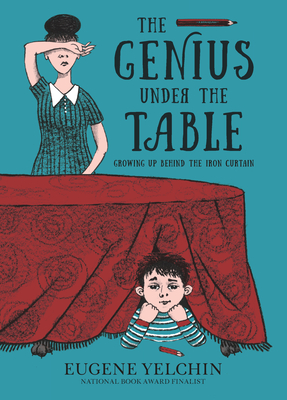
Cover image for The Genius under the Table.

The Genius Under the Table: Growing Up Behind the Iron Curtain by Eugene Yelchin (9781536215526)

Yevgeny only seems to disappoint his parents who are rather desperate for him to find a natural gift that will let him escape Soviet Russia. They already know he’s not much of an athlete, unlike his older brother who is going to be a famous ice skater. When his mother takes him to see Mikhail Baryshnikov dance, Yevgeny tries to become a ballet dancer, practicing the movements in their tiny shared apartment. But what he truly loves to do is draw. Since he sleeps under the huge table, he steals his father’s pencil and draws on the bottom of the table where no one can see. Could those small doodles be the talent that his family has been waiting for? And what about the KGB agent who lives down the hall? And what happened to the grandfather whose pictures have been removed from the family album and no one speaks about? There are so many questions to be answered, but Yevgeny must be willing to start insisting on answers.

In this hilarious and touching book for middle grade readers, Yelchin shares a memoir of his own childhood in Russia during the Cold War. Yevgeny is a wonderful naïve protagonist, who doesn’t understand the immense political and social pressures hovering over his family and the entire Russian people. His misunderstandings of this and his growing desire for answers add tension to the story as readers will understand far more than he does.

As Yevgeny covers the bottom of the table with drawings, readers are shown Yelchin’s illustrations of his family and others in his life. They are humorous and filled with a wry charm that shows Yevgeny’s point of view.

Filled with an honesty about life in Cold War Russia, family expectations, and one gifted child. Appropriate for ages 9-12.

Reviewed from ARC provided by Candlewick.

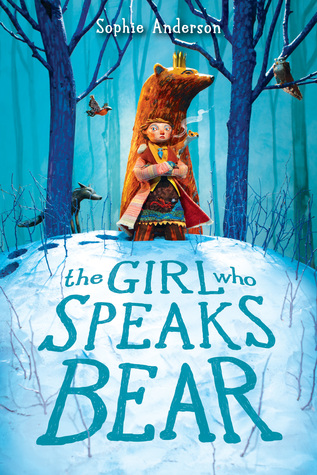
The Girl Who Speaks Bear by Sophie Anderson

The Girl Who Speaks Bear by Sophie Anderson

The Girl Who Speaks Bear by Sophie Anderson (9781338580839)

The author of The House with Chicken Legs returns with another clever novel based on Russian folklore. Yanka is a girl who hasn’t stopped growing, even though she is much taller than her Mamochka and her best friend, Sasha. She loves the stories Anatoly brings from the Snow Forest, tales of greed, transformation, magical trees, and a fiery dragon. After falling from an ice fort, Yanka is carried back home and awakens to discover that she has grown bear legs overnight. While her Mamochka wants to take her to a doctor, Yanka is certain that the answer lies in the stories she loves and the Snow Forest itself. So she sets off into the woods to find out how she fits into the tales and how they fit her. She is accompanied by Mousetrap, a house weasel, who she can now understand when he speaks. Along the way, she gathers new friends including an elk, a wolf, and even a house with chicken legs! Now she just has to find her grandmother, a Bear Tsarina, who may have the answers Yanka needs. 

This novel is so satisfying to read, rather like sipping on sbiten around the fire. The settings are beautifully captured without lingering on too much description: from the lovely village that Yanka and her adopted mother live in, to the glory of the Snow Forest. Fans of the first book will cheer when the Yaga and her house appear in the story, nicely pairing the two novels together. The lessons of working together to solve problems, accepting help when it’s offered, and depending on others in a community (or herd) are graciously offered to readers and shown effectively in the story itself.

Yanka herself is a heroine worth championing. Her struggles with fitting in at the village, even before her bear legs appeared, make sense to her, but from the beginning readers will see the truth of how she is adored and appreciated in her community. Numerous tales are woven throughout the book, told aloud by different characters. They become more than just tales as elements are shown to be true as Yanka’s adventures continue. She is always brave, willing to sacrifice herself, but also independent to a fault with lots to learn about friendship and community. 

Deep, fascinating and warming, this children’s novel is honey and an herbal salve for its readers. Appropriate for ages 9-12.

Reviewed from ARC provided by Scholastic.

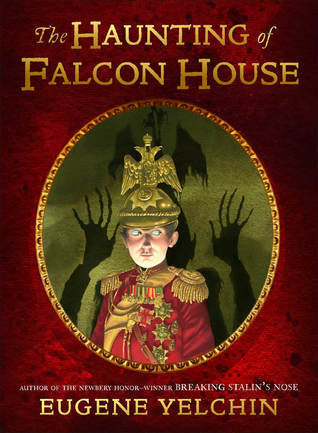
The Haunting of Falcon House by Eugene Yelchin

The Haunting of Falcon House by Eugene Yelchin

The Haunting of Falcon House by Eugene Yelchin (InfoSoup)

Twelve-year-old Prince Lev Lvov moves in with his aunt at Falcon House. It is a house that he will inherit as he is heir to the Lvov estate. Lev wants to be just like his grandfather, a general in the Russian army, stern and strong. Things are strange though at Falcon House where he finds wonders like an elevator in the home but also rooms that have not been touched in years. As he enters the home, Lev sees another young boy there, playing on the banister. Lev is sent to sleep in his grandfather’s old study where he can’t sleep and finds himself drawing and drawing with much more skill than he ever had before. In fact, he finds it nearly impossible to put the pen down. Slowly Lev starts to learn the secrets of his family and realize that some of the family secrets are more terrifying than ghosts.

Yelchin won a Newbery Honor for Breaking Stalin’s Nose. Here he very successfully merges historical Russia with a dark ghost story. Based on the premise of having found old notes and drawings from Lvov, the book is immediately mysterious and filled with wonder. There is the amazing setting of the huge mansion, filled with things like death masks and a basement of mothballed clothes. There are the servants who manage to work for his aunt despite her disdain and harshness. There is the ghost, who tells his own story but ever so slowly. They all create a world of darkness and beguilement.

Then the book turns and changes, becoming something deeper and more filled with emotion. It looks beyond the cranky aunt and into why she acts the way she does. It examines the death of a boy and eventually becomes about who is responsible for it and why. It looks at servants and royals, at status and power. It figures out what it takes to become someone willing to wield that power too.

Entirely gorgeous, haunting and deep, this novel is chillingly dark and wonderfully dangerous. Appropriate for ages 9-12.

Reviewed from library copy.


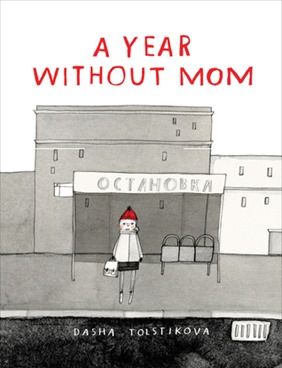
Review: A Year Without Mom by Dasha Tolstikova

A Year Without Mom by Dasha Tolstikova

A Year Without Mom by Dasha Tolstikova (InfoSoup)

Dasha is twelve when her mother leaves Moscow to go to school in America. Dasha is left in the care of her grandparents. It is the early 1990s and things are changing in Russia. Dasha though is more interested in her first crush on a boy, her friendships, and her trip to Germany for Christmas. She misses her mother terribly and has to figure out how to have a life without her there. Dasha’s life reaches a crisis when she fails an important test because she is having problems with the boy she likes and her friends. When spring comes, Dasha’s life changes again with her mother returning and deciding to take Dasha back to America with her.

This autobiographical graphic novel is something unique and very special. Tolstikova tells a story that is both universal and also very personal. She speaks of liking boys, struggling with friends who are changing, lives changing due to parents leaving, and the strength of family. She also tells her specific story of living with her grandparents, growing up in Moscow, and the self-imposed pressure of getting into a better school.

The graphic novel is illustrated with outstanding and quirky illustrations that are effortlessly modern. Done in primarily black and white line, subtle colors are also on the pages to lift it from any dreariness. Pages are dynamically different from one to the next both in size of the illustrations to using only words in large fonts when someone is yelling.

Beautiful and haunting, this graphic novel captures a time in the author’s life that is fleeting and special. Appropriate for ages 9-12.

Reviewed from library copy.

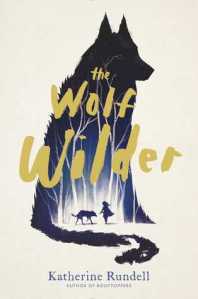
Review: The Wolf Wilder by Katherine Rundell

Wolf Wilder by Katherine Rundell

The Wolf Wilder by Katherine Rundell (InfoSoup)

Feo lives with her mother in the Russian wilderness, away from any civilization. They are the people who are sent the wolves who have been reared in luxury in Russian homes. It is bad luck to kill a wolf, so the wolves are given to Feo and her mother to release into the wild. Feo has three wolves who are very special to her, Black, White and Gray. The three live in a nearby chapel that is slowly decaying. They are fully wild, but love Feo too, accepting her as part of their pack. Things are changing in Russia and some people don’t like wolves and the damage they do to livestock. So soldiers come and threaten Feo and her mother, including a man named Rakov who is brutal and cruel. Feo and her mother get another pampered wolf and when she gives birth a young soldier of Rakov’s emerges from the tree and is enchanted by Feo and her wolves. Feo will need his help when her mother is taken to prison in a far-away city and Feo sets off on a quest to free her.

Rundell is one of my favorite authors writing today. Her books are so different from one another, set in completely different times and places. Yet the thing that binds them all together is Rundell’s exceptional story telling. All of her books have strong young heroines, girls who have been raised in unusual circumstances and have grown to be wild women of the very best kind. Feo is the epitome of a wild woman, a girl who raises wolves, who teaches them to be wild and free, who adores the cold and snow, and who is brave enough to cross Russia to save her mother. Feo is not perfect. She is prickly and often unable to express her emotions. Her hugs are brutally hard, her determination unshakeable even when leading her straight into danger, and yet she is loyal and immensely big hearted in a way that will have all readers cheering her on.

Rundell’s writing is exceptional. She writes with her own ferocity, words tumbling and creating such strong imagery and amazing juxtapositions. She creates an entire snowy world for Feo to inhabit, filled with wolves who love deeply, hills to ski down madly, and trees to climb to safety. Here is how Feo sees her snowy home:

Feo loved it. The land around the house shook and shone with life. She had seen people pass by her wood bewailing the sameness of the white landscape, but, Feo thought, they were just illiterate: They hadn’t learned how to read the world properly. The snow gossiped and hinted of storms and birds. It told a new story every morning. Feo grinned and sniffed the sharpness of the air. “It’s the most talkative weather there is…”

Another amazing read from Rundell, get this into the hands of any young wolf girls you know. Appropriate for ages 9-12.

Reviewed from ARC received from Simon and Schuster.

Review: Breaking Stalin’s Nose by Eugene Velchin

breaking stalins nose

Breaking Stalin’s Nose by Eugene Velchin

Released September 27, 2011.

Sasha Zaichek has always wanted to be a Young Pioneer and demonstrate his dedication to Communism and Stalin himself.  At age ten, he has known the laws of the Pioneers for 4 years.  So when his father is suddenly arrested, Sasha has to decide what to do.  He knows that there has been some mistake, that his father has done nothing wrong and that an error was made.  Thrown out of his home, he tries to find a place to spend the night with his aunt, but his uncle will not let him stay.  The next day at school, he pretends all is normal.  But as his day progresses, more and more of the truths behind Stalin Russia are revealed to him and his own truths are tested.

Velchin, who was born and educated in Russia, writes with a simple voice here that belies the darkness hidden just below the surface.  He has created a very naïve protagonist in Sasha, a boy who truly believes in Communism and Stalin.  Told in two days, the story shows how quickly naiveté can crack, crumble and fall away.  Velchin captures the fear that people lived in under the Stalin regime, yet he also shows the resiliency of the human spirit at the same time.

Velchin manages to create a book about a violent regime where the cruelty and fear is foremost, but the violence that would not be appropriate for young readers happens off the page.  This is a book that allows young readers to understand a situation in an intimate way without flinching away from the darkness that is so much a part of it.

This is a powerful book about freedom, Russia, and one young boy’s path to knowledge.  Appropriate for ages 10-12.

Reviewed from copy received from Henry Holt & Company.