NSTA Best STEM Books 2021

The National Science Teaching Association (NSTA) has announced the winners of their Best STEM Books of the year. They define the best as books that “help by celebrating convergent and divergent thinking, analysis and creativity, persistence, and the sheer joy of figuring things out.” Here are the winning titles:
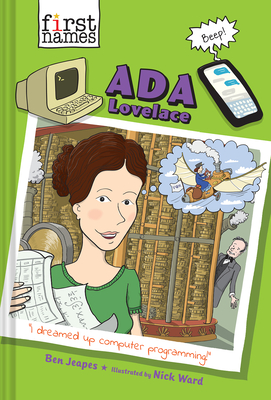
Ada Lovelace by Ben Jeapes, illustrated by Nick Ward
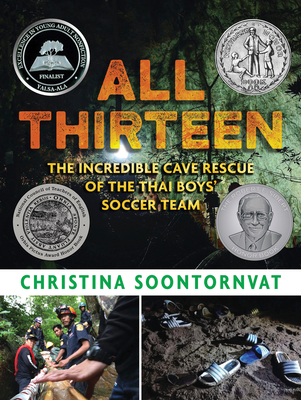
All Thirteen: The Incredible Cave Rescue of the Tai Boys’ Soccer Team by Christina Soontornvat
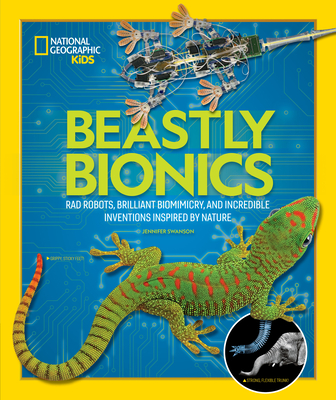
Beastly Bionics: Rad Robots, Brilliant Biomimicry, and Incredible Inventions Inspired by Nature by Jennifer Swanson
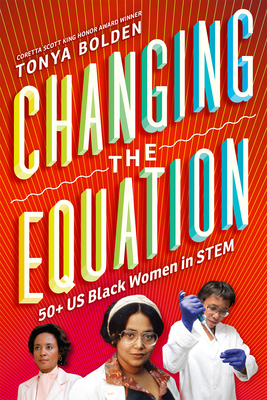
Changing the Equation: 50+ US Black Women in STEM by Tonya Bolden
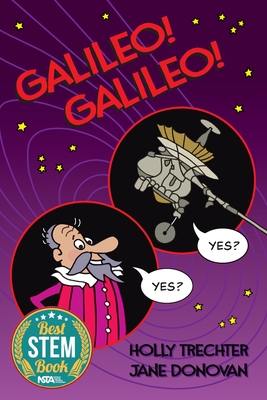
Galileo! Galileo! by Holly Trechter and Jane Donovan
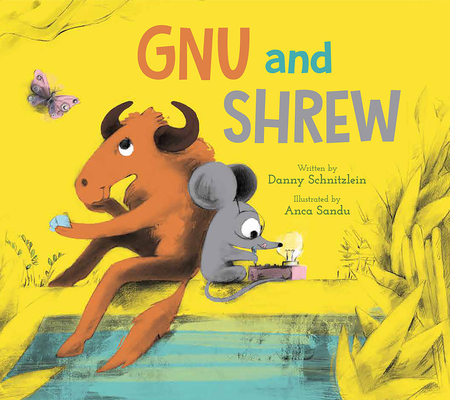
Gnu and Shrew by Danny Schnitzlein
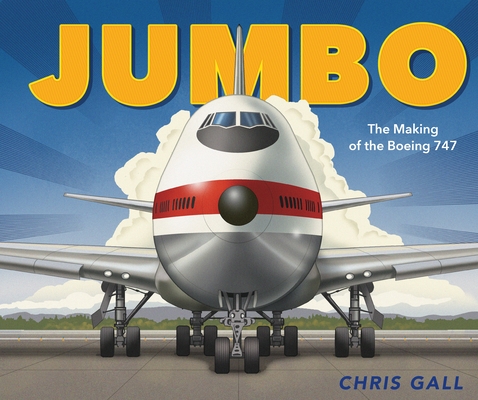
Jumbo: The Making of the Boeing 747 by Chris Gall
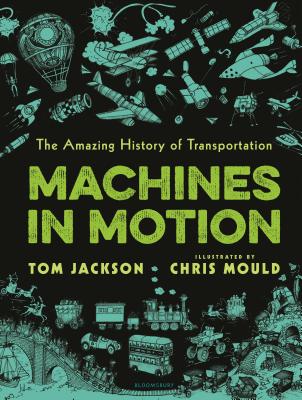
Machines in Motion: The Amazing History of Transportation by Tom Jackson
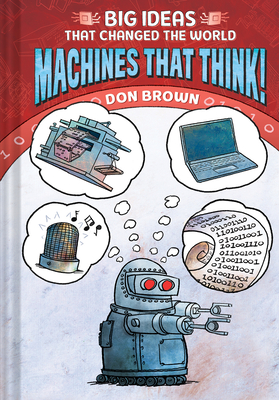
Machines That Think!: Big Ideas That Changed the World #2 by Don Brown
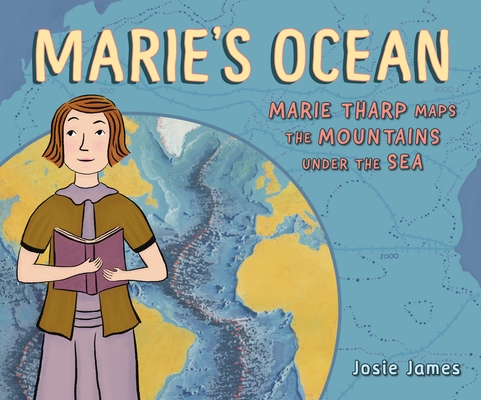
Marie’s Ocean: Marie Tharp Maps the Mountains Under the Sea by Josie James
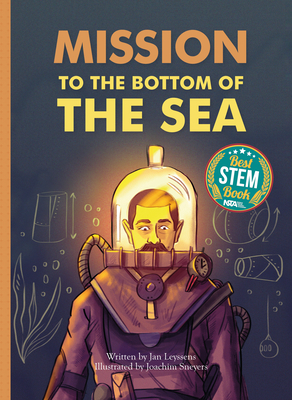
Mission to the Bottom of the Sea by Jan Leyssens, illustrated by Joachim Sneyers
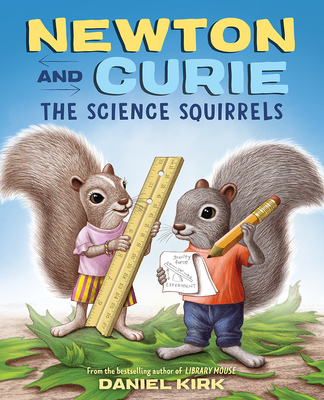
Newton and Curie: The Science Squirrels by Daniel Kirk
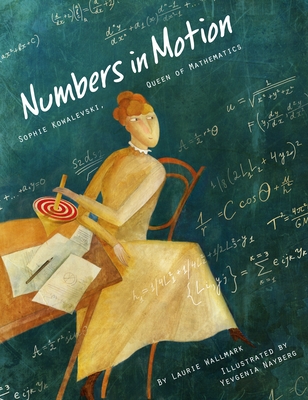
Numbers in Motion: Sophie Kowalevski, Queen of Mathematics by Laurie Wallmark, illustrated by Yevgenia Nayberg
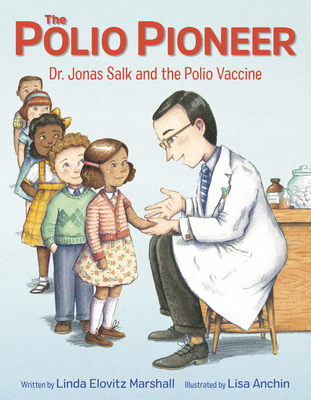
The Polio Pioneer: Dr. Jonas Salk and the Polio Vaccine by Linda Elovitz Marshall, illustrated by Lisa Anchin
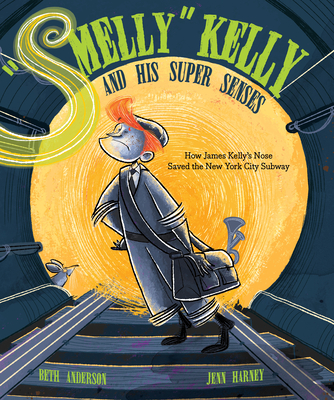
“Smelly” Kelly and His Super Senses: How James Kelly’s Nose Save the New York City Subway by Beth Anderson, illustrated by Jenn Harney
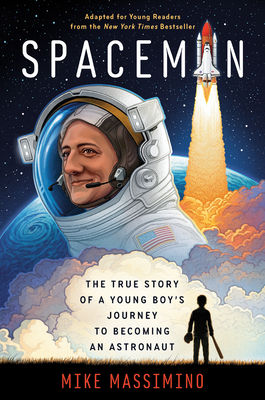
Spaceman: The True Story of a Young Boy’s Journey to Becoming an Astronaut (Adaption for Young Readers) by Mike Massimino
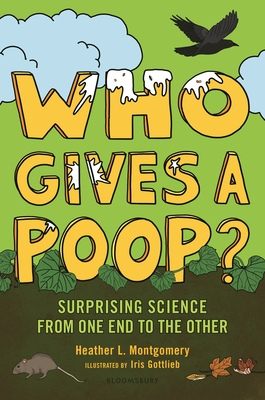
Who Gives a Poop?: Surprising Science from One End to the Other by Heather L. Montgomery, illustrated by Iris Gottlieb
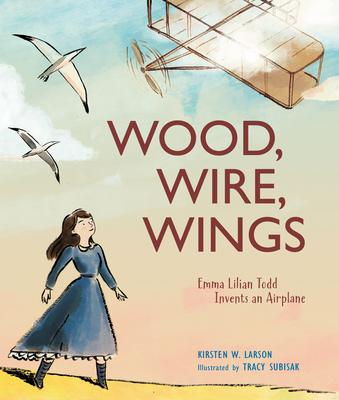
Wood, Wire, Wings: Emma Lilian Todd Invents an Airplane by Kirsten Larson, illustrated by Tracy Subisak
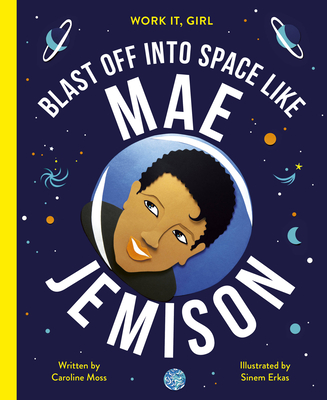
Work It, Girl: Blast Off into Space Like Mae Jemison by Caroline Moss, illustrated by Sinem Erkas
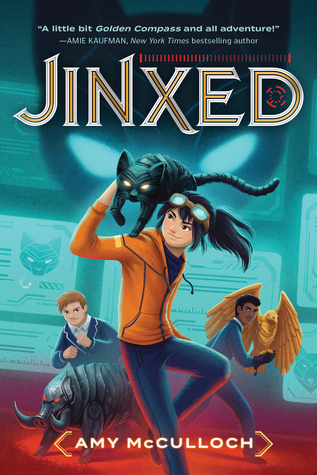
Review: Jinxed by Amy McCulloch

Jinxed by Amy McCulloch

Jinxed by Amy McCulloch (9781492683742)

Set in a modern world where smartphones have been replaced by companion robots shaped like a variety of animals, this middle-grade novel is a dynamic mix of STEM, science fiction and robot battles. Lacey spends most of her time in her basement cave where she works on baku, the smart pets that accompany everyone around. Lacey longs to get into Profectus, the school that feeds people directly into Moncha, the company behind the bakus. She knows her grades are high enough and her test scores are strong, but she gets a rejection letter. It may be because of her mysterious father who left both their family and Moncha when Lacey was five. Then Lacey discovers a ruined baku in a ravine after saving her friend’s new baku from a fall. She works for months to restore the entire machine and when the cat baku finally comes online, Lacey receives an email that she has actually been accepted to Profectus. Jinx, the cat baku, and Lacey make their way into the elite school, but all is not what it seems both at Moncha and with Jinx. 

McCullough has written a middle grade novel that is perfect for devouring quickly. It offers a hint of middle grade romance along with the science fiction and STEM elements. The technology on display is enthralling, making sense as to why it took society by storm. Readers will long for their own baku too. Lacey’s skill with technology and her dedication to it is shown very clearly, honoring the time it takes to both learn and accomplish this high-level work. The baku battles are written with clarity that allows readers to follow them easily and with strong pacing that keeps the action quick and exciting. 

The relationship between Jinx and Lacey is key to the book. Using a cat form as the baku who is rather aloof and does what he wants to do, rather than being perfectly biddable and helpful, makes it really function. Elements in the novel that may not make sense early on, will by the end of the first novel, though many questions are left unanswered for future books in the series. 

A great first in a new series that may make middle graders look up from their phones. Appropriate for ages 10-13.

Reviewed from e-galley provided by Sourcebooks.

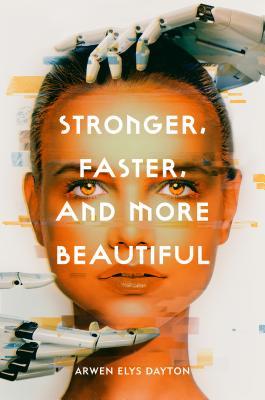
Review: Stronger, Faster, and More Beautiful by Arwen Elys Dayton

Stronger, Faster, and More Beautiful by Arwen Elys Dayton

Stronger, Faster, and More Beautiful by Arwen Elys Dayton (9780525580966)

Take a dazzling and frightening look at our potential future in this novel for teens. Told in six linked stories, the novel starts in the near future with a look at the moral medical questions of saving one twin by killing the other. Things only get more complicated from there with genetic modifications becoming more and more prevalent. Where does a human end and a cyborg begin? What happens when a modified human loses empathy but gains so much intelligence? What about cryogenics when it falls into the wrong hands? Can humans evolve so far that they appear to be another species entirely? Each story takes the reader farther from the present day and into a wild exploration of the depths of genetic modification taken to the logical extreme.

Dayton could have created six stand-alone stories but instead wisely chose to tie all of them together but not in an expected way. Instead of one of the main characters, it is a minor but majorly influential character who is in the background of all of the stories, making an appearance himself or just having his theories mentioned. He is a religious man who starts out believing that genetic modification is the work of the devil and creates demons but then has his own personal experience with death and genetics and finds a way to become the leading figure in promoting genetic modification.

Dayton keeps a firm hand on the politics of her world as well, setting one of her stories in Australia and another in Russia while the remainder take place in the United States. This global focus allows readers to see more deeply into the divided views on genetic modification and also to see more of the questions related to how far it is alright to take this. Each of Dayton’s stories is an ethical question wrapped in a taut and fascinating plot in a shared world.

Brilliant and timely, this novel for teens is remarkable in its ethical and open questions. Appropriate for ages 13-18.

Reviewed from e-galley provided by Delacorte Press.


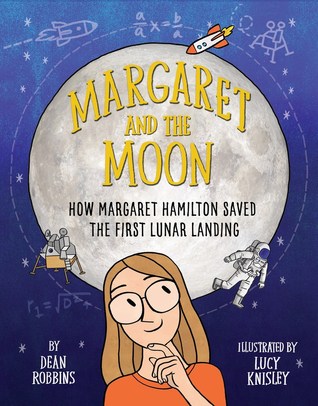
Margaret and the Moon by Dean Robbins

Margaret and the Moon by Dean Robbins.jpg

Margaret and the Moon: How Margaret Hamilton Saved the First Lunar Landing by Dean Robbins, illustrated by Lucy Knisley (9780399551857, Amazon)

This nonfiction picture book tells the story of Margaret Hamilton and her work on computers. When Margaret was a girl in the 1930s and 1940s, she wondered why girls weren’t studying science and math, so she did. She went to MIT and started working on computers back when they required handwriting code and the computers filled entire rooms. She eventually went to NASA where she programmed computers to help astronauts travel to the moon and connect to one another in space. When Apollo 11 came and astronauts were going to land on the moon, Margaret wrote the programs to get them there and back safely. In fact, when disaster struck it was Margaret’s programming that kept everyone safe and accomplished the goal.

Robbins writes with a celebratory tone in this biographical picture book. His appreciation for Margaret’s ability to ask tough questions and figure out answers is clear. Throughout, he keeps the tone playful and light, showing the hard work behind the accomplishments, and her inquisitive nature as the keys to her success.

It is great to see graphic novelist Knisley illustrating children’s books. Her illustrations match the tone of Robbins’ writing, keeping the entire book light and celebratory. The amount of work done by Margaret is staggering and is shown by Margaret next to a pile of papers that showed the length of her code. That same image is repeated as a photograph at the end of the book.

A wonderful example of women in STEM, this picture book speaks to the power of brains and determination. Appropriate for ages 6-9.

Reviewed from e-galley received from Edelweiss and Knopf Books for Young Readers.

Life in a Fishbowl by Len Vlahos

life-in-a-fishbowl-by-len-vlahos

Life in a Fishbowl by Len Vlahos (InfoSoup)

When Jared Stone discovers that he has terminal brain cancer, he decides to sell his life to the highest bidder on eBay. He gains the attention of a nun, a psychologically-disturbed man of leisure and wealth, a video-game playing teen, and a TV producer. When his posting is pulled down on eBay, only one person is left, the TV producer. So Jared and his family become the focus of a reality TV show and lose their privacy entirely. Jackie, Jared’s 15-year-old daughter, will not willingly participate in the show, figuring out how to avoid the crew and the cameras. But perhaps there is even more that she can do as she starts her own behind-the-scenes YouTube show that tells the truth about the editing and manipulation of her family by the reality show.

Vlahos tells a story of our time, about the dangers of believing in what we see on TV, of the siren call of money and the problems and advantages that come with using the internet for connections. Told from a variety of points of view, including Jared’s tumor, the book has a dark sense of humor throughout. Despite that humor, there is a sense of claustrophobia that pervades the novel as well, one that is built on the invasion of privacy from the TV cameras and then exacerbated by the manipulation and deviousness that surrounds the family.

Still, there is not despair here, even with a terminal illness as a central theme. It is instead a book about fighting back, being true to yourself and finding a way forward against the odds. A large part of that is Jackie, a girl who doesn’t fit in at school and appreciates her privacy. This is her nightmare scenario as the TV cameras roll and it forces her to reach out for help to people who are like her and can aid in fighting back. Through Jackie, we see how the Internet is more than darkness, it is also a source of hope and connection. It is both things at the same time.

A book of complex issues, the fakery of reality TV, and the dual sides of the Internet, this is a riveting read. Appropriate for ages 13-16.

Reviewed from ARC received from Bloomsbury.


New Study of Impact of Literacy Apps

ipad-1126136_1280

Science Daily has information about a study of the impact of tablets loaded with literacy apps on children. For the last four years, MIT, Tufts University and Georgia State University have been studying whether tablet computers with literacy apps could improve reading preparedness of young children living in economically disadvantaged communities.

They did three trials of the tablets: one in two rural Ethiopian villages with no schools and no written culture, one in a suburban South African school with a student-teacher ratio of 60 to 1, and one in a rural school in the United States.Students are given the tablets with no coaching from adults, because the plan is to scale this up to a larger level. There was no issue with children using the tablets and most had explored all of the apps by the end of the first day.

The results:

In the South African trial, rising second graders who had been issued tablets the year before were able to sound out four times as many words as those who hadn’t, and in the U.S. trial, which involved only 4-year-olds and lasted only four months, half-day preschool students were able to supply the sounds corresponding to nearly six times as many letters as they had been before the trial.

New trials are being run now in Uganda, Bangladesh, India and the US. A total of 2000 children have been part of the study so far.

This is certainly something for libraries and teachers to keep an eye on!

It’s a Book – Subversive and Smart

It’s a Book by Lane Smith

This is signature Lane Smith in every possible way.  A donkey and a gorilla sit in a living room together.  The donkey has a laptop, the gorilla has a book.  The donkey is puzzled by this book.  How do you scroll?  Does it blog? Where is the mouse?  The gorilla answers again and again, “No, it’s a book.”  Finally, the donkey gets the book in his hands and refuses to give it back.  The gorilla stands up to leave, heading for the library when the donkey offers to charge it when he’s done.  All leading up to the final line: “You don’t have to… It’s a book, Jackass.”  This is like a long lead up to a perfect punch line. 

I shared this book with my sons, aged 9 and 13.  They both adored it.  They got the references to blogging, video games, charging and mice.  By the final line, they both had huge grins on their faces and both looked rather slyly at me to see if I had realized what I had said.  Then we all laughed and read it again. 

Smith has created a book that will be enjoyed by adults and older children.  Young children will not get the references to the technology and will not get the punch line.  So let’s not waste time discussing whether that last line is appropriate for  preschoolers or story times.  The entire book is not for them. 

Smith’s wonderful art is modern, sleek and yet has a timeless quality to it.  It is ideal for this mashup of technology and books.  The day I got it in the mail, I took it to one of our staff luncheons.  It was read aloud, everyone loved it.  I’m going to have it tucked with my things for the upcoming state library conference.  They will all enjoy it.  And I expect plenty of the same looks my sons gave me and plenty of laughter too.

A picture book for adults and older children, this is one to read aloud to librarians and teachers rather than the other way around. 

Reviewed from copy received from Roaring Brook Press.

Enhanced by Zemanta