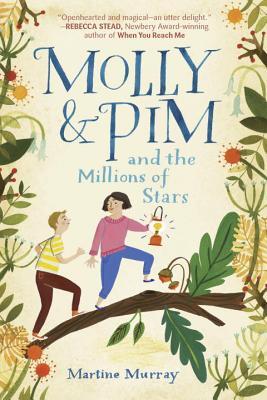
Molly & Pim and the Millions of Stars by Martine Murray

molly-pim-and-the-millions-of-stars-by-martine-murray

Molly & Pim and the Millions of Stars by Martine Murray (InfoSoup)

Released January 17, 2017.

Molly longs not to have a mother who heads into the woods to collect weeds and herbs. She wants a normal family that has a normal house, not one that feels like a caravan inside. She wants a mother who gives her granola bars in packages, not one who creates potions and treatments. Her neighbors want them to calm down too, get control of their rooster who crows at dawn and to neaten up their yard. Molly’s mother creates a powerful potion to grow a tree in one night that will shield them from the neighbors, but accidentally drinks it herself. Suddenly, Molly’s mother has turned into a tree. Now Molly has to decide who to trust with the secrets of her life. It can’t be Ellen, her best friend, who is very normal and whose life Molly covets. Instead she turns to the odd boy in their class, Pim, who creates a plan along with Molly to bring her mother back. But will it work before her neighbors start to cut off the branches of the wild new tree?

This Australian import is a magical read and not only for the real magic that happens on the pages. It has a gorgeous tone about it, one that is organic and delicious at the same time. One feels invited directly into the wonder of potions and weeds, your hands itching to get out there and brew your own green syrup. The voice throughout is fresh and filled with surprise.

Molly grows throughout the book, realizing that her own unique upbringing is nothing to be ashamed of. I love that it is Ellen, the normal one, who teaches her this. She speaks directly to Molly about how it feels to be excluded and how important it is to trust. The writing in the book is very special, creating moments like these that are less about lectures and more about sudden inspiration and realizations.

A gorgeously written novel that offers potions, magic and wonder. Appropriate for ages 9-12.

Reviewed from e-galley received from Alfred A. Knopf Books for Young Readers and Edelweiss.


Yellow Time by Lauren Stringer

yellow-time-by-lauren-stringer

Yellow Time by Lauren Stringer (InfoSoup)

The geese are flying south, the squirrels are busy and the crows are the only birds left in the trees. The air smells different and everyone knows that the trees must drop their leaves soon. Then the wind comes and the air fills with yellow leaves. Children run outside and play in the swirling yellow breezes. When the leaves have fallen, the yellow is in piles on the ground, covering everything. Children gather the leaves to press in books to remember the special time just before winter comes with its whiteness.

Stringer shares the drama of autumn in this picture book. She uses phrases like “a symphony of yellow” to capture the wonder of what is happening, mixing senses of sound and color together. When she describes the smell of autumn just before the leaves fall, she uses comparisons that children will understand: “Like wet mud and dry grass with a sprinkle of sugar.” It offers up the richness and deepness of the smell, the intangible dryness that is part of it and the sweetness as well. She skillfully creates autumn on the page with her words.

The illustrations celebrate the diversity of a small neighborhood filled with yellow trees and the children who wait for the falling leaves to start. There is a gorgeous overload of yellow on the pages, bright and cheerful, filled with motion and tumbling breezes and leaves. The pages are just as fresh and vibrant as the season she is depicting.

A joyous book that welcomes autumn with open arms. Appropriate for ages 3-5.

Reviewed from copy received from Beach Lane Books.

Wonderfall by Michael Hall

wonderfall-by-michael-hall

Wonderfall by Michael Hall (InfoSoup)

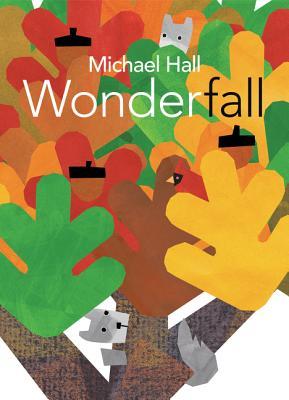
In a series of poems, this picture book celebrates the changing seasons through the experience of a tree. First in the greenness of summer, the acorns start to fall from the oak tree. The yellow school bus arrives and the tree’s leaves start to change. Harvest time arrives, parades march past, and Halloween comes.The leaves start to fall, Thanksgiving comes and children play in the piles of leaves. Wind arrives, taking most of the leaves off the tree and its time to rake. No leaves left, the tree stands bare until snow comes with the new winter season.

Hall celebrates the autumn season with this picture book that encompasses the very beginning signs of autumn all the way through to full winter. The focus on a single tree as the one experiencing the changes works well, particularly with the vivid changes that the tree goes through itself. It is also interesting to see trees as witnessing what humans do just as they watch the activities of the squirrels on the ground and in their branches. The book ends with information on animals seen in the book and how they prepare for winter.

The illustrations are signature Hall with bold shapes done in collage. The leaves are oversized and glorious, full of bold colors and the size of branches. They enliven the page no matter their color, making the winter pages when they are gone all the more cold and barren.

Simple and poetic, this is a great new pick for fall story times and units. Appropriate for ages 3-5.

Reviewed from copy received from Greenwillow Books.

The Branch by Mireille Messier

The Branch by Mireille Messier

The Branch by Mireille Messier, illustrated by Pierre Pratt

Released September 6, 2016.

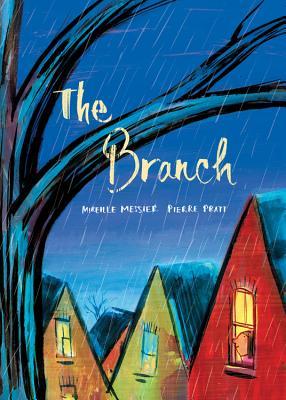
During an ice storm, a little girl is awakened by a loud sound outside. It turns out to be her favorite branch falling from the tree in her yard. It was the branch she played on, dreamed about and that was a big part of her day. The little girl asks to keep the branch after finding out that it can’t be reattached to the tree and her mother agrees. Her neighbor is next door with his chain saw and the girl stands guard so that no one takes her branch. Her neighbor, Mr. Frank, sees her standing there and asks about her branch. He sees “potential” in it and offers to help her make something with it. It turns out to be just the right solution, one that helps the girl remember the fun she had and looks forward to future happiness too.

Messier conveys the little girl’s emotions very clearly. From the feel of the fallen branch to her attachment to it to the importance of creating something new with it. Each moment echoes with emotions, creating a book that is conducive to discussing feelings with young children listening to the story. The book is also anchored in sensations, the feel of the icy branch in her hands, the noise of the chain saw, the hard work of transforming the branch into something else.

The illustrations by Pratt are filled with deep colors that brighten the pages. The beauty and destruction of the ice storm are captured, each branch encased in ice. The change is seasons is also nicely shown, moving from ice and snow to green in the illustrations.

A book about resilience, connections to nature and its power, and the value of memories, this picture book is full of potential itself. Appropriate for ages 4-6.

Reviewed from e-galley received from Kids Can Press and Netgalley.

One Day in the Eucalyptus Eucalyptus Tree by Daniel Bernstrom

One Day in the Eucalyptus Eucalyptus Tree by Daniel Bernstrom

One Day in the Eucalyptus Eucalyptus Tree by Daniel Bernstrom (InfoSoup)

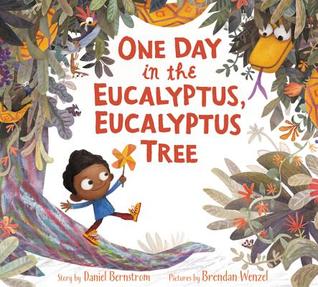
A little boy skipped along in the shade of the eucalyptus tree when down came a snake who ate him up! The boy told the snake that there was more room in his belly and encouraged him to eat something else. So the snake snuck up on a bird and gobbled it up. The boy told the snake he was still hungry and one-by-one, the snake ate more and more animals: a cat, a sloth, an ape, a bear, and a beehive. By then, his stomach was huge and distended, but the boy told him there was room for just one more very small thing. Perhaps not!

In the tradition of There Was an Old Lady Who Swallowed a Fly, this picture book has a rhythm and rhyme that makes reading it aloud pure joy. This is a child outwitting an enormous snake, staying calm and being clever, adding to the appeal for children. The pacing of the book is stellar, creating moments before each new animal is devoured as well as when the boy convinces the snake to eat more.

The illustrations are bright and colorful. The eucalyptus tree is central to the story and to the art with its colored bark and large expanse. The bright yellow snake is huge and vies with the tree for the reader’s attention in the best of ways. Cross sections of the snake’s belly show the animals and the boy inside.

Great pick for a read aloud, this picture book is energetic and cheerful. Appropriate for ages 3-5.

Reviewed from copy received from Katherine Tegen Books.

Tree by Britta Teckentrup

Tree by Britta Teckentrup

Tree by Britta Teckentrup (InfoSoup)

The seasons pass as an owl looks out of a hole in a tree in this engaging picture book. Beginning in winter, owl is alone in the cold landscape. When spring comes, the snow melts and buds form on the tree. Baby bears play and climb the tree’s trunk. Leaves and blossoms form and squirrels, birds and fox cubs arrive. With summer, the apples start to form on the tree and the tree spends long warm nights swaying in the breeze. Autumn comes with colder temperatures and the animals start to leave. Apples fall to the ground and the tree’s leaves turn red and fold. Snow comes and winter arrives. Soon everyone is gone, even the owl. But he is peeking out again soon as spring comes once again.

Teckentrup uses simple rhymes to tell the story of one large tree and the ways that it supports the ecosystem around it. The seasons are clearly noted in the rhymes, the changes explained and each one is celebrated for how unique it is. The various animals too change what they are doing as the weather shifts. This is a dynamic book about weather and seasons.

It is the illustrations that make this book so noteworthy. Teckentrup’s cut out designs allow each page turn to show the owl for most of the book but also to add the other animals as they appear in the story. Then as the story reverses and the animals leave, the cut outs play out that way too.

A clever and striking look at one tree, one ecosystem and many seasons. Appropriate for ages 2-4.

Reviewed from copy received from Random House.

The Perfect Tree by Chloe Bonfield

The Perfect Tree by Chloe Bonfield

The Perfect Tree by Chloe Bonfield (InfoSoup)

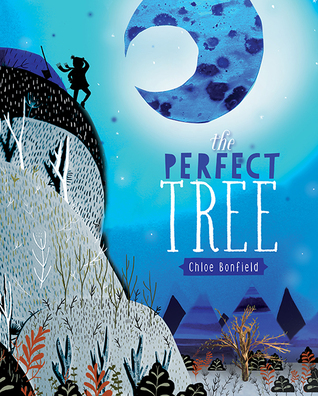
Jack headed out to find the perfect tree, one that was just right to chop down for firewood. But he was having trouble finding that perfect tree. Jack finally sat down under a tree in the forest in despair. Then a woodpecker offered to help Jack find the perfect tree. She flew to a tree and after knocking on a branch all sorts of birds flew out of it. Then a squirrel said that he too could show Jack the perfect tree. Taking Jack into a great oak tree, the squirrel revealed his stash of nuts and berries for the winter. Next a spider showed Jack her favorite tree where a web hung filled with water drops. It was then that Jack was inspired by the rain to find another perfect tree that was just right to stay dry under.

Bonfield has written an ecology picture book that focuses not on how wrong it is to cut down trees, but instead how the definition of “perfect” means different things to different creatures. And how your appreciation of an object in a new way leads to changes in the way you see the world. I appreciate that the book does not lecture about the environment or appreciating nature. Instead the book focuses on the beauty of nature and how it can transform us if we pay attention.

Bonfield’s illustrations are amazing. Done in papercut images and collage, they form two and three dimensional structures and then are lit so that there are shadows that play against other parts of the illustration that glow. The result is a picture book landscape that feels immersive and tangible.

A clever look at the pursuit of perfection and the power of nature. Appropriate for ages 4-6.

Reviewed from library copy.


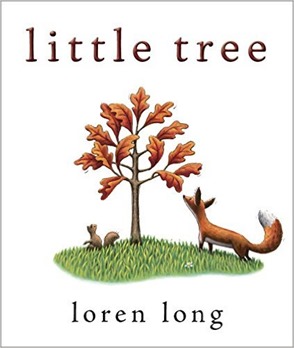
Review: Little Tree by Loren Long

Little Tree by Loren Long

Little Tree by Loren Long (InfoSoup)

The author of the popular Otis series tells a story about a tree that is heartwarming and encouraging. Little Tree is happy as he stands with the other little trees in the forest. Squirrels play in his branches and a mourning dove stops by. Autumn arrives and the leaves of the little tree change color along with those on the other little trees. The leaves began to fall, except for those on Little Tree. He held onto his tightly. The animals start to ask him why he is holding onto his leaves so long, but Little Tree just holds them even tighter. Spring comes and the other trees are taller and filled with bright green leaves. Little Tree though has only his old brown leaves. The other trees continue to grow around Little Tree, the animals no longer played in his branches, and he just held on ever more tightly. Little Tree would have to figure out how to let go and allow change to happen.

This parable is beautifully told. The parallel between a tree not dropping its leaves and allowing seasons to pass and a human fighting the inevitable changes and progress in life is compelling. Young readers will see clearly how stunted the life of Little Tree becomes and how quickly he loses the very parts of his existence that he loves so much. The writing is simple and straight-forward, making this a very shareable book that could lead to a discussion about what children are holding onto that they may want to release and let go.

Long’s illustrations are luminous on the page. He makes great use of white space, allowing Little Tree to shine on the page in a simple and engaging way. Other pages use double spreads, showing the changing forest as it grows around Little Tree. This too is very effective.

A strong picture book with an important message that is cleverly told, this book encourages young readers to embrace change and the uncertainties of life. Appropriate for ages 4-6.

Reviewed from ARC received from Philomel Books.

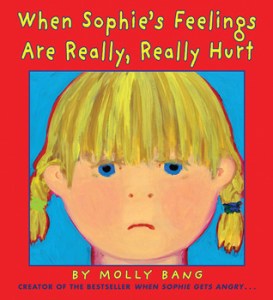
Review: When Sophie’s Feelings Are Really, Really Hurt by Molly Bang

When Sophies Feelings Are Really Really Hurt by Molly Bang

When Sophie’s Feelings Are Really, Really Hurt by Molly Bang

Released September 29, 2015.

Sophie and her class at school are given an assignment to paint a tree from real life. Sophie has a favorite tree, the big beech tree where she goes when she is feeling sad. When she visits it, she sees how it glows in the sun, how its branches are formed. But when she tries to paint it, she realizes that its gray trunk actually looks sad in the painting, it’s the opposite of how she feels about the tree. So she changes the bark color to a vivid blue, the sky is orange and the leaves are chartreuse and ringed in yellow to make them glow. Sophie is very happy with her painting until the other children start to tease her about it not being realistic at all. Sophie’s feelings get very hurt until her teacher comes over and they talk about what Sophie was showing in her painting of the tree. Sophie also gets the chance to see the trees that everyone in the class painted and to see how they conveyed what they were feeling too.

This second book about Sophie follows the very popular When Sophie Gets Angry – Really, Really Angry, which received a Caldecott Honor. This book focuses on feelings and emotions once again and wisely takes on emotions through the lens of art. Bang makes sure to explain exactly how Sophie is feeling throughout the book, focusing on the emotions from how the tree makes her feel to the way that the teasing at school feels down to her physical reactions as well. These clear looks at emotions will allow a discussion of feelings that is manageable and one that can embrace art as well.

Bang’s illustrations are exceptional. They glow with a light from within. The beech tree is fabulous and one can immediately see the connection between Bang’s art and Sophie’s. Both are playful, colorful and show deep emotion. I particularly love the image when Sophie is upset that looks at her gazing down at her feet, so that the reader is almost seeing things from Sophie’s perspective. It captures the feeling of self-doubt and even shame that teasing can create. The entire book has moments like this.

Another winning title from Molly Bang, this second Sophie book deserves to be in every library right alongside the first. Appropriate for ages 4-6.

Reviewed from ARC received from The Blue Sky Press.