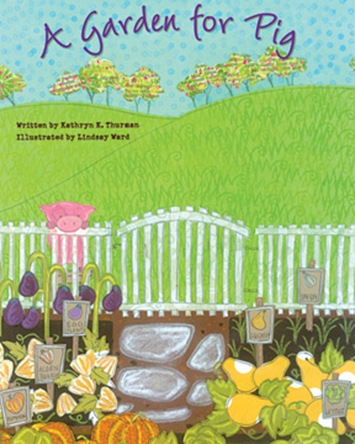
A Garden for Pig by Kathryn K. Thurman, illustrated by Lindsay Ward
Pig lives on an apple farm where they grow lots and lots of apples. And what does Pig get to eat? Apples, apples, and more apples. Mrs. Pippins owns the farm and she makes all sorts of apple dishes for pig to eat, but he is sick of apples all the time. What he really wants to eat are vegetables! So Pig breaks into the vegetable patch and begins gulping down squash, seeds and all. When Mrs. Pippin finds him in the garden, she is not happy. She ties Pig up. When she catches him trying to break the rope, she shuts him in his pen. Though Pig tries to escape, he can’t. But he is determined not to eat any more apples! Pig notices the next day that his pen looks a lot like a garden. And after digesting the squash, he has the seeds he needs to make one.
Thurman’s words are simple and have a jaunty rhythm to them. There are wonderful sounds woven into the book that children will enjoy mimicking. Pig’s determination and tenacity as well as his creative solution to the problem add to the appeal.
Ward’s collage and cut paper illustrations have a warmth to them. This is accentuated by the use of fabrics that offer a texture to the images. In the apple orchard, there are words on the paper that make up the leaves: apple recipes. The illustrations are large enough to read to a group. And goodness knows, the poop event at the end will be a hit!
A friendly and warm introduction to gardening in an organic way, this book is a happy addition to gardening story times. Appropriate for ages 3-5.
Reviewed from copy received from Kane Miller.
Also reviewed by:

 Waking Brain Cells