2 New Bookish Nonfiction Picture Books

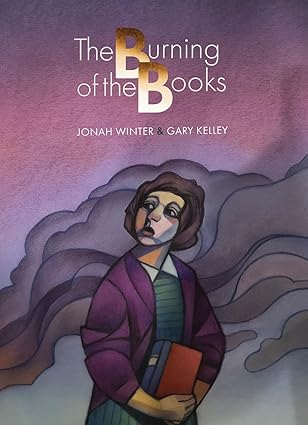
Cover image for The Burning of the Books by Jonah Winter, illustrated by Gary Kelley, featuring a girl holding a book in her arms with a worried look on her face in front of billows of smoke.

The Burning of the Books by Jonah Winter, illustrated by Gary Kelley

  • Publisher: Creative Editions
  • Publication Date: March 10, 2026
  • Reviewed from Edelweiss e-galley
  • ISBN: 9781568464114

This nonfiction picture book begins with the printing of the first book, the Bible. It then turns to Germany, a place where many of these books were printed and a literate nation. When Hitler came to power in 1933, things changed and certain books were labeled as “un-German.” College students and librarians helped remove books that were labeled that way, tens of thousands of books. In Berlin, the books were taken to a public square, dumped near a pile of wood, and set alight. This happened in cities across Germany. Afterwards, authors were blacklisted and many fled to freer countries, like America. Now we all must be aware that freedom must be protected even in free countries.

Winter manages to take a very complex situation and create a book that children can understand without making it lose its power or darkness. His writing is crisp, direct and filled with empathy for those targeted and the books destroyed. Kelley’s illustrations are like stained glass on the page, angular and fierce. Yet they also have a lovely softness to them, a feeling of hope lingering nearby. 

A look at one of the darkest periods in human history that is timely and important. Appropriate for ages 8-12.
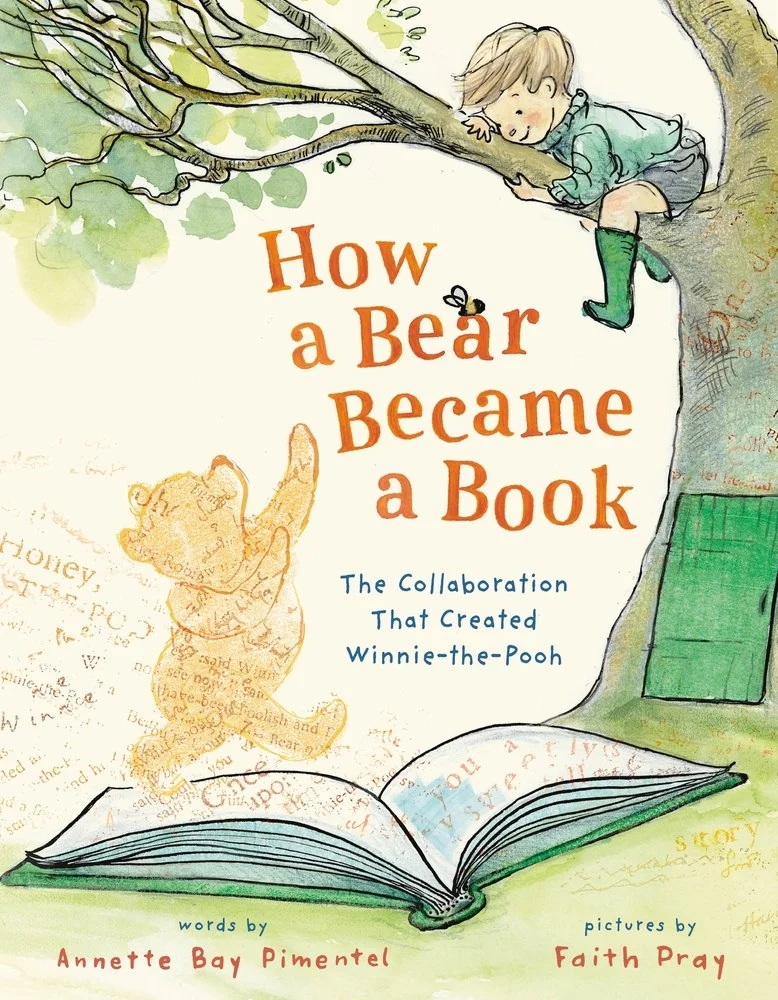
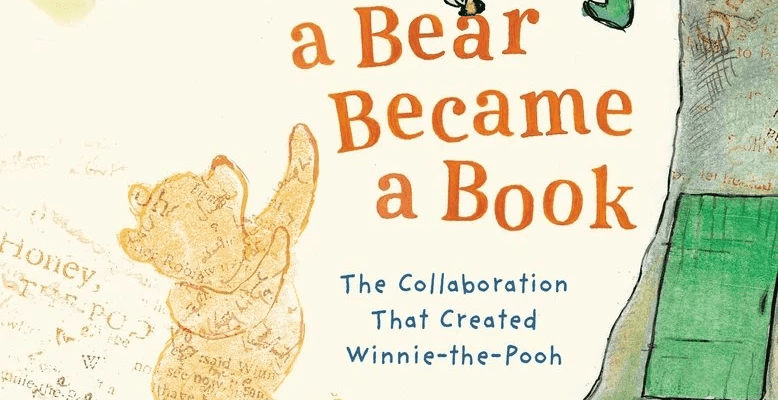
Cover image for How a Bear Became a Book: The Collaboration That Created Winnie-the Pooh by Annette Bay Pimentel, illustrated by Faith Pray, featuring a boy in a tree above Winnie the Pooh stepping on a book.

How a Bear Became a Book: The Collaboration That Created Winnie-the Pooh by Annette Bay Pimentel, illustrated by Faith Pray

  • Publisher: Henry Holt & Co.
  • Publication Date: March 31, 2026
  • Reviewed from Edelweiss e-galley
  • ISBN: 9781250358448

Sweetly partially narrated by Pooh himself, this nonfiction picture book explores what it takes to make an idea into a book. The idea started with A.A. Milne and he wrote down words about a bear. The words needed pictures to bring them fully alive. An editor read the words and thought of the right illustrator for them, Ernest Shepard. But Milne was not a fan of his, so they tried different illustrators first, finally returning to Shepard. The two worked together to create a book where the illustrations danced with the words on the page, bouncing, stacked tall. The books were very popular thanks to the combination of story and illustration. 

The tale of how Milne and Shepard created their books is a real treat. Both author and illustrator here capture the spirit of the original on the page, whether it is the play of words across the page or turns of phrase that are fun to find. The use of Pooh to help tell the story adds to the fun. The illustrations take the idea of the bear and then steadily solidify him as the book comes together. They manage to pay homage to the original without copying them directly.

A warm and marvelous visit to an old friend and how he became a book. Appropriate for ages 5-8.
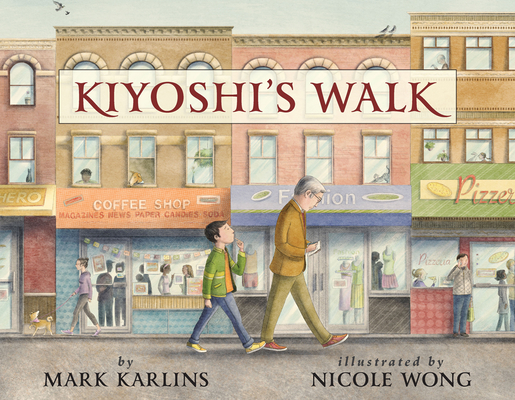
Kiyoshi’s Walk by Mark Karlins

Cover image.

Kiyoshi’s Walk by Mark Karlins, illustrated by Nicole Wong (9781620149584)

Kiyoshi’s grandfather Eto is a poet who writes poetry with brush and ink. Kiyoshi wishes that he could write poems too. When he asks his grandfather where poems come from, the two set off on a walk in their neighborhood. At the corner store, they see a cat on a pile of oranges. Eto stopped and wrote a poem about what happened when the oranges toppled, inspired by what they saw. The two hear pigeons flying above them, inspiring the next poem from what they heard. After seeing an abandoned teddy bear, Eto writes a poem about how it got there and how it feels, all from his imagination. The two reach the river together where Eto writes one last poem of the day, capturing his feelings. Now it is Kiyoshi’s turn to figure out that poems come from our surroundings and how that touches what is in our hearts. He’s ready to write his first poem.

Karlins has created a touching story of the connection between grandson and grandfather. The story is gentle and focused on finding poems throughout their day together. The book clearly shows how heart and imagination meet inspiring moments in life to create art, whether it is poetry, prose, music or art. Throughout the book, Eto treats Kiyoshi as an equal, gently showing him how he works and allowing Kiyoshi to also discover on his own.

The luminous art was done digitally. It evokes the warmth of colored pencil on the page. The fine details work well in showing the vibrant and changing urban setting they live in. The color palette changes as they walk, ending with the setting sun reflected in deep colors in the river.

Full of inspiration, poetry and connection. Appropriate for ages 4-6.

Reviewed from e-galley provided by Lee & Low Books.

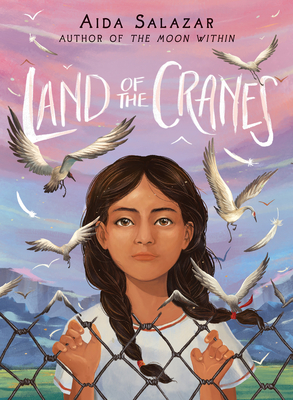
Land of the Cranes by Aida Salazar

Land of the Cranes by Aida Salazar

Land of the Cranes by Aida Salazar (9781338343809)

Betita’s father has always told her that they are descendants of the Aztecs who came from Atzlan, which is now the southwestern United States. They are cranes who have returned home. Living in Los Angeles, Betita goes to school while her parents work long hours. But then one day, her father is taken by ICE and deported to Mexico. Betita and her mother make the long car ride to the border to see him, but find themselves arrested and put into a detention camp. Forced to sleep on the concrete floor, eat moldy food, and succumb to the monotony and cruelty of the camp, Betita almost loses herself. But she rises, inspired by the women and children around her, to insist that they have rights even when she has no one with her anymore.

Salazar uses verse to tell the story of Betita and her family. The early part of the book is almost dreamy as the family creates their new life in Los Angeles together. But the book turns and twists into a razor-like call for dignity and legal help for those both deported and those held in camps. The conditions of the camp are horrible, the indignity and casual cruelty heaped upon them is almost soul crushing. It’s difficult to read and even more difficult to accept that this is the United States doing these things to children and families.

Salazar gives her young heroine a voice in the book, a playfulness and creativity that lets her create her own toys, form connections with other children. She also has the ability to write and to lead others to write their own stories too. That powerful ability is what allows the characters to rise above and insist upon being seen.

An important and powerful call to see Latinx people held in border camps as humans first and always. Appropriate for ages 9-12.

Reviewed from ARC provided by Scholastic Press. 

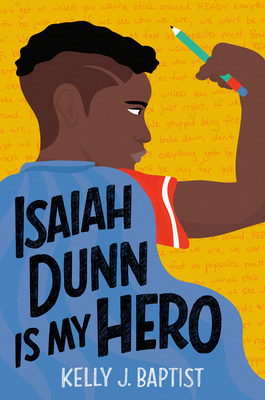
Isaiah Dunn Is My Hero by Kelly J. Baptist

Isaiah Dunn Is My Hero by Kelly J. Baptist

Isaiah Dunn Is My Hero by Kelly J. Baptist (9780593121368)

Adapted from the short story that was published in Flying Lessons & Other Stories, this novel tells the story of Isaiah Dunn. Isaiah lost his father almost a year ago and now lives in a motel with his mother and sister. His mother tries to hide her drinking from them, but Isaiah knows what the bottles mean even if she removes the labels. Isaiah is lucky to have his best friend, Sneaky, someone who has a candy-selling hustle at school. It may mean heading into a dangerous part of town, but he’s intent on earning money. Isaiah joins him, hoping to get enough money to get his family out of the motel. But Isaiah is tired too, tired of being hassled by classmates like Angel, who makes fun of him, tired of the teachers cracking down on him, tired of being hungry. Luckily, he also has his father’s journals, which keep him focused, inspire him to write, and lead him to find positive ways to support his family.

In her first novel, Baptist gives us an incredible young hero. Isaiah is a powerful mix of family-focus, creativity and anger. Inspired by his father, he tries to keep focused on the good, on doing the right thing and on supporting his family. But sometimes it is too much for a ten-year-old boy to be the adult. Sometimes you need help. The book is also filled with great adult role models for Isaiah, from teachers to neighbors to employers. He may not see them at first, but they are there, ready to support him and his family.

Baptist’s writing is child-centered and clarion clear. She demands that readers see Isaiah as more than a statistic, as a full human being, worthy of attention and help. In a family that has sustained a powerful loss, she depicts grief with real skill, allowing it to destroy but also to be the reason to rise again.

Powerful, deep and full of creative voice, this novel will make Isaiah everyone’s hero. Appropriate for ages 9-12.

Reviewed from e-galley provided by Crown Books for Young Readers. 

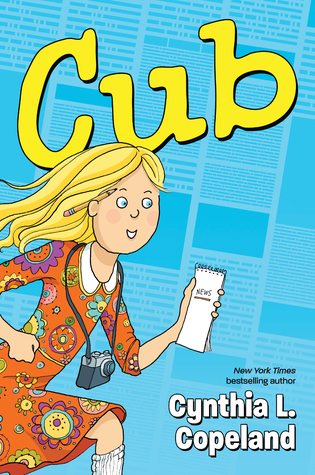
Review: Cub by Cynthia Copeland 

Cub by Cynthia Copeland

Cub by Cynthia Copeland (9781616208486)

This graphic novel looks at life in middle school during the 1970’s, a time filled with bullies, bell bottoms, and possibilities. Cindy is in seventh grade and dealing with being one of the prey in a school with plenty of predators, particularly mean girls. Cindy plays dead and doesn’t react to the comments of people like Evie Exley, so they leave her alone. Cindy loves reading and creating art, so when her favorite English teacher suggests that she become a writer, Cindy jumps at the chance. Soon she is working as a cub reporter for the local paper, accompanying a real reporter to meetings and events around the community. She starts taking photographs and learns to edit her writing to be appropriate for a newspaper. She also finds her voice and a group of friends who are just as unique as she is.

Middle school can be painful but this graphic novel is a breath of fresh air. While it does address the larger issues of middle school bullying, it is truly about simply being yourself in the midst of it all and finding other kids who are doing the same thing. There is a touch of romance here, but only a touch that is just right for the seventh grade setting. The focus on self-esteem and following your dreams is a call for all young girls to find their own paths and then work hard to reach their goals. Cindy is an example of someone who makes mistakes, learns from them, improves and reaches goals that she may not have realized she even had in the beginning. 

The art in this graphic novel is immensely approachable, embracing the seventies setting with fashion, hair styles, and the cars being driven. The time period is a large part of the story as Watergate is breaking just as Cindy starts being a cub reporter. Journalism is an inspiring profession both in the seventies and today, something that is worth commenting on in today’s world.

A graphic novel with a strong female protagonist who follows her own dreams. Appropriate for ages 9-12.

Reviewed from ARC provided by Algonquin Young Readers.

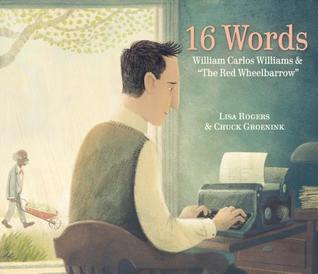
Review: 16 Words: William Carlos Williams and “the Red Wheelbarrow” by Lisa Jean Rogers

16 Words William Carlos Williams and the Red Wheelbarrow by Lisa Jean Rogers

16 Words: William Carlos Williams and “the Red Wheelbarrow” by Lisa Jean Rogers, illustrated by Chuck Groenink (9781524720179)

This nonfiction picture book explores the inspiration behind Williams’ most famous poem as well as the life of the poet who wrote it. The book begins with Williams on his doctor’s rounds, noticing the red wheelbarrow that belonged to Mr. Thaddeus Marshall, who works harvesting and selling vegetables in Rutherford, New Jersey. Williams uses his spare time at work writing poems and noticing small things around him. He types between office visits and takes notes as he walks through the town. Then one glimpse out of a window on a rainy day created a moment that inspired one of the greatest poems.

Rogers writes a biography focused on Williams himself and on the inspiring white chickens and red wheelbarrow. She takes time to not only capture that iconic image once but several times on the page, showing how inspiration lingers and returns. She also makes sure to linger on how Williams works writing into his role as the town doctor and how he notices small things that inspire him.

The illustrations are done digitally and feel very organically with pencil and brush lines on each page. The colors are pastel and gentle, encouraging readers to look more closely and linger just as Williams himself was doing.

A nonfiction picture book about writing, poetry and life. Appropriate for ages 6-9.

Reviewed from e-galley provided by Schwartz & Wade.

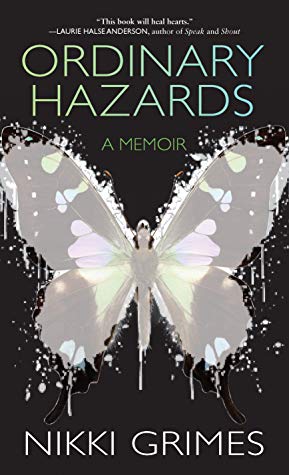
Review: Ordinary Hazards by Nikki Grimes

Ordinary Hazards by Nikki Grimes

Ordinary Hazards by Nikki Grimes (9781629798813)

Grimes writes a searing verse memoir of her years growing up with a mother suffering from alcoholism and schizophrenia. Removed from her mother at a young age and separated from her older sister, Grimes found a loving foster family where she discovered the power of writing her feelings and experiences out on paper. She visited her mother occasionally during that time and they were eventually reunited when her mother got sober and remarried. But it wasn’t that simple or easy. Grimes was trapped in a home filled with a cycle of addiction, mental illness and sexual abuse from her stepfather. Told with a strong sense of hope and resilience, this book is a brave look back into a traumatic childhood.

Grimes has created a book that carries readers back into her previous experiences, showing how she survived, how writing helped, and how she found hope and strength in people other than her mother. Grimes has recreated some of her childhood and teen  journals which were destroyed. In these small glimpses told in the voice of her youth she shows her confusion and strength vividly.

Throughout the book, Grimes mentions that she doesn’t have clear memories of much of her youth due to the trauma that was inflicted upon her. Her willingness to explore such painful subjects even though her memories are incomplete or entirely gone is a concrete example of her resilient spirit and hope.

A powerful and poetic look at trauma and the building of a new life. Appropriate for ages 16-adult.

Reviewed from ARC provided by WordSong.

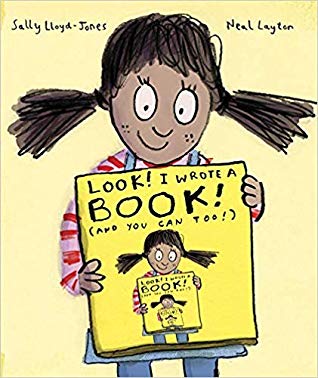
Review: Look! I Wrote a Book! (And You Can Too!) by Sally Lloyd-Jones

Look! I Wrote a Book! (And You Can Too!) by Sally Lloyd-Jones

Look! I Wrote a Book! (And You Can Too!) by Sally Lloyd-Jones, illustrated by Neal Layton (9780399558184)

A little girl explains to readers what it takes to write a book. First, you need a “Good Idea” that you can get from all sorts of places, including your own brain or staring out of the window. You have to know what you are talking about in your book and also know who you are writing it for. Grandmothers are a very different audience than kids who like dump trucks. Books for babies should not be incredibly scary. Then you must concentrate and create a plan for your book. A good title is necessary too. Start strong and then fill in the middle. The ending comes last. Share the book with friends, revise as necessary. Create a cover and an “About the Author” page. Then start selling your book, perhaps with cookies as an incentive and if that doesn’t work tying a person to a chair. Maybe it’s time for a sequel?

The best part about this book is that it is a combination of complete silliness and also good information about the steps in writing a book. Lloyd-Jones uses zany humor to really get her point across about writing taking time, creativity and a willingness to revise. Still, the book is also about frightening babies, boring grandparents, tying people up, and being interesting along the way.

The illustrations help tell the story with their clever depictions of the little girl’s imaginative stories. Using a mixture of textures and patterns, they also incorporate collage elements as well. The result is a modern and silly mix that suits the book nicely.

Silly and serious all at once, this really is a book about writing a book where you will giggle along the way. Appropriate for ages 5-7.

Reviewed from e-galley provided by Schwartz & Wade. 

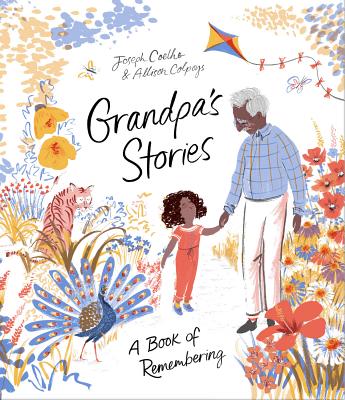
Review: Grandpa’s Stories by Joseph Coelho

Grandpa's Stories by Joseph Coelho

Grandpa’s Stories by Joseph Coelho, illustrated by Allison Colpoys (9781419734984)

A little girl visits her grandfather all through the year. In the spring they walk together in the garden. The girl thinks of replanting her grandpa’s birthdays so he won’t get old. In summer, the two of them play together with a secondhand racing track. The cars fly off into space and the girl thinks of their laughter being like shooting stars. In autumn, her grandpa gives her a book he’s made for her to draw in. She’d like to capture all of her bright feelings about him there. In winter, the two stay inside and Grandpa shares his stories with her. But then her Grandpa dies. While cleaning out his room, she discovers reminders of their time together as well as a new blank notebook that he made her for spring. She fills it with her memories of her Grandpa.

The writing in this book is exceptional. Coelho captures seasonal moments of the pair together, weaving in the joy that they feel, the connection that is being maintained and built. He uses imagery of the little girl’s thoughts to really create sincere memories for her to have that are compelling for the reader as well. When the death in the book happens, it is to be expected as one can feel some sadness in the book throughout as Grandpa ages more. It is a gentle moment, one done with care and thoughtfulness.

The illustrations by Colpoys depict a family of color joyfully spending time together and then experiencing and processing their loss. She uses amazingly bright colors on her pages, incorporating neon-poppy red, zinging sunshine yellow, waves of water blues and many more. Those colors never dim throughout the book, offering hope in their cheerfulness even during times of loss.

A beautifully written and illustrated picture book of love and loss. Appropriate for ages 4-6.

Reviewed from copy provided by Abrams.