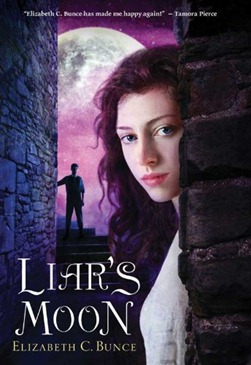
Review: Liar’s Moon by Elizabeth C. Bunce

liars moon

Liar’s Moon by Elizabeth C. Bunce

When Digger is arrested and thrown in jail, she isn’t that surprised.  She is a pickpocket after all.  But it is interesting that the men who grabbed her knew that she was a girl though she was dressed in men’s clothing and that they were looking just for her.  When she is put into prison, she is surprised to find that she’s been put in Lord Durrel Decath’s cell.  He has been accused of poisoning his wife.  This is the man who once saved her life, and so she sets to work with her thieving skills to set him free.  As she searches for answers, she is drawn into the high society of their besieged city.  The clues seem to lead to only more questions and new theories rather than answers in this politically charged, masterful mystery.

This second book after Star Crossed is just as elegantly plotted as the first.  Bunce excels at creating a world that is familiar to readers but also unusual and unique.  Throughout the book, magic is a theme.  But in this world, it is reviled rather than embraced.  Magic users are persecuted, imprisoned and even slaughtered.  This forms the backbone of the story, the society itself, and our protagonist.

Digger is an amazing female protagonist.  She is gutsy, strong, intelligent, and loyal.  She never seems to be afraid of action or danger, making the entire story a delight to read since it is always moving quickly forward.  The other characters are equally complex.  There are women who appear to be flighty and dim, yet are something else entirely when their pretense is dropped.  There are suspects who seem obvious but then melt away to innocence and others who are just the opposite.

This is a complex and intricate mystery set in a world that is equally compelling.  Get this into the hands of fans of Tamora Pierce who will discover another amazing female protagonist to enjoy.  Appropriate for ages 14-16.

Reviewed from ARC received from Scholastic.

Also reviewed by:

2011 Best Illustrated Children’s Books

The New York Times has announced their 10 Best Illustrated Children’s Books for 2011:


Along a Long Road by Frank Viva

A Ball for Daisy by Chris Raschka (my review)

Brother Sun, Sister Moon by Katherine Paterson, illustrated by Pamela Dalton


Grandpa Green by Lane Smith (my review)

Ice by Arthur Geisert (my review)


I Want My Hat Back by Jon Klassen (my review)

Me… Jane by Patrick McDonnell (my review)

Migrant by Maxine Trottier, illustrated by Isabelle Arsenault


A Nation’s Hope: the Story of Boxing Legend Joe Louis by Matt de la Pena, illustrated by Kadir Nelson

A New Year’s Reunion by Yu Li-Qiong, illustrated by Zhu Cheng-Liang

Review: The Orphan by Anthony L. Manna

orphan

The Orphan: A Cinderella Story from Greece by Anthony L. Manna & Soula Mitakidou, illustrated by Giselle Porter

This story of Cinderella has a distinct Greek twist to it.  In the author note at the beginning of the book, they state that the tale is drawn from two Greek versions of Cinderella.  One change that was made from the traditional stories is that Cinderella takes a more modern and active stance than she had in previous versions.  It is the story of a girl who loses her devoted mother and then has a stepmother and two stepsisters who take her father’s attention, love and money.  She weeps at her mother’s grave and is encouraged by her mother’s spirit to have hope and wait for blessings to appear.  They arrive in the form of Mother Nature and her children, who give Cinderella the Evening Star as a headpiece, dresses, and shoes.  Instead of a ball, this Cinderella meets her prince in church and in disguise, riding there on a white mare made of clouds.  She loses her shoe when leaving the church after the prince tries to capture her by making the threshold sticky.  All is revealed when the shoe fits.

This is a very satisfying version of the story with a spiritual tone that is not in the more familiar version.  Cinderella’s connection with her dead mother is much stronger here as well, having her turn to that guidance rather than a fairy godmother deepens the story considerably.  Also connecting her dresses, shoes and crown to nature is an adroit move. 

Porter’s illustrations have a folktale feel to them with a traditional grounding in the style.  At the same time, they have a rather ethereal quality as well, a lightness and wonder that infuses them.  It is a pleasing combination.

While we don’t really need more versions of the Cinderella tale, this one has a unique appeal and a very different feel.  Appropriate for ages 5-7.

Reviewed from copy received from Schwartz & Wade Books.

Review: The Three Little Aliens and the Big Bad Robot

three little aliens

The Three Little Aliens and the Big Bad Robot by Margaret McNamara and Mark Fearing

The story of the Three Little Pigs heads to outer space in this fractured fairy tale.  Here there are three little aliens, who must find a new planet to live on.  Their mother advises them to stick together, but two of the little aliens don’t listen.  When Bork sees the space rover on the red planet, she just can’t resist living there.  Gork is drawn in by the satellite circling around a planet surrounded by rings.  Nklxwcyz went deep into space until he found a planet that he thought was perfect.  It was blue with nice breezes.  When the Big Bad Robot arrived in the galaxy, there is no where for Bork and Gork to hide, because they had been too busy playing with their new toys to build homes.  So both of them fled to Nlkxwcyz’s house deep in space.  And you will just have to read the book to see how the Big Bad Robot is defeated.

While this is a light-hearted fiction book, it is also one that has some science mixed in.  The planets that the three aliens travel to are the planets in our galaxy.  They start out at home at Mercury.  Bork settles on Mars, Gork on Saturn and Nlkxwcyz on Neptune. This adds a nice dimension to the book. 

McNamara’s prose is a pleasure to read aloud.  The noises of the Big Bad Robot add much to the book’s fun and build the tension up.  The illustrations by Fearing are quirky and fun.  The backdrop of stars and the familiar planets make for a winning setting for the pictures. 

A fun, fractured fairy tale, this book will be popular with children who enjoy space and robots.  Appropriate for ages 4-6.

Reviewed from copy received from Schwartz & Wade Books.

Also reviewed by:

Review: Chocolate Me! by Taye Diggs

chocolate me

Chocolate Me! by Taye Diggs, illustrated by Shane W. Evans

The main character of the book, who goes unnamed, is teased because he is different than the other boys in the neighborhood.  Compared to the white kids, his skin is darker, his hair more poofy, his nose is wider, and his teeth shine brighter.  He returns home in tears, because he wants to fit in.  His mother talks to him, telling him how special he is and how perfect he is.  She tells him that his skin is like “velvet fudge frosting mixed in a bowl.”  She gives him a t-shirt that says “Chocolate me!” and he starts to rethink things as do the other kids.

The focus of this book is self-acceptance and self-love.  The universal theme of trying to fit in and feeling different than others will speak to all children.  Diggs writes with a smoothness and natural rhythm.  The book reads as confident poetry, though it does not rhyme.  Evans’ illustrations have a great organic feel as well.  They are bright colored, rough lined, and filled with motion. 

Share this with a group of children discussing self-esteem or diversity.  It will also be one of those books that children pick off the shelves thanks to the sunshine bright cover.  Appropriate for ages 3-5.

Reviewed from copy received from Feiwel and Friends.

Review: If You Lived Here by Giles Laroche

if you lived here

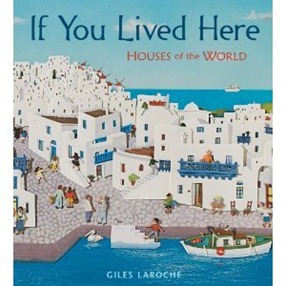
If You Lived Here: Houses of the World by Giles Laroche

This book invites readers to explore the different types of houses that are lived in throughout the world.  Beginning with the phrase, “If you lived here…” the book then describes some unique features of that particular type of home.  There are homes that you would have to go outside to get to the kitchen, others where you would not have to go out to even get to the barn, others are built around caves, still others are close to water or surrounded by it.  The book then defines the type of house, what materials it is made from, where this type of house is found, the date that this house first appeared, and a fact about them.  The tone is kept light and interesting, which will invite young readers to explore this subject in depth.

Laroche’s writing is welcoming and light.  He finds the most unique features of a home and describes them in simple and inviting ways.  Even the information on the materials and location are kept short and contain only the most interesting details. 

The illustrations, done in paper, have a three dimensional effect.  The homes are done in exacting detail that includes individual shingles, decorative features, and even the ability to peer closely and see into the windows to the rooms beyond.  There is a physical quality to this, creating almost a model effect where you lean in closer to see even more.  The illustrations are a delight and truly bring the structures to life.

When I first started reading this book, I wondered who would be the audience for it.  The entire book is so appealing that it will have no trouble being enjoyed by young readers interested in architecture, history, or travel.  Appropriate for ages 8-10.

Reviewed from library copy.

Sharp Fangs of Vampire Authors

fangs

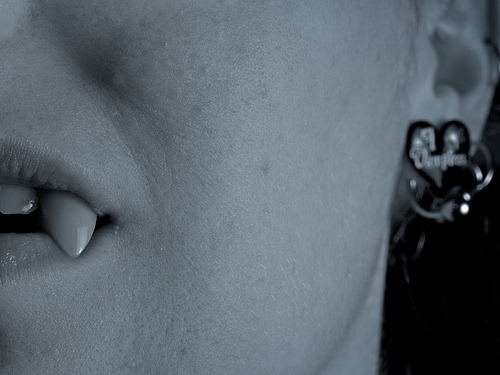
In a perfect story for Halloween, Interview with a Vampire author Anne Rice takes a fanged snap at Stephenie Meyer’s new version of the vampire mythos via Rice’s Facebook page:

Lestat and Louie feel sorry for vampires that sparkle in the sun. They would never hurt immortals who choose to spend eternity going to high school over and over again in a small town —- anymore than they would hurt the physically disabled or the mentally challenged. My vampires possess gravitas. They can afford to be merciful.

After almost 2,000 comments that went back and forth between fans of the different vampire series, Rice attempted to clarify that it was all meant in humor. 

In the end, she offered an olive branch:

I very much love the new vampire authors, no doubt of it. I have unqualified praise for the originality of Charlaine Harris and Stephenie Meyer and for their success. This is fun, guys, all these new vampires roaming the fantasy world. And a little humour about it is not out of place.


Photo credit: http://www.flickr.com/photos/mazdotnu/5363098271/

Review: The Ice Bear by Jackie Morris

ice-bear

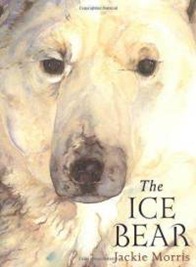
The Ice Bear by Jackie Morris

Poetic and mystical, this picture book is a rich read.  In the beginning of time, people and animals were as one.  Two tiny polar bear cubs were born into the world and cared for by their mother bear in an ice cave.  But the mother was tricked, and Raven was able to steal one of the cubs away.  A hunter found Raven with a bundle of white fur.  Raven flew off, and the hunter picked up the bundle of fur and headed back home on his sled.  When he brought the furs into his home, he and his wife discovered a baby inside.  The two had wished for a child and here was one.  They raised him as their own.  When the child was seven years old, Raven returned and drew him out onto the ice and away from home.  There he almost froze to death, until the bears found him and took him away with them.  He is a boy of two families, two worlds, who must make a choice.

Morris proves here that she is just as radiant a writer as an illustrator.  Her story is told in words that make you slow down, savor them.  If you read them aloud, it reads as verse, a poem in paragraph form.  The world she creates is one of wonder and timelessness.  It is a world at birth, a world that mirrors our own, but is also filled with magic and connections.  She has created a picture book that is an invitation to dream.

Her illustrations have a lot to do with this too.  They capture the Arctic landscape in all of its blues, whites, and purples.  Then they also show the human family filled with the warmth of fire, furs and the snugness of their home.  But most powerful of all is the bear home, where it is still cold, but the heat and warmth comes from the animals themselves, shown powerful in creams and yellows and equally loving.

A gorgeous story that is both beautifully written and illustrated, this book is radiant.  Appropriate for ages 5-8.

Reviewed from library copy.

Also reviewed by:

Check out the video of the author reading the book:

Review: Love, Mouserella by David Ezra Stein

love mouserella

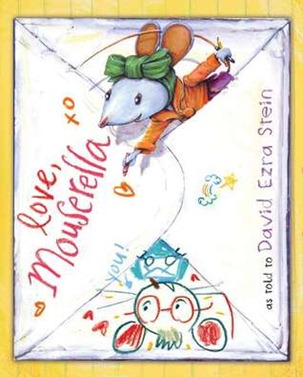
Love, Mouserella by David Ezra Stein

Mouserella misses her grandmother.  She had to go back to the country, and Mouserella lives in the city.  So her mother suggested she write a letter, and she did!  The pages are filled with drawings, photographs, and plenty of great details.  Though Mouserella doesn’t think there is much to share, she actually finds lots of everyday things to talk about: creating seed parachutes, visiting a museum, experiencing a blackout, and playing with her brother.  The story is jolly and warm, filled with homey details, a loving family and the joys of the small things in life.

Stein’s writing and art here create a harmonious whole.  The writing is winningly child-like and wandering.  Mouserella’s voice is clear and personal throughout, creating a solid base for the book.  Stein then embellishes the book with art that ranges from Mouserella’s drawings to photographs of her world.  The combination of crayon art with Stein’s own more realistic but still whimsical art makes for a striking read.

This warm, wonderful picture book will be enjoyed by grandmothers and grandchildren alike.  It is a perfect accompaniment to letter writing units or story times about grandparents.  Appropriate for ages 4-6.

Reviewed from copy received from Penguin Young Readers Group.

Also reviewed by A Year of Reading.