Review: Apocalypse Bow Wow by James Proimos III

apocalypse bow wow

Apocalypse Bow Wow by James Proimos III

Brownie and Apollo are two dogs who have been happily living together with their two humans.  Their only argument is that Apollo always gets the couch.  But then their humans fail to return and the two of them are left alone.  Brownie knows the humans will be back soon because he’s getting very hungry and they always come back when he’s hungry.  But they don’t return.  So the dogs have to figure out how to get out of the house.  Apollo tries to break down the door, but it doesn’t work so Brownie thinks that licking the doorknob will help.  Apollo knows this makes no sense, but lets Brownie try it.  And when he does, a deer leaps through the window and breaks it.  Ta da!  Brownie and his tongue have saved the day.  But when they get out into the world, there are no humans anywhere and now they have to find their own food.  Can two rather silly dogs find a way to survive the apocalypse?

This graphic novel is told in distinct scenes, creating a rather movie-like experience reading it.  The two dog characters are great foils for one another, Apollo being the more grounded and logical dog while Brownie is rather confused and hopelessly optimistic about everything.  Though the book never explains where the humans have disappeared to, readers will happily just go along with the scenario presented thanks to the humor and the silliness.

Proimos’ illustrations are very funny and the way he uses the page is deftly done, making the scenes all the more humorous.  Readers of Jarrett J. Krosoczka’s books will be right at home here with the illustration style. 

A humorous take on a bleak dystopian disaster, this book will be enjoyed by children who don’t mind a dark side to their graphic novels.  Appropriate for ages 9-12.

Reviewed from digital galley received from Bloomsbury and Netgalley.

2014 Costa Children’s Book Award Winner

Five Children on the Western Front

The winner of the 2014 Costa Children’s Book Award is Kate Saunders for Five Children on the Western Front, a sequel to E. Nesbit’s Five Children and It.  The Costa Award is given to an outstanding children’s book written by authors based in the UK and Ireland.

Review: Emmanuel’s Dream by Laurie Ann Thompson

emmanuels dream

Emmanuel’s Dream: The True Story of Emmanuel Ofosu Yeboah by Laurie Ann Thompson, illustrated by Sean Qualls

Emmanuel was born in Ghana, West Africa, with a deformed leg.  His father left the family but his mother continued to encourage Emmanuel to make something of himself.  Emmanuel taught himself to crawl and hop, so he was able to hop the two miles to school and then hop all the way back home at the end of the day.  At school kids would not play with him at first, so he saved up his money to buy a new soccer ball that he shared with the others as long as they let him play too.  Soon he was playing soccer using crutches to get around.  It was at school that Emmanuel also taught himself to ride a bike.  Then his mother fell ill and Emmanuel had to leave school to support his family.  He headed for the big city of Accra where he looked for a job.  It took time, but he started working as a shoe shiner and for a restaurant that also gave him a place to stay.   He sent money home and two years later returned home because his mother’s health was failing.  After her death, he decided to follow his dream to bike around Ghana.  He worked to get help with his dream, becoming a spokesperson in his country for people with disabilities.  He completed his journey of 400 miles in just ten days, an amazing journey that proved that one person’s dreams could deeply change a culture.

Thompson’s writing is in stanzas and moves between feeling like poetry and prose.   This fluidity makes the book very readable, it also lets her make her points with a grace and brevity that is purely poetic.  Thompson’s text shines with her appreciation for Emmanuel and his achievements in life.  Where his culture told him that he was cursed and unworthy, he has become a hero.  It is also a sort of tangible heroism that children will completely understand.  They will know what his achievement is and how difficult it would be to accomplish.

Qualls’ illustrations are incredible.  Filled with beautiful people, strong color, patterns and light, the illustrations let the backgrounds fade to white and black and the people come forward and shine.  Bright colors ripple across skin, fill cheeks, and color the air around people.  There is a sense of life within these illustrations, one that can’t be contained.

A truly inspiring story that shows the creation of a national hero from his infancy through his achievements.  Appropriate for ages 7-9.

Reviewed from digital galley received from Random House and Edelweiss.

My Top 25 Middle Grade Books of 2014

After doing this for a few years, I just get happy if I can pick few enough to make the number somewhat sensible.  Not sure that 30 counts for that!  But I really had a hard time cutting the number down any farther.  So here are my Top 25 Middle Grade Books of 2014:

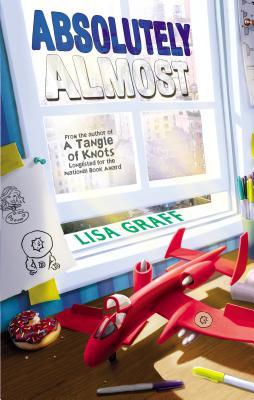
Absolutely Almost Cartwheeling in Thunderstorms

Absolutely Almost by Lisa Graff

Cartwheeling in Thunderstorms by Katherine Rundell

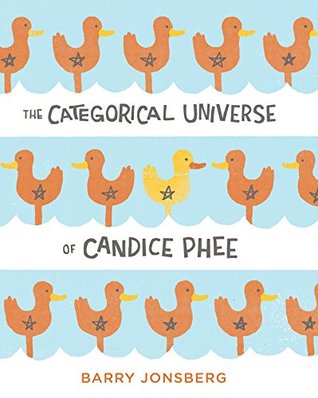
The Categorical Universe of Candice Phee The Children of the King

Categorical Universe of Candice Phee by Barry Jonsberg

The Children of the King by Sonya Hartnett

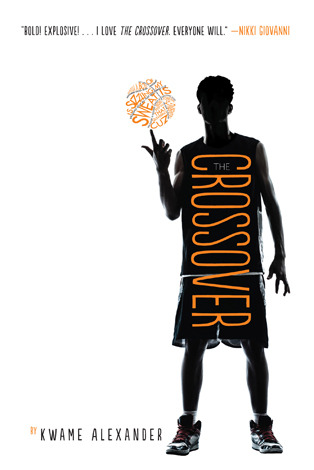
The Crossover Curiosity

The Crossover by Kwame Alexander

Curiosity by Gary L. Blackwood

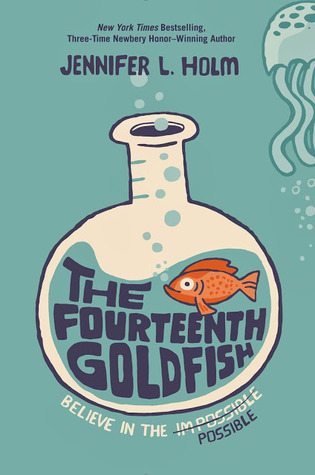
 The Fourteenth Goldfish Gracefully Grayson

The Fourteenth Goldfish by Jennifer L. Holm

Gracefully Grayson by Ami Polonsky

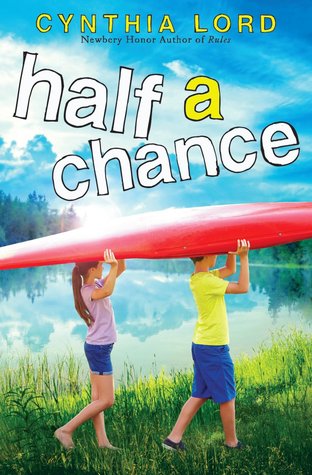
Half a Chance Half a World Away

Half a Chance by Cynthia Lord

Half a World Away by Cynthia Kadohata

The Luck Uglies (The Luck Uglies #1) The Madman of Piney Woods

The Luck Uglies by Paul Durham

The Madman of Piney Woods by Christopher Paul Curtis

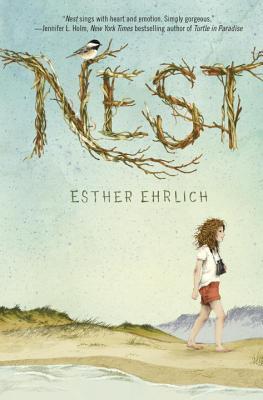
The Meaning of Maggie Nest

The Meaning of Maggie by Megan Jean Sovern

Nest by Esther Ehrlich

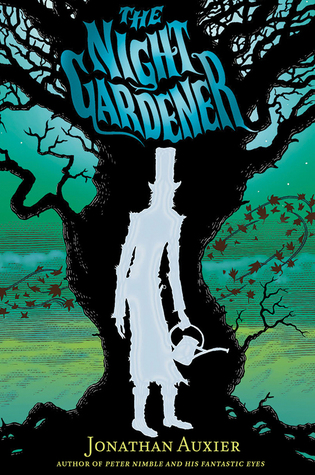
The Night Gardener Nightingale's Nest

The Night Gardener by Jonathan Auxier

Nightingale’s Nest by Nikki Loftin

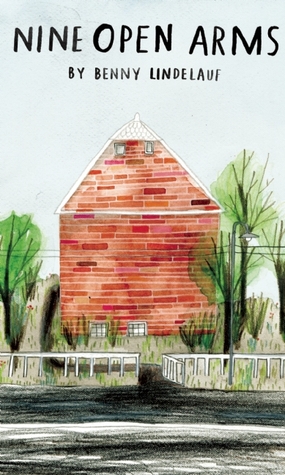
Nine Open Arms Outside In

Nine Open Arms by Benny Lindelauf

Outside In by Sarah Ellis

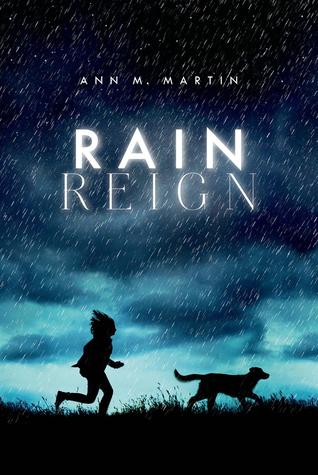
Rain Reign The Red Pencil

Rain Reign by Ann M. Martin

The Red Pencil by Andrea Davis Pinkney

The Secret Hum of a Daisy The Swallow: A Ghost Story

The Secret Hum of a Daisy by Tracy Holczer

The Swallow by Charis Cotter

The Thickety: A Path Begins The Turtle of Oman: A Novel

The Thickety by J. A. White

The Turtle of Oman by Naomi Shihab Nye

West of the Moon

West of the Moon by Margi Preus

My Top Ten Books of 2014 for Elementary Readers

Here are my favorite reads of 2014 for children in elementary grades.  Perhaps they reveal a bit too much about my quirky personality!

More great reads for elementary kids will be part of my Graphic Novel and Nonfiction lists, coming soon.

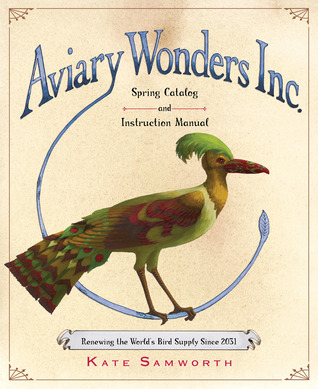
Aviary Wonders Inc. Spring Catalog and Instruction Manual The Day My Father Became a Bush

Aviary Wonders, Inc. Spring Catalog and Instruction Manual by Kate Samworth

The Day My Father Became a Bush by Joke van Leeuwen

Dory Fantasmagory Emma and the Blue Genie

Dory Fantasmagory by Abby Hanlon

Emma and the Blue Genie by Cornelia Funke

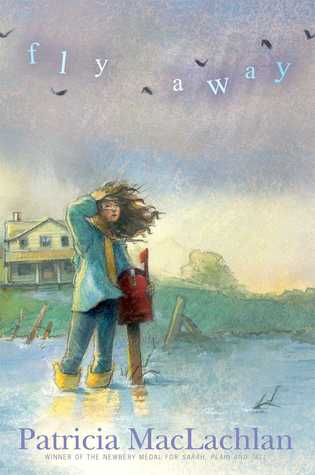
Fly Away Lindbergh: The Tale of a Flying Mouse

Fly Away by Patricia MacLachlan

Lindbergh: The Tale of a Flying Mouse by Toben Kuhlmann

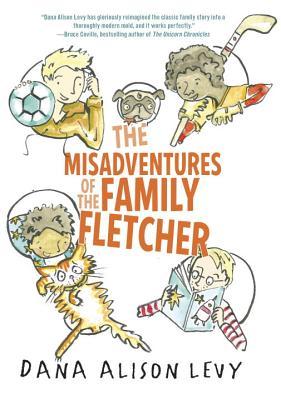
The Misadventures of the Family Fletcher My Heart Is Laughing

The Misadventures of the Family Fletcher by Dana Alison Levy

My Heart Is Laughing by Rose Lagercrantz

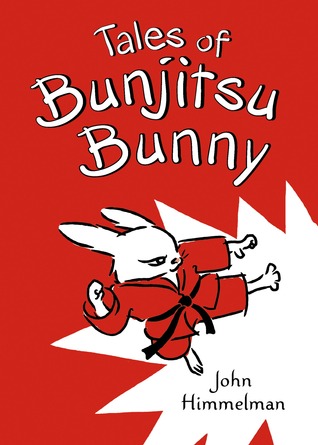
Rules of Summer Tales of Bunjitsu Bunny

The Rules of Summer by Shaun Tan

Tales of Bunjitsu Bunny by John Himmelman

These are only selected from the books I managed to read this year, so please share other favorites of your own in the comments!

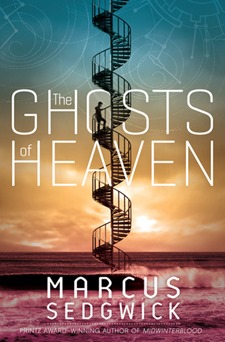
Review: The Ghosts of Heaven by Marcus Sedgwick

ghosts of heaven

The Ghosts of Heaven by Marcus Sedgwick

Sedgwick once again takes readers on a unique journey, this time all bound together by spirals both symbolically and tangibly.  Told in four sections, which Sedgwick explains can be read in any order, the book begins in Paleolithic time with a young girl who has become a woman but not yet borne children being selected to travel to the special caves where someone more important with do the painting on the cave walls.  She is meant solely to climb the walls burdened with his supplies.  But the story twists and turns away from what is expected into a different story entirely.  The second tale is of the witch hunts in England, where another girl is trying to survive after her mother’s death.  Her mother was the cunning woman of the village, caring for the health of everyone.  And the girl has caught the eye of the landowner’s son, but things are not that simple and when a new religious leader comes to town, the girl finds herself at the sharp end of his attention.  The third tale brings readers into the world of a 1920s asylum for the mentally ill where a poet who is incarcerated there is obsessed with spirals and draws a young doctor into his world.  The final story is set in the future, aboard a spaceship where only one person wakes at a time, keeping the ship maintained as it heads on its lengthy journey that will save the human race.  Then things start going wrong.  Four stories, each spiraled with one another into a whole novel that is dark, deep and incredibly engaging.

Each of these stories stands on its own merit, each one more dazzling than the next.  Yet as a whole it is where they are truly powerful, tied together with spirals of time, spirals of power, the spiral of humanity too.  Sedgwick excels at creating tension in each of these stories, each building ever so cleverly and enticingly towards an ending that readers long to arrive and yet dread.  Sometimes you know where they are headed, others you have no idea, and in each there are connections to the others, echoes from one story to the next through time and space.

This is a book that requires strong teen readers.  Some of the stories are less about teens than about adults, yet it is the stories of those teen girls that echo through time, tying the stories into one novel.  It is a book that will be welcomed in high school classrooms, one that insists on discussion, one that will resonate with certain readers who see the world as one enormous spiral too.

Exquisite writing, beautifully plotted and filled with powerful tension, this novel for teens is a great way to start a  new year.  Appropriate for ages 14-18.

Reviewed from digital galley received from Roaring Brook Press and Netgalley.

Review: How to Grow a Friend by Sara Gillingham

how to grow a friend

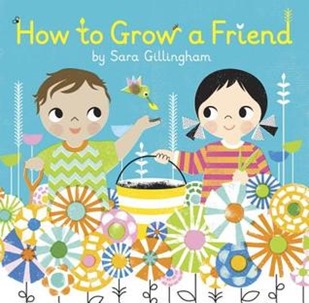
How to Grow a Friend by Sara Gillingham

Growing a friend is a lot like growing a flower as this picture book proves.  Just like flowers, friends need a seed and good soil.  You need space to bloom.  You need to be patient.  Sometimes your friend will bug you, but chase the bugs away together.  Don’t let your friend get stuck in the weeds.  Grow a whole garden of friends and know that there is always room for one more friend.  Along the way, the analogy of gardening strengthens the ties of the friendship, making this a very tight and strong picture book that shows that hard work, patience and time make for a great friendship.

Gillingham writes in a very earnest and straight forward tone here.  This is not a subtle analogy, but one that is presented straight to the reader.  The text of the book speaks about friendship while the illustrations show mostly the gardening aspect though at times it too is all about the human connection.  Young readers are shown clearly that friendship takes work and time.

Gillingham’s bright illustrations add greatly to the appeal of the book.  With an organic feel thanks to the texture of the prints, the illustrations have strong shapes, bright colors, and lots of patterns yet never get too busy or fussy.  They have a jaunty and frolicking feel to them that is very cheery.
Perfect for gardening and friendship story times, this picture book will have us thinking spring early this year.  Appropriate for ages 3-6.

Reviewed from digital galley received from Random House and Edelweiss.

2014 in Review

The WordPress.com stats helper monkeys prepared a 2014 annual report for Waking Brain Cells!

Here’s an excerpt:

Madison Square Garden can seat 20,000 people for a concert. This blog was viewed about 62,000 times in 2014. If it were a concert at Madison Square Garden, it would take about 3 sold-out performances for that many people to see it.

Click here to see the complete report.