2015 Scottish Children’s Book Awards

28,000 Scottish school children voted on the winners of the Scottish Children’s Book Awards.  Here are the winners, including one of the youngest Scottish authors, Alex McCall, at age 21.

BOOKBUG READERS (Ages 3-7)

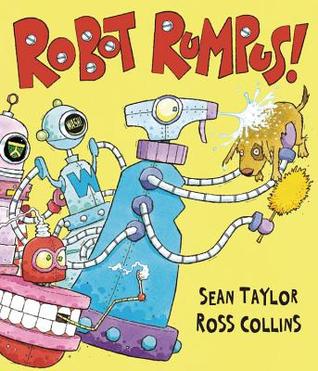
Robot Rumpus!

Ross Collins for the illustrations of Robot Rumpus, written by Sean Taylor


YOUNGER READERS (Ages 8-11)

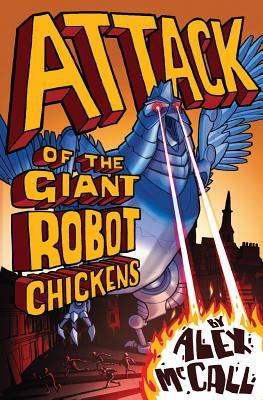
Attack of the Giant Robot Chickens

Alex McCall for Attack of the Giant Robot Chickens


OLDER READERS (Ages 12-16)

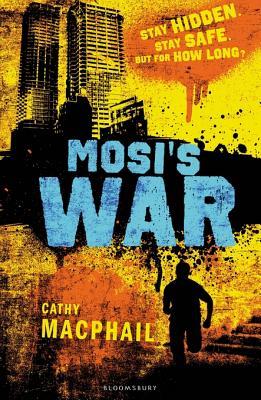
Mosi's War

Cathy MacPhail for Mosi’s War

2015 Golden Kite Winners

SCBWI

The Society of Children’s Book Writers and Illustrators (SCBWI) has announced the winners of their Golden Kite Awards and the Sid Fleischman Award. These awards are unique because they are the only ones judged by a jury of author and illustrator peers.  Here are the winners in each category as well as the honor books:

Revolution The Family Romanov: Murder, Rebellion, and the Fall of Imperial Russia

FICTION WINNER

Revolution by Deborah Wiles

NONFICTION WINNER

The Family Romanov by Candace Fleming

The Right Word: Roget and His Thesaurus A Dance Like Starlight: One Ballerina's Dream

PICTURE BOOK ILLUSTRATION WINNER

The Right Word: Roget and His Thesaurus illustrated by Melissa Sweet, written by Jen Bryant

PICTURE BOOK TEXT WINNER

A Dance Like Starlight: One Ballerina’s Dream by Kristy Dempsey, illustrated by Floyd Cooper


Dory Fantasmagory Freedom Summer: The 1964 Struggle for Civil Rights in Mississippi

FICTION HONOR

Dory Fantasmagory by Abby Hanlon

NONFICTION HONOR

Freedom Summer: The 1964 Struggle for Civil Rights in Mississippi by Susan Goldman Rubin

18475599 The Baby Tree

PICTURE BOOK ILLUSTRATION HONOR

The Farmer and the Clown by Marla Frazee

PICTURE BOOK TEXT HONOR

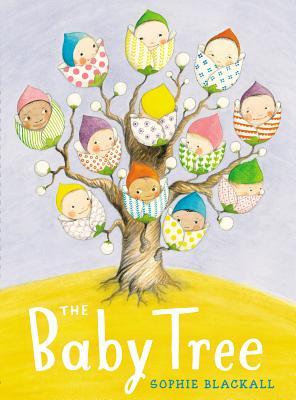
The Baby Tree by Sophie Blackall


SID FLEISCHMAN AWARD FOR HUMOR

Evil Librarian

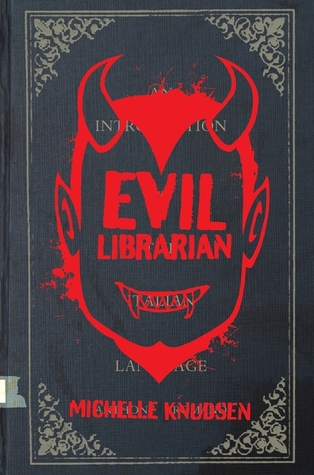
Evil Librarian by Michelle Knudsen

Review: Red Butterfly by A. L. Sonnichsen

red butterfly

Red Butterfly by A. L. Sonnichsen

Kara was abandoned as an infant and taken in by an American woman living in China. Her Mama never leaves the apartment they share and Kara doesn’t attend school. Kara does get to leave the apartment each day to run errands on her bicycle, her favorite time of day. In China where the one-child limit is in effect, parents leave infants who have physical challenges like Kara who was born with one hand with only two small fingers on it. Mama longs to return to the United States, but she can’t without abandoning Kara, who has no identification papers and has not been formally adopted. When Mama’s American daughter comes to visit, Kara finds their entire lives turned upside down and their secret exposed. Will Kara be able to bring their family back together again?

Told in lovely rich verse, this novel is elegantly written and conceived. It shows the results of the one-child policy in China and the children who were abandoned because of it. Yet it is far from a condemnation of China or the United States. It is a portrait in contrasts and complexity, showing that there is good and bad in both systems. It is also the story of one very strong young girl who has already lost one family and is determined not to lose another.

Kara is the voice of the book with the poems told from her point of view. She is unique in many ways, including being able to speak English better than she Chinese due to her upbringing. Kara’s disability is handled in a matter-of-fact way for the reader. While she is profoundly ashamed of it, her hand and disability do not label her at all in the novel. Kara’s situation is complicated by the politics of adoption and identity. In her journey to a resolution of where she will live, there are episodes in an orphanage and then later in a home in the United States. These are all deftly and clearly drawn, showing both the universal nature of family and love but also the differences in cultures.

Radiant verse and a very strong young protagonist make this verse novel a treat to read. The unusual subject matter of an older orphan from China makes it a unique read. Appropriate for ages 9-12.

Reviewed from copy received from Simon & Schuster Books.

This Week’s Tweets, Pins & Tumbls

Here are the links I shared on my Twitter, Pinterest, and Tumblr accounts this week that I think are cool:

Choose your own adventure

CHILDREN’S BOOKS

CCBlogC: CCBC Diversity Logs on Pinterest http://buff.ly/1DFAS2e #kidlit #yalit #weneeddiversebooks

Dr Seuss is more widely read than JK Rowling among children – Telegraph http://buff.ly/1DLeUgK #kidlit

Mal Peet, writer, dies aged 67 – Telegraph http://buff.ly/1EdMBue #kidlit

No Boys Allowed: School visits as a woman writer http://buff.ly/1GIM3ug #kidlit #authors #sexism

When you read....

TEEN READS

17 of March 2015’s Best YA Books: Young Adult Readers, We Lucked Out This Month http://buff.ly/1vUjdWX #yalit

Divergent author Veronica Roth is writing TWO new books http://buff.ly/1EGPS45 #yalit

Gene Luen Yang to Write For DC Comics http://buff.ly/1zCaXpY #yalit

Hot YA Book ‘The Square Root of Summer’ Sells at Auction http://buff.ly/1vUjWHK #yalit

2015 Blue Peter Book Awards

Blue Peter Book Awards 2015

The Blue Peter Book Awards are voted on by over 200 children from 10 schools across the UK.  A panel of judges decide the shortlist which is then voted on by the children. Here are the winners:

BEST STORY

The Spy who loved School Dinners

The Spy Who Loved School Dinners by Pamela Butchart, illustrated by Thomas Flintham


BEST BOOK WITH FACTS

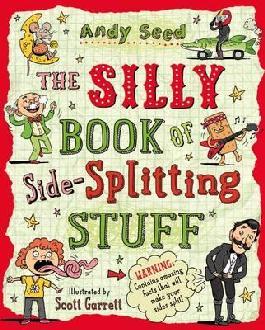
The Silly Book of Side-Splitting Stuff

The Silly Book of Side-Splitting Stuff by Andy Seed, illustrated by Scott Garrett

Review: My Name Is Truth by Ann Turner

my name is truth

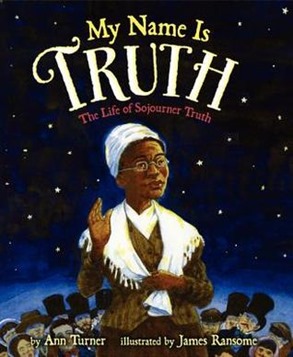
My Name Is Truth: The Life of Sojourner Truth by Ann Turner, illustrated by James Ransome

Told in her own voice, this picture book biography captures the childhood and emergence of Sojourner Truth as an orator and activist. The first pages of the book show the horror of slavery, the loss of family members when they are sold away, and the damage of loss, grief, battery and ownership. Then with her baby in her arms, Sojourner runs away, finding shelter. She eventually fought to get her son back with her, and finding her voice. Moving to New York City, she gains her new name of Sojourner Truth and begins to speak out. From wagon backs to formal lectures and then in print, her words travel and help destroy the institution of slavery across the nation.

Turner weaves Truth’s words into the text, creating poetry that is fiery and honest and burns with indignation about slavery. Using her own voice to narrate the story is a great decision, allowing readers to really see what has built the passion upon which Sojourner Truth draws again and again. The horrors of the loss of twelve members of her family never leaves her and it never leaves the book, as it begins and ends with that focus. The entire book is beautifully drawn and historically accurate. Readers can read the author’s note at the end and teachers will appreciate the book being reviewed for accuracy by experts.

Ransome’s illustrations are luscious and lovely. He shows the hard work, grueling labor of slavery and then with one page of running away, Sojourner Truth expresses freedom in the form of a large bed of her very own, something she has never experienced before. It is an image that is powerful and one that children will understand intuitively. As the book progresses, the images grow in power and strength as she comes into her own.

Strong, poetic and filled with history, this picture book biography of Sojourner Truth will be embraced by schools and public libraries alike. Appropriate for ages 6-9.

Reviewed from library copy.
Review: Wolfie the Bunny by Ame Dyckman

wolfie the bunny

Wolfie the Bunny by Ame Dyckman, illustrated by Zachariah OHora

When the bunny family came home, they found a little bundle on their doorstep. It was a baby wolf! Mama and Papa were thrilled to take him in, but Dot knew that the wolf was going to eat them all. Still, the bunny family took Wolfie in. Dot kept an eye on him all night long, and tried again at breakfast to warn her family that they were going to be eaten. No one listened, again. Finally, Dot’s friends agreed that Dot was right and they went to play somewhere else. When she got back, Wolfie would not leave Dot alone. Days went by and Wolfie started to grow and grow. He also started to eat and eat, so Dot was sent to the store along with Wolfie. It was there that Wolfie finally showed his fangs, but it doesn’t turn out in the way that Dot was expecting!

Dyckman has created a very clever little book that shows adoption and new siblings in a fresh way. Dot is convinced from the very beginning that taking in Wolfie is a bad idea and that it will be catastrophic for her family. This feeling of doom is very much what human children feel when a new baby is announced. Wolfie goes through all of the steps of a new sibling, from getting all of the attention to being a pest. Yet through the entire book, Dyckman keeps the focus on wolves and bunnies and how it will all play out, creating a welcome added dynamic to the story.

OHora’s illustrations add to the humor on the page. Done in acrylic, the illustrations have a signature flat feeling to them that is very modern. They capture the cheerful bunny family, the worried Dot, and the adorable Wolfie. OHora also creates a dynamic neighborhood for the story to take place in that makes the entire book feel grounded and real. Or as real as a book about wolves and bunnies can be.

Clever, funny and bright, this picture book captures have a new sibling in a fresh way. Appropriate for ages 3-5.

Reviewed from library copy.

Review: Such a Little Mouse by Alice Schertle

such a little mouse

Such a Little Mouse by Alice Schertle, illustrated by Stephanie Yue

A little mouse lives in a hole in a meadow under a clump of dandelions. In the spring, he heads out of his home and explores the area around him. He sees a snail, a woodpecker and buzzing bees. He also sees himself reflected in a puddle. And each day he brings home a seed that he stores away in his storeroom. In the summer, the little mouse watches beavers building a dam in the pond, visits a toad, and sees a porcupine. He brings a sprig of watercress home each day and adds that to his storeroom. In autumn, the little mouse watches geese flying, ants marching, and brings home an acorn to his storeroom which is filling up. In winter snow falls and the little mouse can’t see the grass anymore. He heads right back into his hole and stays there, well fed and warm.

This picture book explores seasons and the changes seasons bring in nature from a gentle and cheerful mouse perspective. It captures the natural rhythms by echoing them in the writing.  Little mouse leaves his hole the same way no matter what the season, by counting to three and popping out. Then he explores, discovering three things in nature to pay attention to. Some small and some large. Schertle’s tone invites young readers to take a look at the nature outside their own holes and visit it each day to see the changing seasons.

Yue’s illustrations also show nature as a place to safely visit and explore. The illustrations celebrate nature and its beauty and variety. They also pay homage to classic stories like Peter Rabbit while down in the mouse’s burrow with his homey furniture and then his baking and soup making in the winter months.

A simple story, but one that has a wonderful rhythm and poetry to it that moves it to the top of the large pile of seasonal stories. Appropriate for ages 3-5.

Reviewed from copy received from Scholastic.

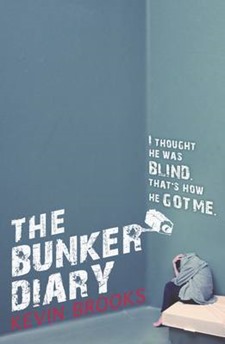
Review: The Bunker Diary by Kevin Brooks

bunker diary

The Bunker Diary by Kevin Brooks

The controversial winner of The Carnegie Medal in 2014 has arrived in the United States. It is the story of Linus, a teenager living on the streets who is kidnapped and placed in a bunker. The bunker has six bedrooms, a kitchen and a bathroom. In the kitchen are six plates, six cups, six sets of plastic utensils. Each room has a Bible and a notebook and pen. There is is no hot water, only cold. Linus is there alone at first but then others start to arrive. Someone is watching them through the vents in the ceiling, even in the bathroom there are cameras and microphones. That someone responds to written requests for food and supplies via notes sent in the elevator. Until someone does something wrong, then the food stops and the real horror begins.

Brooks has crafted an intense and horrific story here. It could have descended into pure hate and the proof that people are inherently evil. But something else happens here. There is hope, there are dreams, there are memories of human connection, and new connections are forged too. At the same time, there is no denying that it is bleak and desperate and frightening. It is a book that asks what you would do in this circumstance, who you would become. It is a book that challenges, that doesn’t offer easy answers and that is beautifully terrible.

While Linus is the narrator of the book with the story told in his own writing in his notebook, the story is also that of the others in the bunker with him. They are all just as well crafted, their responses to their kidnapping entirely personal and appropriate for who they are, and there are at least two of them who are heroes of the story too. They are the ones that imbue it with humanity and make the book worth the endurance needed to finish it.

Powerful, compellingly written and achingly human, this novel is challenging and exquisite but certainly not for all readers. Appropriate for ages 14-17.

Reviewed from digital galley received from Edelweiss and Penguin.