A gorgeous trailer has been released for the movie version of The Great Gilly Hopkins:
What do you think? I think it looks pretty great!
A gorgeous trailer has been released for the movie version of The Great Gilly Hopkins:
What do you think? I think it looks pretty great!

The winners of the 2016 New Zealand Book Awards have been announced. The winner of the Margaret Mahy Book of the Year and winner of the Elsie Locke Non-Fiction Award is
Anzac Heroes by Maria Gill, illustrated by Marco Ivancic
Other winners include:
PICTURE BOOK AWARD
The Little Kiwi’s Matariki by Nikki Slade Robinson
ESTHER GLEN JUNIOR FICTION AWARD
From the Cutting Room of Barney Kettle by Kate De Goldi
YOUNG ADULT FICTION
Battlesaurus: Rampage at Waterloo by Brian Falkner
RUSSELL CLARK ILLUSTRATION AWARD
Much Ado About Shakespeare by Donovan Bixley
Visit the site for more award winners including the ones voted on by children in New Zealand.

Applesauce Weather by Helen Frost, illustrated by Amy June Bates
Faith and Peter know that it is applesauce time when the first apple falls from the tree outside their house. It’s also the time of year when their Uncle Arthur comes to tell his stories about how he lost his finger. But this year is different, since Aunt Lucy died and Uncle Arthur just isn’t as twinkly as he once was. Faith though is sure that her uncle will come and he does, unsure of his welcome without Aunt Lucy. He sits on the bench under the apple tree with the children, warming up to telling his tales. Maybe this year they will finally learn the truth of his missing finger!
There is a beautiful delicacy in this book, spun together by the masterful poetry of Frost. She holds the hearts of her characters with such tenderness, showing the love of the children for their uncle and also the love of Arthur for his beloved Lucy. The stories all twine together, the family sitting under the tree, long-lasting love, Peter discovering his own first love, and then the remarkable stories that Arthur tells. The entire work is dazzling, moments of life held up and made amazing just for taking the time. This is real world writing at its very best and one of the best verse novels of the year so far.
The illustrations by Bates are filled with emotions. There is the hesitation of Arthur as he arrives. The bend of the back of Faith as she waits under the apple tree. The flow of breeze into her hair. They are filled with whimsy, the stoop of an old back, the twinkle of a storyteller starting to tell, the joy of apples in fall.
Beautiful and amazing, this very short verse novel is a celebration of autumn and families. Appropriate for ages 6-9.
Reviewed from ARC received from Candlewick Press.

Quit Calling Me a Monster by Jory John, illustrated by Bob Shea (InfoSoup)
The main character in this book does not want people to just call him a monster. Sure, he may look like a monster. He may sound like a monster. He may live in your closet or under your bed. But how would you feel if everywhere you went people screamed and called you “monster.” After all, he doesn’t go around calling humans names like “little meat snack” does he? He’s a very well behaved and polite monster. Wait, OK, so he IS a monster, but he’d much rather you call him Floyd Peterson instead. Can you do that?
Two picture book masters come together for their best collaboration yet in this very funny picture book that speaks directly to how stereotyping and labels make someone feel. The text is gorgeously written and works beautifully when shared aloud, particularly by someone willing to go full out on the voicing of Floyd. The twist at the end is wonderful as well.
Shea’s art is incredibly playful with Floyd blending into darkness and also disappearing against furry backgrounds. Shea has created a rather friendly and polite monster but also one that has a scary side too, the perfect mix.
Funny and smart, this picture book looks at how names hurt even if you are a monster. Appropriate for ages 3-5.
Reviewed from e-galley received from Random House Books for Young Readers and Edelweiss.
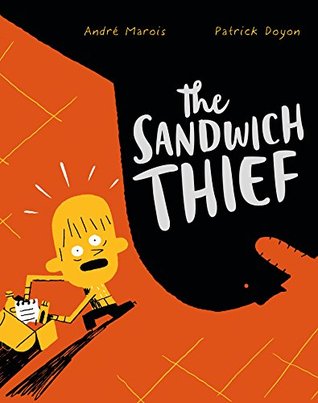
The Sandwich Thief by André Marois, illustrated by Patrick Doyon (InfoSoup)
Marin loves the sandwiches his foodie parents send in his school lunches. Then one Monday at lunch, his sandwich is gone. Stolen! And it was his favorite: ham, cheddar and kale. Now Marin must figure out who stole his sandwich. He has a list of suspects, mostly other children in his class. But soon his list of suspects extends to include teachers and even the principal. As the days go on, his sandwiches continue to be stolen and the situation is becoming dire. It is up to Marin to find a way to solve the case with the help of a food (and chemistry) expert.
The winner of the Governor General’s Literary Award for French Language, this Canadian import is the first in a series. The entire book is written from Marin’s point of view and is not tidied up to be particularly politically correct. The list of student suspects is subject to this and is rather unfortunate with someone who loves to eat being referred to solely as “big” and a girl in poverty being shown no empathy only suspicion. But those are smaller points in a book that is a huge amount of fun and my hope is that the further books in the series will remedy those missteps.
The format is a mix of graphic novel and regular novel, making it imminently readable for elementary-aged students. The humor is broad and funny as is the final solution to the mystery which is entirely satisfying and has all of the clues clicking nicely into place for the reader. There is a sense of hipness around the book, as it has a unique style that is immensely appealing in its quirkiness.
A strong new series for young readers, get this into the hands of fans of graphic novels who may just love a fast-moving novel with lots of graphics for a change. Appropriate for ages 6-9.
Reviewed from library copy.

Plants Can’t Sit Still by Rebecca E. Hirsch, illustrated by Mia Posada (InfoSoup)
Plants can’t walk or run or even fly, but they don’t stay still either! This jaunty picture book captures the many ways that plants manage to move, even though they are rooted to the ground. They squirm out of the soil. They turn towards the sun. They creep underground and spring up in new places. They can climb walls and even eat bugs. Some fold shut at night while others open only in the moonlight. Then there are the seeds that use all sorts of tricks to move to new places to grow. That’s where they start to move all over again.
As a person with a native garden that overtakes the entire front of house this time of year, I am very aware of plants being able to move! I love the dynamic quality of this book as well as the surprise factor where children will wonder about how plants in their lives are moving since they don’t appear to be doing much at all. Hirsch selects plants that children will experience in their normal lives: milkweed, strawberries, tulips, morning glories, and maple trees. She uses simple language to explain how the plants move and grow, making this a science book that preschoolers will enjoy. Those looking for more detail can turn to a section in the back of the book.
Posada’s illustrations beautifully enhance this picture book and its fresh look at plants. The illustrations are done with cut paper collage and watercolor. They fill the pages with bursts of color, zings of green and plenty of earthiness too. The colors are perfectly chosen to evoke the real nature of the plants like the changing colors of the maple leaves and the burst of fuzz from a dandelion.
A great new book on plants and the surprising ways they move, this is a fascinating read. Appropriate for ages 3-5.
Reviewed from library copy.
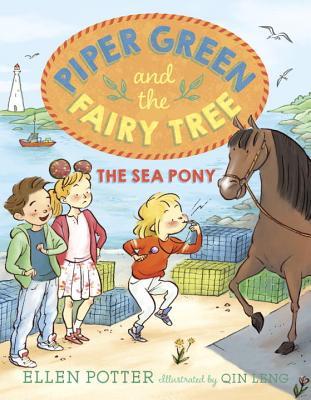
Piper Green and the Fairy Tree: The Sea Pony by Ellen Potter, illustrated by Qin Leng
Released August 16, 2016.
Piper sets off on her third adventure living on her small island home. When she visits the Fairy Tree, she discovers a strange whistle inside. Unfortunately though, Piper doesn’t want a whistle. She wants a pony! And the first pony just arrived on the island that day. Piper was also hoping to spend time with her big brother who is home from school, but he isn’t feeling well so Piper decides to try to make him the treat that her mother makes her when she is sick. They don’t turn out quite the same way. When Piper’s dad needs help on his fishing boat, Piper leaps to help and discovers two things along the way, one that has her dreaming of riding something other than a pony and the other that will help her family even more than her loud whistle does.
Potter has just the right feel in the books in this series. Piper is wonderfully engaging as a protagonist. She is imaginative, funny and entirely herself. Even as Piper is making silly mistakes, the book does not make fun of her, rather it laughs along with her and looks at the errors we all make in our lives. It’s a book of empathy, humor and the importance of family and community.
Leng’s illustrations offer young readers a refreshing break from the text, giving them just the right amount of space. They are done in a framed style in either half-page or full-page format. The chapter breaks too are done with style, offering stripes to invite readers to turn more pages and follow the story further.
Another winner in this charmer of a series that is just right for children who enjoy Clementine. Appropriate for ages 6-8.
Reviewed from ARC received from Knopf Books for Young Readers.
The shortlist for the 2016 British Book Design Awards have been announced. The following are some of the shortlisted titles. The full list can be seen here.
CHILDREN’S TRADE 0-8 YEARS
Above and Below by Patricia Hegarty, illustrated by Hanako Clulow
Bob the Artist by Marion Deuchars
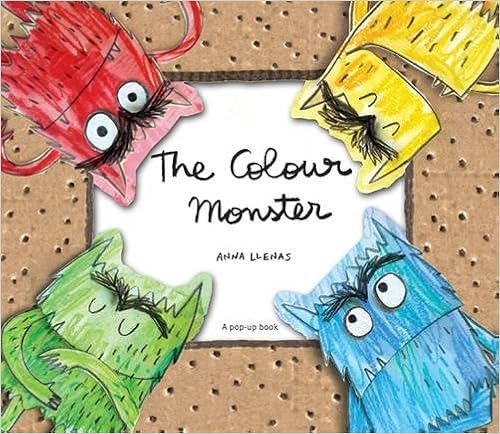

The Colour Monster by Anna Llenas
Dog on a Train by Kate Prendergast
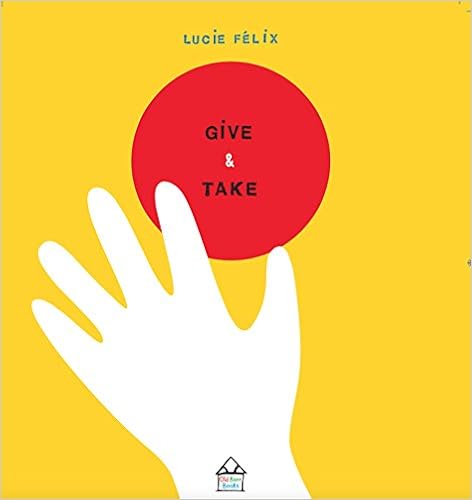
Give & Take by Lucie Felix
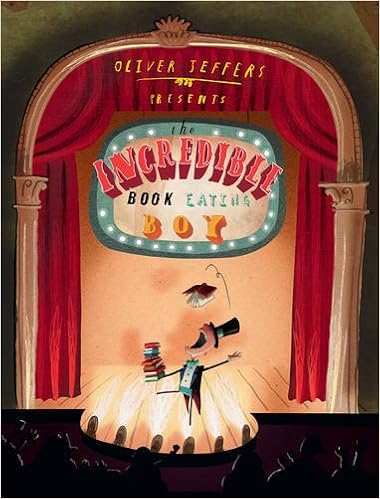
The Incredible Book Eating Boy by Oliver Jeffers
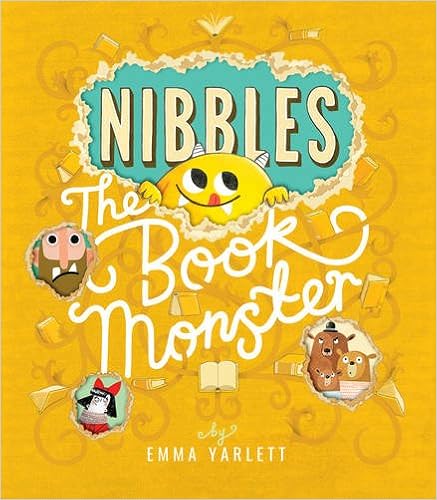
Nibbles by Emma Yarlett
CHILDREN’S TRADE 9-16 YEARS
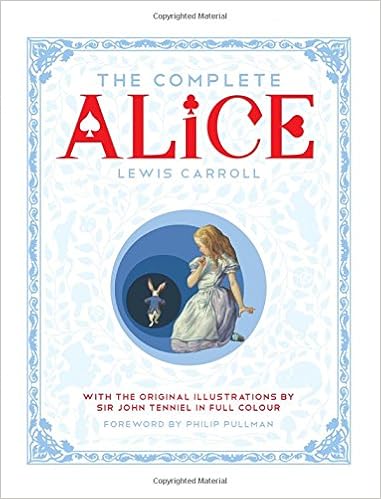
The Complete Alice by Lewis Carroll and Sir John Tenniel
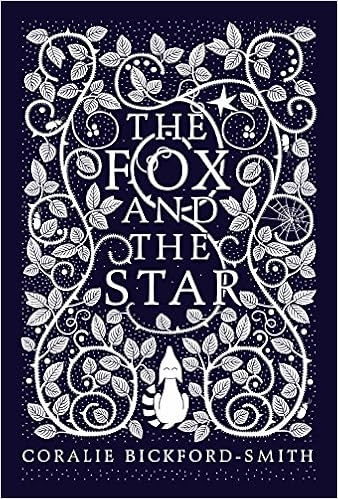
The Fox and the Star by Coralie Bickford-Smith
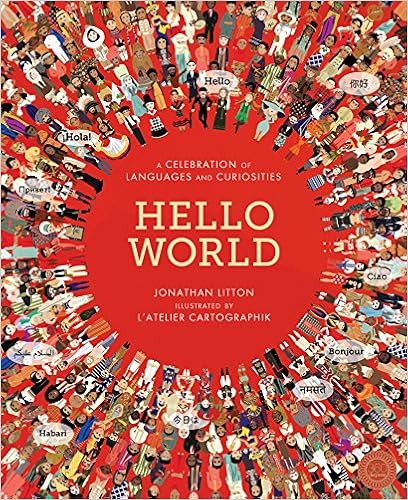
Hello World by Jonathan Litton
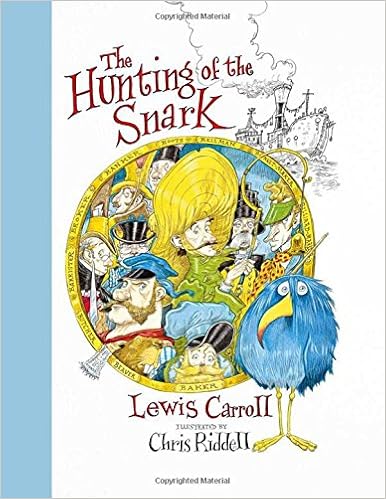
The Hunting of the Snark by Lewis Carroll, illustrated by Chris Riddell
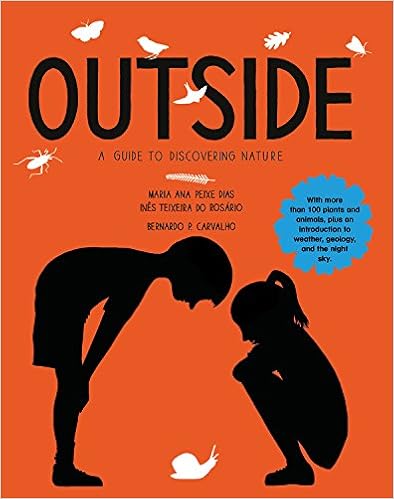

Outside: A Guide to Discovering Nature by Maria Ana Peixe Dias
Under Earth, Under Water by Aleksandra Mizielinski
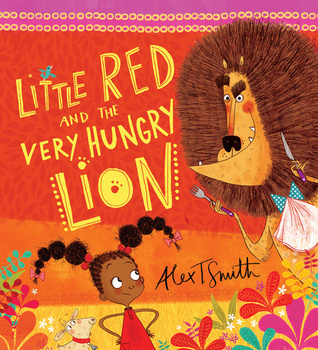
Little Red and the Very Hungry Lion by Alex T. Smith (InfoSoup)
This riff on the Little Red Riding Hood story is filled with humor and twists that will delight. Little Red’s auntie has woken up with spots and so Little Red must cross the Savannah to bring her some medicine and some doughnuts. Little Red makes it past all sorts of animals until she stops in the shad of a tree. That’s when the Very Hungry Lion appears. When he asks Little Red where she is off to, the Lion hatches a plan that involves pretending to be her auntie and then eating both Little Red and her aunt. Little Red though is not fooled at all. So when she sees the Lion in her auntie’s clothes and in her bed, Little Red launches into action. Soon the Lion has a new hairstyle, has brushed his teeth and changed into a ruffled dress. The Lion though has had enough and roars. Little Red does not back down and soon a friendship is starting, with some strict rules in place.
Little Red is a great heroine. She is smart and fearless, facing down a hungry lion with stern warnings. It is also the humor of this book that works so well. The braiding of the Lion’s hair is a wonderful moment as is his changing clothes once again at Little Red’s insistence. It is in those moments that story becomes something new and fresh and where the audience will understand that this is a very different Little Red Riding Hood than in the original tale.
Smith’s art is zany and bright. The look on the Lion’s face is lovely, particularly when Little Red is forcing him to do things. Little Red pops on the page with her red dress and arching braids. She is particularly small next to the huge lion and still manages to hold her own on each page. Filled with humor and color, these are images that will work with groups of children very well.
One to roar about, add this to your twists on well-known tales or in any story time about lions. Appropriate for ages 3-5.
Reviewed from library copy.


 Waking Brain Cells