March: Book 3 by John Lewis

march-book-3-by-john-lewis

March: Book 3 by John Lewis, Andrew Aydin and Nate Powell (InfoSoup)

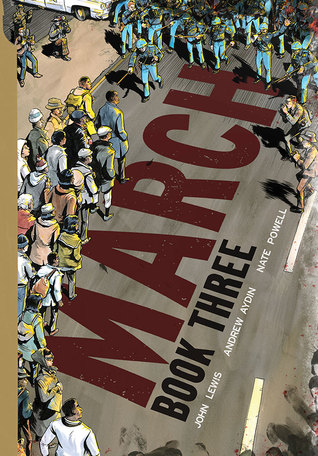
This is the final book in this amazing graphic novel trilogy. Congressman John Lewis concludes his story of the Civil Rights marches, providing real context to the Black Lives Matter movement of today. This book begins with the bombing of the church in Birmingham, Alabama that killed four young girls. It shows the fight for the ability to vote in Alabama for African Americans who were forced to take tests or just ignored as they tried to register to vote. The book culminates with the march in Selma and the violence that accompanied it and most importantly the changes it created.

I can’t say enough good things about this series. It brings critical Civil Rights history directly to teens in a format that is engaging. There is no way to turn away from the violence of the response of those in power as blood flows in the images on the pages. It makes it all the more powerful that the marches stayed nonviolent and focused on pacifism. Lewis himself voices again and again how much pressure there was at times in the movement to react more violently and how that was managed by himself and others. It is a testament to people willing to put their own bodies and lives at risk for progress.

The illustrations are riveting. Done in black and white, they effectively play darkness and light against one another, adding to the drama of the situations they depict. At times they are haunting and blaze with tragedy. The opening scenes of the Birmingham church are filled with tension and sadness that make it difficult to turn the pages and witness what happens.

These are the books our teens need right now. Every public library should have this series, no matter what races are represented in your community. This is our shared history and one that we cannot deny or turn away from. Appropriate for ages 12-15.

Reviewed from library copy.


First Light, First Life by Paul Fleischman

First Light First Life by Paul Fleischman.jpg

First Light, First Life: A Worldwide Creation Story by Paul Fleischman, illustrated by Julie Paschkis (InfoSoup)

A companion book for Glass Slipper, Gold Sandal, this picture book looks at creation stories from around the world. From the very beginning of how the universe was formed, then how the earth was formed, how human beings came about and then the animals as well, this book combines a myriad of different cultures into one story with various voices and points of view. With all of the differences, the book still manages to show the universal elements of creation stories and how looking at different cultures allows us to celebrate our humanity as one.

Fleischman captures phrases from different cultures in the book. Structuring the elements into a story all of its own, he allows each culture’s differences to show but also focuses them into a cohesive whole as well. While cultures may differ on how the universe was formed, there is a sense of wholeness in looking at it from so many points of view. The universal aspects shine and the differences ensure that we are still seeing the cultures themselves and their uniqueness.

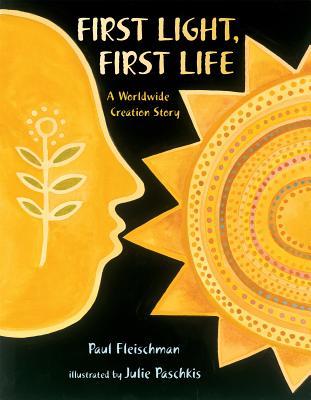
The illustrations by Paschkis are beautifully elemental, showing each culture, celebrating each one separately. The illustrations also label each culture or region of origin for the story fragments, allowing readers to see the roots of the different stories and how they reflect the area they come from.

Vividly presented, this picture book look at creation itself is a dynamic view of our world’s cultures as well. Appropriate for ages 5-7.

Reviewed from library copy.


In Plain Sight by Richard Jackson

in-plain-sight-by-richard-jackson

In Plain Sight by Richard Jackson, illustrated by Jerry Pinkney (InfoSoup)

Sophie lives with her parents and her grandfather who sits near the window during the day in his wheelchair. He can wave goodbye to her as she heads to school in the morning and is the first person she runs to see when she comes back home. Each day, she visits with her grandfather and he tells her the story of something that he has “lost” during the day. Then it is up to Sophie to find the lost item somewhere in his room. Each time she manages to find the hidden object somewhere in place sight, if she just looks closely enough. This lovely picture book shows a playful and warm relationship between grandparent and grandchild.

Jackson’s text is demonstrates how small daily rituals can become the foundation of a close relationship, each one designed to tell a story, share a moment and bring the two of them closer together. There is a warmth in the language they use with one another, a recognition of how important they are to one another. That relationship is all about playing together, spending these moments delighting in one another and the shared game.

Pinkney’s illustrations are filled with the small details that he is known for. The room of the grandfather is filled with shelves, papers, books and mementos. It’s an ideal background for an object search and one that is based in reality. Young readers get the chance to find the object themselves before Sophie shows them where it is. The organic feel of the art and these searches adds to the warmth and joy of this picture book.

A lovely depiction of a close grandparent relationship, this picture book also adds the pleasure of a well-done object search. Appropriate for ages 4-6.

Reviewed from library copy.


Coyote Moon by Maria Gianferrari

coyote-moon-by-maria-gianferrari

Coyote Moon by Maria Gianferrari, illustrated by Bagram Ibatoulline (InfoSoup)

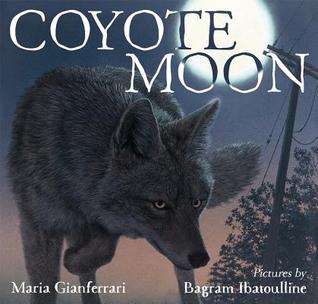
Coyote wakes and heads out of her den to find food for her pups. She walks the roads past houses and fences. She finds a mouse but doesn’t manage to catch it. There are geese on the golf course, but Coyote can’t get close enough to steal an egg without the geese attacking her. There is a rabbit on a lawn, but the rabbit is faster than Coyote. Soon dawn arrives and Coyote still has not caught any food for her family. Then there are turkeys walking nearby and Coyote manages to capture one. She heads home but not before a child spies her from a window when Coyote stops to sing to the morning.

This book is a beautiful dance between illustrations and text. Gianferrari’s prose is extremely poetic, using phrasing that almost turns it into verse particularly when read aloud. The pacing of the book is dynamic and picks up with a sense of near desperation as one prey animal after another escapes. Sympathy for the coyotes, which may not have been high in the beginning of the book, is skillfully built throughout the story until readers will be near cheering when the turkey is caught. The book finishes with information on coyotes.

Ibatoulline’s illustrations are incredibly detailed. Dark and light play on the page, from the electric outdoor lights from human buildings to the moonlight shining on fur. The darkness has dimension, subtle colors, and textures. There is a sense of near hyper-realism as well as readers get closer to these animals in the illustrations than they ever could in life.

This picture book blends nonfiction with great writing to create a realistic view of urban coyotes. Appropriate for ages 5-7.

Reviewed from library copy.


Moo by Sharon Creech

moo-by-sharon-creech

Moo by Sharon Creech (InfoSoup)

Reena and her little brother, Luke, move to the Maine countryside with their parents. At first they spend their summer riding their bikes around the area, loving the freedom that comes with it. But then their parents “volunteer” both of them to help out on a neighbor’s farm. Mrs. Falala is unusual to say the least. She has all sorts of animals on the farm, including a pig, a cat and a snake, but the one that she needs Reena’s help with most is Zora, a grumpy cow. Slowly, Reena gains Zora’s trust and starts to understand what she needs to be happier. Just as slowly, Luke begins to bond with Mrs. Falala as he works on his drawings alongside her. As these new friendships emerge, new opportunities arise to form connections, learn from one another, and delight in the antics of one ornery cow.

Creech uses a glorious blend of prose and poetry in this novel. The poetry takes concrete form at times but usually is free verse and flows in the way summer days do. The prose reads like poetry at times, blending the two formats even more closely together. The rural Maine setting comes alive in the book, the children experiencing it with great delight that readers will share. Creech captures the emotions of a major move and the wonders and fears of being from the city and landing firmly in farm country.

This is a book with plenty of large characters. Mrs. Falala is a wonderful character, isolated and lonely, she is by turns prickly and warm, a conundrum that also makes perfect sense. From her use of music to express emotion to her willingness to learn to draw, she is an older character with plenty to still learn and even more to share. Then there is Zora, the cow, a creature with more than enough attitude and chutzpah to carry the novel. She is very much an animal version of her owner, though she tends to use hooves and head butts to show her feelings.

A rich narrative and plenty of amazing characters, this novel in prose and verse enchants as it demonstrates the importance of connections and community. Appropriate for ages 9-12.

Reviewed from copy received from HarperCollins.


Fantastic Beasts and Where to Find Them – Final Trailer

The official final trailer for the film: