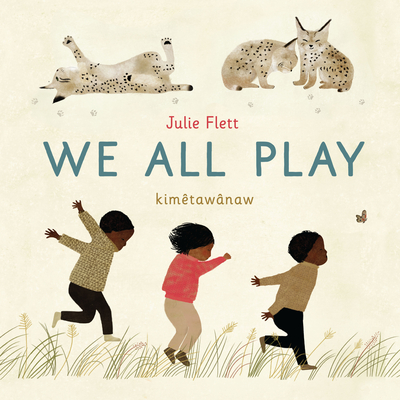
Children and animals both love to play. This picture book incorporates Cree words into the narrative. Animals play in the grass, hopping, sniffing, sneaking. They peek and peep. Children play too, leaping through the grass or laying down in it. Animals swim and so do children. Animals slide and rumble and wiggle, just like children sledding in the snow. Animals settle down, roosting and yawning, finally falling asleep. Children do too.
Told in very simple language, woven with Cree words, this picture book shows the connection the natural world and its value to children in particular. The Cree words repeat with the children themselves saying them, something that would be great to do in a story time when this book is shared. The illustrations show a diverse group of children playing outside, acting just like the animals. A glossary of Cree words is offered at the end of the book along with a list of the animals who appear on the pages.
A frolic of a picture book that speaks to the importance of outdoor play. Appropriate for ages 2-4.
Reviewed from e-galley provided by Greystone Kids.
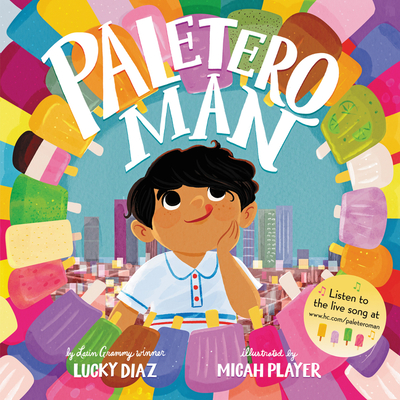
Paletero Man by Lucky Diaz, illustrated by Micah Player (9780063014442)
It’s the hottest day in the hottest month in Los Angeles, so a boy heads out with his money to find the paletero cart, hoping that his favorite flavor is still available. The first cart that he finds is the tamale cart, but that’s not what he wants today. Ms. Lee has Korean BBQ for sale, but he won’t even stop for a sample. He runs past the bike shop too, not stopping to visit. Finally, he finds Paletero Joe in the park and there is still some pineapple flavor left. But when he reaches into his pocket, all of his money is gone. Luckily, all of the business owners he ran past noticed him dropping his money and are all there at the park to return it to him.
A story of delicious food set against the urban LA cityscape, this picture book shows a strong, connected and diverse community. The various foods from different cultures are all celebrated as the narrator dashes past them looking for his desired cool treat. Diaz manages to write a rhyming picture book that is merry and bright, never becoming sing-songy but instead incorporating Spanish to create many of the rhymes.
The illustrations cleverly show the money dropping out the boy’s pockets though readers may miss it the first time they read the book. The illustrations are bold and bright, reflecting the colors of the paletero and showing the diverse people in a bright and friendly urban neighborhood.
A great read-aloud just right if you have popsicles to share. Appropriate for ages 2-4.
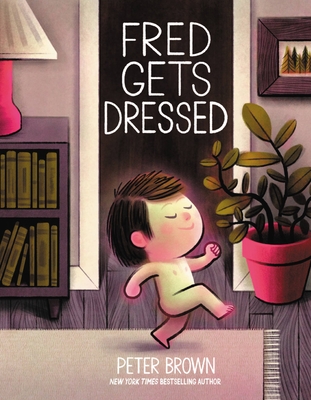
Fred loves to be naked. He runs through the house wild and free. He thinks he may never get dressed, but then discovers the closet in his parents’ bedroom. First, he tries on his Dad’s clothes, including a shirt, tie and pair of shoes. But he has trouble putting them on and they don’t fit right. He looks at his mother’s side of the closet. He picks out a blouse, scarf and some shoes. He doesn’t have any trouble putting them on in an outfit. Now he needs some additional touches, like some jewelry and maybe some makeup. That’s when his parents come in the room. His mother shows him how to put the makeup on and how to do hair. Soon all of the family, even the dog, are all dressed up together in a marvelous mix of outfits.
Brown uses simple wording to show a young boy exploring with nakedness and then playing dress up. The parents he shows are clearly unconcerned with the naked child running all around the house. His merriment is wonderful to see as is their casual response. As Fred tries on his mother’s clothes and then gets “caught” the reaction of the parents is perfection as they join in the fun but also show Fred some new skills along the way.
Brown’s art is always marvelous. Here his palette is an unusual mix of greens, vivid pink and browns. The result is a modern yet classic feel.
A charmer of a picture book that celebrates freedom from gender norms. Appropriate for ages 3-5.
Reviewed from e-galley provided by Little, Brown and Company.
Roberta spends her time rescuing tiny creatures. She flips over pillbugs and moves worms from sidewalks. But everyone around her doesn’t understand. Her classmates make fun of her and her teacher insists that she wash her hands. At home, her cat helps out and so does her little brother, watching as she takes the ladybug outside safely. Some of the creatures, Roberta gets to know better before she has to release them. Others are only welcome in certain places and still others bite. If Roberta finds a dead creature, she collects them to look at how beautiful they are. When spiders emerge at school, Roberta is able to figure out a solution that has everyone helping out and gets the spiders safely outside. After the spider excitement, Maria approaches Roberta at recess and the two dream of all of the larger animals they can rescue together, maybe with a bit more help.
Manley takes the ickiness of bugs and worms away and instead celebrates them as creatures worthy of saving. Roberta is a wonderful example of what paying attention to small things can become, showing a deep kindness towards all lifeforms and the brain of a scientist as she gathers more information. With the spider incident at school, Roberta fully comes into her own as she takes her knowledge and turns it into shared action. It’s a brilliant and affirming moment that becomes a way to connect with others with similar interests.
Cummins uses her signature simple illustrations to great effect here. Their whimsical nature adds to the special appeal of insects and bugs and show how Roberta feels connected to them.
A buggy book of daily heroism. Appropriate for ages 3-5.
Reviewed from e-galley provided by Roaring Brook Press.
The Paul Bunyan myth gets transformed by a young Chinese-American girl growing up in the logging camps in this graphic novel. Mei shares her stories about Auntie Po just as freely as she shares her stellar pies. She is the daughter of the camp cook and helps out her father in the kitchen. The manager of the camp loves her pies and is friends with her father, but that only goes so far. The Chinese men logging are fed separately. When her father is fired, Mei is left behind at the camp with her best friend. Mei uses her stories of Po Pan Yin, Auntie Po, to give all of the children in the camp a heroine they can believe in. Mei must find a way through the politics of race and privilege to find a future for herself and her father in America.
Khor offers a mix of tall tale and riveting real life in this graphic novel. She weaves in LGBT elements as Mei has feelings for Bee, her best friend. The use of sharing tales to provide comfort combines seamlessly with also offering food. Mei is a girl with a future that seems out of reach much of the time, but comes into focus by the end of the book. The book looks directly at racism in the years after the Chinese Exclusion Act and offers a mixture of characters that are racist and allies for Mei to encounter and deal with.
The art focuses on the characters themselves, sometimes offering glimpses of the Sierra Nevada scenery too. Chapters begin with different logging tools being featured and described. The art is full of bold colors, the huge Auntie Po, and the busyness of a logging camp and its kitchen.
A fascinating look at logging from a Chinese-American point of view combined with some really tall tales. Appropriate for ages 9-12.
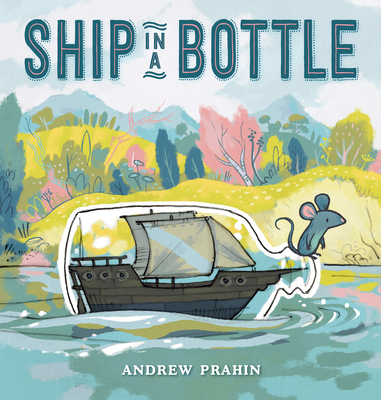
Mouse had been trying to live with Cat, but there were problems. Most of them from the fact that Cat wanted to eat Mouse all the time. Mouse loved her ship in a bottle, so she filled it with gingersnaps and with some help from Cat headed out into the world. Her bottle floated along and while it was sometimes peaceful, there were also attacks by rude seagulls trying to get the cookies. Mouse came to shore and met lots of new rabbit friends who loved gingersnaps, though once the cookies were gone, they sent Mouse on her way. Mouse continued downstream with nothing but a few crumbs that eventually ran out. Then a storm arrived with lightning and big waves. She came to a shore near a large city where she met a chipmunk who shared a berry and the ship. Mouse soon met many new friends who helped her, even some kind seagulls who shared. She was able to find safe sunshine, a safe place for her ship in a bottle, and a community.
Prahin’s picture book has a merry sense of humor throughout. His timing is perfect, landing some of the twists of the story with a wry grin. From the first part of the book with Cat chasing Mouse all over their house to the middle with hopes dashed, all builds beautifully to finding a place where Mouse is accepted, can help others, and finds friends. The arc of the story is very effective, offering a wonderful circle back to Cat at the end.
The illustrations do so much to reflect Mouse’s own emotions. There is the darkness and gray of the house with Cat which turns to blues, greens, and pinks as Mouse is freed to float away down the stream. When the rabbits eat Mouse’s gingersnaps and then reject her, the world turns dingy again as the storm threatens. The world brightens and fills with colors once more as Mouse finds a place she belongs.
A lovely look at community, acceptance and a watery adventure. Appropriate for ages 4-6.
Reviewed from e-galley provided by G. P. Putnam’s Sons.
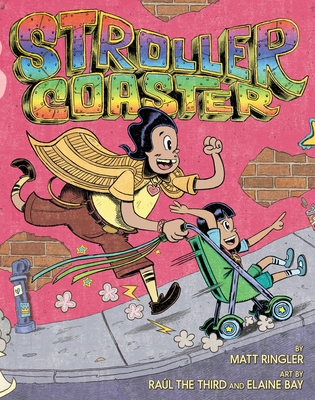
Strollercoaster by Matt Ringler, illustrated the Raul the Third and Elaine Bay (9780316493222)
Every day there is a time when the inside feels too small for Sam. She kicks toys around the room, stomping and angry. There is only one solution for this, which is to take a ride on the strollercoaster! To start the ride, Sam gets buckled in and the straps are pulled tight. A reminder of keeping hands and feet inside at all times is given, and they are off! Sam’s father runs fast and the neighborhood flies past them. There are cool shops, sweet-smelling bakeries, and the green of a park. Soon Sam feels like she’s flying and she’s smiling. The ride ends with a dark tunnel with a light at the end. By the time they get back home, Sam is asleep and her father is ready for a nap too.
Ringler writes a book that starts with anger and frustration and then shows a way to find delight in life once more with big smiles that turn into a cozy nap. It’s a book with a strong arc that is enhanced by all of the urban elements of the story and the warm relationship of father and daughter. The text in the book plays with the rollercoaster theme, using buckles, straps and the iconic warning and then clicking and clacking uphill. It’s funny, universal and delightful.
The illustrations are playful right from the beginning with all sorts of small details that are great fun to discover. Keep an eye on Sam’s stormcloud t-shirt that is big and bold at first, and then covered up skillfully as she calms down. The urban neighborhood is brought fully to life in the images with rainbow sherbet colors carrying throughout, creating a tropical summer feel.
A dynamic thrillride of a book. Appropriate for ages 2-4.
Reviewed from e-galley provided by Little, Brown and Company.
When Lola Visits by Michelle Sterling, illustrated by Aaron Asis (9780062972859)
A little girl’s grandmother, Lola, always comes to visit in the summer. The first thing she does when she arrives for the summer is to make mango jam. Summer smells like that jam and also the sampaguita soap that she uses. Lola’s suitcase carries other smells like dried squid and candy. Summer smells like cassava cake hot from the oven. It smells of chlorine from lessons at the pool and sunscreen on the beach. It smells of all sorts of food, even limes on the trees. Summer ends with the smell of sticky rain while saying goodbye to Lola at the airport. The house becomes grayer and quieter. The breezes are colder. Summer ends with return to school and the last bites of summer in mango jam.
Sterling creates a symphony of senses in this picture book that celebrates the food of the Philippines and shares a special connection made every summer between grandmother and granddaughter. Using food to add taste and smell to the summer setting works particularly well. The food bridges nicely into other summer scents of pools, lakes and beaches, creating an entire world of experience that is universal but also wonderfully specific.
Asis’ illustrations are done in gouache and digital art. With light brush strokes, he creates cabinets, tree branches, pool water and cooling cakes. This light touch adds to the summery feel of the book, inviting us all to feel a bit more sunshine and brightness.
Delicious and sensory, this book is a treat. Appropriate for ages 3-5.
Reviewed from e-galley provided by Katherine Tegen Books.
Voya’s time to get her Calling has finally arrived. While she isn’t excited about the trial that she must undergo, she is thrilled that she will get her witch’s power. Voya hopes that her power will set the course for the rest of her life, likely keeping her close at home with her multigenerational family who live in a house that was magically moved to Canada. When Voya’s hesitation causes her to have to ask her ancestor for another chance, she is given an impossible task: to destroy her first love. If Voya doesn’t succeed, every witch in her family will lose their magic. It also means that Voya’s young sister will die since magic keeps her alive. As Voya tries to get her cousin a great internship, she also meets a boy who is the perfect genetic match for her. The trouble is, they don’t like each other at all and he has no interest in even meeting her again. As Voya struggles to solve the mystery of her Calling, she learns more about her family’s pure magic, the cost of darker magical power, and what duty to her family means.
This book is full of Black magic that is at once both powerful but also marvelously mundane. Sambury brings us into a family of witches who are coming to the end of their power and tied to being pure, meaning that they won’t kill or torture other people to gain power. The family dynamics are beautifully drawn, from divorced parents who are forced to live together under the same roof to a grandmother who controls them all to a group of cousins who are very different from one another but also watch out and help one another constantly. The dialog is well written, full of small touches that bring each character to life.
Voya is an unusual protagonist. First, she has not only her parents but a huge extended family around her all the time. Second, she has trouble making choices that impact her life to the point of grinding to a halt regularly. When given tasks that force her to make decisions, she falters but doesn’t give up. She finds other ways, other paths and asks for help. This is the opposite of a solo protagonist, as she is surrounded by people who love her even if they don’t trust that she will succeed.
Magical, powerful and unique, this novel is fantastic. Appropriate for ages 13-17.




 Waking Brain Cells