Chime: Breathtakingly Beautiful

chime

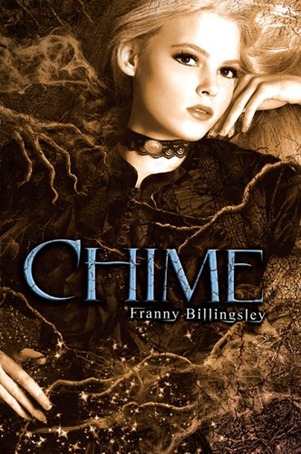
Chime by Franny Billingsley

Released on March 17, 2011.

Briony believes that she is the source of her family’s troubles.  She blames herself for her stepmother’s death and for her twin sister’s brain damage.  Her only solace is the swamp, where she can see and speak with the Old Ones.  But she can tell no one about her gift because it means that she is a witch, and witches in her village are hanged.  Everything changes when funny, gallant Eldric comes to live with them.  He is golden, lion-like and best of all, he appreciates Briony for just being herself.  However, Briony is filled with guilt and secrets that may be the death of her.  Unknown to her though, there are further secrets that need to be revealed, to everyone.

The writing here is so lush, so inventive, so layered that its language creates a unique world all on its own.  Billingsley uses unique metaphors that are arrestingly descriptive.  In fact, the writing is so lovely that my book is marked with many small bookmarks for amazing passages.  Wonderfully, the character of Briony also plays with language and words, using them as a game, a tool and a weapon.  It is this layering of imagery and wordplay that makes the reading of the book such a special one.

Right from the beginning, readers will know that something is amiss with Briony’s version of the events.  One wonders if the Old Ones are actually real, emerges confused by the relationship of the stepmother with her stepdaughters, examines the events of the library fire, and tries to follow the breadcrumb trail of details to figure out this puzzle of a book.  Briony is a great example of an unreliable narrator, leading readers through past events and present events with her own personal lens.  Delightfully, readers will struggle to remove the vividness of Briony’s perspective and view the world without it. 

Highly recommended, this is a book that mature teen readers will enjoy thanks to its blend of fantasy, romance and mystery.  My hope is that we see it winning some awards when award season rolls around.  It is definitely a winner of a read for me.  Appropriate for ages 15-18.

Reviewed from copy received from Dial Books.
Except If: A Puzzle of a Book

exceptif

Except If by Jim Averbeck

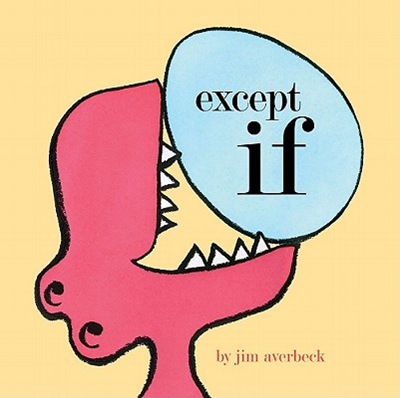
Follow this twisting, turning puzzle of a book that has you thinking one thing and then transforming it into another.  It all starts with an egg that is cracking open.  It will become a bird “except if” it becomes a baby snake.  That snake will slither on the floor “except if” it is actually a lizard.  The lizard is actually a dinosaur, which is actually a fossil, which shelters a nest, where a familiar blue egg is resting.  What will be in the egg this time?

This book is pure fun.  The reader puts themselves into the author’s hands, unable to predict where this book will take them.  The fossil piece was one that I was happily surprised by, not expecting the book to head in that direction.  Averbeck’s use of spare language to great effect makes this a book that will read aloud well.  Its straightforward text is the perfect foil to the twists of the story line.

Averbeck’s illustrations are bright and bold.  The thick black lines and flat color evoke children’s coloring books, giving it immense child appeal.

Add this to any story time on dinosaurs or as the ideal ending book for any general story time.  It’s sure to be requested again and again.  Appropriate for ages 4-6.

Reviewed from copy received from Atheneum Books for Young Readers.

Also reviewed by:

Bedtime Monster

bedtimemonster

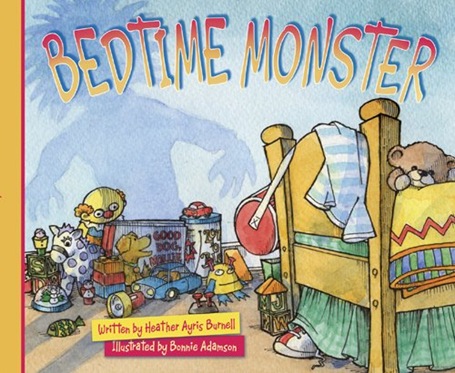
Bedtime Monster by Heather Ayris Burnell, illustrated by Bonnie Adamson

When Paul was told that it’s time to go to bed, he is too busy playing to hear it.  When Mom reminded him again that it’s time for bed, he grumbled, then screeched.  And then?  Then a strange thing happened and Paul turned into a monster, complete with scaly tail and sharp claws.  Paul acted like a monster too, banging and crashing around the house.  His parents knew just what to do.  They scooped him up, sang him a lullaby, and slowly Paul returned to being a boy and went to bed.  At the end of the book, Paul’s father admits that he too was once a little monster, and readers will delight in spotting his monster tail as he stands in the doorway. 

Burnell’s text is simple and straight-forward.  She keeps the text brief enough to be used with very small children at bedtime.  Adamson’s watercolor and ink illustrations are very successful with their textured background that adds depth and their bright colors.  She captures the transformation into a monster with a sweetness and non-scary approach. 

Thanks to the gentle humor of the text and images, children will understand that they can sometimes be monsters too.  The reactions of the parents is lovely and patient, something that is also great to see in a picture book.

Yes, there are many bedtime books to choose from, but this one’s quiet humor and lovely illustrations should get it added to the bedtime pile.  It’s very nice for those children who might turn a little green at bedtime themselves.

Reviewed from ARC received from Raven Tree Press.

Mudkin: Muddy, Lively and Joyous

mudkin

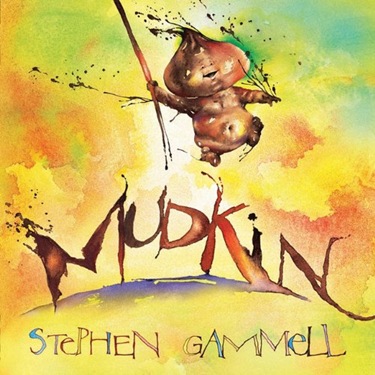
Mudkin by Stephen Gammell

A young girl heads outside after it stops raining to play, pretending to be a queen.  Suddenly, some mud turns into Mudkin, a jolly muddy creature, who asks the girl to be his queen.  Mudkin speaks in muddy phrases, splotches instead of letters, but happily the girl interprets for us.  Mudkin creates a robe and crown from mud for the new queen.  He also makes a carriage that carries the queen to the muddy castle on the hill.  From the parapet, she sees the large number of mudkins that she will be reigning over and pledges to rule forever.  Then the rain begins again and the mud dreams are washed away.

Gammell uses his signature style here to great effect with the swirls of color as shadow and the flying sprays of mud that follow every gesture.  Mudkin is a very friendly creature of warm brown, who smiles and drips.  Gammell has created a brown that celebrates the colors within it, turning to yellows, reds and oranges too. 

The book has very few words, most of them in the conversations between the girl and Mudkin.  Mudkin speaks a marvelous way, in smudges that almost are letters, but not quite.  It brings the pleasure of imagination and play into the text as well as the illustrations. 

A book sure to encourage children to head out in the rain, play in the mud, imagine, dream, and come back in resembling Mudkin! 

Reviewed from digital copy received from Carolrhoda Books via NetGalley.

Also reviewed by There’s a Book.

You can also check out the Making of Mudkin video to see watercolor magic:

Enhanced by Zemanta

Nosh, Schlep, Schluff

noshschlep

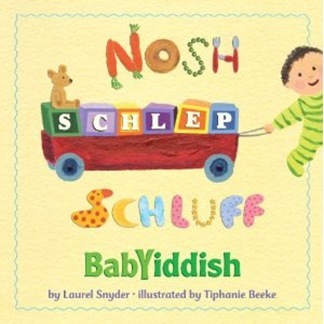
Nosh, Schlep, Schluff: BabYiddish by Laurel Snyder, illustrated by Tiphanie Beeke

Follow a busy toddler through his day and read rhymes that are sprinkled with Yiddish.  From preschool to the playground and back home again, there is plenty to keep a little boy and his toy frog busy.  Along the way, children and adults will realize how much of what they say is Yiddish.  Snyder’s rhymes are clever and bouncy, perfect for a board book for the youngest listeners.  Beeke’s illustrations are bright colored and always focused on the child. 

This little gem of a board book will have universal appeal unless you are feeling particularly kvetchy.  Appropriate for ages 2-3.

Reviewed from copy received from Random House.

Also reviewed by

Grounded: Family, Funerals and Forgiveness

groundedklise

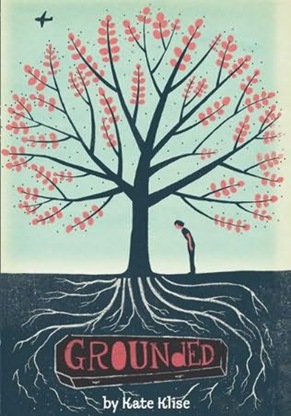
Grounded by Kate Klise

For a girl who never liked dolls, Daralynn sure had a lot of them.  She had gotten over 200 dolls after her father, brother and sister were killed in a plane crash.  She had also gotten her nickname, Dolly, because of them.   Dolly lived with her mother and next door to her grandmother.  After the funeral for her family, Dolly’s mother became the hairdresser for the local funeral home.  Later, she branched out to owning her own salon and doing hair on the living.  It was Dolly who had the big idea to start doing living funerals at the funeral home to make more money.  But then a crematorium was built in town and started taking business from the funeral home, and even worse, started doing living funerals themselves!  Dolly thought there was something strange about Clem, the man who owned the crematorium, and it was up to her to figure out what was really going on.  A mystery with small-town charm, this book is about family, funerals and forgiveness.

Klise’s writing has a folksy cadence to it here that echoes the sounds and feeling of a small town.  There are wonderful transcendent moments where the main character realizes something and Klise writes it with such clarity and perfect pitch.  The conversations between characters feel real and true, giving the book a strong foundation to put a mystery upon.  It is also a very funny book, thanks to Dolly’s wry humor.

Klise has created a small town in this novel that makes the perfect setting for a mystery.  The town and the people who live there are more than a backdrop for the story, they are a real community.  The most fascinating characters are those related to Dolly.  Each of them shows how to deal with life and tragedy in a different way.  They are subtle and tangible reminders of what grief can become.

Dolly is a marvelous character who strives to be good, but is still alive because she was grounded for going fishing without permission.  She is a girl who fishes, does hair, hates dolls, and never quite manages to obey the rules.  In other words, she’s a delight.

Highly recommended, this book would make a wonderful class read-a-loud.  Where it sings is in the relationships it shows, the laughter it provides, and the recovery from loss it allows us to witness.  Appropriate for ages 9-12.

Reviewed from copy received from Feiwel & Friends.

Also reviewed by Kids Reads.

The Secret River: Luminous Loveliness

secretriver

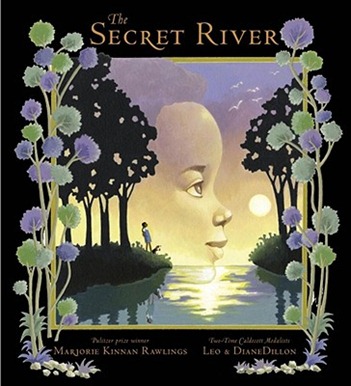
The Secret River by Marjorie Kinnan Rawlings, illustrated by Leo and Diane Dillon

Luminously illustrated by the Dillons, this new version of a classic children’s book truly shines.  The only children’s book written by the author of The Yearling, this story is about Calpurnia, a young girl who is a poet.  She woke up one gorgeous morning and found that she had a journey ahead of her.  Her father told the family that he had no fish to sell in his fish market.  So Calpurnia decided to catch some fish herself.  She made roses out of crepe paper for bait and then headed to get advice from Mother Albirtha, the wisest person in the forest.  When Calpurnia asked Mother Albirtha where she could catch big fish, Mother Albirtha told her of the secret river that was full of fish and advised Calpurnia to follow her nose.  So off Calpurnia went with her dog at her side to find the river.  Eventually, Calpurnia found the river and caught some large fish to help her father.  But that was just the start of her adventures in the forest, because she had to get back home.

Rawlings’ writing is filled with such depth here.  While the story is written for children, it will ask them to stretch, to imagine and to dream.  The writing is filled with small touches, turns of phrase that add such beauty to the text.  Rawlings also had a poet for a main character, so Calpurnia’s poems are throughout the book.  One of my favorite passages happens early in the book where Calpurnia creates a poem and after her mother criticizes one of the phrases turns right around and creates a new poem that focuses on that phrase.  Just that one piece is a testament to writing and creativity, as is the entire book.

Dillons’ illustrations take the book to an even higher level.  They are illustrations that are celebrate the beauty of light on skin, the depth of dark in a forest, the shine of wisdom on a face, and the blackness of animal fur.  The illustrations vary in size, ranging from full page images to smaller illustrations in the margins of the text.  There are illustrations so lovely here that one lingers on the page long after the words have been read, just absorbing the image.  It is simply beautiful.

This is a treat of a new version of a classic.  It is a perfect marriage of illustration and writing that celebrates both.  Appropriate for ages 6-8.

Reviewed from copy received from Simon & Schuster.

Family Pack: Poetic Nature

familypack

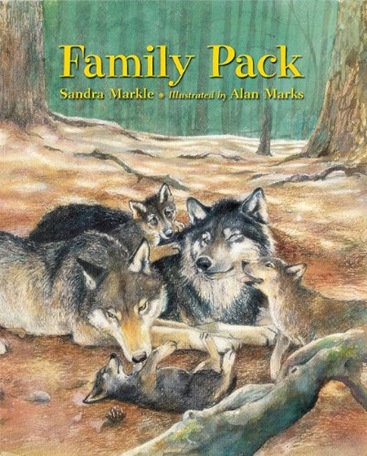
Family Pack by Sandra Markle, illustrated by Alan Marks

This book captures the real-life story of wolves being reintroduced to Yellowstone National Park.  The focus of the story is one young female wolf who finds herself suddenly separated from her pack and alone in a new place.  Her tracks are the only wolf tracks she sees, she is the only wolf she smells.  Without a pack, she cannot hunt the way she is used to, so she survives mostly on mice.  As she becomes an adult, she discovers another wolf, a male.  The two of them become a mated pair and eventually have a family in Yellowstone.  One lone wolf has created her own pack.

Markle’s verse in the book really shines, illuminating the loneliness of this young wolf’s new life, her troubles with hunting larger game, and her growth into an adult wolf.  The poetry is filled with imagery that enlivens the book, making the cold and loneliness tangible to readers. 

Marks’ illustrations are equally successful.  He captures the setting beautifully from the towering trees to the wide open spaces.  In his illustrations, Yellowstone becomes just as real as the wolf herself, almost another character in the story.  The vistas and close-ups he has created here give readers a very unique perspective on the life of this wolf.

Highly recommended, this book will work well for slightly older children because of the depth of the verse.  It will work well in units about preservation and ecology.  Appropriate for ages 6-8.

Reviewed from copy received from Charlesbridge.

Jam & Honey: Natural Sweetness

jamhoney

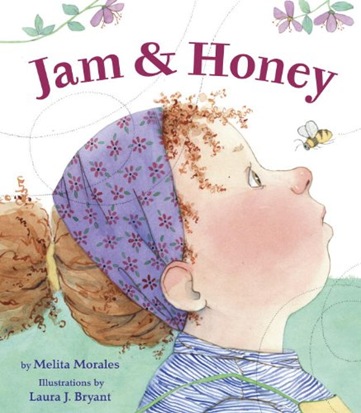
Jam & Honey by Melita Morales, illustrated by Laura J. Bryant

This quiet, gentle book tells the story of a visit to an urban berry patch from two points of view, a girl and a bee.  The girl is headed to the berry patch to pick berry to make into jam.  Her big worry is running into bees, which she does.  But she remembers what her mother told her about staying still and that the bee was interested in nectar not in her.  The bee is heading to the berry patch for nectar to make into honey.  He is worried about running into a human there, which he does.  But he remembers that humans are interested in the berries, so he just flies past.  This parallel story offers a glimpse of urban gardening and emphasizes the importance of our food and other creatures.

Morales has written the book in a verse format that has enough rhyme to make it friendly and bouncy.  There is a rather jaunty tone to the book, making the encounter with the bee less scary than it could have been.  The emphasis is on making food, whether it is by the girl or the bee.  The two halves of the book are written in very similar verse, often repeating patterns from the earlier one.  This ties the two stories together even more firmly.

Bryant’s art makes sure that the reader knows that the book is set in an urban setting without covering it in graffiti or garbage.  Instead, we see a warm friendly neighborhood filled with flowers, pigeons, and bees.  She imbues the illustrations with a natural feel, always having the reader look past greenery and through plants. 

A great pick for insect units or story times or ones about food.  It could also happily be used as a late summer story when the berries are plump and ripe.  Appropriate for ages 3-5.

Reviewed from copy received from Random House.