Yang Warriors by Kao Kalia Yang

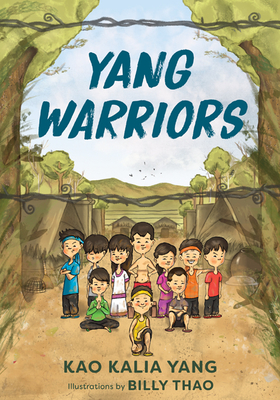
Cover image.

Yang Warriors by Kao Kalia Yang, illustrated by Billy Thao (9781517907983)

In the Ban Vinai refugee camp, there is a group of young warriors who train together. They run drills, balance rocks on their heads, meditate and wield branches as sacred swords. They are led by Master Me, a ten-year-old who teaches them. One day, Master Me meditated and decided that the warriors must leave camp and forage for greens. But no Hmong person was allowed to leave the camp without permission. People had been beaten for doing it and some had even disappeared. But Master Me was set on carrying out the mission. The narrator of the story is a young girl whose older sister was in the warrior group. She was 7 years old, scared but determined to carry out the mission. That day, the warriors stealthily left camp and returned carrying morning glory greens. Many were injured on the mission, but that day they became more than children playing at being warriors and became true heroes to everyone in the camp.

Yang tells the story of life in a Hmong refugee camp through the eyes of her childhood self. The hardships, violence and rules of being in such a camp are foundational to the overall story, though not the direct focus. The tale really is about the power of children to be heroes for their families, the determination and courage to take action in the face of injustice, and the way that real life heroes are so much more important than those with capes.

The illustrations by Thao are unique and interesting. He makes each of the children recognizable even though they move as a group of warriors. He uses interesting frames throughout the images, showing the children through doorways or from the fire itself as danger increases. The illustrations are stirring and also show just how young these children were.

A tale of child heroes in a Hmong refugee camp that is worth cheering for. Appropriate for ages 4-7.

Reviewed from copy provided by University of Minnesota Press.

Force of Fire by Sayantani DasGupta

Cover image for Force of Fire

Force of Fire by Sayantani DasGupta (9781338636642)

The author of the Kingdom Beyond books returns with a stand alone novel set in the same universe. Pinki is the daughter of two of the most renowned rakkhosh members of the resistance to the take over of the Kingdom Beyond by the snakes. But Pinki resolutely refuses to join the resistance, focusing on herself instead. She is a rakkhosh who has fire magic but can’t control it at all. So when a handsome snake prince offers her a way to learn to control her fire, she agrees to find the hidden moonbeams for him. But the moonbeams are not what Pinki had thought they were. As she follows the trail to find the moonbeams, she finds herself learning about what the snakes are doing to people and children in particular, including one of Pinki’s own little cousins, who has lost the ability to speak. But can Pinki forgive her neglectful parents and find a way to embrace her fire and her heritage?

The world building here is marvelous, full of beings from Bengali folktales and stories. As they journey through cave complexes, into ornate palaces and beneath the sea, the entire landscape not only is revealed but becomes a large part of the story as it is impacted by the snake magic and decrees. Readers will also see ties to the Indian Revolution against British rule throughout the story, something that is mentioned in the Author’s Note at the end of the book. This use of a real tyranny as a basis offers a strong foundation for this fantasy to rest upon.

The characters are well drawn. Pinki in particular is a delight of a female character, full of pride in her largess, her horns and her talons, she also struggles to make friends and to rely on others for help. This is all made understandable as her personal story is revealed. She is a character who starts out as surprisingly selfish and steadily proves that she is not, again and again. With funny characters who add charm, like the egg-gifting little cousin, the book also has a lot of humor throughout to offset the darkness.

Fiery, fun and fabulous. Appropriate for ages 9-12.

Reviewed from ARC provided by Scholastic.

Pablo by Rascal

Cover image.

Pablo by Rascal (9781776573240)

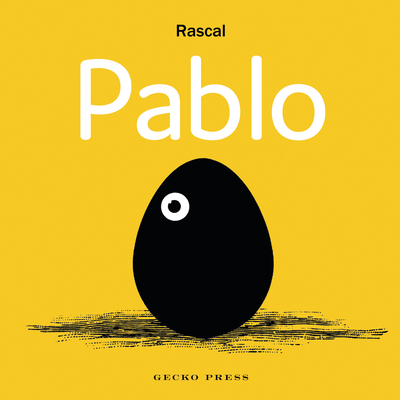
Highly stylized, this picture book focuses on Pablo, a baby bird who is ready to leave the egg. But Pablo is going to do it in his own unique way. After a breakfast of croissant and hot chocolate, he gathers his strength. He is too big for his egg now, so he must break out. First, he creates one hole, just the right size for his eye. He looks all around and then creates a second eye hole so he can really see out. He pecks two holes, one on each side of the shell so that he can hear what is happening around him. Then one hole for his beak so he can smell soil and flowers. The sixth and seventh holes are for his legs so he can wander. Then holes eight and nine are just right for his wings to come out. Pablo is entirely free of the shell, but he saves a piece just in case.

Visually arresting, this Belgian picture book features a pure black egg on a white background. Subtle shading and clouds move past, but the focus and each page center around Pablo himself as he steadily frees himself from the egg shell. The book steadily counts the number of holes that Pablo makes and is marvelously absurd has he continues far longer than most readers might think, staying in the shell and creating holes.

The art is simple and very funny. Perhaps most delightful is the final reveal of Pablo freed from the black egg, looking nothing like what one might have expected.

For the toddler, preschooler or parent who appreciates a bit of the surreal. Appropriate for ages 2-4.

Reviewed from copy provided by Gecko Press.

Spin a Scarf of Sunshine by Dawn Casey

Cover image.

Spin a Scarf of Sunshine by Dawn Casey, illustrated by Stila Lim (9781782506584)

On her family’s small farm full of sheep, bees and chickens, Nari had a lamb of her own. All year, the lamb grew and got more wool. In spring, it was time to shear the sheep and Nari’s sheep was sheared too. Nari washed the wool, carded it, and spun it into yarn. She gathered marigolds from the garden and they dyed the yarn sunshine yellow. Nari knitted the yarn into a scarf just in time to wear it in the winter. Eventually, her scarf got tattered and worn, so Nari put it in the compost bin where the worms would break it down into rich earth. She returned the compost to the ground to help the green grass grow, just in time to feed a new lamb.

Casey’s picture book focuses on the beauty of a quiet cottage life full of farming and animals. She shows how clothing is created from sheep to wool to yarn to cloth in a way that shows how long it takes and how much dedication as well. The book celebrates the cycle of farm goods from animal to item and back to the soil. It also celebrates traditional crafting and a slow, full life in touch with the seasons. Her writing is simple and also offers the sounds of that activity or season.

This is Lim’s first picture book. She shows the beauty of cottage life and the countryside. Her watercolors fill the pages with rich outdoor colors, from early spring green grass to the bounty of autumn to snowball fights in winter. Each season is celebrated for its colors, its feel and its beauty.

A good beginning look at how clothing is made and what a sustainable life looks like. Appropriate for ages 2-4.

Reviewed from copy provided by Floris Books.

Can’t Take That Away by Steven Salvatore

Cover image.

Can’t Take That Away by Steven Salvatore (9781547605309)

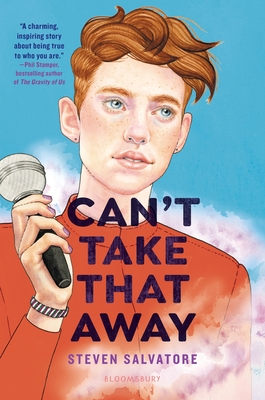
Carey has always been a singer, loving spending time with their grandmother belting out songs together. But being attacked by a homophobic bully made Carey quit voice lessons. Plus as their grandmother’s dementia worsens, Carey doesn’t have much reason to sing. Luckily, Carey has a very supportive mother and a good therapist to help them navigate being genderqueer in a binary world. Carey also knows that they messed up big time with one of their best friends, half of a pair of twins who have been friends forever. As Carey continues to face bigoted hatred from a teacher at school and a classmate, they also meet Cris, a boy who is very interested in Carey, their voice and becoming more than friends. Cris convinces Carey to try out for the school musical and to audition to be Elphaba in Wicked. As Carey grows in confidence, the voices of hate around them get louder and more intense, forcing them to find a way through the hatred to a place of self empowerment where Carey is allowed to sing and to fully be themselves.

Salvatore, who identifies as genderqueer themselves, has written a gripping story of homophobia and the power and activism it takes to regain control of our schools and communities from bigots. Added in are marvelous depictions of first love with all of the feels on the page. There are also strong depictions of what an ally looks like, how to be a great friend, and the importance of giving people a chance to change.

Throughout this entire novel, Carey is in the spotlight. Their emotions around being genderqueer, being targeted by hate, and also being in love are captured with care and real empathy. They are on a journey to self-acceptance even as they seek out the spotlight for their voice. It’s a fascinating look at performance, theater and the performer themselves.

This one will have you righteously angry and applauding by turns. Appropriate for ages 14-18.

Reviewed from copy provided by Bloomsbury.

Home Is Not a Country by Safia Elhillo

Cover image for Home Is Not a Country.

Home Is Not a Country by Safia Elhillo (9780593177051)

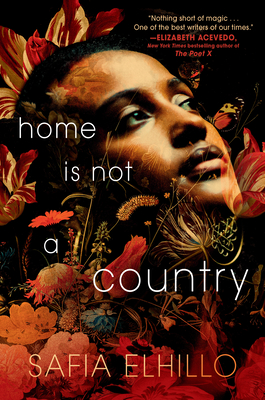
Nima has always wished that she was different somehow. Part of it is the loss of her father before she was born. Part of it is that she doesn’t feel like she fits into her suburban home in America. Part of it is that she isn’t connected enough to her Sudanese heritage. Haitham, a boy who lives nearby, is her only friend and when he is injured after they argue, Nima finds herself adrift and spending days without talking to anyone. She dreams about a fantasy life where her father wasn’t killed, she has a large extended family, and her mother is not overworked and exhausted. Soon those dreams lead to her taking risks, inviting a hungry spirit into her life, one who looks a lot like her and can show her the life of her dreams. But what is the cost of these dreams?

Told in exceptional poetry, this verse novel for teens is a deep look at racism, Islamophobia, and being part of a large diaspora. Elhillo’s poetry is some of the best I have read in a YA verse novel. She captures the dark emotions of loneliness, hate crimes, and lack of self-esteem with such clarity and empathy. Her poetry shows the importance of family, whether it is imagined or real. It shows the dangers of wanting to escape your life and of the potential of losing it all along the way.

Nima is the sort of protagonist that readers will want to shake and comfort. She is incredibly lonely, spending her evenings isolated and her days silent. Her relationship with her mother is complex and well drawn, creating both tension and connection in turns. Readers will see themselves in Nima, in dreaming of alternate lives and outcomes. They will get a close look at the experience of an immigrant family that keeps secrets in order to survive.

Incredible writing combines with a gorgeous story of loneliness and risk. Appropriate for ages 15-18.

Reviewed from library copy.

Have You Ever Seen a Flower? by Shawn Harris

Cover image.

Have You Ever Seen a Flower? by Shawn Harris (9781452182704)

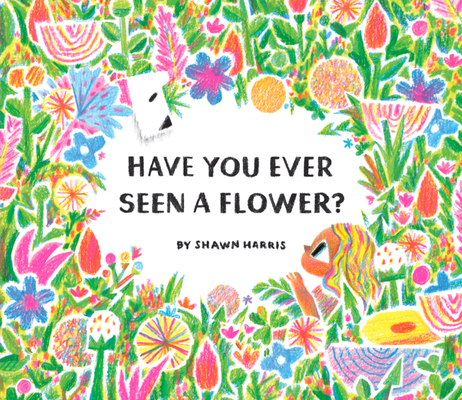
Award-winning illustrator Harris makes his authorial debut in this bright and flowery picture book. A little girl is the only colorful spot in her drab, gray city. She travels by car out to the hills that are covered with flowers, the same hues as her streaming hair. With her dog at her side, she asks the reader if they have ever seen a flower. Have they crawled deep in the clover to find one? Have they breathed deeply and figured out exactly what they are smelling? Have they found a flower so deep that they shouted into it and listened for an echo? The question then shifts to whether the reader has ever been a flower? With their torso as their stem, rooted in the ground, growing to the sun? Try it and see!

Harris brings young readers directly into his story with his string of questions that ask them to use all of their senses to experience nature around us, in particular flowers. He draws deep connections between flowers and children while also inviting in creativity and imagination. His wording reads aloud brilliantly, playing with near rhymes and repeating structures.

The illustrations are stunning. Done in colored pencil, the colors are neon bright while still having real depth. Harris evokes the flowering hills of California, filling them with a variety of plants and also having pages of the same plant repeating in patterns. He shifts perspective beautifully, moving from close ups of plants and the little girl to broad landscapes of color.

Perfect for spring, this is one to pluck from the shelves and share. Appropriate for ages 2-5.

Reviewed from copy provided by Chronicle Books.

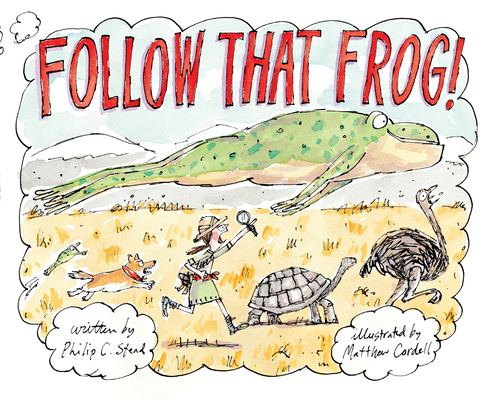
Follow That Frog! by Philip C. Stead

Cover image.

Follow That Frog! by Philip C. Stead, illustrated by Matthew Cordell (9780823444267)

The great combination of Stead and Cordell return with another energetic and funny picture book collaboration. In a house full of chickens, there is a knock on the door. Sadie rushes to wake up Aunt Josephine. But Aunt Josephine is much more interested in sharing a tale of her time in Peru cataloging amphibians for Admiral Rodriguez who recently experienced a tragic banana accident. His son was flirting with Josephine when suddenly he was swallowed by a giant frog. Josephine gave chase, trying to catalog the fast-moving frog and rather disinterested in the fate of the Admiral’s son. The frog fled around the world, through deserts aboard an ostrich, into the waters of the Panama Canal, onto the back of a whale, all to lose sight of the frog forever. But who could be at the door?

Stead’s text is marvelous, moving from the rather wordy but fascinating Aunt Josephine into her story which is fast paced and frenetic. The journey around the world is great fun, dashing along behind the huge frog. There is so much to enjoy here, including Josephine’s ignoring of the Admiral’s son in all of this, her interest in nature and the world, and the story-within-a-story structure. The ending is also a delight sure to satisfy readers.

Cordell’s illustrations fit perfectly with Stead’s writing. His merry illustrations add to the wild storyline with their large fonts. His truly huge frog is interesting as are the chickens peppered around the place. Throughout there is a sense of giggles rising to the surface.

A grand escapade of a picture book. Appropriate for ages 4-6.

Reviewed from copy provided by Neal Porter Books.

The Highest Tribute: Thurgood Marshall’s Life, Leadership, and Legacy by Kekla Magoon

Cover image

The Highest Tribute: Thurgood Marshall’s Life, Leadership, and Legacy by Kekla Magoon, illustrated by Laura Freeman (9780062912510)

This picture book biography tells the life story of the first Black justice on the Supreme Court. It begins with Marshall changing his first name in second grade from Thoroughgood. From a child, Marshall knew that there were things that needed to change in the world around him, including segregation. Marshall discovered a love of the law and of debate in school, before heading to Lincoln University for college. He wanted to attend law school at the University of Maryland, but they did not admit Black students, so he attended Howard University, another Black college. As a young lawyer, Marshall won a case to allow a Black student to attend the University of Maryland. He worked on all sorts of civil rights cases with his most famous being arguing before the Supreme Court against school segregation and winning. He argued seven cases before the Supreme Court in his career, winning new rights for Black people along the way. Marshall was asked by JFK to become a judge and was himself sworn in as a member of the Supreme Court in 1967.

Magoon has created a focused and interesting biography for young readers in this nonfiction picture book. She takes a man of many accomplishments and highlights those of the most importance. By starting in his early years, she shows how a passion at a young age can become a career and a way to make a difference in our world. Her writing is insightful and fast moving, taking us through his career and personal life without her pace dragging at all.

Freeman’s illustrations focus on Marshall and the people around him. Even on the pages focused on his education, Marshall stays right in the center of the images rather than the university buildings. This focus on Marshall as a person centers the book visually, matching the text. The captures famous faces beyond Marshall’s in a recognizable yet simple way.

A resounding success of a biography. Appropriate for ages 6-9.

Reviewed from e-galley provided by HarperCollins.