Amira’s Picture Day by Reem Faruqi

Cover image

Amira’s Picture Day by Reem Faruqi, illustrated by Fahmida Azim (9780823440191)

It is Eid tomorrow, and Amira is thrilled. She gets her hands decorated by mehndi designs that she has to let dry from green to a rich brown. They also get to miss school tomorrow! Amira is happily helping her family make goody bags for the children at the masjid, when she sees the notice about tomorrow also being Picture Day at school. The class was going to be photographed all together and now Amira would miss it. The next morning, Amira got ready for Eid but still longed to wear the dress she had picked out for Picture Day. Once they were at the masjid, Amira was swept up in the celebration of Eid with lots of food, hugs and sharing of goody bags. But when the celebration ended, she once again thought about Picture Day. On their way home, Amira had a big idea that involved the leftover goody bags and maybe going to Picture Day after all.

Faruqi shows the push and pull of being Muslim in a country like the United States where children must miss school to celebrate holidays like Eid. When Eid which is based on the lunar calendar, falls on an important day at school, it can be very difficult for children. That’s what happens with Amira in the story and her navigation of it shows the tension between loving her family and her faith but also wanting to be part of her school community too. The book shows various parts of Eid without minimizing Amira’s wishing to be at school too.

Azim’s illustrations are bright and colorful. She shows the diversity in both the Muslim community as well as at Amira’s school. She creates great facial expressions as Amira navigates having to go to Eid and potentially miss out on Picture Day. Readers will clearly understand her happiness, wistfulness and pleasure at being able to find a solution.

A strong addition for school and public libraries that celebrates the diversity of children in our communities. Appropriate for ages 4-7.

Reviewed from copy provided by Holiday House.

A Plan for the People by Lindsey McDivitt

Cover image.

A Plan for the People by Lindsey McDivitt, illustrated by Charly Palmer (9780802855022)

This picture book biography of the great Nelson Mandela explores his adult life as first an attorney and then a prisoner and then president. Mandela defended people against the unjust White laws of apartheid that drove dark-skinned South Africans into impoverished communities and took away their rights. He joined the African National Congress, helping draft their Freedom Charter. Mandela was a leader in the fight for justice, soon arrested as an activist, tried and sent to Robben Island. Mandela was placed in a small, cold cell and separated from those he loved, allowed just one visitor in his first year and only two letters sent and received. But Mandela and others created ways to communicate and continue to learn. He saw ways to open the hearts of the guards in the prison, learning about their history as well as his own. Along the way, they gained more freedoms in the prison, eventually getting released as international pressure mounted. Mandela was elected President and formed a new multiracial government with new freedoms for everyone.

McDivitt shares in her Author’s Note that she was born in South Africa as a white person. Her background gives her an interesting lens of understanding from which to write a biography of Nelson Mandela. She does so with a real depth, allowing Mandela’s decades in prison to form a lot of the book and also focusing on the injustice of apartheid and its ramifications on its victims. Throughout her prose, she uses vivid imagery from South Africa that help readers better understand the impact and power of Mandela.

Palmer’s art beautifully captures Mandela throughout his adult life. From the days in prison to connecting with fellow prisoners and guards to eventually donning his signature vibrant tunics as President. The illustrations show the injustice of apartheid, the horrors of the prison, and the rise of Mandela as a world leader.

An important look at Mandela’s life and work. Appropriate for ages 7-10.

Reviewed from copy provided by Eerdmans.

My Red Hat by Rachel Stubbs

Cover image

My Red Hat by Rachel Stubbs (9781536212716)

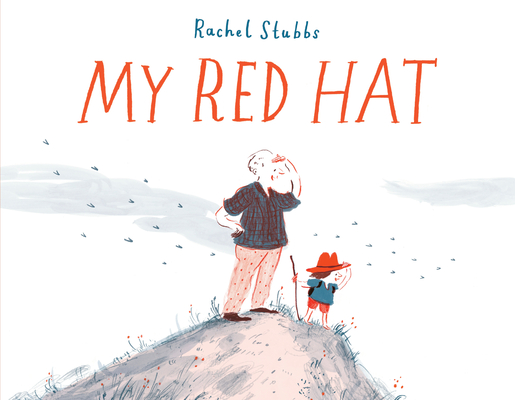
A grandfather gives his red hat to his granddaughter. He explains the amazing things that the hat is capable of. It can make you stand out in a crowd or blend right in. It can keep you warm and dry or keep you cool in the sun. It can be used for serious and silly reasons. Wearing the hat, you can go anywhere you like: low, high or on real adventures, until you are ready to come back home again. It is your hat.

Stubbs takes a very simple and familiar event, the gifting of a hat into a level of wonder and dreams in this picture book. Using very simple language, she has created a book that reads aloud brilliantly. The pace manages to be both fast and rather dreamy, revealing new opportunities that the hat provides at each turn of the page. It is the relationship between grandparent and grandchild here that is beautifully portrayed while never being overtly discussed in the text.

The illustrations are done in a limited color palette with teal, red and pink the primary colors. On each page, the red pops out, focusing on the hat itself. The illustrations have enough details to linger over, particularly the crowd scenes that fill double-page spreads.

A warm look at the role of grandparents to inspire discovery and self-esteem. Appropriate for ages 2-4.

Reviewed from e-galley provided by Walker Books.

Jo Jo Makoons: The Used-to-Be Best Friend by Dawn Quigley

Cover image for Jo Jo Makoons.

Jo Jo Makoons: The Used-to-Be Best Friend by Dawn Quigley, illustrated by Tara Audibert (9780063015371)

Boozhoo! Welcome to a new chapter book series featuring an Ojibwe girl. Jo Jo has two best friends. There is Mimi, her pet cat, who may need to be saved from having to get shots. Then there is Fern, her school best friend, who has been acting a lot more distant lately. Jo Jo lives on the Ojibwe reservation with her mother and grandmother. Because Mimi must get shots soon, Jo Jo tucks her into her bookbag and takes Mimi to school with her. At school, they have to do a rhyming exercise that Jo Jo doesn’t get quite right. But when she tries to hide Mimi in her shirt and Mimi escapes, Jo Jo suddenly speaks in rhymes much to her teacher’s surprise. With Fern not being overly friendly, Jo Jo realizes she needs to start making new friends besides Mimi, so Jo Jo tries following her grandmother’s advice and being friendly to everyone. But its’ not that easy!

Written with a ton of humor that will have you laughing out loud, readers will immediately love Jo Jo with her unique view of the world. She’s a girl who thinks that her gym teacher’s name is “Jim” and doesn’t realize that words spelled alike sometimes don’t rhyme at all. Meanwhile, she is a great friend, a great artist, and just has to find her own unique way through life.

Quigley’s writing is just right for a chapter book. It pairs well with the illustrations which show Jo Jo and her series of misadventures through a few days in her life. From the chaos of Mimi in class to Jo Jo’s humorous art style to her attempts to be more friendly, all are captured in the images with humor and empathy.

A look the life of a modern young Ojibwe with plenty of giggles. Appropriate for ages 6-9.

Reviewed from e-galley provided by Heartdrum.

Yang Warriors by Kao Kalia Yang

Cover image.

Yang Warriors by Kao Kalia Yang, illustrated by Billy Thao (9781517907983)

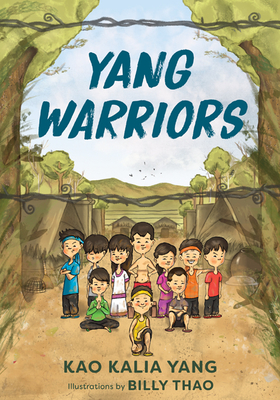
In the Ban Vinai refugee camp, there is a group of young warriors who train together. They run drills, balance rocks on their heads, meditate and wield branches as sacred swords. They are led by Master Me, a ten-year-old who teaches them. One day, Master Me meditated and decided that the warriors must leave camp and forage for greens. But no Hmong person was allowed to leave the camp without permission. People had been beaten for doing it and some had even disappeared. But Master Me was set on carrying out the mission. The narrator of the story is a young girl whose older sister was in the warrior group. She was 7 years old, scared but determined to carry out the mission. That day, the warriors stealthily left camp and returned carrying morning glory greens. Many were injured on the mission, but that day they became more than children playing at being warriors and became true heroes to everyone in the camp.

Yang tells the story of life in a Hmong refugee camp through the eyes of her childhood self. The hardships, violence and rules of being in such a camp are foundational to the overall story, though not the direct focus. The tale really is about the power of children to be heroes for their families, the determination and courage to take action in the face of injustice, and the way that real life heroes are so much more important than those with capes.

The illustrations by Thao are unique and interesting. He makes each of the children recognizable even though they move as a group of warriors. He uses interesting frames throughout the images, showing the children through doorways or from the fire itself as danger increases. The illustrations are stirring and also show just how young these children were.

A tale of child heroes in a Hmong refugee camp that is worth cheering for. Appropriate for ages 4-7.

Reviewed from copy provided by University of Minnesota Press.

Force of Fire by Sayantani DasGupta

Cover image for Force of Fire

Force of Fire by Sayantani DasGupta (9781338636642)

The author of the Kingdom Beyond books returns with a stand alone novel set in the same universe. Pinki is the daughter of two of the most renowned rakkhosh members of the resistance to the take over of the Kingdom Beyond by the snakes. But Pinki resolutely refuses to join the resistance, focusing on herself instead. She is a rakkhosh who has fire magic but can’t control it at all. So when a handsome snake prince offers her a way to learn to control her fire, she agrees to find the hidden moonbeams for him. But the moonbeams are not what Pinki had thought they were. As she follows the trail to find the moonbeams, she finds herself learning about what the snakes are doing to people and children in particular, including one of Pinki’s own little cousins, who has lost the ability to speak. But can Pinki forgive her neglectful parents and find a way to embrace her fire and her heritage?

The world building here is marvelous, full of beings from Bengali folktales and stories. As they journey through cave complexes, into ornate palaces and beneath the sea, the entire landscape not only is revealed but becomes a large part of the story as it is impacted by the snake magic and decrees. Readers will also see ties to the Indian Revolution against British rule throughout the story, something that is mentioned in the Author’s Note at the end of the book. This use of a real tyranny as a basis offers a strong foundation for this fantasy to rest upon.

The characters are well drawn. Pinki in particular is a delight of a female character, full of pride in her largess, her horns and her talons, she also struggles to make friends and to rely on others for help. This is all made understandable as her personal story is revealed. She is a character who starts out as surprisingly selfish and steadily proves that she is not, again and again. With funny characters who add charm, like the egg-gifting little cousin, the book also has a lot of humor throughout to offset the darkness.

Fiery, fun and fabulous. Appropriate for ages 9-12.

Reviewed from ARC provided by Scholastic.

Pablo by Rascal

Cover image.

Pablo by Rascal (9781776573240)

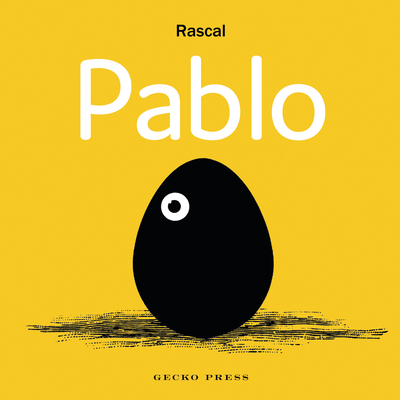
Highly stylized, this picture book focuses on Pablo, a baby bird who is ready to leave the egg. But Pablo is going to do it in his own unique way. After a breakfast of croissant and hot chocolate, he gathers his strength. He is too big for his egg now, so he must break out. First, he creates one hole, just the right size for his eye. He looks all around and then creates a second eye hole so he can really see out. He pecks two holes, one on each side of the shell so that he can hear what is happening around him. Then one hole for his beak so he can smell soil and flowers. The sixth and seventh holes are for his legs so he can wander. Then holes eight and nine are just right for his wings to come out. Pablo is entirely free of the shell, but he saves a piece just in case.

Visually arresting, this Belgian picture book features a pure black egg on a white background. Subtle shading and clouds move past, but the focus and each page center around Pablo himself as he steadily frees himself from the egg shell. The book steadily counts the number of holes that Pablo makes and is marvelously absurd has he continues far longer than most readers might think, staying in the shell and creating holes.

The art is simple and very funny. Perhaps most delightful is the final reveal of Pablo freed from the black egg, looking nothing like what one might have expected.

For the toddler, preschooler or parent who appreciates a bit of the surreal. Appropriate for ages 2-4.

Reviewed from copy provided by Gecko Press.

Spin a Scarf of Sunshine by Dawn Casey

Cover image.

Spin a Scarf of Sunshine by Dawn Casey, illustrated by Stila Lim (9781782506584)

On her family’s small farm full of sheep, bees and chickens, Nari had a lamb of her own. All year, the lamb grew and got more wool. In spring, it was time to shear the sheep and Nari’s sheep was sheared too. Nari washed the wool, carded it, and spun it into yarn. She gathered marigolds from the garden and they dyed the yarn sunshine yellow. Nari knitted the yarn into a scarf just in time to wear it in the winter. Eventually, her scarf got tattered and worn, so Nari put it in the compost bin where the worms would break it down into rich earth. She returned the compost to the ground to help the green grass grow, just in time to feed a new lamb.

Casey’s picture book focuses on the beauty of a quiet cottage life full of farming and animals. She shows how clothing is created from sheep to wool to yarn to cloth in a way that shows how long it takes and how much dedication as well. The book celebrates the cycle of farm goods from animal to item and back to the soil. It also celebrates traditional crafting and a slow, full life in touch with the seasons. Her writing is simple and also offers the sounds of that activity or season.

This is Lim’s first picture book. She shows the beauty of cottage life and the countryside. Her watercolors fill the pages with rich outdoor colors, from early spring green grass to the bounty of autumn to snowball fights in winter. Each season is celebrated for its colors, its feel and its beauty.

A good beginning look at how clothing is made and what a sustainable life looks like. Appropriate for ages 2-4.

Reviewed from copy provided by Floris Books.

Can’t Take That Away by Steven Salvatore

Cover image.

Can’t Take That Away by Steven Salvatore (9781547605309)

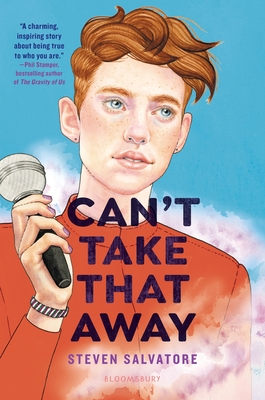
Carey has always been a singer, loving spending time with their grandmother belting out songs together. But being attacked by a homophobic bully made Carey quit voice lessons. Plus as their grandmother’s dementia worsens, Carey doesn’t have much reason to sing. Luckily, Carey has a very supportive mother and a good therapist to help them navigate being genderqueer in a binary world. Carey also knows that they messed up big time with one of their best friends, half of a pair of twins who have been friends forever. As Carey continues to face bigoted hatred from a teacher at school and a classmate, they also meet Cris, a boy who is very interested in Carey, their voice and becoming more than friends. Cris convinces Carey to try out for the school musical and to audition to be Elphaba in Wicked. As Carey grows in confidence, the voices of hate around them get louder and more intense, forcing them to find a way through the hatred to a place of self empowerment where Carey is allowed to sing and to fully be themselves.

Salvatore, who identifies as genderqueer themselves, has written a gripping story of homophobia and the power and activism it takes to regain control of our schools and communities from bigots. Added in are marvelous depictions of first love with all of the feels on the page. There are also strong depictions of what an ally looks like, how to be a great friend, and the importance of giving people a chance to change.

Throughout this entire novel, Carey is in the spotlight. Their emotions around being genderqueer, being targeted by hate, and also being in love are captured with care and real empathy. They are on a journey to self-acceptance even as they seek out the spotlight for their voice. It’s a fascinating look at performance, theater and the performer themselves.

This one will have you righteously angry and applauding by turns. Appropriate for ages 14-18.

Reviewed from copy provided by Bloomsbury.