Line and Scribble by Debora Vogrig

Book cover.

Line and Scribble by Debora Vogrig, illustrated by Pia Valentinis (9781797201870)

Though they are very different, Line and Scribble are great friends. They love to show one another what they are creating with ruler-straight lines or dreamy swirls. Line travels by straight roads, railroad tracks or planes that head straight to their destination. Scribble wanders, creates roller coasters. Line makes straight fur on dogs and straight elegant hair on people. Scribble makes fluffy cats and people with curly hair. Line likes breadsticks while Scribble enjoys cotton candy. Line likes to drink with a straw and Scribble makes bubbles. Together the two of them also combine to create a very dramatic visual storm full of straight rain, swirls of tornadoes, and plenty of wind. When the entire page is dark, Line sweeps it all away and the two friends start again.

This Italian import is joyous and full of ways to celebrate differences between friends where you can stay entirely yourself and still play together. Mostly told in the illustrations, this picture book is marvelously stylized with its almost entirely black and white images made of simple lines and swirls. Readers will enjoy exploring shapes and ways to make entire pictures with just a line or curl.

A lively and touching book about friendship because of differences. Appropriate for ages 3-5.

Reviewed from copy provided by Chronicle Books.

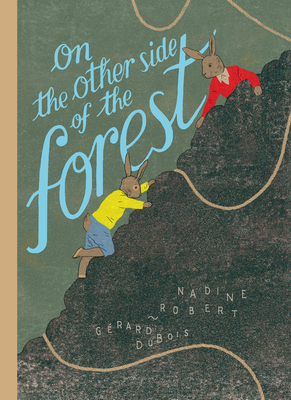
On the Other Side of the Forest by Nadine Robert

Cover image

On the Other Side of the Forest by Nadine Robert, illustrated by Gerard DuBois (9781771647960)

A little rabbit and his father live together near the edge of a dark and menacing forest where no one goes. His father has always wanted to know what is on the other side of the forest, so he sets a plan in motion. He takes their wheat harvest and begins to bake bread. When other rabbits in the community come around, he offers them bread in exchange for four large stones. Those stones, the two rabbits use to start building a huge tower to see above the tall trees. Their work continues for weeks and weeks until one day a terrible storm knocks down all of their hard work. The father rabbit falls asleep exhausted near his ruined tower, and that is when the community of rabbits appears and helps to rebuild the tower, higher than it was before. After lots more bread, more stones and plenty of hard work, the tower is complete. The little rabbit and his father are the first to climb to the top and see the surprise waiting for them.

Translated from the original French, Robert’s picture book reads like a folkloric story filled with classic elements such as bread, stones and sacrifice. She uses a storyteller’s voice throughout the book, drawing readers into the story. She excels at brevity in her text, using just enough to keep the story moving ahead and also explaining what is happening with enough details to bring it to life.

The art is exceptional, marvelously mixing modern and vintage elements into something very interesting and unique. The idyllic countryside setting is shown both in the closeup images as well as those showing extensive landscapes. The process of building the tower uses all sorts of levers and pulleys, showing the ingenuity at work and the hard labor involved.

A book full of suspense, fresh bread and community. Appropriate for ages 3-5.

Reviewed from e-galley provided by Greystone Kids.

The Water Lady: How Darlene Arviso Helps a Thirsty Navajo Nation by Alice B. McGinty

Cover image

The Water Lady: How Darlene Arviso Helps a Thirsty Navajo Nation by Alice B. McGinty, illustrated by Shonto Begay (9780525645009)

Cody, a child living in the Navajo Nation, wakes up thirsty. The bucket in the kitchen is empty and so are all of the water barrels outside. This is the only water that Cody and his family have. Meanwhile, Darlene Arviso is getting ready to work. She has running water in her trailer, but many in the Navajo Nation do not. She climbs aboard the school bus she drives and delivers students to school. Then she heads to her other job. She fills the yellow tanker truck with water from the water tower and heads out onto the road once more. She drives many miles through the mesas, steep hills and valleys. Eventually, she reaches Cody’s home where she fills the water barrels. Over the course of a month, Darlene delivers water to over 200 families and then starts over again.

McGinty offers a glimpse into the story of one woman and her hard work that allows people on the Navajo Nation to survive without running water. At the same time, she also speaks to the hardship of lives lived without modern conveniences and the worry that can create in children like Cody. Throughout the book, Darlene is treated as the hero she is, a critical link to drinking water for families who ration it, using a fraction of what modern families tend to use.

Begay’s art captures the beauty of the Navajo Nation by showing many landscapes full of purple, blue and yellow light. Using watercolor washes to fill the background, he creates moments of worry, tenacity and joy as Darlene finally reaches them with water.

A powerful look at modern Navajos and the impact of community in the face of poverty. Appropriate for ages 4-6.

Reviewed from e-galley provided by Schwartz & Wade.

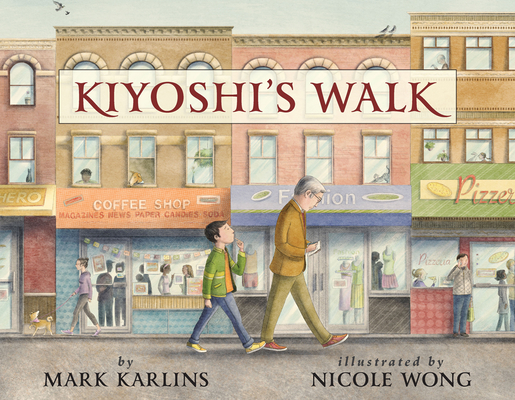
Kiyoshi’s Walk by Mark Karlins

Cover image.

Kiyoshi’s Walk by Mark Karlins, illustrated by Nicole Wong (9781620149584)

Kiyoshi’s grandfather Eto is a poet who writes poetry with brush and ink. Kiyoshi wishes that he could write poems too. When he asks his grandfather where poems come from, the two set off on a walk in their neighborhood. At the corner store, they see a cat on a pile of oranges. Eto stopped and wrote a poem about what happened when the oranges toppled, inspired by what they saw. The two hear pigeons flying above them, inspiring the next poem from what they heard. After seeing an abandoned teddy bear, Eto writes a poem about how it got there and how it feels, all from his imagination. The two reach the river together where Eto writes one last poem of the day, capturing his feelings. Now it is Kiyoshi’s turn to figure out that poems come from our surroundings and how that touches what is in our hearts. He’s ready to write his first poem.

Karlins has created a touching story of the connection between grandson and grandfather. The story is gentle and focused on finding poems throughout their day together. The book clearly shows how heart and imagination meet inspiring moments in life to create art, whether it is poetry, prose, music or art. Throughout the book, Eto treats Kiyoshi as an equal, gently showing him how he works and allowing Kiyoshi to also discover on his own.

The luminous art was done digitally. It evokes the warmth of colored pencil on the page. The fine details work well in showing the vibrant and changing urban setting they live in. The color palette changes as they walk, ending with the setting sun reflected in deep colors in the river.

Full of inspiration, poetry and connection. Appropriate for ages 4-6.

Reviewed from e-galley provided by Lee & Low Books.

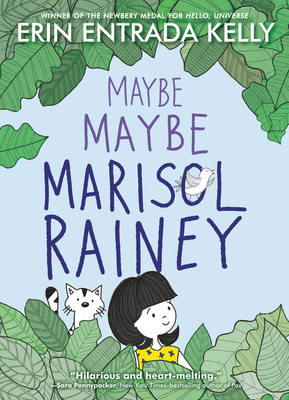
Maybe Maybe Marisol Rainey by Erin Entrada Kelly

Cover image for Maybe Maybe Marisol Rainey.

Maybe Maybe Marisol Rainey by Erin Entrada Kelly (9780062970428)

Marisol is the only one in her family who hates the big magnolia tree in their back yard. She has named the tree Peppina, and doesn’t like it because Marisol is scared of climbing trees. Her best friend Jada isn’t scared of anything. She can climb the tree like a flash and so can Marisol’s older brother. Marisol though worries a lot. She even worries about worrying too much. She is scared of learning to swim and almost didn’t learn to ride a bike either. Marisol is the only person in her class whose mother was born somewhere else. Her mother was born in the Philippines. She’s also the only person whose father works on an oil rig during the week. That’s why she also worries about Evie Smythe, a mean girl in her class who seems nice but makes fun of Marisol and her family. So what will happen when Marisol decides she has to climb Peppina after all? Maybe something amazing!

Award-winning author Kelly based Marisol upon herself as a child. Marisol’s worries and internal voice ring so true because of that connection to the author. As Marisol frets, she finds herself up in the middle of the night often and spends the time watching silent movies so no one else wakes up. She loves Charlie Chaplin and Buster Keaton, naming some of the objects around her home after the actors she sees on screen. These are the clever moments in the book that fully bring it to life.

Readers will enjoy Marisol who may be worried, but also is entirely her own person. While she keeps some of her quirks between herself and Jada, others are more obvious in her life. Marisol is funny and filled with imagination, allowing her to become a bird even if she doesn’t like heights.

A charmer of a chapter book that “may be” just the one you are looking for. Appropriate for ages 6-9.

Reviewed from e-galley provided by Greenwillow Books.

The Elephants Come Home by Kim Tomsic

Cover image of The Elephants Come Home.

The Elephants Come Home by Kim Tomsic, illustrated by Hadley Hooper (9781452127835)

Based on a true story, this picture book shows the immense connection and love that can come from saving elephants. Lawrence Anthony and Francoise Malby owned an animal sanctuary, Thula Thula, in Africa. In 1999, they rescued a herd of wild elephants who were causing damage where they had been living. But it was not as simple as creating a space for the elephants and moving them in. The elephants were not sure they wanted to stay, and certainly didn’t want to be penned in. They made that clear after destroying their first enclosure and escaping. Lawrence and Francoise had to act quickly to avoid the elephants being slaughtered by hunters, so they called in the help of a helicopter, who found them and managed to move them back to Thula Thula. Lawrence decided to camp with the elephants, forming a bond with their matriarch, Nana. Once that happened, they were able to leave their enclosure and head into the full Thula Thula sanctuary with the other animals. They could visit the farmhouse whenever they wanted too. It was when tragedy struck though that the true connection to the elephants became clear.

This incredibly moving story shows the connection that can happened between human and animal, one that goes both directions through gentleness, protection and a deep understanding of one another’s value. The patience that Lawrence shows through the book is notable and is what allows him to bond with the herd. People who already love elephants will find new knowledge here about conservation, protection and how very intelligent they are.

The art feels like a series of prints, each created with watercolor, ink and printmaking. The colors are magnificent from the blues of late night to the dusty oranges of African day to the lush greens of Thula Thula itself. The elephants are drawn with real character, their hugeness and their emotions clear in each image.

A remarkable story worth enjoying with your own herd. Appropriate for ages 6-9.

Reviewed from copy provided by Chronicle Books.
Sunrise Summer by Matthew Swanson

Cover image for Sunrise Summer.

Sunrise Summer by Matthew Swanson, illustrated by Robbi Behr (9781250080585)

A family heads to Alaska for the summer, traveling 4000 miles to get there. This summer, the girl narrating the story will get to join the fishing crew for the first time. She will pull ropes, twist anchor poles and fetch water. The girl and her mother watch the river, waiting for the salmon to come. Meanwhile, the family keeps busy with necessary repairs, mending nets, and listening to the fishing reports on the radio. The tides say that fishing should start at 4 am, so the family gets up a 2:30 am to head out. They dress up in rubber waders, long gloves and woolly hats. They face wind, rain and high waves as they head out to fish. At 4 am, the nets are dragged into the water and it’s her job to tie the net to the rope, but it’s much harder with the tide pulling, a wet rope and slick mud underfoot. The whole crew helps out, until finally it’s time to remove the salmon from the nets by hand. Then they get shipped all over the world.

Based on Robbi’s own personal experience as a young girl spending summers in Alaska as part of a commercial fishing operation, this picture book is full of details that only someone who has lived it would know. From bumping into bears on the beach to the troubles of taut ropes to the immense pride in being included in the family business, all of this adds to the joy of a girl participating on a fishing team for the first time. The writing is focused and brief, making the book perfect for sharing aloud. The focus is on facing a new experience with family by your side and realizing with pride that this is what we do.

The art is digitally done with watercolor washes across the sky and collaged elements that have the characters popping with black outlines against the backgrounds. The depiction of the beauty of the Alaskan tundra is particularly of note as well as the clear family support among everyone.

A unique and fascinating lifestyle that is worth smelling like fish. Appropriate for ages 3-6.

Reviewed from copy provided by Imprint.

Nubia: Real One by L. L. McKinney

Cover image for Nubia.

Nubia: Real One by L. L. McKinney, illustrated by Robyn Smith (9781401296407)

When Nubia heads into a store to talk to Oscar, a boy she likes, everything goes wrong. The store is robbed, and Nubia finds herself using her Amazonian strength to stop the robbers and protect everyone in the store. The problem is, that Oscar witnessed what she did. Nubia and her mothers have had to move multiple times when people have seen her feats of strength just to protect her and let her have a normal life. Her mothers get advice from D, who helps relocate them and assess the dangers. As one of her best friends is targeted by a predatory classmate, Nubia learns that she can’t just sit by and let things happen to those she loves. But as a Black woman, the world sees her as a threat already, it’s not as simple as Wonder Woman has it.

McKinney, author of A Blade So Black, has created the voice of this graphic novel, focusing on modern issues like Black Lives Matter and the problem of being a super hero in a world that sees Black people as the problem, not the solution. McKinney centers the problems that Nubia faces into these larger societal problems, giving them a serious weight. Her text is lively and her dialogue is natural and deeply explores what Nubia is experiencing as a Black woman.

The illustrations by Smith are marvelous. I love the height and strength of Nubia. I adore the messy look of Wonder Woman, as if she has run her hands through her hair in frustration several times on her way into the room. The images of Nubia’s mothers are great, from their determination to their deep caring to the celebration of Nubia despite what the world might say.

A graphic novel for our times and for our future. Appropriate for ages 11-15.

Reviewed from library copy.

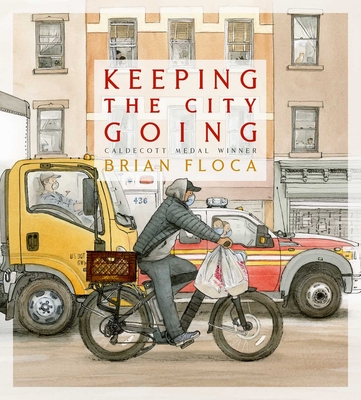
Keeping the City Going by Brian Floca

Keeping the City Going by Brian Floca (9781534493773)

This picture book by Caldecott Award winner Floca explores the Covid-19 pandemic. Through New York City streets, the book shows how most people were forced to stay indoors and watch the streets go quiet. But the streets never emptied entirely, since there were people working at essential jobs. People were still out and about using all sorts of vehicles. There were people delivering mail and packages, people heading to work in hospitals, others making food deliveries on their bicycles, still others picking up trash, and police and fire protecting everyone. Then every night, the windows opened and people shouted and banged their appreciation for these people who kept on working through the danger and the emptiness to keep everyone safe, fed and looked after.

The text in the book is simple, explaining what happened to cause the streets to empty as people took refuge in their homes to stay safe. The book shows vehicles of all sorts but also shows lovely moments of connection, of toys being delivered or taxis stopping to get someone with lots of grocery bags.

Floca tells us in his Author’s Note that he created these images during the pandemic’s height in New York City. As the streets emptied, he found solace in drawing the vehicles that continued to move through the city. He then took those images and made them into this book, which explains the aching melancholy of some of the images as they show the empty streets and the vast change to a normally bustling city.

A beautiful yearning look at New York City in 2020 with plenty of interesting vehicles to explore. Appropriate for ages 3-5.

Reviewed from copy provided by Atheneum.