Ty’s Travels: Super Ty! By Kelly Starling Lyons – Book Review

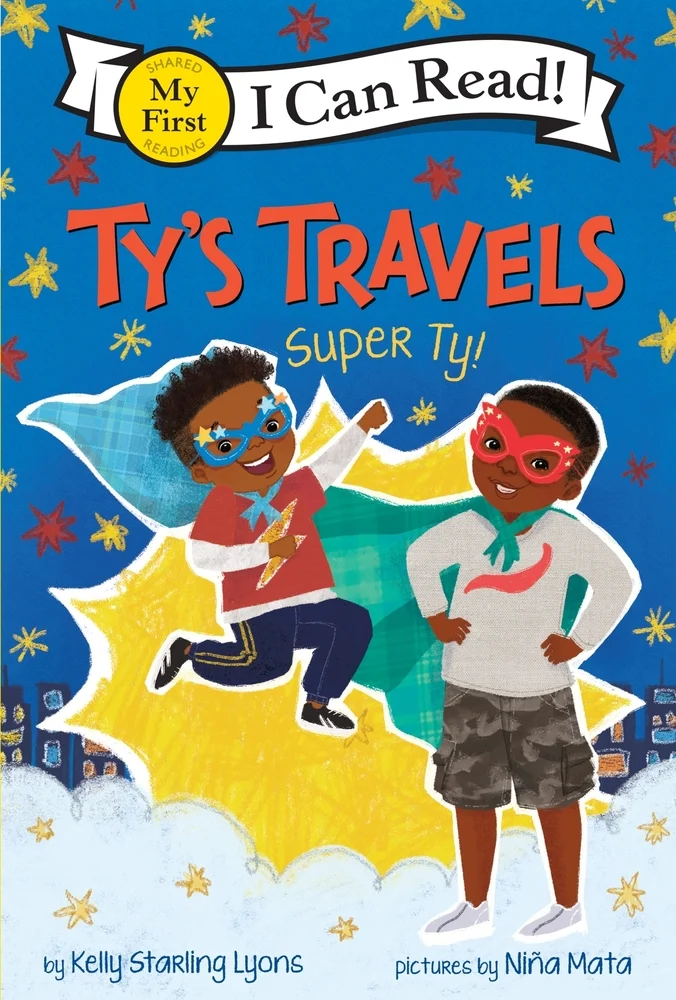
Ty’s Travels: Super Ty! by Kelly Starling Lyons, illustrated by Niña Mata (9780063083721)

Ty becomes a super hero in this newest book in the award-winning beginning-reader series. When Ty puts on his mask and cape, he’s ready to save the day just like his favorite super heroes. So when a dad needs someone to open the door for him, Ty saves the day! At the playground, when a boy is frightened of the slide, Ty saves the day by sliding with him. Mom can’t find her keys, but Ty can! Ty takes a break from all of his hard work as a super hero but when his paper plane gets stuck in a tree, Ty may be the one who needs to be saved.

Done in simple and readable language that is accessible to beginning readers, this book continues the themes of community and family that run through the entire series. Though the book’s language is simple, the story has a great depth to it and asks questions about being a helper and also accepting help from others. The illustrations are bright and cheery. They capture Ty’s imagination in childlike sketches that pop against the otherwise smoothly drawn images.

Another great book in a series that can’t be missed. Appropriate for ages 4-6.

Reviewed from e-galley provided by HarperCollins.

The Glass Pyramid by Jeanne Walker-Harvey – Book Review

The Glass Pyramid: A Story of the Louvre Museum and Architect I. M. Pei by Jeanne Walker-Harvey, illustrated by Khoa Le (9781665953337)

I. M. Pei, a renowned architect had successfully redesigned part of the National Gallery of Art in Washington, D.C. But when the President of France asked him to work on the Louvre, Pei decided to keep the project secret. The Louvre had many issues as a museum with people unable to find the entrance and the long walk to reach the art once they did enter. So Pei set out to create a new way to enter the building. It was unclear what would work, but eventually he designed a glass pyramid. The French people though didn’t love the idea and argued that they should have hired a French architect. Pei stayed the course, doing interviews and calmly explaining his design. Could he win over the French people? 

A look at the design process of a gifted architect allows young readers to see the resilience and persistence that design takes. Even when the design was finalized, there were issues with the construction that arose and then the arguments about the design itself. This nonfiction picture book explores process and results, engaging the reader in Pei’s childhood visits to China and what he learned there. The digital illustrations are a filled with crisp edges and renderings that capture Pei’s calm pride in his work. The book provides more information on the building at the end as well as sources and online resources. 

A strong nonfiction picture book about one of the top architects in the world and one of his most famous projects. Appropriate for ages 6-10.

Reviewed from e-galley provided by Atheneum Books for Young Readers.

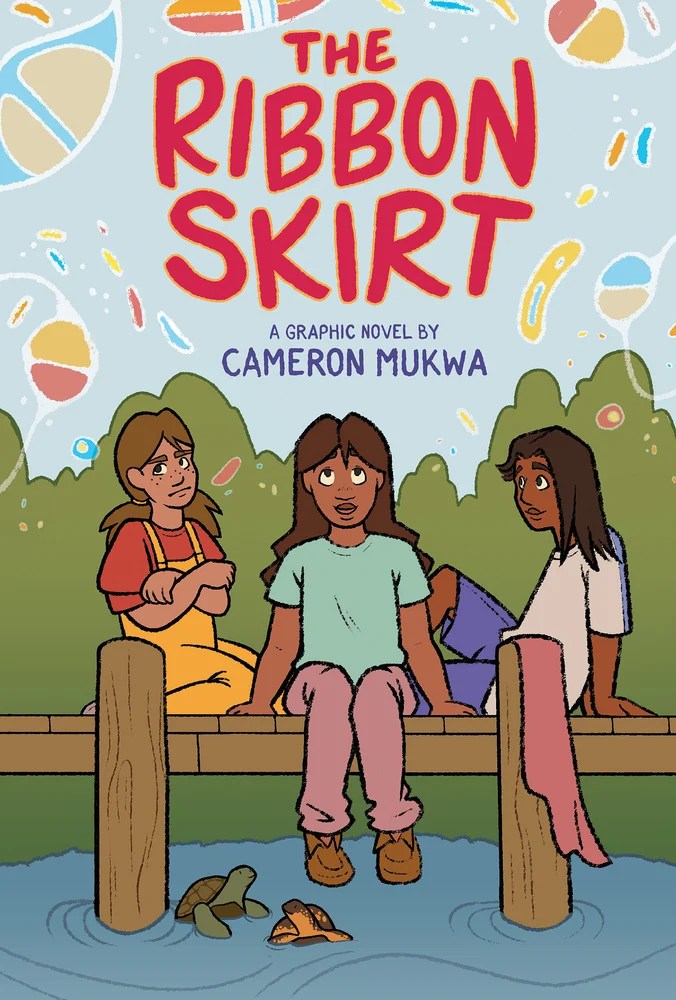
The Ribbon Skirt by Cameron Mukwa – Book Review

The Ribbon Skirt by Cameron Mukwa (9781338843262)

Anang wants to make a ribbon skirt to wear at an upcoming powwow, a skirt that is traditionally worn by Anishinaabe girls. Anang is two-spirit and nonbinary. While they have some concerns about wearing a ribbon skirt, they decide to follow their dreams. Helped along the way by spirits, turtles and crows, Anang steadily gathers the items they need for their skirt. Supported by their family and friends, Anang must also deal with a girl who used to be a close friend but now is more like a bully. It’s up to Anang to stay strong, follow their path and create their perfect skirt.

Mukwa is also a two-spirit Anishinaabe and this is their debut book. Written with a wry sense of humor, an honest take on support and fear, and a delight in the spirits helping, this graphic novel has a winning combination. The illustrations are bold and colorful, making the graphic novel all the more approachable for young readers.

A timely and joyful look at being nonbinary and living your dream life. Appropriate for ages 8-12. Reviewed from library copy.

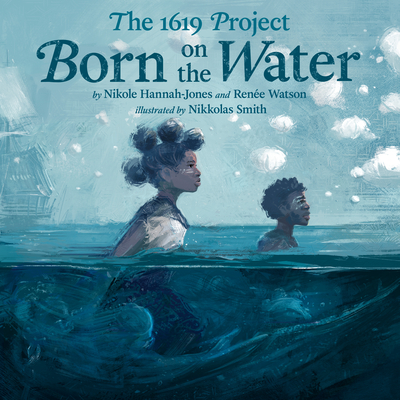
The 1619 Project: Born on the Water by Nikole Hannah-Jones and Renee Watson

Cover image for The 1619 Project: Born on the Water.

The 1619 Project: Born on the Water by Nikole Hannah-Jones and Renee Watson, illustrated by Nikkolas Smith (9780593307359)

This picture book forms a way for younger children to benefit from the information shared in The 1619 Project. In this story, a Black girl is given an assignment in class to trace her family history. She can only trace three generations back and tells her grandmother that she is ashamed. So her grandmother shares the history of her family before slavery when they lived in West Central Africa. Her family spoke Kimbundu and were good with their hands and used them for growing things, inventing, mixing herbs, building tools, and caring for babies. They danced to offer worship, to share joy, and to mourn. Then they were stolen, taken from their families and lands, stamped with new names. They fought back, some refused to eat and chose to die on the journey, others survived. They had to learn a new language, form a new people, and survive the brutality of slavery. From that history have come generations of Black Americans who have changed our nation for the better. There is nothing to be ashamed of, take pride in this history of resilience and hope.

The focus of this picture book is to share the history of Black Americans in this country, showing how a deep history in the cultures of Africa are their origins. The book doesn’t flinch from the darkness of the Middle Passage or the horrors of slavery. These are also sources of pride for children reading the book, who may have been made to feel ashamed of where they came from. Written with a poetic touch, the entire book is filled with hope even in its darkest points. Throughout there is a sense of resilience and power, a knowledge that ancestors survived.

The illustrations carry readers through history. They show the rich cultures in Africa and the beauty of what was lost. They show slavery but not without hope shining in the sky above. They share connections, new families forming, and children who are a promise for the future. They show resistance, an insistence on change, a focus on the future continuing to carry us forward.

Powerful and important, this book belongs in every library. Appropriate for ages 6-9.

Reviewed from e-galley provided by Kokila.

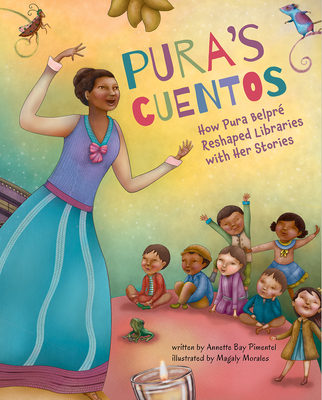
Pura’s Cuentos by Annette Bay

Cover image for Pura’s Cuentos.

Pura’s Cuentos: How Pura Belpré Reshaped Libraries with Her Stories by Annette Bay, illustrated by Magaly Morales (9781419749414)

This picture book celebrates the life of Pura Belpré, librarian and storyteller. From a young age, Pura loved stories, particularly those that her Abuela told her. As an adult she moved from Puerto Rico to New York, where she first dreams of being a librarian. Soon Pura is hired at the library and works as the storyteller. But she is bound by rules such as only sharing stories written in books. But the stories she grew up hearing were not written down in English. Pura shows the how storytelling can be more than is in books, and gets permission to tell her stories in her own way. Pura also finds ways to bring in children who had not been coming into the library, children who spoke different languages and were new to America. Finally, Pura manages to put her stories into a book, one that reminds her of the taste of home.

Through lyrical prose, this picture book shows the power of stories as they cross borders. It also shows the impact of one woman, determined not to lose her stories and how she changed public libraries and their services to children permanently. It is beautiful to see a biography for young children that captures the elements of Pura’s stories and her own personality of determination but also one of joy and playfulness.

The illustrations are filled with that spirit of play. They capture the spark of storytelling, the dance of movement, and the wonder of children entering the library for the first time. Done in the colors of citrus, papaya, guava and mango, they suit Pura’s stories and herself.

An inspiring biography of the librarian who changed the rules for generations to come. Appropriate for ages 4-7.

Reviewed from copy provided by Abrams Books for Young Readers.

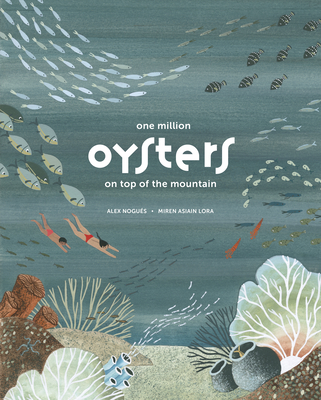
One Million Oysters on Top of the Mountain by Alex Nogues

Cover image for One Million Oysters on Top of the Mountain.

One Million Oysters on Top of the Mountain by Alex Nogues, illustrated by Miren Asiain Lora, translated by Lawrence Schimel (9780802855695)

Written by a Spanish geologist, this nonfiction picture book explores how a million fossilized oysters can possibly be found on a mountaintop. The book begins with exploring several landscape scenes, pointing out how simple it is to ignore the rocks that make up our world. The book moves from a child discovering an oyster shell on a hilltop and also explores various scientific discoveries in geology as the reason for the oysters is explained. Concepts such as strata in the earth, the immense length of geological time, and the movements of tectonic plates are explored and explained. Readers will leave with a great understanding of our changing world, much of which may have been underwater long before.

In this Spanish import, the writing by Nogues is what makes this book work so well. His tone is one of wonder and discovery. He writes from the perspective of discovering a new question, forming a hypothesis and then fully explaining the scientific terms and findings. The book offers a great look at geology and earth science for young children, never speaking down to them, instead explaining and lifting their understanding of the world upwards.

The illustrations are filled with earth tones and green punctuated by the whites of bones, fossils and oyster shells. Many of the illustrations help to give context to scientific concepts in a playful way. The scenes include children discovering fossils, exploring redwood trees, and much more.

A fascinating look at the transformations our earth has undergone. Appropriate for ages 6-9.

Reviewed from copy provided by Eerdmans Publishing Company.

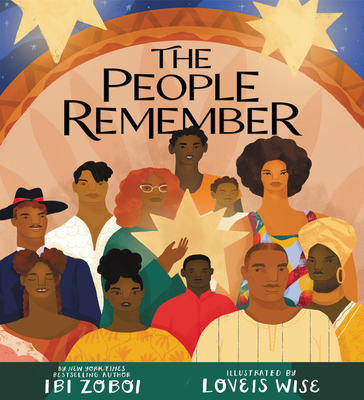
The People Remember by Ibi Zoboi

Cover image for The People Remember.

The People Remember by Ibi Zoboi, illustrated by Loveis Wise (9780062915641)

This nonfiction picture book explores African American history by connecting it to the seven principles of Kwanzaa. The book starts with Africa during a time of war when people disappeared or were sold. The history continues as they are taken into slavery, landing in places like South Carolina, Hispaniola and Brazil. Some escaped while those who could not escape found a common language and unity. People today remember the days of slavery, seeing that they have self-determination to change the nation. When slavery ended, the Great Migration came along with music on the streets and in churches, showing their collective work and responsibility. The history continues with examples of places that Black people created themselves and Black people who were successful, showing the principle of cooperative economics. Purpose came with voting rights, marches for civil rights, and the grief and hate of lynching. Creativity is shown again and again with music, dance, writing and more. The book ends with faith, a commitment not to forget and to carry forward with hope for change.

This Zoboi’s picture book debut. Her writing is exceptional, an ode to African Americans and their collective impact on the world. Using the Kwanzaa principles to guide the structure of the book works well, as the book naturally forms into seven sections. Zoboi uses a repeating structure of the various African tribes who were taken to America as slaves. In these sections and throughout, there is a call to Black pride, to seeing oneself as survivors and removing any shame from the narrative. Zoboi works to clearly draw the connection between history and today, showing the continuum that reaches backward and forward.

Wise’s illustrations are filled with lush colors, depicting connections between modern times and history. Their art is flat and graphic, almost poster like in its powerful simplicity. Each one could be framed and used to call out a movement or moment in history.

Powerful, unflinching and important. Appropriate for ages 6-9.

Reviewed from e-galley provided by Balzer + Bray.

How to Find a Fox by Kate Gardner

Cover image for How to Find a Fox.

How to Find a Fox by Kate Gardner, photographs by Ossi Saarinen (9780762471355)

This nonfiction picture book explores the world of the fox in beautiful photographs. The text is a mixture of a very simple storyline of finding a fox combined with detailed facts about foxes and their adaptability in a changing world. The book looks at when it is best to find a fox, such as time of day or season. It goes on to describe what a fox looks like and what to look for when finding their tracks. You can also listen for yips or other noises. But most importantly, you must try to be very quiet and hope that a fox might just find you!

The text of the book is well-written and full of interesting foxy facts. Children will want not only the simple story but to hear about the details of the fox’s life and how to find one themselves. The premise of the book alone is an invitation that is almost impossible to turn away from.

From the cover and through the entire book, the photographs are the focus. They marvelously capture the fox with clarity and a real feeling for their character. There are images where the fox is lit by the sun where you can almost sink your fingers into their fur. Other pages have the fox looking right at the reader with undeniable intelligence. Simply beautiful.

One of the most enticing and gorgeous animal books of the year. Appropriate for ages 3-6.

Reviewed from e-galley provided by Running Press Kids.

Sona Sharma, Very Best Big Sister? by Chitra Soundar

Cover image for Sona Sharma.

Sona Sharma, Very Best Big Sister? by Chitra Soundar, illustrated by Jen Khatun (9781536214826)

Sona lives in a home with lots of family members and others who stop by regularly. There is her mother and father, Thatha, her grandfather, Paatti, her grandmother, and The President who lives in the neighborhood. There is also Elephant, her best friend, and a toy she has had since she was tiny. When Amma, Sona’s mother, tells her that she is expecting a new baby, Sona isn’t so sure that it’s good news. She will have to share her room and her things with the new baby. Sona wants badly to be the best big sister ever, but sometimes her emotions get in the way. She has a chance to help pick the perfect name for the new baby, but she may just wait too long in the end.

Perfectly pitched for young readers, this early chapter book is a glimpse of life in India with rickshaws to get to school, jasmine in the garden, and pooris for a snack. Sona’s reaction to a new baby is just right, an honest mixture of wanting to participate and also resenting what she may lose too. The extended family plays a large part in giving Sona both the attention and the space she needs to process her feelings without making her ashamed along the way.

The illustrations add to the depiction of life in India, capturing the connection of the family members, shared meals, and crowded streets. The images are full of warmth and love.

A look at the emotions of a new baby combined with a visit to India. Appropriate for ages 5-7.

Reviewed from ARC provided by Candlewick.