A Poem for Peter by Andrea Davis Pinkney

a-poem-for-peter-by-andrea-davis-pinkney

A Poem for Peter: The Story of Ezra Jack Keats and the Creation of The Snowy Day by Andrea Davis Pinkney, illustrated by Lou Fancher and Steve Johnson (InfoSoup)

The son of Polish immigrants, Ezra Jack Keats grew up in poverty in Brooklyn. Early in his life, Ezra followed his dream of being an artist. As an 8 year old, he earned money painting store signs. His father worried about this dream, but also helped by bringing home partially used paint from the artists at the cafe he worked at. Ezra was encouraged at school by teachers and at the library by librarians. Just as Ezra was about to leave for art school, his father died. He thought his artist dream was gone, but then during the Great Depression the New Deal emerged with The Art School League. It was then that he discovered what would be the beginning of The Snowy Day, but World War II would intervene before that dream could come true.

Pinkney’s poem sings on the page, telling the story of how an image can create real magic, just like the snow that inspired it too. She writes with real passion about poverty, the transformation that snow brings to poor neighborhoods, the delight of creation, the wonder of art and the long path it takes to bring a story to life sometimes. Pinkney’s words are magic, dashing and reacting along with the reader, swirling like snowflakes against your cheeks.

The illustrations by Fancher and Johnson are wonderful. Done in collage and paint, they capture Brooklyn as a clear setting and the hardship of Keats life enlivened by art. They then go on to inspire new thoughts of snowflakes and snow as they pay homage to The Snowy Day.

Perfect for fans of The Snowy Day, this picture book speaks to the power of art in one’s life and the way that one man’s dreams have inspired generations to dream too. Appropriate for ages 5-8.

Reviewed from library copy.

10 Best Nonfiction Books for Children in 2016

It was a wonderful year for nonfiction books for children, particularly those with a focus on diversity. I only wish I had managed to read more of them. Here are the ones I enjoyed most this year:

20899295 26240643

The Book Itch: Freedom, Truth & Harlem’s Greatest Bookstore by Vaunda Micheaux Nelson, illustrated by R. Gregory Christie

Cloth Lullaby: The Woven Life of Louise Bourgeois by Amy Novesky, illustrated by Isabelle Arsenault

25664556 24885797

The First Step: How One Girl Put Segregation on Trial by Susan E. Goodman, illustrated by E. B. Lewis

My Story, My Dance: Robert Battle’s Journey to Alvin Ailey by Lesa Cline-Ransome, illustrated by James E. Ransome

28588346 18552623

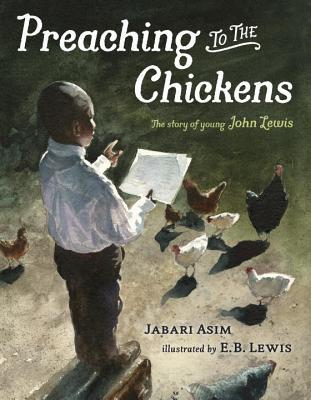
Preaching to the Chickens by Jabari Asim, illustrated by E. B. Lewis

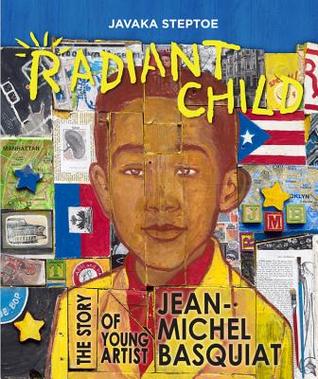
Radiant Child: The Story of Young Artist Jean-Michel Basquiat by Javaka Steptoe

25738883 28186006

The Secret Subway by Shana Corey, illustrated by Red Nose Studio

Six Dots: A Story of Young Louis Braille by Jen Bryant, illustrated by Boris Kulikov

28114411 26543145

Some Writer!: The Story of E. B. White by Melissa Sweet

Their Great Gift: Courage, Sacrifice and Hope in a New Land by John Coy, photographs by Wing Young Huie

Radiant Child by Javaka Steptoe

radiant-child-by-javaka-steptoe

Radiant Child: The Story of Young Artist Jean-Michel Basquiat by Javaka Steptoe (InfoSoup)

Coretta Scott King Award winner, Steptoe has created a visual feast of a book about the remarkable artist, Jean-Michel Basquiat. The book shows Basquiat as a child who drew all day long, refusing to sleep until his art is complete. He wakes in the middle of the night, drawing things from his dreams onto paper. His Puerto Rican mother teaches him to see art all around him. They visit museums, the theater, read poetry and Basquiat learns about art and artists. Eventually, his mother’s mind breaks and she can no longer live at home. He visits her when he can and shows her his artwork. As a teenager, he lives with friends and spray paints art around the city. He mixes collage and paint, his art moving from the street and into galleries, fulfilling his dream of becoming a famous artist.

Young readers are not shown the dark part of the Basquiat’s life. That is revealed in the author note at the end of the book where Basquiat’s death at age 27 from his drug addiction is explained. The picture book focuses on the inspiration for his art, his dreams of fame and how he used his diverse urban landscape as inspiration for his art and his life.

Steptoe’s art pays homage to Basquiat. Done on boards where the seams are rough and form an organic pattern, the art is a mix of painting and collage. As he explains in a note about motifs, there are certain items that repeat in Basquiat’s art that readers can see echoed in the art in the book as well. The art is stunning, detailed and worth lingering over.

A luminously beautiful book about a passionate and gifted artist, this picture book shines. Appropriate for ages 7-10.

Reviewed from library copy.


Preaching to the Chickens by Jabari Asim

preaching-to-the-chickens-by-jabari-asim

Preaching to the Chickens by Jabari Asim, illustrated by E. B. Lewis (InfoSoup)

John Lewis, renowned Civil Rights leader and Congressman, dreamed of becoming a preacher as a child. When he was put in charge of the family’s flock of chickens on their farm, he knew it was a great responsibility. John loved going to church on Sunday and took what he learned in church back to his flock. He would sermonize to them, the chickens mesmerized by his voice. He would also baptize them, speak up for them when they needed a voice and rescue them when they needed help. As he preached the words he learned in church, he put those words into action while tending his flock.

Asim beautifully ties together the lessons in church to actions in caring for others. There is a richness to the writing in this picture book biography, capturing both scripture and the beauty of life on a small farm filled with hard work. This is not a fantasy farm, but one where toil is what makes for a successful harvest. Still, it is a place that grew an activist like John Lewis, who learned about using his voice for a cause right there on the farm with his chickens.

The illustrations by Lewis are done in watercolor, capturing the chicken coop and John himself with just enough detail to convey their simplicity but also their stature. Lewis uses the play of light spectacularly in the book, deftly incorporating shadow and light into John’s childhood sermons.

A beautifully crafted picture book biography that speaks of the power of childhood dreams to create activism and a man with a voice to change generations. Appropriate for ages 6-8.

Reviewed from library copy.


Lift Your Light a Little Higher by Heather Henson

lift-your-light-a-little-higher-by-heather-henson

Lift Your Light a Little Higher: The Story of Stephen Bishop: Slave-Explorer by Heather Henson, illustrated by Bryan Collier (InfoSoup)

Stephen Bishop was a slave who explored and mapped Mammoth Cave. The book is set in 1840 where you can follow the light of Bishop’s lantern deep into the massive cave as he gives people and the reader a tour. For the reader though, the tour is about slavery, about civil rights and about the ability for a man to discover value through exploring darkness. Bishop was the first to see many of Mammoth’s sights, including the blind fish. He learned to read as people signed their names on the cave’s ceiling, though learning to read and write was forbidden for slaves. This man’s story is a tale of resilience, self worth and discovery.

Henson tells the story almost in verse, capturing the highlights of the man’s discoveries but also weaving the dark side of slavery with the darkness of the cave. Henson gives Bishop a strong voice, one that stands out on the page and demands to be heard. Told in the voice of The Guide, Bishop explains slavery and its structure to the reader just as he explains his role and his attitudes towards life and the cave that made his famous. The author’s note contains information on Bishop and how he was sold along with the cave to several owners.

Collier’s illustrations are exceptional. He has several that are simply amazing in their power. One that caused me to linger for some time was the page with the oxen with faces on their sides, faces of slavery in various colors that are wrinkled and damaged. It’s a powerful reminder of the place of slaves as property. There are other pages that show hope in the slanting light of sun as Bishop exits the dark of the cave is one. Exceptional.

A strong picture book biography of a man many won’t have heard of before, this book speaks to the tragedy of slavery and the resilience and power of one man. Appropriate for ages 6-9.

Reviewed from copy received from Atheneum.


10 Great Picture Books on Civil Rights

The ACLU has just had its best fund raising month ever, so I know that others are concerned with civil rights being attacked just as much as I am. Happily, there are beautiful picture books on civil rights to share with the children in our lives:

The Amazing Age of John Roy Lynch The Beatitudes: From Slavery to Civil Rights

The Amazing Age of John Roy Lynch by Chris Barton, illustrated by Don Tate

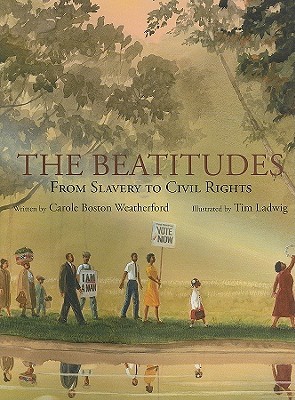
The Beatitudes: From Slavery to Civil Rights by Carole Boston Weatherford, illustrated by Tim Ladwig

The Case for Loving: The Fight for Interracial Marriage Lillian's Right to Vote: A Celebration of the Voting Rights Act of 1965

The Case for Loving: The Fight for Interracial Marriage by Selina Alko, illustrations by Sean Qualls and Selina Alko

Lillian’s Right to Vote by Jonah Winter, illustrated by Shane W. Evans

Seeds of Freedom: The Peaceful Integration of Huntsville, Alabama Separate Is Never Equal: Sylvia Mendez and Her Family's Fight for Desegregation

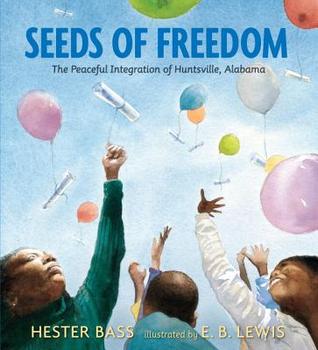
Seeds of Freedom: The Peaceful Integration of Huntsville, Alabama by Hester Bass, illustrated by E. B. Lewis

Separate Is Never Equal: Sylvia Mendez & Her Family’s Fight for Desegregation by Duncan Tonatiuh

Sit-In: How Four Friends Stood Up by Sitting Down 22747807

Sit-In: How Four Friends Stood Up by Sitting Down by Andrea Davis Pinkney, illlustrated by Brian Pinkney

Voice of Freedom: Fannie Lou Hamer:The Spirit of the Civil Rights Movement by Carole Bostone Weatherford, illustrated by Ekua Holmes

6519593 When Thunder Comes: Poems for Civil Rights Leaders

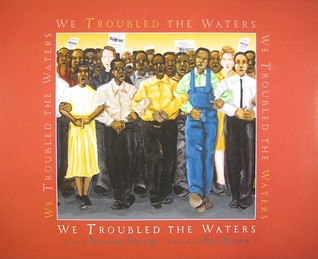
We Troubled the Waters by Ntozake Shange, illustrated by Rod Brown

When Thunder Comes: Poems for Civil Rights Leaders by J. Patrick Lewis, illustrated by Jim Burke, R. Gregory Christie, Tonya Engel, John Parra, and Meilo So

Six Dots by Jen Bryant

six-dots-by-jen-bryant

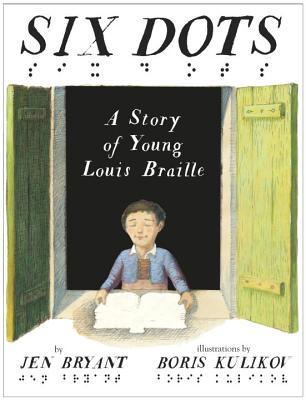
Six Dots: A Story of Young Louis Braille by Jen Bryant, illustrated by Boris Kulikov (InfoSoup)

Louis Braille lost his sight at age five from an accident and a resulting infection. His family helped him learn to cope, making him a cane that he could use to explore a little farther from home each day. His brothers taught him to whistle and his sisters made him letters out of straw. He could play dominoes, knew trees by touch, flowers by their smell and could listen to books being read aloud. But there were no books for blind children like him. Even when he got into a school for the blind in Paris he had to work very hard and become one of the best students to be able to access their books. When Louis achieved that though, he found that the books were done in large raised wax letters so thick books were actually quite short. Then there was news that a French army captain had created a way to send secret messages that was read by touch. Louis worked to make the system readable by the blind, creating his own alphabet system as a teenager!

Bryant writes in first person from Braille’s point of view. She explains how Louis lost his sight with just enough detail to make it understandable how tragic it was but doesn’t overly linger there. When Louis’ sight is gone, the text changes to become filled with noises and other senses than sight. Bryant moves the story forward using Braille’s desire to read for himself, that drives both the story and Braille’s own life. As each opportunity proves to be disappointing, Braille does not give up hope, instead developing throughout his life a tenacity to find a solution.

Kulikov’s illustrations play light against dark. When Braille loses his sight, the pages go black with shadowy furniture forms only. Color is gone entirely. The reader is not left there, but moves back into the world of color unless the story is speaking about Braille’s blindness specifically, so when Braille finally gets to try reading the wax lettering, the page goes dark again, also showing his disappointment in the solution.

Intelligently designed and depicted, this is a warm and inspiring look at the life and achievements of Louis Braille. Appropriate for ages 6-9.

Reviewed from copy received from Knopf Books for Young Readers.


Some Writer! by Melissa Sweet

some-writer-by-melissa-sweet

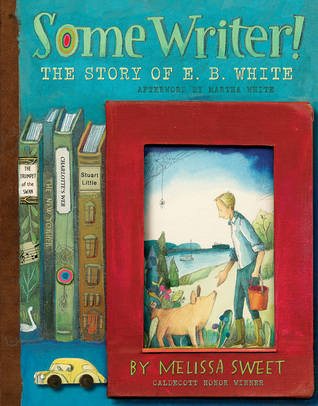
Some Writer!: The Story of E. B. White by Melissa Sweet (InfoSoup)

The life of E. B. White, author of several beloved children’s books, is shown here in a children’s biography from a two-time Caldecott Honor winner. White’s upbringing as a child with his summers spent on a lake in Maine shows the impact of childhood experiences. He won several writing awards as a teenager, knowing exactly what he wanted to do. His work for The New Yorker and other publications as a column author and poet is shown as well as Sweet spends much of the book on the author’s adult life. The strong connection he had with water, nature and Maine shines on the page just as it does in his work. Issues with Stuart Little being accepted in libraries and other moments of note are wonderfully portrayed in original wording of letters. A writer who lived away from the fame he was garnering, White continued to do farm work, sail his boats, and enjoy the simple life he adored.

Sweet has written a simply incredible biography. Her writing flows with that of White. Hers has a frankness and an honesty that is particularly important in biography. Sweet intersperses White’s writing throughout the book, sometimes in clippings from magazines or newspapers and other times clearly typed using a typewriter to get the right feel. Unlike many children’s biographies, Sweet depicts White’s childhood and then moves on to his work and his adult life. While his childhood informs his work, it is not the sole focus of the biography, which honors young readers will plenty of information on his full life.

Sweet’s illustrations are equally amazing. She uses physical items on the page, weathered wood, screws, rope, typewriter keys, and leaves. She incorporates photographs and then her own art as well, creating a world of found objects, drawn Wilburs and Templetons, photos and actual documents that is rich and wondrous. It is like opening a drawer and discovering a treasure trove, a book you want to curl up with and read just as you did those beloved childhood books.

In short, this is a masterpiece. A book with just the right tone, style and organic nature. Terrific! Appropriate for ages 8-12.

Reviewed from library copy.


Coyote Moon by Maria Gianferrari

coyote-moon-by-maria-gianferrari

Coyote Moon by Maria Gianferrari, illustrated by Bagram Ibatoulline (InfoSoup)

Coyote wakes and heads out of her den to find food for her pups. She walks the roads past houses and fences. She finds a mouse but doesn’t manage to catch it. There are geese on the golf course, but Coyote can’t get close enough to steal an egg without the geese attacking her. There is a rabbit on a lawn, but the rabbit is faster than Coyote. Soon dawn arrives and Coyote still has not caught any food for her family. Then there are turkeys walking nearby and Coyote manages to capture one. She heads home but not before a child spies her from a window when Coyote stops to sing to the morning.

This book is a beautiful dance between illustrations and text. Gianferrari’s prose is extremely poetic, using phrasing that almost turns it into verse particularly when read aloud. The pacing of the book is dynamic and picks up with a sense of near desperation as one prey animal after another escapes. Sympathy for the coyotes, which may not have been high in the beginning of the book, is skillfully built throughout the story until readers will be near cheering when the turkey is caught. The book finishes with information on coyotes.

Ibatoulline’s illustrations are incredibly detailed. Dark and light play on the page, from the electric outdoor lights from human buildings to the moonlight shining on fur. The darkness has dimension, subtle colors, and textures. There is a sense of near hyper-realism as well as readers get closer to these animals in the illustrations than they ever could in life.

This picture book blends nonfiction with great writing to create a realistic view of urban coyotes. Appropriate for ages 5-7.

Reviewed from library copy.