In Plain Sight by Richard Jackson

in-plain-sight-by-richard-jackson

In Plain Sight by Richard Jackson, illustrated by Jerry Pinkney (InfoSoup)

Sophie lives with her parents and her grandfather who sits near the window during the day in his wheelchair. He can wave goodbye to her as she heads to school in the morning and is the first person she runs to see when she comes back home. Each day, she visits with her grandfather and he tells her the story of something that he has “lost” during the day. Then it is up to Sophie to find the lost item somewhere in his room. Each time she manages to find the hidden object somewhere in place sight, if she just looks closely enough. This lovely picture book shows a playful and warm relationship between grandparent and grandchild.

Jackson’s text is demonstrates how small daily rituals can become the foundation of a close relationship, each one designed to tell a story, share a moment and bring the two of them closer together. There is a warmth in the language they use with one another, a recognition of how important they are to one another. That relationship is all about playing together, spending these moments delighting in one another and the shared game.

Pinkney’s illustrations are filled with the small details that he is known for. The room of the grandfather is filled with shelves, papers, books and mementos. It’s an ideal background for an object search and one that is based in reality. Young readers get the chance to find the object themselves before Sophie shows them where it is. The organic feel of the art and these searches adds to the warmth and joy of this picture book.

A lovely depiction of a close grandparent relationship, this picture book also adds the pleasure of a well-done object search. Appropriate for ages 4-6.

Reviewed from library copy.
 

Coyote Moon by Maria Gianferrari

coyote-moon-by-maria-gianferrari

Coyote Moon by Maria Gianferrari, illustrated by Bagram Ibatoulline (InfoSoup)

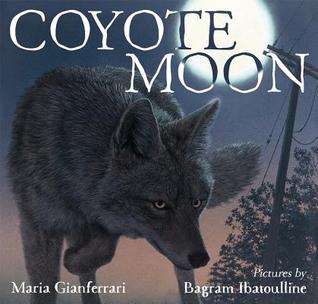
Coyote wakes and heads out of her den to find food for her pups. She walks the roads past houses and fences. She finds a mouse but doesn’t manage to catch it. There are geese on the golf course, but Coyote can’t get close enough to steal an egg without the geese attacking her. There is a rabbit on a lawn, but the rabbit is faster than Coyote. Soon dawn arrives and Coyote still has not caught any food for her family. Then there are turkeys walking nearby and Coyote manages to capture one. She heads home but not before a child spies her from a window when Coyote stops to sing to the morning.

This book is a beautiful dance between illustrations and text. Gianferrari’s prose is extremely poetic, using phrasing that almost turns it into verse particularly when read aloud. The pacing of the book is dynamic and picks up with a sense of near desperation as one prey animal after another escapes. Sympathy for the coyotes, which may not have been high in the beginning of the book, is skillfully built throughout the story until readers will be near cheering when the turkey is caught. The book finishes with information on coyotes.

Ibatoulline’s illustrations are incredibly detailed. Dark and light play on the page, from the electric outdoor lights from human buildings to the moonlight shining on fur. The darkness has dimension, subtle colors, and textures. There is a sense of near hyper-realism as well as readers get closer to these animals in the illustrations than they ever could in life.

This picture book blends nonfiction with great writing to create a realistic view of urban coyotes. Appropriate for ages 5-7.

Reviewed from library copy.


Monster Trucks by Anika Denise

monster-trucks-by-anika-denise

Monster Trucks by Anika Denise, illustrated by Nate Wragg (InfoSoup)

A revved up mix of trucks and monsters, this picture book will delight fans of either topic. Monster trucks are ready to race as their engines moan and rumble. There is Frankentruck, jumped alive by his electric cables. Werewolf Truck stops to howl at the moon. Zombie Truck is glowing and green. Ghost Truck appears suddenly out of the shadows. Vampire Truck is on the hunt for everyone’s fuel. As the race begins though, there is an unlikely entry, Little Blue Bus all cute enters the race. Soon the monster trucks are after her and she’s in a race for her life!

Denise writes in engaging rhyme that speeds the book alone, accelerating the pace along with the racing trucks. The addition of the little blue bus is wonderfully refreshing, playing on the horror movie motif and also adding a character that children can relate to. The rhythm of the book is also great fun to read aloud and this one will charm anyone listening with its dynamic subject matter.

Wragg’s illustrations are fabulous. He thoroughly embraces the idea of “monster” trucks and transforms them into real monsters while still making sure they are trucks as well. The headlight eyes are expressive and often evil, the bumper and hood leers are cleverly done, and the lightness of the little bus plays up the twist at the end.

A strong entry in the Halloween book race, this picture book will be adored by truck fans and those looking for a little monster thrill. Appropriate for ages 3-5.

Reviewed from copy received from HarperCollins.


Hocus Pocus, It’s Fall by Anne Sibley O’Brien

hocus-pocus-its-fall-by-anne-sibley-obrien

Hocus Pocus, It’s Fall by Anne Sibley O’Brien, illustrated by Susan Gal (InfoSoup)

The second seasonal book by this author and illustrator duo welcomes autumn. A series of hinged pages open to reveal the magic of this season. Right before each gatefold is opened, there is a magical word that punctuates the book, “Open Sesame” and “Shazam!” As each page opens a moment in fall is revealed from the cloud-filled milkweed to changing leaf colors to pumpkins becoming jack-o-lanterns. It is all a dazzling magical show of seasonal change and joy.

O’Brien captures classic autumn moments in this book that all children will relate to. There are apples, pumpkins, and animals preparing for the approaching winter. School buses arrive, cranberries are harvested, and leaves blanket the ground. It is all captured with a smile and a nod, no fear or worry at the changing seasons here, just a pleasure in the wonder of nature around us.

Gal’s illustrations share that same delight in the transformation of fall. She shows parts of autumn that are not mentioned in the text, making it all the more fun to explore the illustrations. Children will enjoy the many small details in the images as well as opening the pages to reveal the magic inside. This is very intelligently designed.

A delightfully warm and magical look at autumn and the pleasures of the season. Appropriate for ages 2-4.

Reviewed from copy received from Abrams.

A Unicorn Named Sparkle by Amy Young

a-unicorn-named-sparkle-by-amy-young

A Unicorn Named Sparkle by Amy Young (InfoSoup)

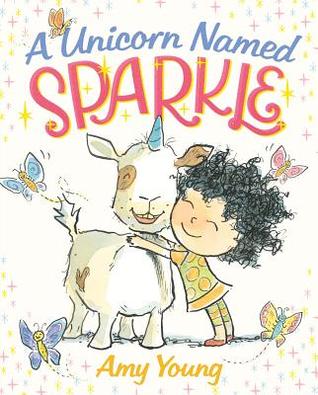
When Lucy sends away for her 25 cent unicorn, she has big dreams of what it’s going to look like. It is sure to be blue with a pink tail and pink mane. She will ride on him and name him Sparkle. But when the box finally arrives, Sparkle is not what she expected at all. He does love cupcakes, but that’s not all he loves to eat. He also eats underwear, his flower necklace and the tutu Lucy puts on him. She can’t ride him at all and he doesn’t behave at show-and-tell. Lucy decides to return Sparkle, but the man can’t come and get him until the next day. In the meantime, Sparkle turns out to be scared of storms, butterflies love him, and he makes Lucy laugh. Perhaps it’s not important to be the perfect unicorn after all.

I must admit that I expected this book to be overly sweet, rather too sparkly and filled with too much princess and unicorn fluff. However, it’s not that kind of a picture book at all and I can’t resist a book that surprises me this much. Even better, it’s a unicorn book with a “unicorn” that farts, smells and has fleas. In fact, it’s a unicorn book about a goat and a girl who learns to love him. And in the end, I think readers are going to fall for Sparkle too and realize that the idealized unicorn may be very dull compared to one very active goat.

Young’s illustrations are very appealing. She does a mix of large format pages and then more detailed ones that show all of the trouble that Sparkle manages to get into. Lucy imagines herself as a princess, but throughout is clearly a colorful little girl who loves to pretend and imagine. Readers will immediately know that Sparkle is not a unicorn, but will love the fact that he’s a goat with a heart-shaped mark on his side.

A sparkling and clever story about new friends that defy expectations. Appropriate for ages 3-5.

Reviewed from library copy.


Eat, Sleep, Poop by Alexandra Penfold

eat-sleep-poop-by-alexandra-penfold

Eat, Sleep, Poop by Alexandra Penfold, illustrated by Jane Massey (InfoSoup)

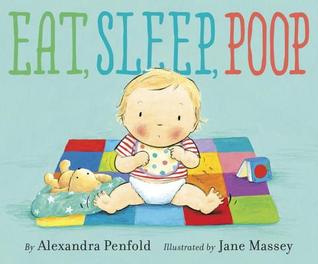
This funny picture book about the life of a baby is just right for toddlers and slightly older siblings of new babies. The life of a baby is not easy at all. There’s a lot to fit into the day: eating, sleeping and pooping. If a day gets too hectic though, baby can always cut back on sleep to compensate, much to the chagrin of his parents. Then the routine can go back to normal, filled with eating, sleeping, pooping and plenty of love.

Penfold uses plenty of puns and word play in this picture book that will invite laughter and nods from families dealing with a new baby. The text here is very simple, just enough to keep the humor of the situation at the forefront and allow new siblings to understand that this is what all babies do, all day long. There is a strong focus too on love and support and by the end of the book, the tiny baby has grown into a toddler themselves though their routine hasn’t changed much yet.

Massey’s illustrations underscore the importance of a loving family as the backdrop to the infant’s story. She also includes a dog in the family, one who is displaced by the baby and has to learn to cope with the new focus on the baby. The illustrations are bright and friendly with a doting extended family who all participate in baby care.

A warm and funny look at new infants, this book will be welcomed by families who have their own eating, sleeping, pooping machine. Appropriate for ages 1-3.

Reviewed from copy received from Random House Children’s Books.


The Pros and Cons of Being a Frog by Sue deGennaro

the-pros-and-cons-of-being-a-frog-by-sue-degennaro

The Pros and Cons of Being a Frog by Sue deGennaro (InfoSoup)

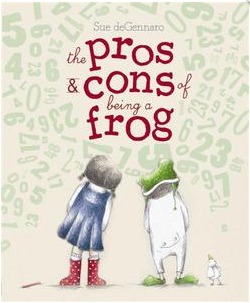
Told from the point of view of a boy who loves to dress as animals, this lovely picture book embraces differences between people. The boy first tried to dress as a cat, but was chased by a dog. Then he tried a variety of other animals before Camille gave him the idea to try being a frog. He loved it, but frogs are not solitary so he asked Camille to join him. Now Camille is very different from him. She speaks in numbers and science. She agreed to try and was very helpful with measuring for a costume. But soon, she was unable to stand still and the boy yelled at her to stop moving. Camille left. Now it is up to the boy to figure out how to make amends with a girl who is very different from himself.

There is something enchantingly quirky about this Australian import. Just having a boy who dresses as animals and a girl who thinks and speaks in numbers is unique. Then add in the way that the girl uses specific numbers to show her distress, other numbers to say yes and no. This book has lots of levels to it with plenty of room for discussion about friendships, accepting one another’s differences and the importance of communicating even if it’s not easy.

The illustrations add to the appeal. There are the interesting costumes the boy creates for himself. Then there is the language of Camille, which appears as numbers that balance on her hand, fall to the floor, tip and overwhelm, prickle and hurt. The graphic strength of the numbers plays against the softness of the other illustrations, the fine lines swirling into deep colors.

An intriguing picture book that will suit some readers perfectly, rather like a frog suit isn’t for everyone. Appropriate for ages 3-5.

Reviewed from library copy.


Goodbye Summer, Hello Autumn by Kenard Pak

goodbye-summer-hello-autumn-by-kenard-pak

Goodbye Summer, Hello Autumn by Kenard Pak (InfoSoup)

A child wearing a flowing red scarf heads out into the woods on a late summer morning. Branches sway in the cool wind. Animals are out and busy looking for food while others are heading south for the winter. Cozy nests and dens are being crafted too. The flowers are catching the last rays of warm summer sun. There are rumbles of thunder and clouds rolling in. Breezes and drizzle and chill enter the air. Leaves are starting to fall too. The child heads out the next day, into autumn.

Pak’s writing is poetic and simple. He allows nature to have a voice in this picture book. The trees talk about the wind, the animals speak to what they are doing to prepare for cold weather, etc. It’s a lovely way to capture the changes through the living things that are experiencing it first hand. The child too is experiencing the changes in temperature, the clouds, the rain and the winds. There is a sense of being immersed in nature and experiencing changing seasons directly as they change from one to another.

Pak’s illustrations truly make this book spectacular. From the flow of the child’s scarf on the page, marking the wind as it blows to the woods itself filled with strong trunks and tall grasses. The tops of the trees shine with the light of late summer and start to change to early autumn as the book progresses, still filled with the same light and air.

This book is a testament to the beauty of changing seasons, the natural aspects of those changes and the vitality of being outside and being part of it. Appropriate for ages 4-6.

Reviewed from library copy.


Rules of the House by Mac Barnett

rules-of-the-house-by-mac-barnett

Rules of the House by Mac Barnett, illustrated by Matt Myers (InfoSoup)

Ian loves to follow the rules while his sister Jenny breaks all of them. So when they go on a trip with their father to a cabin in the woods, Ian loves that there is a list of rules on the wall. Jenny though, ignores the rules, breaking each one of them. The final rule is not to open the red door, which Jenny does. Nothing happens. Until later that night, when the mud-tracked bear rug, the dirty bathtub and the empty woodstove come into the children’s room. At first, Ian flees while his sister is captured by the monsters. But he returns to try to help her. But it may mean breaking the rules!

This book is a delight. It’s a riff on classic horror movies as well as Bluebeard with the forbidden door in an isolated house. Barnett keeps the tone light at all times, making sure that the book is just frightening enough to give shivers but not too frightening for young readers. The focus on following rules is turned on its head with the culmination of the story and learning that sometimes rules are meant to be broken in the right circumstances.

The art by Myers is dark and atmospheric. It plays up the horror motif with long shadows, a scratched up red door that looks like things have tried to break in, and objects that look like monsters even before they fully emerge as monsters. The long moment after the door is opened is drawn out even farther by the full double page spread, showing the quiet house. Wonderful timing!

A great just-right scary read for Halloween that is just creepy enough to enchant. Appropriate for ages 4-7.

Reviewed from library copy.