My New Mom and Me by Renata Galindo

My New Mom and Me by Renata Galindo

My New Mom and Me by Renata Galindo (InfoSoup)

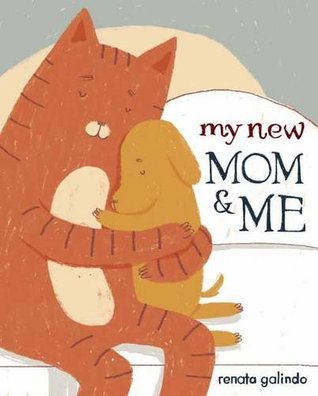
When a puppy comes to live with his new cat mother, he is scared. But his mother reassures him. He tries to give himself stripes so he looks more like her, but she says there is no need to change at all. She likes that they are different and the puppy does too. His new mom takes care of him and plays with him. Not all days are perfect, but his mother tells him that they can do better next time and that it is OK. This is a portrait of a newly formed family finding their way together.

Galindo captures the emotions of a newly adopted child in this picture book. She tells the story with a frank simplicity that really works, not trying to explain away the emotions but allowing them to show in their messiness as a reassurance that such emotions will not undo a new adoption. Galindo also shows the connection building and love that an adoptive family feels. Her decision to use a single parent is one that is not always seen in picture books about adoption.

The art is very effective. Large on the page, it is done in a limited palette of oranges, yellows and grays. The differences between cat mother and dog child are beautifully clear and the part where the puppy paints stripes on himself is a visual reminder of the desire to be a solid family unit. Just the use of a dog and cat as the characters was a brilliant choice. It is clear to children that they are very different and could even have points of view that are opposites.

A simple and strong new picture book about adoption from the child’s point of view. Appropriate for ages 2-4.

Reviewed from library copy.
 

The Bell in the Bridge by Ted Kooser

The Bell in the Bridge by Ted Kooser

The Bell in the Bridge by Ted Kooser, illustrated by Barry Root (InfoSoup)

Stuck at his dull grandparents’ house in the summer, Charlie is left alone most of the time. He spends time down by the stream collecting tadpoles, using his weed-whacking stick, and dropping stones from the iron bridge that crosses the stream. One day, he discovers that when he hits the bridge with a stone, it rings like a bell and echoes down the valley. He does this again and again and sometimes there seems to be a faint third “bong” that sounds. His grandmother explains that that is just how echoes work, but Charlie is sure that there is another person on a similar iron bridge ringing it too in response. Before he is able to solve the mystery, Charlie returns home, but not before readers discover the answer.

Poet Ted Kooser has turned his poetic writing to another book for children with another grand result. Kooser invites readers into Charlie’s world, weaving slow days of summer carefully with his words. He shows the beauty of these slow days, the potential for discovery of things that would otherwise be unnoticed in the fast pace of video games and TV. These are old-fashioned summer days but ones that modern children can discover too if they are willing to head outside, collect their own jars of creatures and sticks, and hit things with stones.

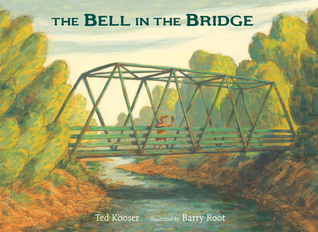
Root’s illustrations are filled with golden summer sun. Even the cool shade near the stream is dappled with it. The bridge across the stream is structural and one can clearly understand how it rings like a bell. The countryside is filled with greens and yellow oranges, showing open fields bordered with stream and trees. It’s a world to explore.

A gorgeous picture book that shows the luminous nature of summer days spent outside with a good mystery to keep you occupied. Appropriate for ages 5-7.

Reviewed from library copy.


Guess Who, Haiku by Deanna Caswell

Guess Who Haiku by Deanna Caswell

Guess Who, Haiku by Deanna Caswell, illustrated by Bob Shea (InfoSoup)

Haiku poetry is turned into a guessing game in this delightful picture book. One animal after another is described in haiku format and then the reader is asked to guess what animal it is. The answer is revealed with a turn of the page. This simple idea is engaging for youngsters learning about poetry and also works as a more basic picture book for younger listeners. It is that ease of use that makes this book so engaging for various age levels.

Caswell’s haiku are exceptional in the way they offer clues that children can understand and yet conform to the strict haiku format rules. They also read as haiku and real poems, each one working as a stand-alone haiku as well as a clue in the game of the book. This takes real skill, particularly since it looks so very effortless on the page.

Shea’s illustrations are loud, dynamic and funny. From the almost round bumblebee and the grinning flower to the googly-eyed frog , they are simple and also capture the essence of the animal they are depicting. They are filled with energy and life, making the book all the more fun.

This is the ideal book to introduce children to haiku since it makes the experience completely engaging and game-like. Appropriate for ages 3-7.

Reviewed from copy received from Abrams.


Rain Fish by Lois Ehlert

Rain Fish by Lois Ehlert

Rain Fish by Lois Ehlert (InfoSoup)

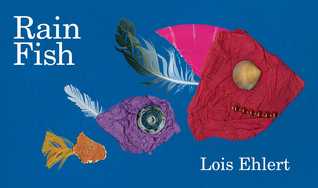
Rain fish only appear when it rains, coming out of the debris in the gutters. Formed of lost receipts, bottle caps, feathers, socks, leaves and more. They swim down the streets, along the gutters and on the sidewalks. You have to look fast, because they disappear quickly. These are fish who swim off to different seas, unable to be caught by fishermen.

This picture book encourages children to look at debris and discarded items in a different way, seeing forms in them and wonder as well. The book’s text is simple, single lines of text on double page spreads which create rain fish that are larger than life. The end pages feature the various objects not made into fish with the objects labeled at the end of the book. This is a gorgeous book, playful and filled with artistic fun.

As always, the illustrations in Ehlert’s books are the treat. Here she captures the fluidity of fish, their forms and fins with a series of objects. The youngest of children may want to name the objects the fish are made of, making this art very accessible and an opportunity to talk about the illustrations. It is also a great introduction to collages and classes or groups could do their own fish or other animals.

Another solid and striking book from a masterful book maker, this picture book is another winner for Ehlert. Appropriate for ages 2-4.

Reviewed from copy received from Beach Lane Books.


The Knowing Book by Rebecca Kai Dotlich

The Knowing Book by Rebecca Kai Dotlich

The Knowing Book by Rebecca Kai Dotlich, illustrated by  Matthew Cordell (InfoSoup)

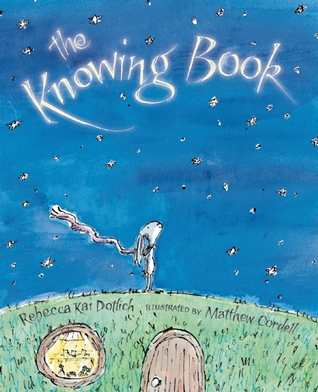
This picture book begins with the reminder that the sky is always above you, no matter what. A little rabbit with a long scarf makes his way along an adventure with a wise narrator explaining that there are wonderful things alive in this world. There is magic where you least expect it. There is adventure if you leave the mapped roads. It is OK to both hum and cry. It’s important to trust yourself. The little rabbit gains skills on his adventure and lots of confidence too. In the end, the book returns again to the permanence of the sky above us and its beauty.

This book is completely encouraging, explaining to youth exactly what it takes to live a life filled with bravery and authenticity. In many ways it would make a great graduation gift as teens set off into the world. Yet it still works well as a picture book for younger children where the large concepts inside can be discussed and their importance reinforced in conversations. It’s a book that celebrates the individual and their personal journey through life, one that asks us all to follow our own roads and live as we were meant to live.

Cordell’s illustrations are lovely. Their fluid lines and deep colors reinforce both the necessary fluidity of life and our journey and then also the beauty of the world around us if we take time to see it. His little rabbit is entirely engaging, making sure that the book stays relevant to younger children.

An inspirational read that is all about living your personal life and following your own path, this picture book is just right for young and old. Appropriate for ages 4 and older.

Reviewed from library copy.


Thunder Boy Jr. by Sherman Alexie

Thunder Boy Jr by Sherman Alexie

Thunder Boy Jr. by Sherman Alexie, illustrated by Yuyi Morales (InfoSoup)

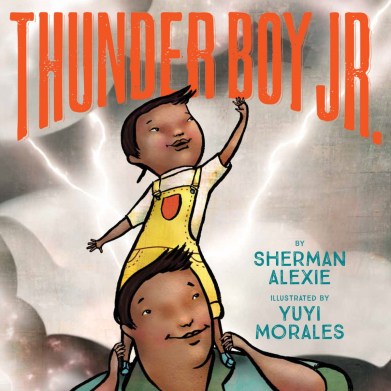
Thunder Boy Jr. is named after his father who is known as Big Thunder. But Thunder Boy wants a more normal name, like Sam which is what his mother wanted to name him. People call him Little Thunder, which sounds “like a burp or a fart.” Thunder Boy hates his name and wants one that is all his own. He thinks of other names that would be more cool and would speak to what he has done in life. He doesn’t know how to tell his father that he wants a different name, but his father may understand a lot more than Thunder Boy thinks.

Amazing, amazing, amazing. Alexie proves here that he can write for children with a voice that is clear and resonant. He writes almost like a poem, one that dances and moves. There is not a classic structure to the book, which makes it a treat to read. One isn’t quite sure where it is going to head next. There is the whimsical part there Thunder Boy is thinking of new names that shows again and again the actual power of his real name. Then his father steps in, showing his son that he understands him and builds upon the name he has been given. It is a book that takes you on a journey and by the end ties it all together.

Morales’ illustrations are luminous. She captures the emotions clearly with characters who pop against calm patterned backgrounds. The characters shine with an internal light that is very compelling. On every page, parenting with warmth and love is shown, just like it is in the story itself.

A powerful and beautiful picture book that respects modern American Indian culture and families. This book belongs in every library. Appropriate for ages 3-5.

Reviewed from library copy.


Life Without Nico by Andrea Maturana

Life Without Nico by Andrea Maturana

Life Without Nico by Andrea Maturana, illustrated by Francisco Javier Olea (InfoSoup)

Maia and Nico are best friends. They love playing together. But then one day, Nico’s family announce that they are moving across the world. When Nico leaves, Maia is left with an empty feeling inside. The emptiness gets bigger and bigger, not allowing her to play with other kids. But things get better as time passes. Maia finds a kitten, learns to play the piano, and makes a new friend at school. Soon it is time for Nico to return. At first, Maia is scared that things will be different, but soon she discovers that Nico once again fills the emptiness for her.

This story told from the point of view of the person left behind when someone moves away is a nice change of perspective from most picture books about moving. Originally published in Mexico, this picture book captures the progress of emotions that come from losing a close friend. The empty feeling is beautifully portrayed in the story and then the gentle change to meeting new people and finding new hobbies is shown with delicacy.

Olea’s illustrations are striking. I particularly appreciate the way he incorporates the empty feeling visually on the page, shadows cast by other objects but that also speak to the emotions that Maia is feeling right then. Characters in the book have skin of wildly different colors that show various but indistinct races. The result is a book of shadows, light and rich color.

A lovely book on moving and grief, this picture book is one worth sharing. Appropriate for ages 4-6.

Reviewed from digital galley received from Kids Can Press and Edelweiss.


The Not-So-Faraway Adventure by Andrew Larsen

The Not So Faraway Adventure by Andrew Larsen

The Not-So-Faraway Adventure by Andrew Larsen, illustrated by Irene Luxbacher (InfoSoup)

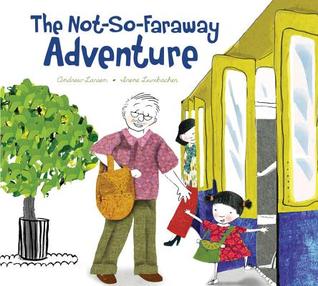
Theo’s grandfather, Poppa, had traveled all over the world. He has a big trunk packed with items from his travels. Now it is Poppa’s birthday and Theo wants to give him the perfect gift. She realizes that it would be wonderful to go on an adventure together. When he speaks of traveling to the ocean once, Theo decides that they will head to the beach and eat at a restaurant. They create a map of their plans together and the next day their board a bus. Soon they reach the beach and the water which they pretend is the ocean. It’s a beach where Poppa came as a little boy. The two spend time on the beach, eat gazpacho and then head home on the bus. Now Theo has items to add to the trunk that are from their adventure together.

A dynamic picture book, this book demonstrates that adventures can be right in our own cities and need not take much time, money or effort. It is also a beautiful look at a granddaughter spending time with her Poppa and a grandfather who has more than enough energy to keep up with her. The urban setting is captured with people of various ethnicity on the page. It’s a bustling and busy place but also welcoming.

Luxbacher’s illustrations are done in PhotoShop and have the feel of collage. Textures and patterns are used throughout, creating a setting that is rich and layered. The city is done with just enough pops of color to keep it dynamic and not so many to make it entirely overwhelming. The page on the beach where they imagine the water is the ocean is captivating with the water entirely swallowing the page and filled with glimpses of their imagination.

A lovely look at a grandchild and grandfather going on their own personal adventure together. Appropriate for ages 4-6.

Reviewed from digital galley received from Kids Can Press and Edelweiss.


Over the Ocean by Taro Gomi

Over the Ocean by Taro Gomi

Over the Ocean by Taro Gomi

Released May 17, 2016.

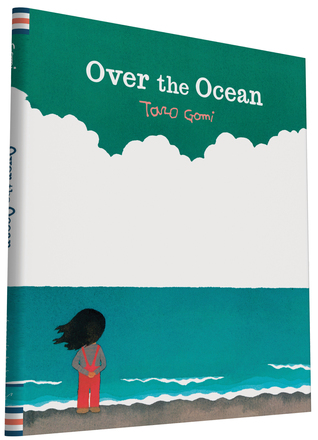
Originally published in Japan in 1979, Gomi has created a timeless picture book that will speak to modern children beautifully. A child is standing on a beach looking over the ocean. The child wonders what is beyond the ocean. Is it more ocean? Perhaps many boats. The land beyond may be filled with farms, or huge cities, or small houses. Children may live in those houses, ones who could be friends or could be bullies. Are there icebergs? Is it night? Or perhaps there is another solitary child looking right back across the ocean.

So simple, this Japanese picture book offers an imaginative look at what is in our world from a child’s point of view. Gomi captures that childlike view perfectly, allowing jumps of attention and new thoughts to create a natural flow to the narrative. The ending is a gorgeous cap to the book, showing throughout that the people on either side of an ocean are more similar than they are different in a subtle way.

The art is filled with deep colors that are so rich they almost bleed on the page. The art is so vibrant, each page anchored by the child looking across the ocean with small waves breaking. It is a place where imagination soars and a journey is made from right there without ever getting wet.

A vibrant picture book from Japan that offers a glimpse of what lays beyond our doors. Appropriate for ages 3-5.

Reviewed from copy received from Chronicle Books.