Maybe Something Beautiful by F. Isabel Campoy

Maybe Something Beautiful by F Isabel Campoy

Maybe Something Beautiful: How Art Transformed a Neighborhood by F. Isabel Campoy and Theresa Howell, illustrated by Rafael López (InfoSoup)

Based on the true story of the colorful transformation of the East Village neighborhood in San Diego, California, this picture book shows how art can impact quality of life. Mira is a little girl who loves to create art. She lives in a gray city where she tries to share her art and change things, but her art is too little to make big changes. Then she meets a man who is creating huge murals and who allows Mira to help him. Soon other neighbors are helping and colors begin to fill the streets, creating a close-knit neighborhood.

There is a sense of joy and hope throughout this picture book, led by little Mira, a girl with the heart of an artist from the very start of the book. Just sharing her art with her neighbors is an act of artistic courage that sets the tone for the rest of the story. The text is accented by “Bams!” and “Pows” that add to the dynamic tone. Everything here is filled with creative energy and a cheery tone.

López’s art shows the gray concrete city and then imposes Mira and her own colorful attitude against it. The paint splashes on the page and also creates vibrant rainbows of swirling colors that dance on the page. The diverse neighborhood is captured with a richness that is captivating. As color fills the page, it fills the neighborhood too.

A brilliant testament to the power of art and the way it can transform a life and a neighborhood. Appropriate for ages 4-7.

Reviewed from library copy.


One Day in the Eucalyptus Eucalyptus Tree by Daniel Bernstrom

One Day in the Eucalyptus Eucalyptus Tree by Daniel Bernstrom

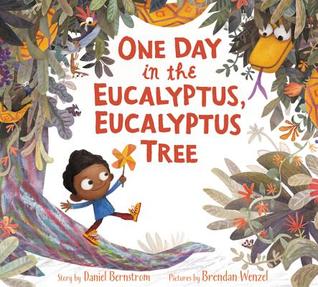
One Day in the Eucalyptus Eucalyptus Tree by Daniel Bernstrom (InfoSoup)

A little boy skipped along in the shade of the eucalyptus tree when down came a snake who ate him up! The boy told the snake that there was more room in his belly and encouraged him to eat something else. So the snake snuck up on a bird and gobbled it up. The boy told the snake he was still hungry and one-by-one, the snake ate more and more animals: a cat, a sloth, an ape, a bear, and a beehive. By then, his stomach was huge and distended, but the boy told him there was room for just one more very small thing. Perhaps not!

In the tradition of There Was an Old Lady Who Swallowed a Fly, this picture book has a rhythm and rhyme that makes reading it aloud pure joy. This is a child outwitting an enormous snake, staying calm and being clever, adding to the appeal for children. The pacing of the book is stellar, creating moments before each new animal is devoured as well as when the boy convinces the snake to eat more.

The illustrations are bright and colorful. The eucalyptus tree is central to the story and to the art with its colored bark and large expanse. The bright yellow snake is huge and vies with the tree for the reader’s attention in the best of ways. Cross sections of the snake’s belly show the animals and the boy inside.

Great pick for a read aloud, this picture book is energetic and cheerful. Appropriate for ages 3-5.

Reviewed from copy received from Katherine Tegen Books.

Introducing Teddy by Jessica Walton

Introducing Teddy by Jessica Walton

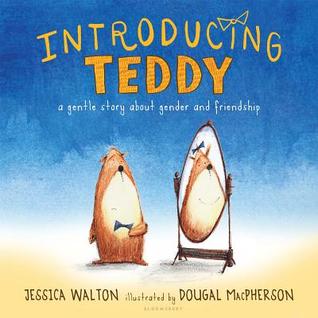
Introducing Teddy by Jessica Walton, illustrated by Dougal MacPherson

Starting as a Kickstarter project, this picture book features Thomas the teddy and Errol who are best friends. They do everything together, riding bikes, playing in the garden, and eating in the tree house. But one day, Thomas doesn’t feel like playing. Even a visit to the park won’t cheer him up. When Errol asks what is wrong, Teddy says that he is worried that if he tells Errol that Errol won’t want to be his friend any more. After Errol reassures him, Teddy admits that he has always felt in his heart that he is a girl teddy, not a boy teddy. When the two meet Ava, she demonstrates that girls can be anything they want, including inventing robots and wearing their hair without a bow. It’s a gentle look at gender identity.

This is Walton’s first picture book and it is inspired by her father’s transition from male to female. In the picture book, she makes sure to keep everything at a level that small children can understand. It’s a book that speaks to gender and will also work for children who may not be transgender but feel that they don’t fit into the limits that society puts them into. It’s a book that celebrates being who you are and not being afraid to tell others what is in your heart.

MacPherson’s illustrations have a whimsical quality to them, filled with a zingy energy. The use of a bow to demonstrate gender works very nicely and subtly. The introduction of a girl character who is a lovely mix of long hair and skirts and then science and freedom makes for an excellent counterpoint to the bow and bow tie.

A strong addition to picture book about gender identity, this is a gentle way to speak about the issue with children. Appropriate for ages 4-6.

Reviewed from ARC received from Bloomsbury.


The Bear and the Piano by David Litchfield

The Bear and the Piano by David Litchfield

The Bear and the Piano by David Litchfield (InfoSoup)

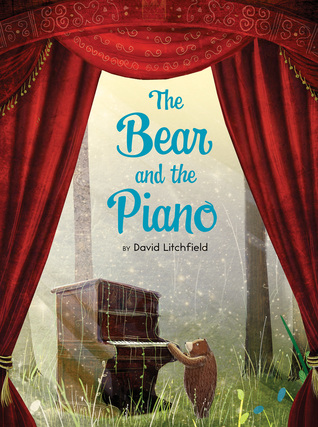
One day a bear cub found something in the woods: a piano. When he touches the keys, the sounds are terrible. But year after year he comes back and presses the keys again. Eventually he learns to play beautiful sounds on the piano. Soon all of the bears in the forest are listening too. When a girl and her father hear the music, they invite the bear to come to the city with them to play. He agrees even though he knows the other bears will be sad. After playing piano to great acclaim and winning awards and fame, the bear starts to long for the forest again. But can he return to the old piano in the woods and the other bears?

Litchfield has created a terrific picture book that tells a full story arc that children and adults will appreciate. The book speaks to the transforming nature of music, the longing for something greater and more, and then the longing to return to one’s origins and roots. It is also about talent and setting someone free to pursue their dreams. The entire book has a tugging nature to it, a bear caught between two worlds and the desire for exploration and the continued tie to home. It is beautifully done.

Litchfield’s illustrations are done in mixed media. They have a translucent and light-filled feel, particularly the forest scenes where sunlight beams in and the page glows. There is a beautiful luminous quality to them, inviting readers deeply into the page and evoking the scent of trees and grass.

An exceptional picture book that is musical, nature-filled and grand. Appropriate for ages 4-6.

Reviewed from library copy.


Nobody Likes a Goblin by Ben Hatke

Nobody Likes a Goblin by Ben Hatke

Nobody Likes a Goblin by Ben Hatke (InfoSoup)

Goblin lives very happily in the quiet of his rat-infested dungeon that he shares with his best friend, Skeleton. He spends the days feeding the rats, eating boots for breakfast, and playing games with the treasure. Then one day, a group of adventurers plundered the dungeon. Goblin hid but Skeleton was taken away along with everything else in the dungeon. So Goblin headed out to rescue his friend. But everywhere that Goblin went, people refused to help him and chased him away. Even once Goblin finds Skeleton, he has to find a way to escape the hordes of people and elves chasing him. Perhaps someone does like a goblin after all?

Hatke, the author of the Zita the Spacegirl series, has created another winning picture book. He uses lovely tropes from Dungeons and Dragons and turns them on their head. Here it is Goblin who is the hero and the adventurers who are the bad guys. I love the idea of these creatures having quiet and happy lives before the adventurers come and ruin it all. It’s a clever twist that makes the book enchanting to read aloud, aided by the brisk pace and clear writing.

As always, Hatke’s illustrations are exceptional. I particularly enjoy the adventurer group with their huge swords, glowing staffs and flowing locks of hair. Against them, the little goblin manages to steal your heart, thanks in large part to his diminutive size and big heart.

A perfect bedtime story for your little goblin. Appropriate for ages 3-5.

Reviewed from digital galley received from First Second and Netgalley.


Nibbles the Book Monster by Emma Yarlett

Nibbles the Book Monster by Emma Yarlett

Nibbles the Book Monster by Emma Yarlett

Nibbles is a monster who eats his way through all sorts of things, but his favorites are books. Soon Nibbles has left this picture book entirely and chewed his way right into a fairy tale instead. There he meets Goldilocks who desperately tries to explain the huge damage Nibbles leaves behind to the three angry bears. Nibbles next moves on to Little Red Riding Hood where Little Red is entirely shut out of the story and Nibbles saves Grandma from the wolf. Next comes Jack and the Beanstalk where Nibbles bites a bit of giant rump and steals the golden goose. The goose drops Nibbles back into his cage but wait, could it be that he is nibbling once again?

Yarlett very successfully combines a hungry little yellow monster with fractured fairy tales in this dynamic picture book. She keeps the menu lean and focused, just enough of a glimpse of each of the stories to understand the story clearly and then Nibbles messes everything up and dashes off. The story books are built into the pages as flaps to turn, adding to the appeal of the book. The same is true of Nibbles’ cage where children both release him in the beginning and capture him again at the end.

The artwork is filled with humor and the flaps add a level of participation to the book. Yarlett’s art really works well in the small story books themselves where her style changes as one enters each book. There is the playful cartoon of Goldilocks, the muted black-and-white colors with pops of red for Little Red Riding Hood, and a more vintage feel for Jack and the Beanstalk. These changes in the artistic style really make each book feel unique and as if they really have just been discovered in a pile.

Cleverly designed and immensely appealing, this picture book is worth a nibble or two. Appropriate for ages 4-6.

Reviewed from copy received from Kane Miller.

Yaks Yak by Linda Sue Park

Yaks Yak by Linda Sue Park

Yaks Yak: Animal Word Pairs by Linda Sue Park, illustrated by Jennifer Black Reinhardt (InfoSoup)

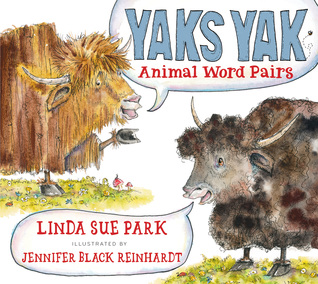
This picture book is a wonderful piece of word play. On each page, animals act out the version of their names as verbs. Quails quail in fear. Fish fish with lines and hooks trying to catch other fish. Bats swing bats at baseballs. Slugs wear boxing gloves and try to slug one another. The book goes on and on, each one funnier than the last. The book nicely offers the definition of the verb because some of them can be unusual for young readers. The book ends appropriately with kids kidding.

Park’s writing is simplicity itself, just the two words next to each other, noun and verb and then the definition of the verb. She also offers a chart of the words at the back of the book that explains the origins of both the nouns and verbs so young readers interested in language can explore the words more deeply.

The illustrations by Reinhardt are so important to this book, allowing young readers to immediately understand what is happening even in the more esoteric words. She makes them all work clearly and well, even quailing, craning and badgering. It’s a very impressive feat and one that makes this book full of appeal.

Grand wordplay, this book offers a fun look at word pairs. Appropriate for ages 5-8.

Reviewed from library copy.


My New Mom and Me by Renata Galindo

My New Mom and Me by Renata Galindo

My New Mom and Me by Renata Galindo (InfoSoup)

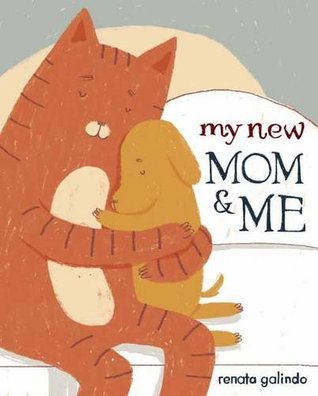
When a puppy comes to live with his new cat mother, he is scared. But his mother reassures him. He tries to give himself stripes so he looks more like her, but she says there is no need to change at all. She likes that they are different and the puppy does too. His new mom takes care of him and plays with him. Not all days are perfect, but his mother tells him that they can do better next time and that it is OK. This is a portrait of a newly formed family finding their way together.

Galindo captures the emotions of a newly adopted child in this picture book. She tells the story with a frank simplicity that really works, not trying to explain away the emotions but allowing them to show in their messiness as a reassurance that such emotions will not undo a new adoption. Galindo also shows the connection building and love that an adoptive family feels. Her decision to use a single parent is one that is not always seen in picture books about adoption.

The art is very effective. Large on the page, it is done in a limited palette of oranges, yellows and grays. The differences between cat mother and dog child are beautifully clear and the part where the puppy paints stripes on himself is a visual reminder of the desire to be a solid family unit. Just the use of a dog and cat as the characters was a brilliant choice. It is clear to children that they are very different and could even have points of view that are opposites.

A simple and strong new picture book about adoption from the child’s point of view. Appropriate for ages 2-4.

Reviewed from library copy.


The Bell in the Bridge by Ted Kooser

The Bell in the Bridge by Ted Kooser

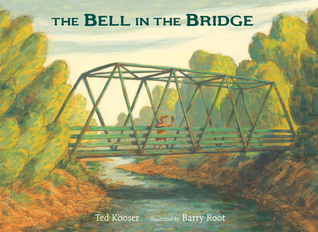
The Bell in the Bridge by Ted Kooser, illustrated by Barry Root (InfoSoup)

Stuck at his dull grandparents’ house in the summer, Charlie is left alone most of the time. He spends time down by the stream collecting tadpoles, using his weed-whacking stick, and dropping stones from the iron bridge that crosses the stream. One day, he discovers that when he hits the bridge with a stone, it rings like a bell and echoes down the valley. He does this again and again and sometimes there seems to be a faint third “bong” that sounds. His grandmother explains that that is just how echoes work, but Charlie is sure that there is another person on a similar iron bridge ringing it too in response. Before he is able to solve the mystery, Charlie returns home, but not before readers discover the answer.

Poet Ted Kooser has turned his poetic writing to another book for children with another grand result. Kooser invites readers into Charlie’s world, weaving slow days of summer carefully with his words. He shows the beauty of these slow days, the potential for discovery of things that would otherwise be unnoticed in the fast pace of video games and TV. These are old-fashioned summer days but ones that modern children can discover too if they are willing to head outside, collect their own jars of creatures and sticks, and hit things with stones.

Root’s illustrations are filled with golden summer sun. Even the cool shade near the stream is dappled with it. The bridge across the stream is structural and one can clearly understand how it rings like a bell. The countryside is filled with greens and yellow oranges, showing open fields bordered with stream and trees. It’s a world to explore.

A gorgeous picture book that shows the luminous nature of summer days spent outside with a good mystery to keep you occupied. Appropriate for ages 5-7.

Reviewed from library copy.