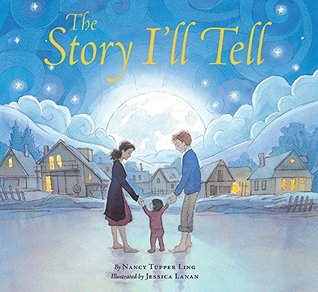
The Story I’ll Tell by Nancy Tupper Ling

The Story Ill Tell by Nancy Tupper Ling

The Story I’ll Tell by Nancy Tupper Ling, illustrated by Jessica Lanan (InfoSoup)

An adoptive mother knows that her son will eventually ask her where he came from. She dreams of what she will tell him. Perhaps that he floated down from a hot-air balloon. Or that he was delivered by horseback by a man in a cape. Or that she found him in the garden among the tiger lilies. Or that she rescued him from a dragon queen. But the story of where he really came from is special enough, filled with joy and tears, with winged flight over the ocean. That is the story to tell.

Each of the stories that the boy’s mother creates contains a touch of truth. Throughout there is a tie to China, there is flight, crossing long distances, and a story of rescue. This imaginative look at the power of international adoption and the formation of a family is endearing and magical. The stories create a beautiful rhythm among themselves, dancing and weaving a tale that invites children to see their adoption as something particularly special.

Lanan’s art evokes that same special magical feel. Throughout the book, there are creatures in the clouds, dragons rising into the sun, roosters summoning dawn. Each shows a future part of the story, the tiger lilies gracing the garden gate long before they are mentioned in the book. Fish float on walls, ribbons tie each experience to the next. It is a rich tapestry of illustration filled with Chinese symbols.

A gem of a book for adoptive families, this picture book conveys the joy of adoption and the wonder of finding one another and forming a family. Appropriate for ages 4-6.

Reviewed from e-galley received from Lee & Low Books and Edelweiss.
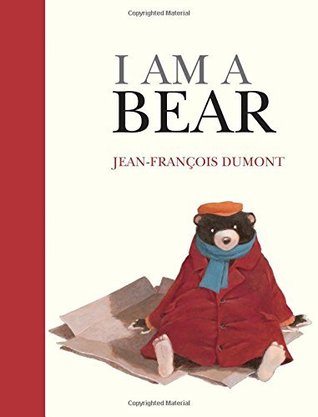
I Am a Bear by Jean-Francois Dumont

I Am a Bear by Jean Francois Dumont

I Am a Bear by Jean-Francois Dumont (InfoSoup)

Told in the first person, this is a story of a bear who finds himself living on the streets of a city. He has a stack of cardboard boxes that make up his home. He isn’t welcome in any of the stores, and finds it safer to scrounge for food after dark. That means that he sleeps most of the day. He had tried to talk with people, but he scared them since he’s such a big bear. He gave up after awhile, paying no attention to those walking past him anymore. Until one day, a little girl notices him and talks directly to him. She returns the next day too and the bear has made an effort to clean up himself and his home. She calls him a teddy bear and visits again and again. Suddenly the bear has something to look forward to each day, and there is hope.

Dumont is the author of The Chickens Build a Wall and the series of silly books that follow it. This book though is a departure from that frenetic cheery tone. Here there is darkness, hunger and need. Here there is a bear who clearly is not actually a bear, but treated as such by society. It does not matter if young readers realize that the bear is a symbol. The story works much the same with a real bear or a real person. The life is hard, the city stark, and hope nonexistent, at first.

The art here is lush and lovely. It shows life on the street both from the bear’s point of view and also from that of an observer like the little girl. The buildings lean and tower above, the traffic is dangerous and close, and the alley is like a canyon. With sharp angles, the perils of life on the street are evident here as appropriate for a child.

A book that will help talk about homelessness and that offers a way forward, kindness. Appropriate for ages 3-5.

Reviewed from copy received from Eerdmans Books for Young Readers.

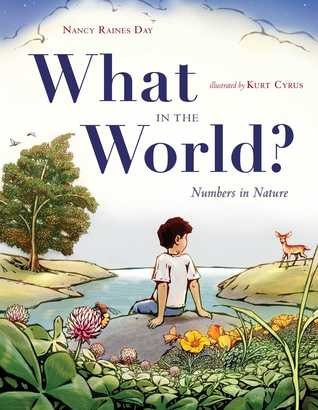
What in the World? by Nancy Raines Day

What in the World by Nancy Raines Day

What in the World?: Numbers in Nature by Nancy Raines Day, illustrated by Kurt Cyrus (InfoSoup)

In this rhyming counting book, the concept of numerical sets is introduced. The book opens asking “What in the world comes one by one?” It then answers, explaining that the moon, your nose and your mouth come in singles. Then the book counts upwards, each time asking the question of what comes in that set and answering it. The book ends by looking up at the stars and the infinity of them. It invites young readers to start to think about the patterns in the natural world around them.

Day has created a rhyme that makes this book an engaging mix of poetry and science. As the rhyme dances along, the book will inspire conversation and thinking of more things that come in that type of set. The book is wisely limited to a coastal area where a young boy plays, dangling his toes and fingers in the water, sets of ten.

The art is simple enough to allow this book to be both a counting book and a book about sets. Smaller children will merrily count the nine spines on the back of a fish while older children will start to think about other things in their world that match the set. The digital art is bright colored, and cheery.

An engaging math book that can be read at different levels, this rhyming science book will be enjoyed by several ages of child. Appropriate for ages 3-5.

Reviewed from copy received from Beach Lane Books.

My Top Picture Book Picks for 2015

22718714 Drum Dream Girl: How One Girl's Courage Changed Music

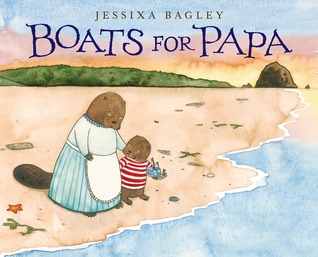
Boats for Papa by Jessixa Bagley

Drum Dream Girl by Margarita Engle, illustrated by Rafael Lopez

23309640 22292490

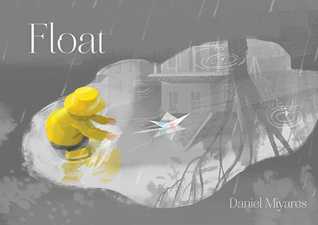
Float by Daniel Miyares

Hoot Owl, Master of Disguise by Sean Taylor, illustrated by Jean Jullien

17990161 23130340

I Don’t Like Koala by Sean Ferrell, illustrated by Charles Santoso

In a Village by the Sea by Muon Van, illustrated by April Chu

18969290 22521973

It’s Only Stanley by Jon Agee

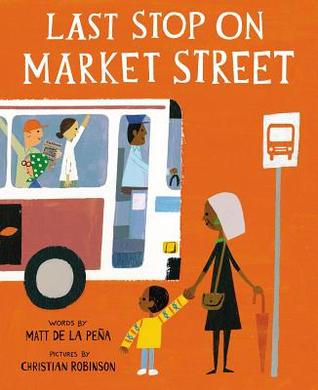
Last Stop on Market Street by Matt de la Pena, illustrated by Christian Robinson

23310688 23395646

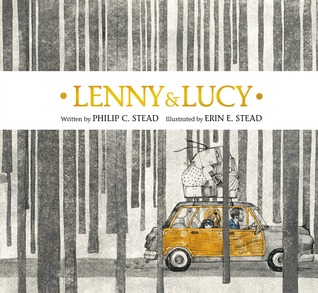
Lenny & Lucy by Philip C. Stead, illustrated by Erin E. Stead

Lillian’s Right to Vote by Jonah Winter, illustrated by Shane W. Evans

23282276 24612106

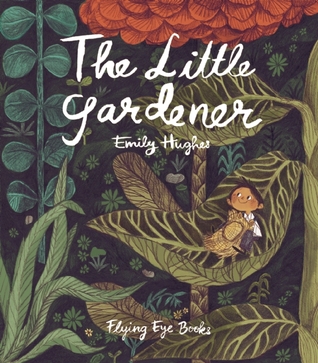
The Little Gardener by Emily Hughes

Mama’s Nightingale: A Story of Immigration and Separation by Edwidge Danticat, illustrated by Leslie Staub

23281715 23341569

The Moon Is Going to Addy’s House by Ida Pearle

The Night World by Mordicai Gerstein

22718666 22875417

Out of the Woods: A True Story of an Unforgettable Event by Rebecca Bond

Pool by JiHyeon Lee

23604390 22750286

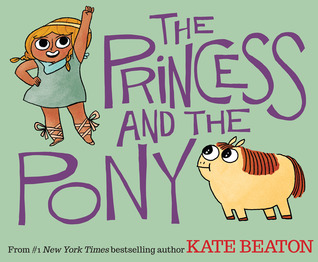
The Princess and the Pony by Kate Beaton

Sidewalk Flowers by JoArno Lawson, illustrated by Sydney Smith

22718694 22747816

The Skunk by Mac Barnett, illustrations by Patrick McDonnell

Sweep Up the Sun by Helen Frost and Rick Lieder

25583502 24796235

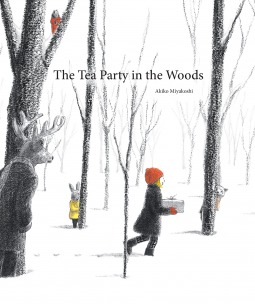
The Tea Party in the Woods by Akiko Miyakoshi

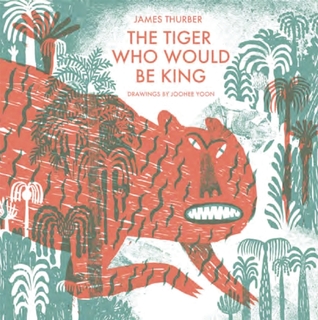
The Tiger Who Would Be King by James Thurber, illustrated by Joohee Yoon

23735067 20307024

Waiting by Kevin Henkes

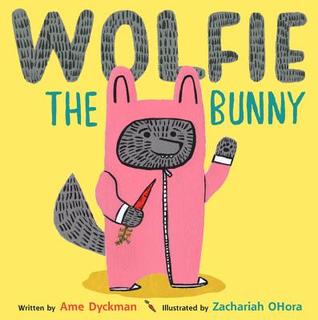
Wolfie the Bunny by Ame Dyckman, illustrated by Zachariah OHora

22747809

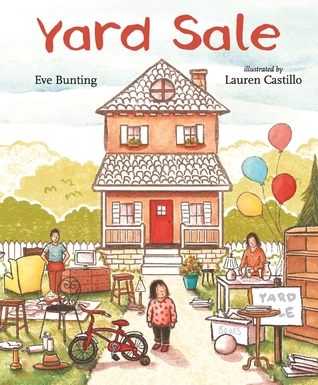
Yard Sale by Eve Bunting, illustrated by Lauren Castillo

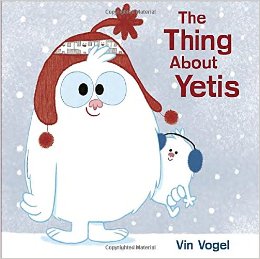
The Thing about Yetis by Vin Vogel

The Thing about Yetis by Vin Vogel

The Thing about Yetis by Vin Vogel (InfoSoup)

The one thing you should know about yetis is that they love winter. They love playing in the snow, sliding down hills, ice skating in their own unique way, making the best snowballs, and building snow castles. But even yetis can get too cold and have to head inside to warm up. When winter gets a bit too rough, yetis can also get crabby, particularly when they run out of cocoa. They also love summer, you see. They miss playing outside in the sun, sliding down slippery slides, swimming, sleeping in tents, and building sand castles. There’s just one thing for a grumpy winter yeti to do, make their own summer day!

This book has such an appeal about it. It’s the googly-eyed yetis throughout the book, the ones who delight in both cold and warm weather. The ones who get grouchy when they are too cold, poofy when their fur dries, and who sometimes need to be cozy inside on a blustery winter day. Vogel captures these elusive yetis with a cartoon feel that has universal appeal for readers.

The story is brief but cleverly done. Rather than just an ode to winter and all that it brings in terms of snowy fun, this is also a book that will appeal to any of us who live in the north and know that snow and cold can get very old after awhile. Children will relate to longing for summer.

Read this one as February is getting brutal and be prepared to have your own summer day inside. Appropriate for ages 3-5.

Reviewed from copy received from Dial Books.

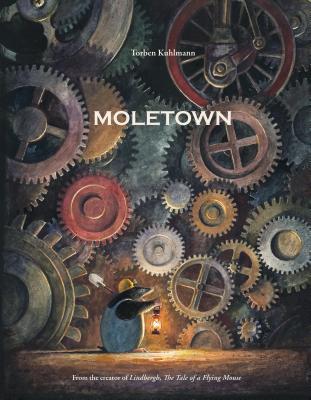
Moletown by Torben Kuhlmann

Moletown by Torben Kuhlmann

Moletown by Torben Kuhlmann (InfoSoup)

With just a few words at the beginning and ending of the book, this nearly wordless picture book looks at progress. It begins with one lone mole moving into a green meadow. He was soon joined by more moles and each dug out space of their very own. Soon there was electricity, plumbing and heat. The shaft got larger and deeper and then large machinery was used to dig the tunnels. The meadow was dotted with mounds. Public transport was added, cities grew up, apartments were jammed closely together, traffic was awful, and the lush green meadow disappeared. But not quite.

Kuhlmann shows human progress but with a mole point of view. His gorgeous illustrations show the wheels of change, the machinery of digging, the way that progress takes over and has a speed all of its own. It is a story that is dark and sad, one that shows that starting with a lone mole and freedom to make choices can quickly turn into a society bound by the machines that once built it. Much like our own, perhaps exactly like our own.

As I mentioned, it is Kuhlmann’s illustrations that show all of this without words. Each illustration is detailed and lush. The little mole homes are cleverly depicted from the happiness of the early days to the jammed apartments at the end. I particularly enjoyed the page filled with paperwork and records with one bored mole at a desk. All of these work together to show what loss was suffered with progress.

A book to start discussions or to pore over on your own, this picture book takes a mole-eye view of what we humans are doing to ourselves. Appropriate for ages 5-7.

Reviewed from library copy.


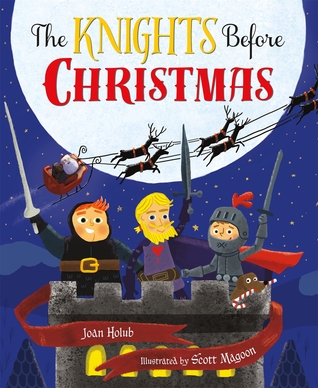
The Knights Before Christmas by Joan Holub

The Knights Before Christmas by Joan Holub

The Knights Before Christmas by Joan Holub, illustratead by Scott Magoon (InfoSoup)

Three knights are guarding the castle when suddenly out on the drawbridge there arose a clatter! Outside there is a red-and-white knight with his eight dragons who is trying to get inside the castle. He asks where the chimney is, but castles don’t have a chimney, so Santa has to go to extreme measures to get gifts to these three knights. Meanwhile the knights try to defend the castle but take the instructions a bit too literally. Santa does not give up, deciding to launch the presents at the castle using a flexible pine tree. The knights successfully defend the castle from this barrage of cookies, candy and gifts. Then they merrily bring it all indoors and set up their holiday celebration. Santa has won too!

This is such a clever play on Twas a Night Before Christmas. At first I wondered if it would work, but the author manages to pay homage to the traditional story but also strike out on her own and make a very enjoyable holiday tale. The rhythm and feel of the original story is still here, but this new version does not feel bound by it. Rather it launches the story forward and gives the author room to play. Children will love these three confused knights and their battle against the holiday.

Magoon’s art is digitally done, offering a feeling of plenty of texture and even collage. The three knights are unique from one another and Santa himself is unmistakable in his red and white costume. Each image is filled with humor. Make sure to take time to read the asides too as they add to the merriment.

A modern twist on a traditional poem, this is a welcome new version for fans of knights and castles. Appropriate for ages 3-5.

Reviewed from copy received from Henry Holt and Company.

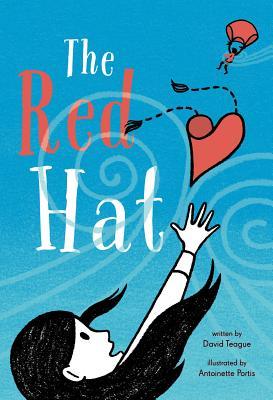
The Red Hat by David Teague

The Red Hat by David Teague

The Red Hat by David Teague, illustrated by Antoinette Portis (InfoSoup)

A boy named Billy Hightower lives at the top of the tallest building in the world, so high that he is above the clouds. Then one day, another building is built nearby. Billy soon sees a girl on top of the building wearing a red hat. Billy tries to call to her, but the wind sweeps away his words before she can hear them. He tries to send her a note via paper airplane, but the wind snatches that away too. The kite doesn’t work either. When Billy tries to use a blanket to fly across the gap to the girl, the wind pushes him down to street level and takes the girl’s hat too. The vicious wind continues to push Billy around, but soon Billy has figured out where the girl lives and finds a way through the wind to see her.

Teague keeps his text very simple in this picture book. He tells a straight forward story, but one that also is about loneliness and how important it is to reach another person. It is also clearly a book about love, about obstacles and finding an alternate way to connect and be together. Children may see it as a book more about wind, and that is completely wonderful too. Some of the best books work on different levels.

Portis’ illustrations use a little gimmick of the wind being shiny on the page. But these illustrations are beautiful in their simplicity and the wind itself is so capricious and involved in the story that it deserves its own style and feel. Done in only a few colors, the red pops on the page, the color of love.

A lovely picture book that can be enjoyed on different levels by different readers. It would make an interesting discussion for slightly older children about imagery and hidden meanings. Appropriate for ages 3-5.

Reviewed from library copy.


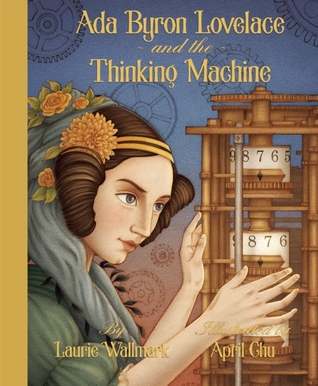
Ada Byron Lovelace and the Thinking Machine by Laurie Wallmark

Ada Byron Lovelace and the Thinking Machine by Laurie Wallmark

Ada Byron Lovelace and the Thinking Machine by Laurie Wallmark, illustrated by April Chu (InfoSoup)

Ada Lovelace was born the daughter of the famous poet, Lord Byron. But she was more like her mother and interested in numbers rather than words. As a young woman, Ada invented a flying machine that she did all of the mathematics for. She spent time experimenting with wind and sails to inform her calculations. Despite a health scare that left her blind and paralyzed for some time, Ada continued to learn math and love numbers. When she met Charles Babbage, the inventor of the first mechanical computer, she found a person she could talk to about her love of numbers. It was his machine that inspired her to write the first computer program ever so that others could understand this amazing computer he had built. This makes Ada the first computer programmer.

It is inspiring to see a girl from such an early time period who was clearly a mathematical genius. She had a mother who was also interested in math and supported her daughter’s education and love of numbers throughout her life. This book shows the power of mathematics to inspire new ideas and inventions. It also demonstrates that women in computing goes back to the very beginning.

Chu’s art is done with pencil on paper and then as the copyright information says “colored on an Analytical Engine” also known as a computer. The illustrations are rich and lovely. They have interesting perspectives like looking down on Ada in the bath with her muddy boots on the floor nearby. Ada is shown as an active person, a youthful presence among older people, and shines on the page as she must have in life.

A powerful and inspirational read for children interested in math and science, this picture book will show young readers a heroine that they may never have met before. Appropriate for ages 7-10.

Reviewed from library copy.