Noah’s Seal by Layn Marlow

Cover image for Noah’s Seal.

Noah’s Seal by Layn Marlow (9781536218510)

Noah is waiting on the beach, wondering when he and Nana can take a sail out to see the seals. Nana needs to fix the boat before they go, so Noah must amuse himself on the beach instead. He looks out to see to check for seals, but they don’t like to come in to shore. So Noah digs in the sand while thinking of seals. Suddenly, he notices the pile of sand behind him looks a lot like the body of a seal. Noah steadily works to make the sand look even more like a seal, giving it shape, speckles, whiskers, and eyes and mouth. The two lie on the beach together until Nana calls him because a storm is coming. The two take shelter in the boat under a tarp, but the sand seal is washed away. Nana tells him that the boat is fixed and they can head out to see the seals tomorrow, and that is when Noah sees his seal alive and near the beach. Surely they must take the boat out right now!

A delightful mix of wishful fantasy and the beauty of a day spent on the beach making something, this picture book is a summery joy. The relationship between Nana and Noah is evident right from the beginning, full of warmth and support, but also offering Noah plenty of space to amuse himself. The text is just right, offering a clear view of the setting while moving ahead as quickly as an ocean breeze.

The illustrations are just the right mix of sunshine colored sand and teal sea wave. Noah and his grandmother are Black characters. Noah’s seal is depicted in a way that makes sense for a child to have designed and built it. It’s simple and effective.

Perfect reading for a summery day, whether on the beach or not. Appropriate for ages 3-5.

Reviewed from copy provided by Candlewick Press.
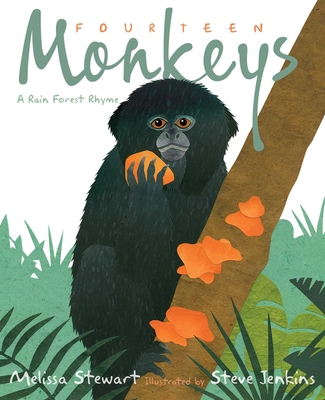
Fourteen Monkeys: A Rain Forest Rhyme by Melissa Stewart

Cover image for Fourteen Monkeys.

Fourteen Monkeys: A Rain Forest Rhyme by Melissa Stewart, illustrated by Steve Jenkins (9781534460393)

This picture book explores the fourteen species of monkey that all live together in Manu National Park in Peru. They all live in the rainforest together and survive successfully near one another thanks to their different diets, different heights for their habitats, and different body sizes. The day begins with the red howler monkeys who climb to the very tops of the trees to bellow. The spider monkeys live high up as well, searching for their favorite fruits. Down near the ground, sakis race and jump. Each monkey is shown with Jenkins’ detailed illustrations, their space in the rainforest documented, and their activities and diet explored. It’s a look at an entire community of monkeys all living happily as neighbors.

Stewart’s writing is clear and concise. She has a knack for sharing fascinating details about each monkey, such as how long the howlers rest each day (18 hours) and that capuchins will eat anything they can catch. The book offers layers of text, including basic text that could be shared aloud while the more detailed information is also there for those who want to explore it. Even more information is available at the end of the book along with additional resources.

As always, Jenkins’ illustrations done with paper art are phenomenal. He can make paper look furry, smooth, veined and fruity. He’s a master at the craft, creating animals that are realistic and artistic.

This book doesn’t monkey around, providing great information in a gorgeous format. Appropriate for ages 5-8.

Reviewed from copy provided by Beach Lane Books.

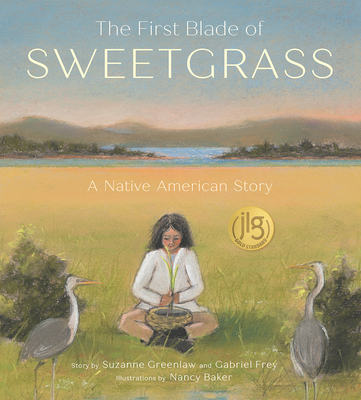
The First Blade of Sweetgrass by Suzanne Greenlaw and Gabriel Frey

Cover image for The First Blade of Sweetgrass.

The First Blade of Sweetgrass by Suzanne Greenlaw and Gabriel Frey, illustrated by Nancy Baker (9780884487609)

Musqon accompanies her grandmother to the salt marsh where they are going to pick sweetgrass. The salt marsh is where the river meets the ocean. Her grandmother explains that she helped her own grandmother pick sweetgrass as a girl to weave into baskets and use in ceremonies. To Musqon, all of the grasses look the same, so her grandmother shows her what to look for to find sweetgrass among all the other grasses. She explains that they never pick the first blade of sweetgrass that they see, to make sure that sweetgrass continues to the next generation. When her grandmother tells her that sweetgrass has a shiny green tassel and blades with a purple stem and that it is easy to pick, Musqon is confident she can find it on her own. It isn’t until Musqon takes her time, thinks about what she is there to do, and really sees the salt marsh that she can find sweetgrass herself.

Written by a citizen of the Houlton Band of Maliseet Indians and a citizen of the Passamaquoddy Nation, this picture book is a gentle story of Native traditions shared with a new generation. The text of the book shares Passamaquoddy-Maliseet words in the dialogue of the characters. It takes the time, slowing us all down, to explain the importance of sweetgrass and how to find it. The moment when Musqon takes her own time and gives herself space is beautifully created.

Baker learned about sweetgrass for this book also the landscape in which it grows. She shows a delicacy with both in her illustrations, celebrating sweetgrass itself and also showing the beautiful landscape where the river meets the ocean.

A rich and vital look at sweetgrass and heritage. Appropriate for ages 4-7.

Reviewed from e-galley provided by Tilbury House.

Ergo by Alexis Deacon

Cover image for Ergo.

Ergo by Alexis Deacon, illustrated by Viviane Schwarz (9781536217803)

This philosophical picture book explores one chick’s world. Ergo wakes up not realizing she is inside an egg and thinks that she has discovered her entire world. She has eyes to see, toes that wiggle, wings that flap, a beak to peck and legs that kick. Perhaps, she thinks, she is the world and she had found everything. That’s when she discovers the wall of the egg around her. She pushes the wall, rolls the egg over, and realizes that she can move the entire world! That’s when she feels the bumps coming from outside the egg and realizes that she is not the entire world. Now she must decide whether to leap (or peck) her way into the unknown or stay safe in her small universe of the egg.

Deacon and Schwarz follow I Am Henry Finch with this picture book that plays with Plato. The book works on multiple levels, allowing adults to recognize the philosophy while also really working well as a picture book for young children that asks big questions about our world and our place within the universe. The use of the little chick and an egg serve a clever purpose here. Ergo asks the big questions while the simple style of the writing supports the ideas being shared.

The illustrations are simple and bold. Done in a sunshine yellow, Ergo fills the page. Often surrounded by a cool blue-gray, the illustrations show Ergo and her world, egg-sized and then larger.

Clever and inquisitive, this book will egg on children’s thinking about the world. Appropriate for ages 2-6.

Reviewed from copy provided by Candlewick Press.
I Am the Subway by Kim Hyo-eun

Cover image for I Am the Subway.

I Am the Subway by Kim Hyo-eun, translated by Deborah Smith (9781950354658)

Told from the point of view of the Seoul subway itself, this picture book takes readers deep into the city and introduces them to the various people who use the subway. With a steady ba-dum ba-dum, the subway rattles and rumbles over its tracks reaching stop after stop. At each stop a different character enters the story, from the business man running to make his train to a mother with two children who is also late to a man who repairs shoes for a living to a student so tired she is almost falling asleep. Each person offers their story, glimpses of their past and plans. As the train car fills up, the light shines in showing the beauty of each person and their journey.

This Korean import is beautifully written with a dazzling combination of simple prose that moves to a poem for each of the people entering the train. The poems are set apart from the prose, offering a full story of that person in just a few lines. The bustling urban setting is brought to a personal level as each human is highlighted and given space to shine. There is space here for transformation in each person’s life, the subway used as a huge metaphor for life and growth.

The illustrations are done in ink and watercolor. The humans are shown as more faceless at first but as they are introduced to the reader, they are shown in brighter colors in the crowd rather than the gray people around them. Each person’s story and poem are shown with the bright colors from the bluest of sea water to the bustle of the city itself.

A gorgeous celebration of Seoul and its people. Appropriate for ages 4-7.

Reviewed from copy provided by Scribble.

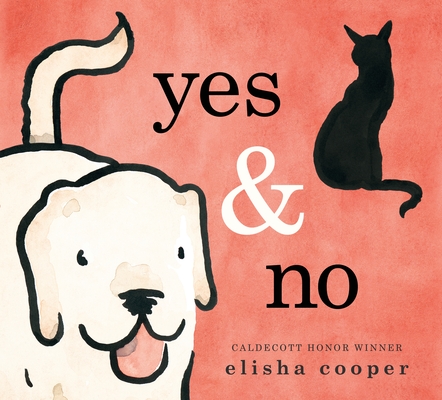
Yes & No by Elisha Cooper

Cover image for Yes & No.

Yes & No by Elisha Cooper (9781250257338)

A dog and a cat live together. In the morning, the dog is ready for anything while the cat wakes up more slowly and with a touch of grumpiness. The dog wants breakfast, while the cat isn’t hungry. The dog helps clean up, and the cat walks off. The dog wants to play while the cat avoids him. Their owner sends them outside to play together. The dog is full of delight and eagerness, exploring the backyard with enthusiasm while the cat naps on a tree branch. Finally sent off even further, they head out together and find a common spot to sit and look at the world while sniffing the breeze. Called to come back in, now it’s the dog who doesn’t want to go back inside, doesn’t want to have a bath, or head to bed. It’s the cat who brings the blanket back and gets the dog ready to sleep. But the cat may have other ideas too.

Told in the voices of the cat, dog and their owner, this picture book is marvelously understated. The voices of each character are distinct from one another with the imperious cat, the eager dog, and the owner who’d just like a little peace. The text reads aloud beautifully, since it is solely the voices of the characters with no narration at all.

The art is classic Cooper, telling a story in deft and clever lines. The cat is an elegant black figure against the white background while the dog almost bursts from the page, often looking right at the reader and looking for fun.

A grand picture book of opposites who are the best of friends. Appropriate for ages 3-5.

Reviewed from e-galley provided by Macmillan Children’s Publishing Group.

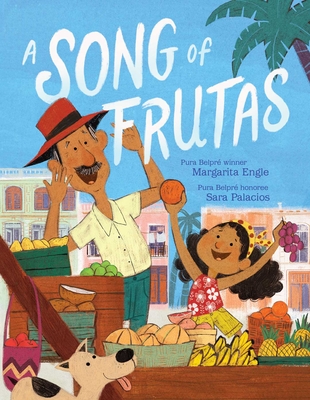
A Song of Frutas by Margarita Engle

Cover image for A Song of Frutas.

A Song of Frutas by Margarita Engle, illustrated by Sara Palacios (9781534444898)

A little girl tells of visiting her Abuelo in Cuba. When she is there, she helps him sell fruit from his small cart on the street. Together they sing the names of the fruits they have for sale, walking in beat to the song and shaking their hands like maracas. Their voices reach up the tall buildings around them and some people purchase fruit using a basket they lower down on a rope. There are other vendors on the street shouting or singing about their wares too, and that’s when Abuelo has to sing even louder to be heard. It’s most special to visit Abuelo at the new year when everyone wants to purchase 12 grapes per person to have good luck when they eat them at midnight. If only visiting Cuba was simpler and they could go more often!

Engle is an award-winning author of books for all ages of children. This picture book uses a mix of English and Spanish called Spanglish that is used both in the United States and Cuba. The songs that the girl and her grandfather sing together are done in rhyme while the rest of the picture book displays Engle’s skills with verse in a different way. Her paragraphs of free verse still play with rhythm and form, inviting readers to experience Cuba and their lively street vendors.

Palacios’ illustrations are bright and merry. They show the dynamic urban Cuban street scene that is full of colorful buildings and equally colorful people. The illustrations share that same inherent happiness as the words.

Bright and energetic, this picture book offers a glimpse of Cuba. Appropriate for ages 4-6.

Reviewed from e-galley provided by Atheneum Books for Young Readers.

11 New Picture Books Coming in August to Wake Your Brain Cells

Here are 11 upcoming picture books this month that have gotten starred reviews. There are some lovely treats from established authors, ones newly published in the U.S., and hopefully some nice surprises too.

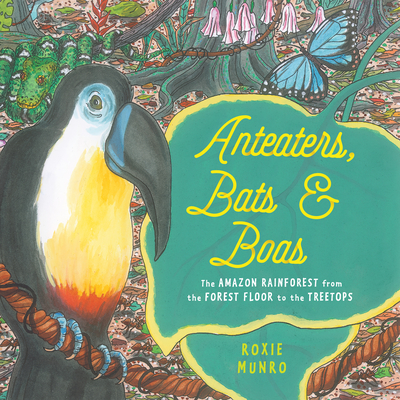
Cover for Anteaters, Bats & Boas

Anteaters, Bats, and Boas: The Amazon Rainforest from the Forest Floor to the Treetops by Roxie Munro

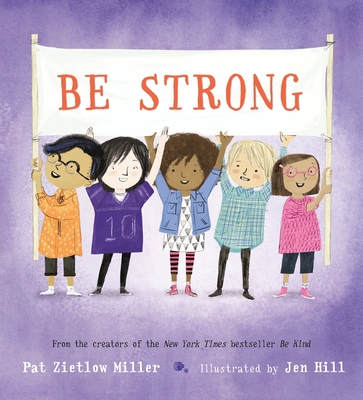
Cover for Be Strong (Be Kind #2)

Be Strong by Pat Zietlow Miller, illustrated by Jen Hill

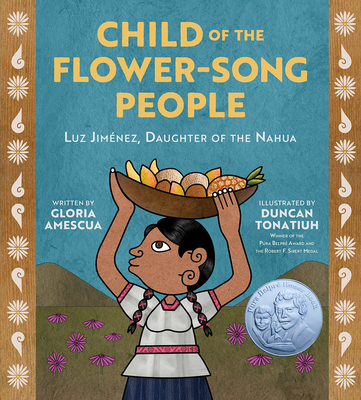
Cover for Child of the Flower-Song People

Child of the Flower-Song People: Luz Jiménez, Daughter of the Nahua by Gloria Amescua, illustrated by Duncan Tonatiuh

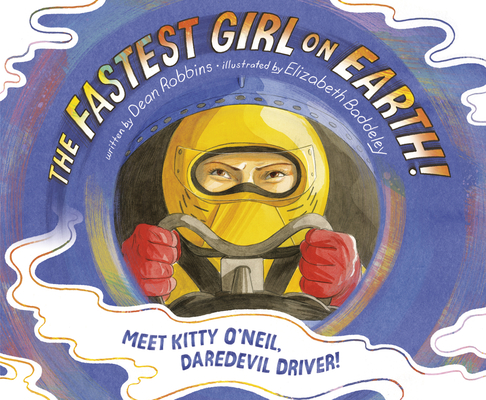
Cover for The Fastest Girl on Earth!

The Fastest Girl on Earth!: Meet Kitty O’Neil, Daredevil Driver! by Dean Robbins, illustrated by Elizabeth Baddeley

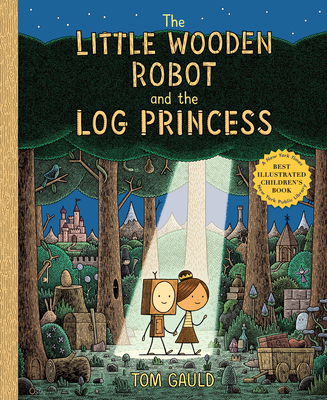
Cover for The Little Wooden Robot and the Log Princess

The Little Wooden Robot and the Log Princess by Tom Gauld

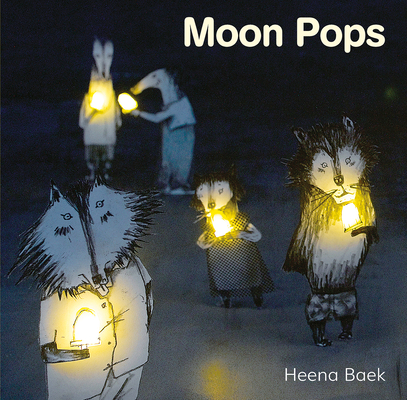
Cover for Moon Pops

Moon Pops by Heena Baek

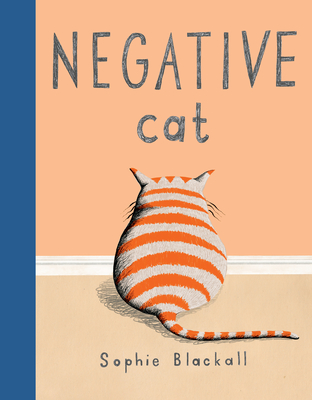
Cover for Negative Cat

Negative Cat by Sophie Blackall

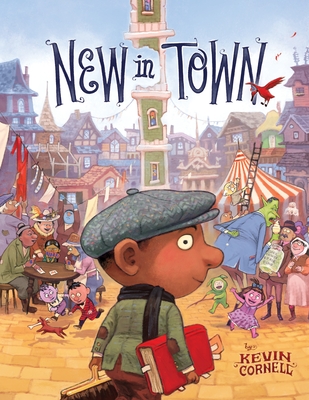
Cover for New in Town

New in Town by Kevin Cornell

Cover for Poultrygeist

Poultrygeist by Eric Geron, illustrated by Pete Oswald

Cover for A Song of Frutas

A Song of Frutas by Margarita Engle, illustrated by Sara Palacios

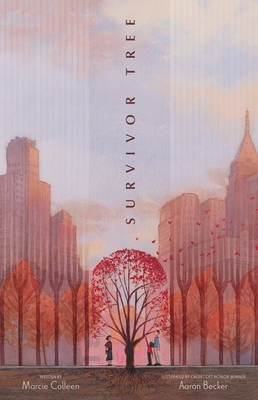
Cover for Survivor Tree

Survivor Tree by Marcie Colleen, illustrated by Aaron Becker

Sonny Says Mine! by Caryl Hart

Cover image for Sonny Says Mine.

Sonny Says Mine! by Caryl Hart, illustrated by Zachariah OHora (9781547605804)

When Sonny finds a pink, soft bunny toy in the sandbox, he falls in love with it. He names it Bun-Bun and they spend lots of time playing together. Meemo, the dog, sniffs Bun-Bun but Sonny insists that Bun-Bun is “Mine!” Later, Honey and Boo come by. Boo is crying, because she has lost Suki, her favorite pink bunny. Honey searches everywhere for Suki, but Sonny keeps Bun-Bun out of sight. Honey even asks if Sonny has seen Suki, but Sonny says No! Sonny hides Bun-Bun in a safe place and then heads to help Boo feel better, but she doesn’t want to play. She is even too sad to eat cake. Now it is up to Sonny to see if he will do the right thing or not.

This is the first in a new series of books featuring these four characters. This first book looks at sharing and telling the truth. Hart’s animal characters have big personalities and their relationships with one another are well drawn and interesting. They are written as small children and show the same mistakes and learning.

OHora’s illustrations work really well here with their bright colors and simplicity. The emotions on their faces are clear and add to the understanding of how difficult the choices are for Sonny as he struggles with his desire for the toy and the need to make his friend feel better.

A charming new series starter that will start conversations about sharing and choices. Appropriate for ages 2-4.

Reviewed from ARC provided by Bloomsbury.