Picture books kept me going this year during the pandemic. So many of them were marvelous reads, written by ownvoices authors, and powerfully showing the experiences of children in our world today. Here are my picks for the best of the year, though the list could be so much longer!
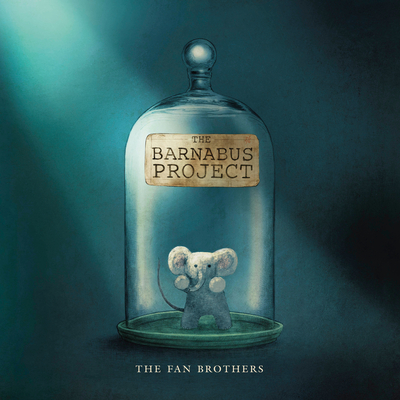
“This is the first time that all three Fan brothers have worked on a book together. If they make things this great as a team, they should keep on working with one another.”
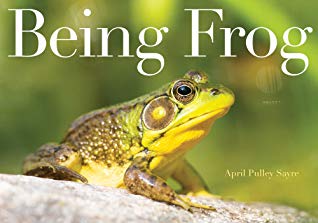
“It’s a picture book distinctly from a human point of view, wondering about nature and giving space for those moments of thought for both the reader and the frog alike.”
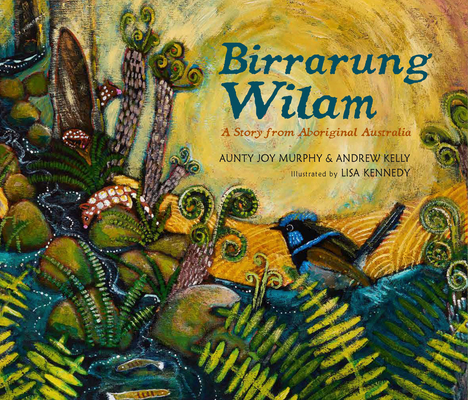
Birrarung Wilam by Aunty Joy Murphy and Andrew Kelly, illustrated by Lisa Kennedy(9781536209426)
“The writing embraces the Aboriginal words, creating swirling and flowing lines of text that move like the river itself. Reading it aloud really lets the words sing out, evoking a place full of natural wonders.”
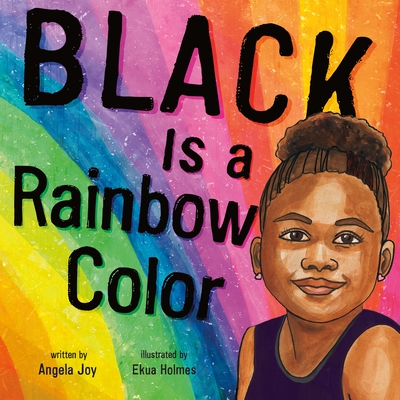
“Joy’s writing is powerful, singing on the page like a hymn. She writes simply but with great imagery and drawing in references to powerful African-Americans along the way.”
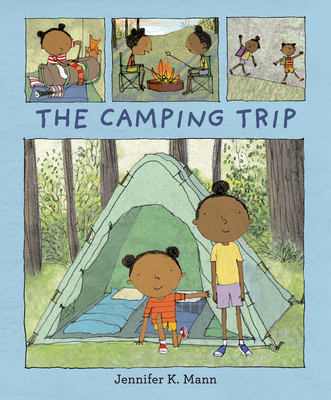
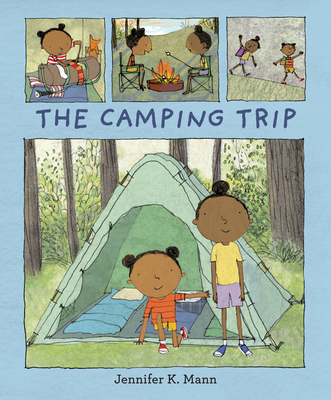
“The picture book reads more like a comic book with panels and lots of speech bubbles. The Black family at the heart of the book gives it a fresh and inclusive take on being outside.”
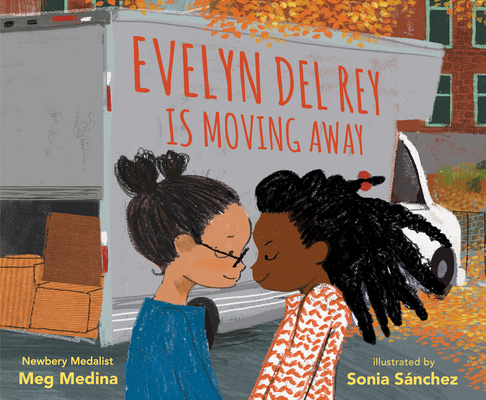
“This is an entire world of apartments and friendship.”
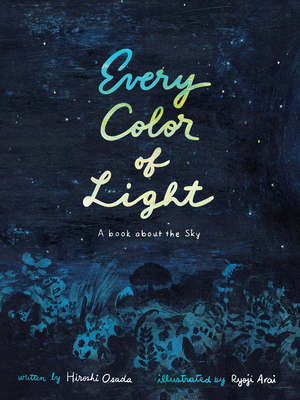
Every Color of Light by Hiroshi Osada, illustrated by Ryoji Arai, translated by David Boyd (9781592702916)
“Illustrated with glorious paintings that show nature and the changing light, the book shimmers and shines. The changing light sweeps on the pages bringing sun shafts, pink lightning strikes, dark night, and a bright moon.”
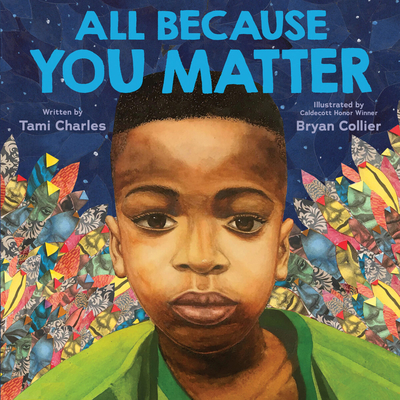
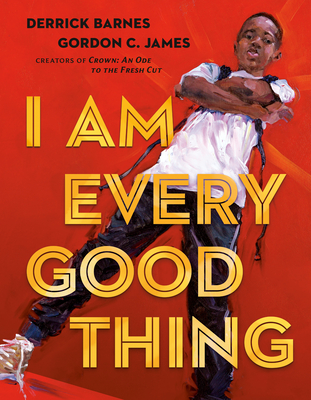
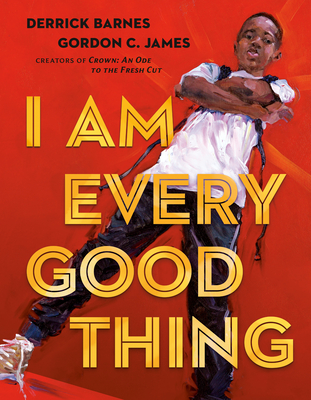
“This is a book all about empowerment, of seeing your own identity and holding it clear against what society may say about you. It’s a book that all children need, but Black boys most of all, as they are targeted and threatened by the world they live in.”
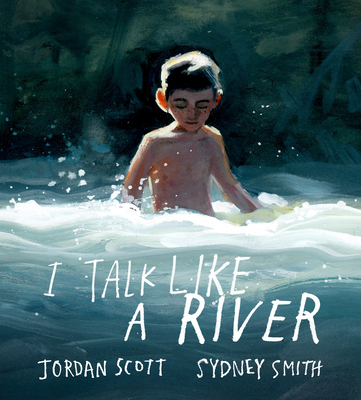
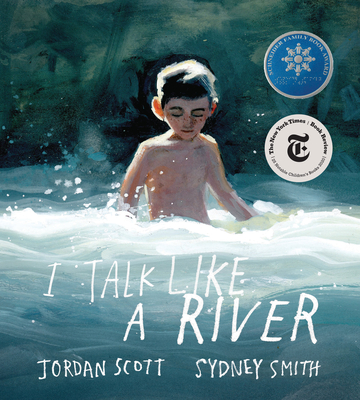
I Talk Like a River by Jordan Scott, illustrated by Sydney Smith (9780823445592)
“The words around the boy in the morning connect with his inability to speak at times, the pine trees sticking out from his lips, the crow cawing from his throat, the moonlight shining from his mouth. Each of these gives readers a new way to experience a stutter, each beautiful and haunting.”
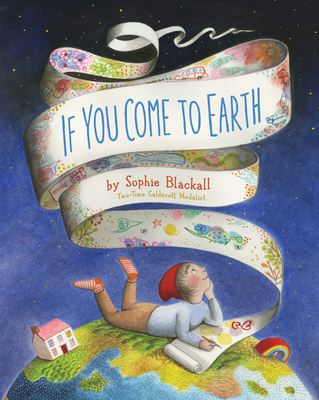
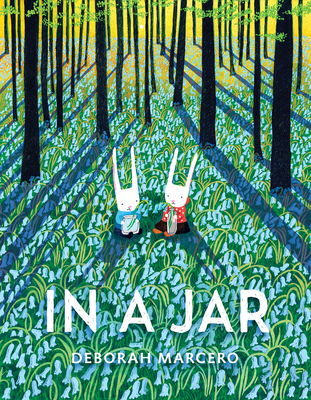
“Each item is marveled at for a bit, rather like picking up a gem and then moving on to the next amazing jewel. The entire book is a delight, looking at the earth and at humans as something to be proud of, to care for, and to adore.”
“There’s a beautiful tension between the beauty on the page and also the normalcy of it all.”
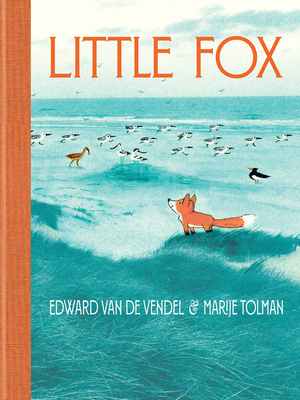
Little Fox by Edward van de Vendel & Marije Tolman (9781646140077)
“Throughout there is a feeling of joy and marvel, such as the memory of licking drops of water off of a deer’s nose. The book is also peppered with smaller moments, blackberries, birds, and orange balls.”
I Will Dance by Nancy Bo Flood, illustrated by Julianna Swaney (9781534430617)
A little girl with cerebral palsy makes a birthday wish that she gets a pink tutu and can dance. When Eva was born, she wasn’t expected to survive more than a short while, but she is now ten years old. She wants to dance but can’t move more than her head and her arms and fingers. Eva can’t use her legs to run and move like other children can. Then her mother discovers a new dance program for people of all ages and all abilities. Still, will they let her join in even though she is in a wheelchair? Yes! When Eva arrives there are children of all sorts of ages, sizes, and who have a variety of assistive devices they use. Soon they are not only dancing but creating a performance where they do more than pretend and imagine. They dance!
At the end of the book, the author explains that a program called Young Dance inspired this picture book. The Executive Director of the Young Dance program also shares information on the program and its opportunities for children of all abilities. This picture book is inspiring on a variety of levels, for children who may think their limitations would prevent them from dancing, certainly. Plus it also shows everyone else not to make assumptions about what is possible and whether a dream can come true. Still, it is based firmly in reality, and as the book points out takes imagination and makes it real.
Swaney’s illustrations are lovely, showing both Eva’s physical limitations and also the beauty and freedom she first sees and then discovers herself in dancing. The use of sparkling energy to show the movement and magic of dance works particularly well.
A book that is inspiring and breaks stereotypes through dance. Appropriate for ages 3-5.
Birrarung Wilam by Aunty Joy Murphy and Andrew Kelly, illustrated by Lisa Kennedy (9781536209426)
Take a journey down the Yarra River near Melbourne, Australia in this Aboriginal picture book that celebrates native creatures and plants. Told using many words from the Woirurrung language, the book is a mixture of evocative language and poetic phrasing. Starting with a starry night sky, the picture book shows the path of the Birrarung as it winds along. It goes past trees where possums make their homes in hollow trees. Rain falls and the bright-blue fairy wren chases insects near his mate. Cockatoos fly past looking for pine cones and their seeds. Kangaroos gather where the river slows and platypus burrow with their babies. Ravens, pelicans, eagles, ducks and more fill the pages alongside the trees, water and river that create this unique ecosystem.
Because they use so many Woirurrung words, the book is almost a word game. The writing embraces the Aboriginal words, creating swirling and flowing lines of text that move like the river itself. Reading it aloud really lets the words sing out, evoking a place full of natural wonders. Here is the opening line to give you a taste of the style:
As ngua rises,
turning clouds over the distant city red,
Bunjil soars over mountain ash,
flying higher and higher as the wind warms.
Below, Birrarung begins its long
winding path down to palem warreen.
The illustrations done in acrylic show the various scenes along the river. They also allow readers to piece together what creatures and plants are being described in the text, finding the platypus, eagles and kangaroos. The illustrations are filled with Aboriginal art touches, the dots and patterns creating ripples of water, breezes and layers of earth.
Enchanting and full of wonders, this picture book is a resounding success. Appropriate for ages 4-6.
The Cybils are the long-running Bloggers’ Literary Awards given to books for children and teens. I’ll be breaking the finalists into three groupings based on reader age. This first one is for the youngest readers and includes the finalists for Fiction Picture Books, Easy Readers and Early Chapter Books, and Elementary Nonfiction:
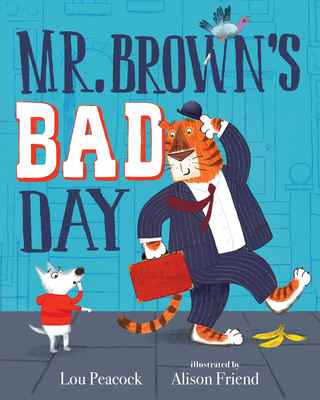
Mr. Brown’s Bad Day by Lou Peacock, illustrated by Alison Friend (9781536214369)
Mr. Brown has a very important business job and carries a very important briefcase. He was always busy going to meetings and signing papers. But no matter how busy he is, he always makes time every day to go to the park for lunch with his important briefcase. On this day though, Mr. Brown didn’t notice a little baby grabbing his briefcase. Mr. Brown soon spots his briefcase heading away in a stroller. But before he can reach it, it gets hooked onto an ice cream cart. From the cart, it is soon snagged by a rider on the Ferris wheel. By the time Mr. Brown got through the line and onto the ride, the briefcase was carried onto a bus. Mr. Brown had lost his hat, his jacket and was quite the mess, but he borrowed a tricycle and headed after the bus. After all, his briefcase held very important things. Mr. Brown never caught the bus until it was already stopped at the school. He headed home with his briefcase held close. Once at home, he opened the briefcase to make sure all of his important items were still there. They were! But you may be surprised by what was in the briefcase.
Peacock takes a child’s view of business work in this picture book that is far more about the chase and the briefcase than Mr. Brown’s important work day. The wild chase around a delightful park and then through town is great fun with plenty of anticipation as the Ferris wheel turns or the bus chugs away. Peacock adds tension in the book, some of which is a marvelous surprise when the important contents of the briefcase are revealed.
The illustrations are warm and dynamic. The park is a delightful green, inviting and filled with all sorts of animals enjoying their day outside. There is a sense of community throughout the book, whether it is spending time together in a park or offering a tricycle to a grownup.
A busy book full of friendly animals and one very important briefcase. Appropriate for ages 3-5.
Reviewed from e-galley provided by Candlewick Press.
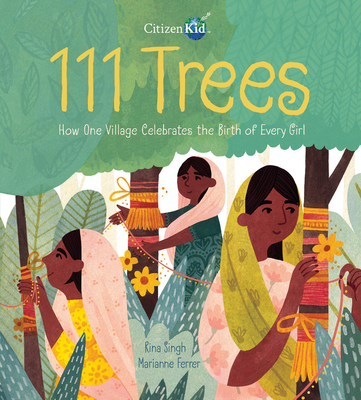
Part of the Citizen Kid collection, this nonfiction picture book explore the story of how one village in India came to celebrate the birth of girls. Sundar grew up walking with his mother to get water through the heat. until she is killed from a snake bite. After this, Sundar takes comfort in hugging trees, thinking of his mother. Sundar grew up and taught his children to love nature as much as he does. He works for a mining company and grows so worried about what they are doing to the local environment and their unwillingness to plant trees to help that he leaves his job. He runs for election and becomes the head of the village. When his daughter dies, he plants trees in her memory. He has an idea, declaring that every girl born in the village will be welcomed by the planting of 111 trees. Sundar is mocked for this idea that goes against customs, but he does not give up. He steadily speaks with people, convincing them of the impact they could have on the local environment by planting these trees. As the trees grow, life in the village changes. Now the women don’t have to walk long distances to get water, the fruit of the trees help feed the children and families, and girls can go to school with the boys as the gender inequality is overturned.
Singh builds her story with care, showing Sundar’s childhood with his mother and then his loss of her as the deep inspiration for his idea. She demonstrates how one man’s quest to fix the environment can make an enormous difference not just for him but for an entire community, the future of the girls that grow up there, and the quality of life for all. Singh does not lecture, instead showing how resilience and perseverance can eventually pay off. The Author’s Note at the end of the book offers more information on Sundar and the other customs that he has ended, including child marriage.
The illustrations show the changing landscape as the trees are planted. From a desert-like wasteland, the steady increase in trees transforms the landscape and the pages to lush green. The images focus on the interplay between human and nature, showing a community that even when skeptical continued to listen.
An inspiring picture book that tells the true story of one man’s quest to bring back trees and stop gender inequality. Appropriate for ages 5-7.
Reviewed from e-galley provided by Kids Can Press.
Offer even the smallest children a look at Black history in the United States with this alphabet book. Told in rhyming stanzas, this picture book invites exploration beyond its covers. It begins with A is for anthem, a call for voices to rise in song and to call for freedom. B is for beautiful, with that and other letters, the book speaks to the importance of not listening to voices that put you down. B is also for bright, bold, brave, brotherhood and believing. That use of multiple words continues through the book, offering a feeling that there is so much to say with each letter, so much to do, so much left to accomplish together.
This alphabet book is several things at once. It’s a call to action for people of all ages to vote, to protest, to be heard. It is also a look at history, so there are letters that focus on artists, writers, teachers, scientists, and more. It is also a statement for self-esteem for Black children, to see themselves as valued, beautiful and able to bring change. It’s a book about how much has been accomplished, but also how much is yet to be done. The end of the book is filled with additional information on the people depicted under each letter as well as resources for further exploration.
The art is filled with bright colors. The images are flat, hearkening back to folk art even as it looks forward to the future and change happening. The art is filled with Black people, unknown and famous, full of urban setting and farms, protest signs and portaits.
A colorful and optimistic look at Black history and a call for Black lives to matter in the future. Appropriate for ages 3-7.
Reviewed from e-galley provided by Workman Publishing





 Waking Brain Cells