Prairie Days by Patricia MacLachlan

Prairie Days by Patricia MacLachlan

Prairie Days by Patricia MacLachlan, illustrated by Micha Archer (9781442441910)

The master of prairie-based books offers this picture book glimpse of life on the prairie. It is a land of huge skies that change color at dawn. It smells of “cattle and bluegrass and hyssop” with wild roses too. There are small towns with fascinating names, filling stations with cold drinks, and farm horses to ride. There are all sorts of prairie birds and creatures. There are farm dogs to cuddle and admire, rides on grain carts heading to the mill. There are trips to town and in the summer, swimming in the pond. Games at dusk and into the dark until  you are called in to bed. As the huge sky changes colors once again.

Newbery medalist MacLachlan’s text captures the beauty of growing up on a working farm in the prairie states. Through a series of small moments, she shows the incredible beauty of the land and sky. She also shows how these small moments string together to form a day, a summer, a life. It is a quiet picture book, with glimpses of wildlife and time spent on horseback or snoozing on a porch.

Archer’s illustrations are deep and beautiful. They are done in collage with acrylics and inks combined with handmade papers. They fill the pages with the textures of grasses, the epic sight of sunrise and sunset, the golds and greens of summer, and the deep blues of the sky.

So many of us will recognize our own childhoods here on the page, whether we grew up on the prairie or in another sort of farming community. Appropriate for ages 4-6.

Reviewed from copy provided by Margaret K. McElderry Books.

 

The Blue House by Phoebe Wahl

The Blue House by Phoebe Wahl

The Blue House by Phoebe Wahl (9781984893369)

Leo lived with his father in a blue house that they loved. The paint may have been peeling, there may have been leaks, and it might shake when the wind blew, but the house was theirs. It was cold in the winter, but Leo and his dad just baked pies to keep the kitchen warm and had dance parties in their hats and scarves. The house had a big garden and a yard where Leo loved to spend all day playing. But their neighborhood was changing, and eventually it was their house that needed to be knocked down. They got evicted by their landlord and had to move. Leo was very angry, and his father let him express it with angry music but they still needed to pack. After painting their farewell on the walls, they left and moved into a white house, a house that didn’t feel at all like home. But perhaps they could make it feel better after all.

There is so much to love about this picture book with its look at the cost of new construction on a neighborhood and a family. It is also a book that celebrates this small family of a dad and son and the way they deal with forced changes in their lives. The focus here is on quality of life rather than wealth, on home rather than real estate, on love rather than land. The story shares these ideals of simple living without preaching, never pushing them, just showing how a life focused on love looks.

Wahl’s art is marvelous. The end pages of the book show the full neighborhood that this little family lives in. Then readers get to see their home with its rambling garden, laundry on the line, trampoline and rather ramshackle house. It’s a home filled with delights of home-baked pies, rock music, dancing and togetherness. The long-haired little boy and his father are marvelously modern with an engaging nod towards simpler times throughout the images.

Richly illustrated, this picture book focuses on love and simple joys. Appropriate for ages 3-5.

Reviewed from e-galley provided by Knopf.

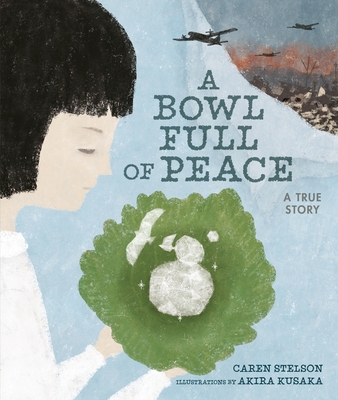
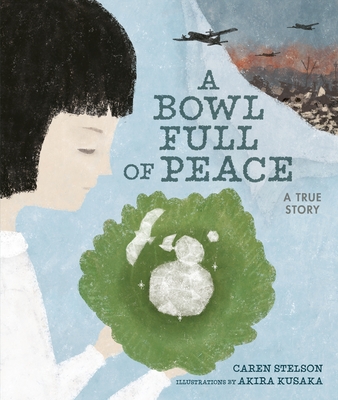
A Bowl Full of Peace by Caren Stelson

A Bowl Full of Peace by Caren Stelson

A Bowl Full of Peace by Caren Stelson, illustrated by Akira Kusaka (9781541521483)

Grandmother’s bowl is precious for their family. Sachiko and family live in Nagasaki. At dinner, grandmother’s bowl is brought out and filled with food, Everyone bows their heads, pressing their hands together and says “itadakimasu.” Soon war comes to Nagasaki with its noises and the lack of food and other supplies. As the war continues and intensifies, the food in grandmother’s bowl changes too, becoming less and less. The family survives air raids, until one gets through. One of Sachiko’s siblings is killed in the blast. Her family leaves Nagasaki on foot, until they reach a hospital. Her brothers are very ill and both die from radiation from the bomb, other members of her family die too. Ice chips are all that help the survivors quench the burning. Two years later, Sachiko and her family return to Nagasaki and in the rubble of their home find grandmother’s bowl, unbroken and not even chipped. Going forward, ice chips are placed in the bowl on the anniversary of the bombing, watched as they melt away.

This picture book version of the award-winning book for older children, Sachiko: A Nagasaki Bomb Survivor’s Journey, allows the story of Sachiko to be shared with elementary-aged children. Stelson manages to pare the story down, writing in poetic lines that capture the horror of war and atomic bombing as well as the wonder of finding anything still intact afterwards. The symbolic nature of the bowl and the ice chips is incredibly moving and repeats in the book so that readers deeply understand the loss and work that must be done.

Kusaka’s illustrations are beautifully spare. She has created touching moments that show the family around their table with the bowl at the center. When the bomb hits, the pages turn from a red burst to blackness. It’s a powerful use of image without words.

A book about war with a strong focus on peace. Appropriate for ages 5-8.

Reviewed from e-galley provided by Carolrhoda Books.

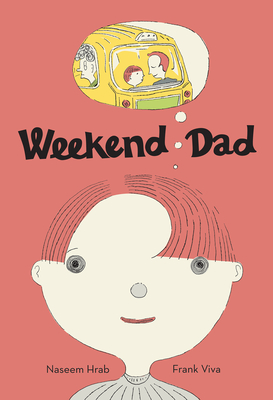
Weekend Dad by Naseem Hrab

CoverFinal2

Weekend Dad by Naseem Hrab, illustrated by Frank Viva (9781773061085)

When his father moves out of the house, the narrator of this picture book thinks about him a lot. His father is just a bus ride away, past the park and through the tunnel. On Friday, the boy gets to visit him, making sure to take his stuffed hedgehog Wendell along. Father and son take the bus together through the tunnel, talking the entire time. Then they are at the boy’s second home, but it doesn’t feel like home at all, since his mother isn’t there. The night is different and strange, sleeping in an empty room that has yet to be decorated with even a bed. His father wants to do something special, but the boy wants a normal day. So they have breakfast, play cards, go to the park, have dinner. Before returning to his mother, the boy leaves Wendell on his father’s bed to keep him company.

It is the tone here that is particularly effective. Hrab captures the strangeness of suddenly living in a divorced family and being a child navigating moving between two homes for the first time. Both parents are loving and gentle, showing their son support for the changes he is facing. But he still needs to experience them and go through them, even if his parents are lovely.

Viva’s illustrations are in his signature style that wonderfully warp, color and expose the strangeness of regular life. His distorted figures match the strangeness that the main character is experiencing, almost like a fun-house mirror at times and then other times frank and direct.

A look at divorce through the eyes of a child with inventive illustrations and a genuine exploration of emotions. Appropriate for ages 4-6.

Reviewed from e-galley provided by Groundwood Books.

20 New August Picture Books to Wake Your Brain Cells

Here are 20 picture books coming out in August that have gotten stars from review journals. Enjoy!

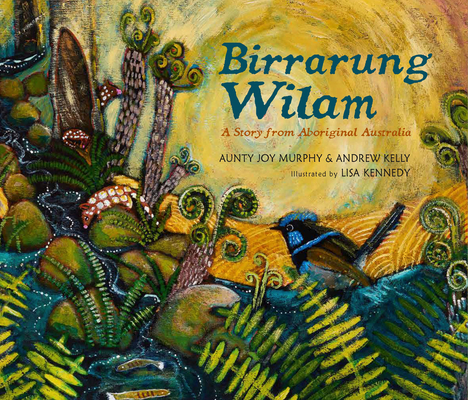
Birrarung Wilam: A Story from Aboriginal Australia by Aunty Joy Murphy & Andrew Kelly, illustrated by Lisa Kennedy

The Blue House by Phoebe Wahl

A Bowl Full of Peace by Caren Stelson, illustrated by Akira Kusaka

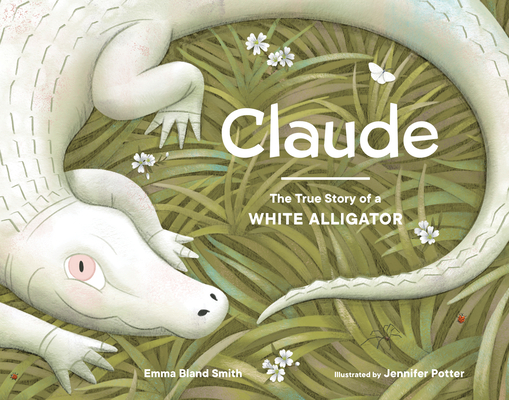
Claude: The True Story of a White Alligator by Emma Bland Smith, illustrated by Jennifer Potter

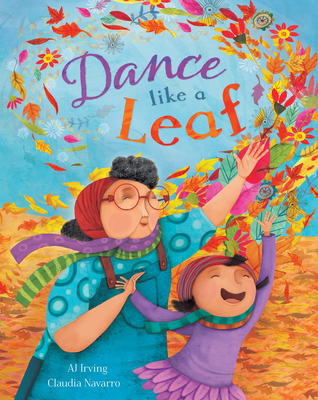
Dance Like a Leaf by Aj Irving, illustrated by Claudia Navarro

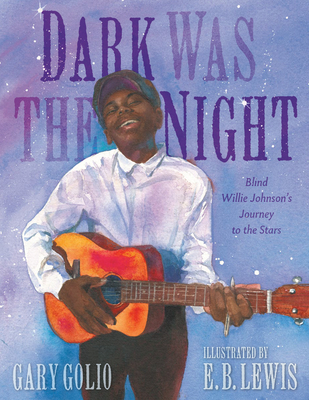
Dark Was the Night: Blind Willie Johnson’s Journey to the Stars by Gary Golio, illustrated by E. B. Lewis (9781524738884)

The Egg by Valerio Geraldo

Every Color of Light by Hiroshi Osada, illustrated by Ryoji Arai

The First Fire: A Cherokee Story by Brad Wagnon, illustrated by Alex Stephenson

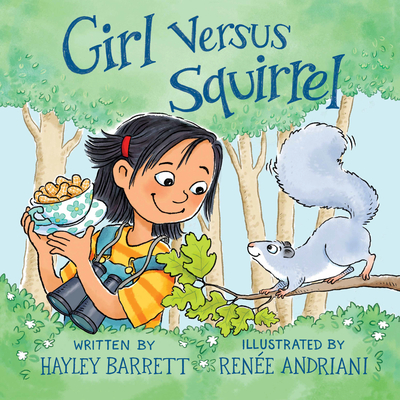
Girl versus Squirrel by Hayley Barrett, illustrated by Renee Andriani

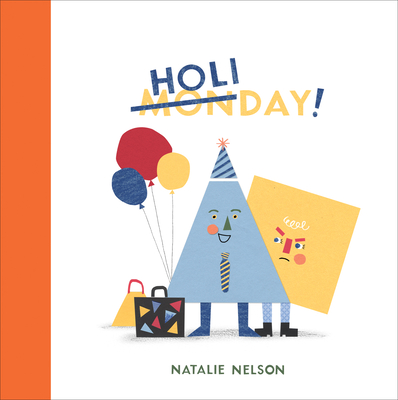
Holiday! by Natalie Nelson

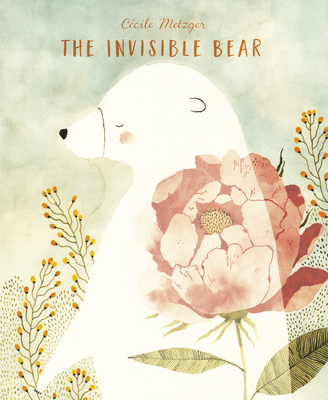
The Invisible Bear by Cecile Metzger

Jumbo: The Making of the Boeing 747 by Chris Gall

Little Fox by Edward van de Vendel, illustrated by Marije Tolman

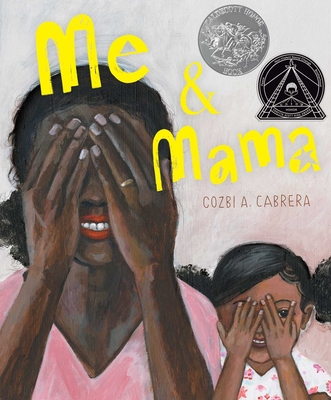
Me & Mama by Cozbi A. Cabrera

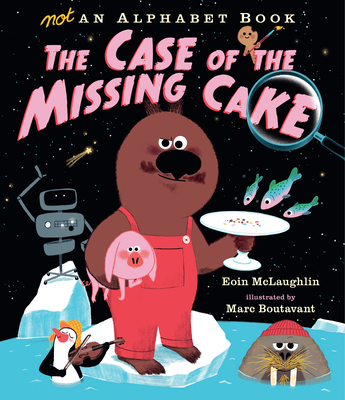
Not an Alphabet Book: The Case of the Missing Cake by Eoin McLaughlin, illustrated by Marc Boutavant

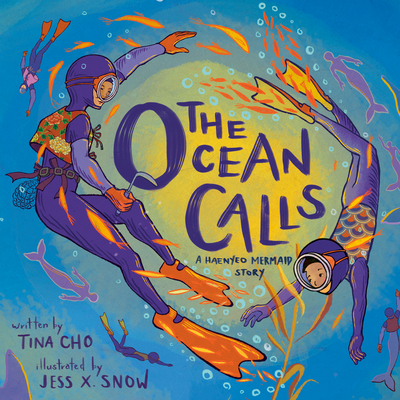
The Ocean Calls: A Haenyeo Mermaid Story by Tina Cho, illustrated by Jess X. Snow

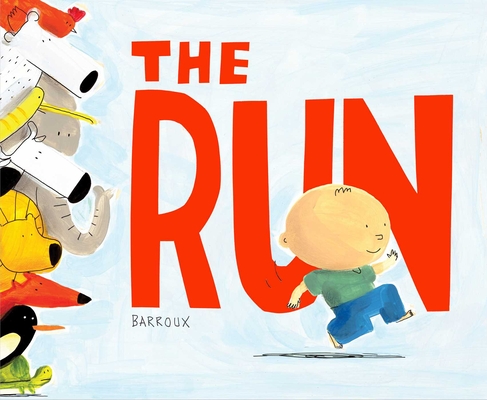
The Run by Barroux

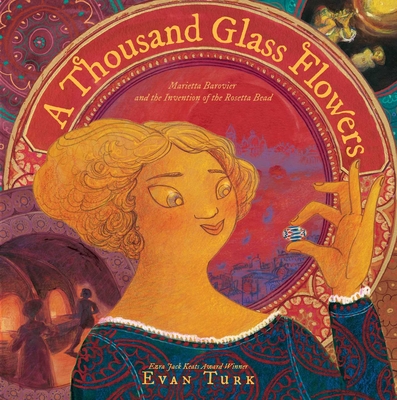
A Thousand Glass Flowers: Marietta Barovier and the Invention of the Rosetta Bead by Evan Turk

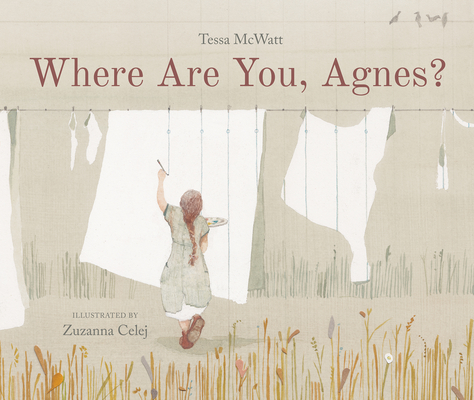
Where Are You, Agnes? by Tessa McWatt, illustrated by Zuzanna Celej

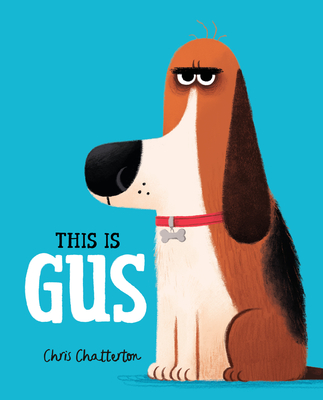
This Is Gus by Chris Chatterton

This Is Gus by Chris Chatterton

This Is Gus by Chris Chatterton (9780593097366)

Gus is the sort of dog that doesn’t like much. He doesn’t like being petted, going on walks, playing fetch, or making friends. He doesn’t like birthdays either. Then a little dog enters his life. The little dog explains that once he arrived, Gus started liking all sorts of things like baths together and hugs. But the one thing that Gus really loves is sausages. He loves everything about sausages. So does the little dog! But Gus doesn’t like to share. But there just might be one thing that Gus likes more than sausages.

Chatteron’s humor is marvelously deadpan. His timing is impeccable throughout the book, particularly the reveals. At first the book seems to not have a specific narrator but that reveal of the little, perky dog speaking about Gus is a delight. The ending too has a well-timed and touching moment that is simple but perfection.

The text is very simple, so the illustrations carry much of the story. They are particularly important to capture the neutrality of Gus with his natural frown. Big and bold, the illustrations work well for sharing the book aloud.

Hilarious and just as satisfying as a sausage feast. Appropriate for ages 2-4.

Reviewed from e-galley provided by Penguin Workshop.

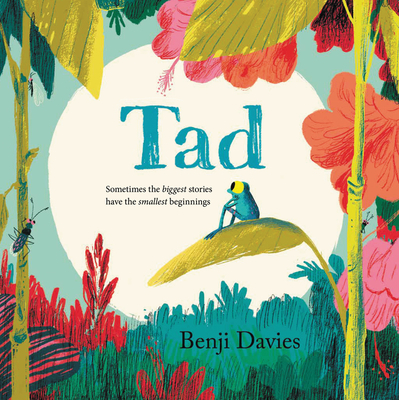
Tad by Benji Davies

Tad by Benji Davies

Tad by Benji Davies (9780062563590)

Tad was a very small tadpole, smaller that all of her tadsiblings. The others warned her that if she couldn’t keep up with them, she would be eaten by Big Blub, the huge nasty fish at the bottom of their pond. So Tad swam twice as hard to keep up with everyone and kept to the shallow parts of the pond. Gradually, the other tadpoles started to change, growing legs and losing their tales. But Tad still had her tail and steadily the other tadpoles disappeared. Eventually, she was the only one still left in the water, hiding from Big Blub. Then one day, Big Blub appeared. Now Tad had one choice, leap out of the water or be eaten!

Davies has written a deep and marvelous picture book about being a late bloomer and then having change thrust upon you. Tad faces her challenges with lots of grit and determination, but eventually that isn’t quite enough as she is left behind by the others. Still, it is her courage that saves her in the end, allowing her to figure out what happened to her siblings after all.

The art here is great, filled with murky pond greens, deep seaweed teals, the blackness around Big Blub, and the moonlit blue of water at night. Tad has a glowing yellow eye, different from her siblings that lets readers find her even in a school of tadpoles.

A grand story sure to make your heart leap. Appropriate for ages 3-5.

Reviewed from e-galley provided by HarperCollins.

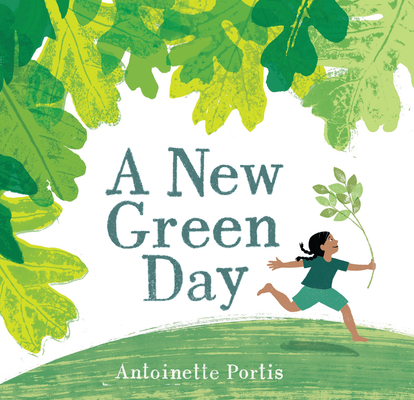
A New Green Day by Antoinette Portis

A New Green Day by Antoinette Portis

A New Green Day by Antoinette Portis (9780823444885)

Welcome to your new day. The sun invites you to play when you wake up, creating a square on your pillow. Creatures are up and moving, snails scribbling across the sidewalk, inchworms measuring out their paths, and tadpoles punctuating the streams. There are things to find: leaves with paths imprinted on them, pebbles smoothed by the water. Then a storm arrives with lightning and thunder, rain pounding down. Mud is created to wriggle your toes in. Long shadows capture the approaching evening until night falls with a sky of stars and the voice of a cricket thrumming you to sleep.

Portis creates quite an invitation to head outside and experience nature with all of your senses from touching stones and leaves to feeling the rain to hearing the thunder and seeing the stars. It is all an immersive experience for the reader. Portis’ text is deceptively short and simple. Yet within each four-line verse she creates almost haiku moments of discovery.

The art was done in brush and sumi ink, leaf prints, and vine charcoal with the lettering done by hand. The illustrations are large and bold, offering a book that will work well shared with a group. They have a wonderful natural feel to them, tactile and warm.

Ideal for a summer day. Appropriate for ages 2-4.

Reviewed from e-galley provided by Neal Porter Books.

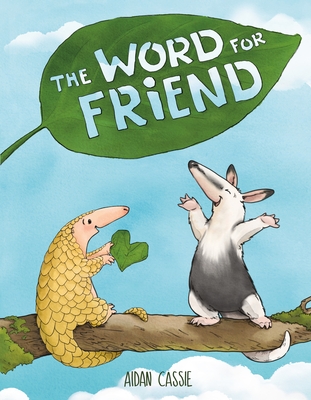
The Word for Friend by Aidan Cassie

The Word for Friend by Aidan Cassie

The Word for Friend by Aidan Cassie (9780374310462)

Kemala, the pangolin, loved everything that was new and different when they moved. There were new foods, new smells, new clothing to admire. But there was also a new language to learn. When Kemala headed to school, she realized that no one could understand her. So she curled into a ball in dismay. She stayed that way until recess, when she climbed high in a tree to get away from everyone. She sat on a branch cutting animals out of leaves, until Ana found her there. Kemala showed Ana how to cut leaves too, and Ana loved it even though she made a big mess. While Kemala didn’t want to go back to school at all, she steadily found herself learning a new language with Ana’s help, particularly through animals they cut out. Until finally, Kemala is brave enough to try talking to the entire class.

Cassie has written a universal book about friendship, belonging and learning a new language. She wisely chose Esperanto as Kemala’s new language in the book. Esperanto is not associated with a specific country, so Kemala could be moving anywhere in the world. Cassie gives the entire story room to breathe a bit, offering time for Kemala to relax and start to learn in a very believable way. The connection with one specific kind friend is also great to see, as well as a tactile way for them to connect with one another without speaking at first.

The art is welcoming and friendly with all sorts of unusual animals in the class that Kemala joins. The choice of pangolin as a main character works particularly well, both her connection with her mother but also when she gets overwhelmed, the ability to just curl up protectively.

A great book to talk about language learners and welcoming new students to school. Appropriate for ages 4-6.

Reviewed from e-galley provided by Macmillan Children’s Publishing Group.