A Girl Like Me by Angela Johnson

A Girl Like Me by Angela Johnson

A Girl Like Me by Angela Johnson, illustrated by Nina Crews (9781541557772)

A group of girls share their dreams with the reader in this picture book. Sometimes when girls dream big, people say that they shouldn’t be doing that. Girls shouldn’t be flying, they shouldn’t walk tall, and they need to stay out of the water. They should just be like everyone else. But instead of listening to the critics, in this picture book they embrace wearing costumes and head to the beach together where they created something even better than their dreams. The book ends with each of the girls in the photographs sharing a bit about themselves and their personal dreams for their futures.

Told in very simple lines, this picture book talks frankly about the limitations placed on girls in our society and the pressures they feel to conform. This book does a great job countering those messages, showing girls who stretch the limits as happy, confident and part of a larger group. Crews has illustrated the book in her signature photograph collages. They depict a diverse group of girls who stand together and create their own community for change and dreams. 

Dynamic and inclusive, this book offers inspiration for girls to just be themselves. Appropriate for ages 3-5.

Reviewed from e-galley provided by Millbrook Press.
15 New Picture Books to Wake Your Brain Cells in March

Here are 15 new picture books releasing this month that have lots of buzz with starred reviews or large print runs!

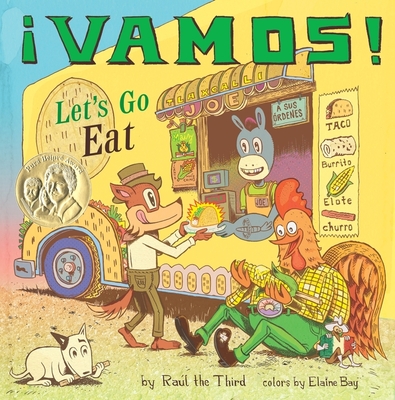
Vamos! Let’s Go Eat! by Raul the Third

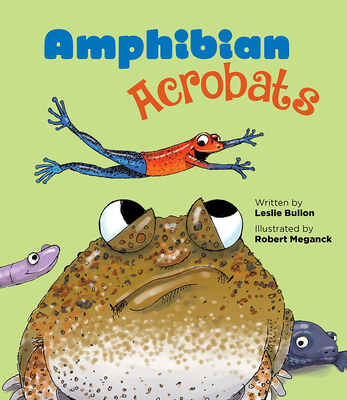
Amphibian Acrobats by Leslie Bulion, illustrated by Robert Meganck

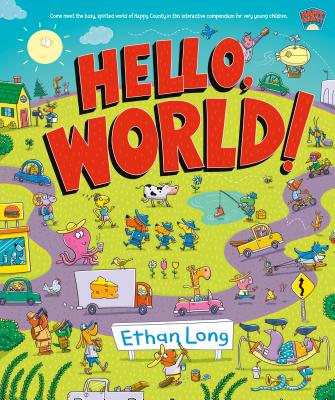
Hello World! by Ethan Long

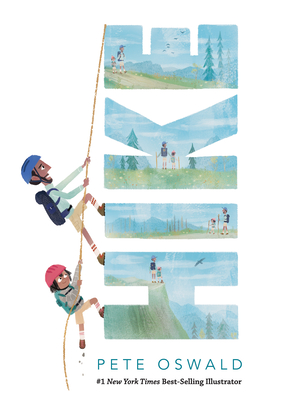
Hike by Pete Oswald

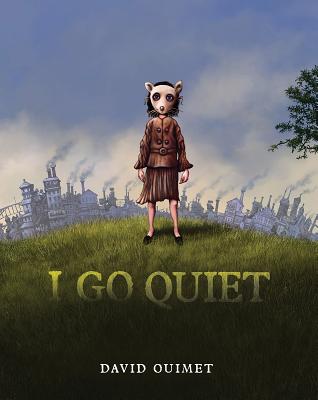
I Go Quiet by David Ouimet

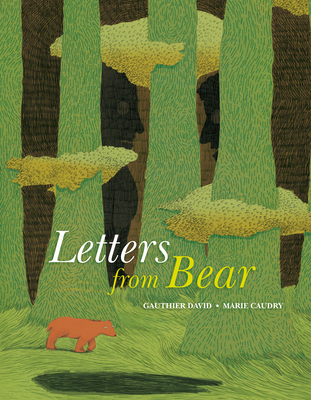
Letters from Bear by Gauthier David, illustrated by Marie Caudry

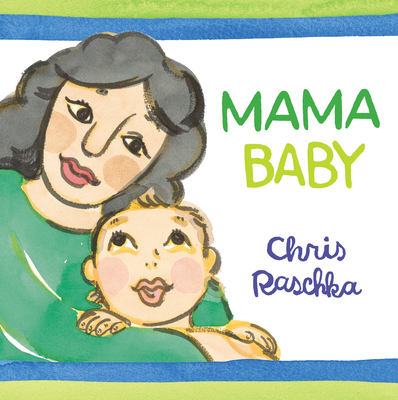
Mama Baby by Chris Raschka

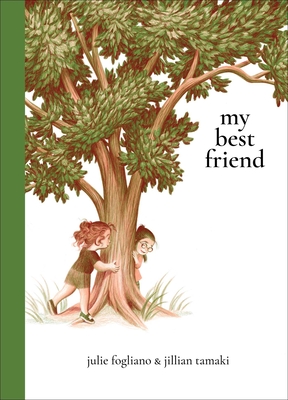
My Best Friend by Julie Fogliano, illustrated by Jillian Tamaki

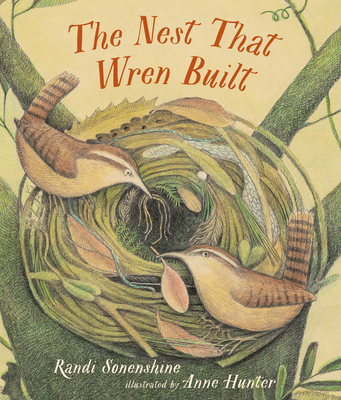
The Nest that Wren Built by Randi Sonenshine, illustrated by Anne Hunter

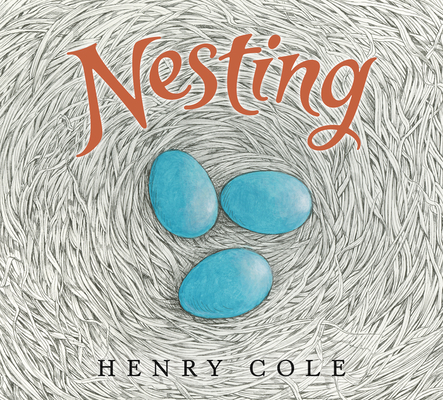
Nesting by Henry Cole

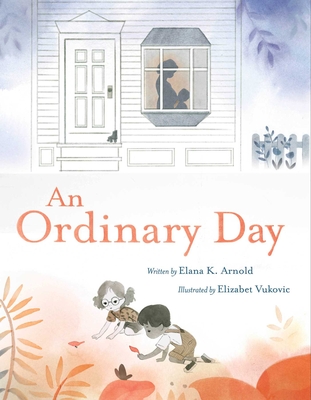
An Ordinary Day by Elana K. Arnold, illustrated by Elizabet Vukovic

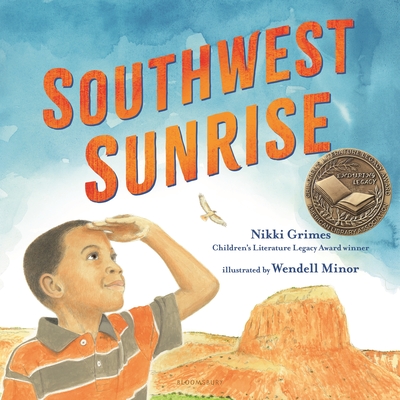
Southwest Sunrise by Nikki Grimes, illustrated by Wendell Minor

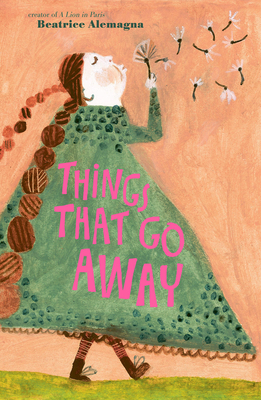
Things That Go Away by Beatrice Alemagna

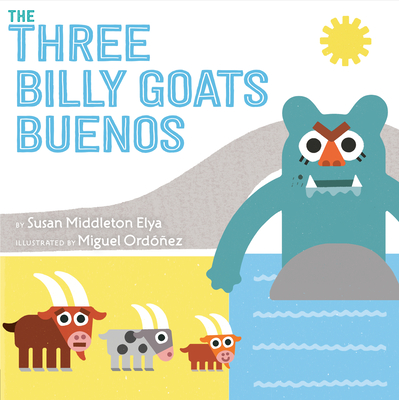
The Three Billy Goats Buenos by Susan Middleton Elya, illustrated by Miguel Ordóñez

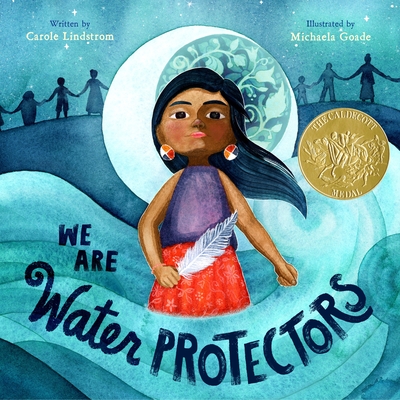
We Are Water Protectors by Carole Lindstrom, illustrated by Michaela Goade

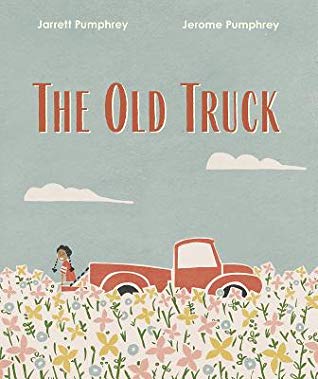
The Old Truck by Jarrett and Jerome Pumphrey

The Old Truck by Jarrett and Jerome Pumphrey

The Old Truck by Jarrett and Jerome Pumphrey (9781324005193)

This picture book celebrates the hard work on a farm, whether you are a human or a truck. The old truck worked hard on the farm hauling things. But it grew tired and unable to be fixed. So it rested near the barn, dreaming of being a boat, a blimp or even a space rover. It got older and older sitting there, weeds growing up around it. Until a new farmer, who had grown up on the farm, decided to try again to fix it. It took a lot of determination and trying, just like farming, but the old truck eventually came to life again, woke up and started working. 

Told in the simplest of phrases, this picture book is really about the illustrations. Done with over 250 handcrafted stamps, the illustrations have a wonderful retro look with modern colors. They show an African-American family on a small family farm, working hard. The little girl goes from being born all the way through to owning the farm herself and having a child of her own. The time process is slow and steady, marked by the growing of the weeds as well. 

Delightfully modern and retro, this picture book is very special. Appropriate for ages 2-4.

Reviewed from library copy.

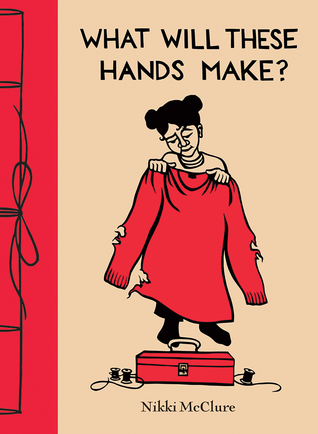
What Will These Hands Make? By Nikki McClure

What Will These Hands Make by Nikki McClure

What Will These Hands Make? By Nikki McClure (9781419725760)

A grandmother’s special birthday party brings together an entire community in this picture book. Celebrating what can be done with one’s hands and created for another person, this book looks at the power of using hands for kindness and creativity. An old sweater is made into a fish-shaped pillow, hands make the six-tier birthday cake, a blanket is woven, a wooden box whittled, bread is baked, and children are cared for. The party is prepared for by the family and community, the event is held, and the book closes with the quiet afterwards. 

McClure excels in all of her books in making small moments meaningful and impactful. Here, she does exactly that with making things with one’s hands. In her note at the end, she points out that the art for her books is done entirely by hand by cutting paper with an exacto knife. Her poetic text invites readers to think about all the ways they can use their hands to create something too. Her art is as lovely as always, remarkable in that it is cut paper creating the faces of characters and their world. She uses selective colors to create special moments like the grandmother’s white hair, the red sweater, and the deep browns of wood. The entire book is done on darker paper that evokes brown paper bags and wholegrain bread. 

Another delight of a book from a master artist. Appropriate for ages 3-5.

Reviewed from copy provided by Abrams Books for Young Readers.

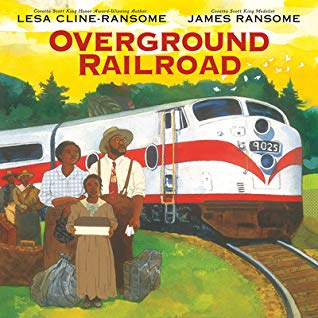
Overground Railroad by Lesa Cline-Ransome

Overground Railroad by Lesa Cline-Ransome

Overground Railroad by Lesa Cline-Ransome, illustrated by James Ransome (9780823438730)

Ruth Ellen and her family left the South to head north to New York. Some African-Americans made the trip on foot, some drove but Ruth Ellen and her family took the train. They got the last seats in the colored car, and settled in for the long journey. They left secretly, not telling her father’s boss or their landlord that they were leaving. More and more people filled the colored train car as they traveled northward, many of them left standing because all the seats were taken. Ruth read to her mother from the book her teacher had given her about Frederick Douglass. As they got to Maryland, the separation of white and colored was removed, and Ruth and her family moved to get seats in less crowded parts of the train. Some white people didn’t want them sitting near them, but others were friendly. Their trip continued all the way to New York City where they would make their new future. 

Told in the voice of Ruth Ellen, this picture book is a very personal look at the deep changes in the South after slavery that created the opportunity for the Great Migration to the north. On these pages is a clear optimism about their future, their new opportunities coming to fruition. The book is focused specifically on the travel north, beautifully weaving in elements from Frederick Douglass’ experience as he journeyed north fleeing slavery. 

The illustrations are done in paper, graphie, paste pencils and watercolors. Ransome has created illustrations that are richly colored, show the poverty of the south, but also capture the rush of the train towards the north and opportunity.

This historical picture book shows a moment of deep change in America. Appropriate for ages 6-9.

Reviewed from ARC provided by Holiday House.

The Imaginaries by Emily Winfield Martin

The Imaginaries by Emily Winfield Martin

The Imaginaries by Emily Winfield Martin (9780375974328)

Told in fragments of stories with stirring paintings to accompany them, this book is like a series of gems on a necklace, each discrete and beautiful. Just like the necklace, they also work together side-by-side to create something larger than themselves. There are glimpses of large sea creatures. A girl journeys in the forest, but she is not alone. Cats and birds, flowers and lions appear on the pages. There are masks to conceal and masks to reveal. There are bats that soar and an alligator to ride. 

Each image is paired with writing on a literal scrap of paper. Torn from envelopes, carefully folden, sometimes corrected, on the backs of postcards, each one is different and fascinating. Take those lines from untold stories and pair them with images that create something incredibly moving, bright glimpses into one story and then the next. These are tales you long to be completed, where girls perch on the moon and libraries are filled with music and animals. It is to Martin’s credit that they feel like a whole piece rather than transient images and words set side-by-side. They form a universe of stories to linger in. 

The illustrations are whimsical and beautiful. The effect is rather like looking into a series of windows and being able to linger with a story for just a moment before moving on. There are repeating themes of companionship, concealment and surprise on the pages, each captured in a painting that is lush and carefully done.

A very unusual book and one that is at times almost surreal, this is one to celebrate. Appropriate for ages 5-7.

Reviewed from e-galley provided by Random House.

Review: Beehive by Jorey Hurley

Beehive by Jorey Hurley

Beehive by Jorey Hurley (9781481470032)

This simple picture book focuses on bees and beehives. The book follows bees that explore the area, find a hollow tree just right for a new hive, and build there. They lay eggs and then care for and feed the immature bees. They sometimes need to defend the hive from predators too. When the new generation of bees emerges, they go right to work too, continuing to care for and build up the hive.

Told in single words, the story really plays out in the illustrations which are done in Hurley’s distinctive style. Her simple text is just right for very small children learning about bees and the environment. Hurley’s author note cleverly uses the single words within the book as a structure for more information on bees as well as a comment about the recent decline in bee populations. The digital art is strong and has large shapes that will work very well with a group of preschoolers.

Buzzy and busy, this book is a glimpse into the life of bees. Appropriate for ages 2-4.

Reviewed from ARC provided by Simon & Schuster.

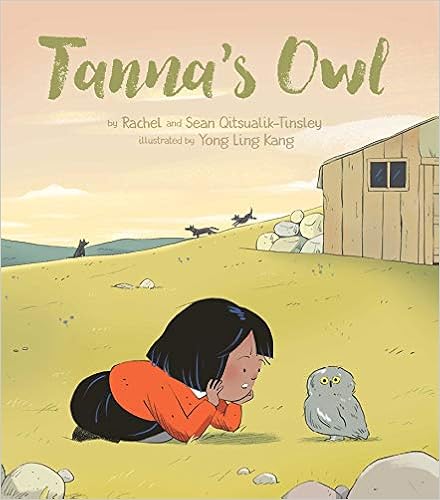
Review: Tanna’s Owl by Rachel and Sean Qitsualik-Tinsley

Tanna’s Owl by Rachel and Sean Qitsualik-Tinsley, illustrated by Yong Ling Kang (9781772272505)

Based on the story of the owl one of the author’s cared for as a child, this picture book offers a glimpse of life in the Arctic as an Inuit family. Tanna’s father came back from hunting with a baby owl. It was so ugly, it was somehow also cute. The owl had to be fed two or three times a day, so Tanna and her siblings caught lemmings to feed it. The owl, named Ukpik (or owl in Inuktut), lived in her father’s workshop. When the owl was hungry she would stomp her feet, sway back and forth, and chomp her beak. Soon Ukpik wanted even more to eat and everyone was tired of catching lemmings, so they started to feed her other types of meat, including caribou and fish. Her beak was very sharp, so now she had to be fed with gloves on. When summer ended, Tanna had to return to school in another community. She didn’t return home until the next summer. That’s when she found out that Ukpik had been set free. But maybe the large white owl that she saw around their home was Ukpik coming back to visit.

The authors clearly share both sides of caring for a wild animal. There is the initial joy of learning about the animal and starting to be able to understand their needs and ways of communication. Then there is the drudgery of the ongoing care. At the same time, there is a delight in being that close to a wild creature, of knowing it needs to learn to fly away someday, and knowing you are helping in some way. The book also shows modern Inuit life complete with an unusual way of attending school. 

The art is large and bold with the images fully filling both of the pages. Readers will get to see the transformation of the owl from small and gray to a graceful white bird. They will also get glimpses of the Inuit home and the wide-open setting of the Arctic.

An inspiring picture book for kids who dream of caring for wild animals themselves. Appropriate for ages 4-6.

Reviewed from e-galley provided by Inhabit Media.

Review: A Ride to Remember by Sharon Langley

A Ride to Remember by Sharon Langley

A Ride to Remember by Sharon Langley and Amy Nathan, illustrated by Floyd Cooper (9781419736858)

Back in the 1960’s, African-Americans were not allowed to enter the Gwynn Oak Amusement Park in Baltimore. They were not allowed to sit on the grass, share treats or ride on the carousel. As the world around them began to change and become less segregated, Gwynn Oak continued its policies. They became the center of protests where hundreds were arrested. A mother and child who were African American and light skinned covertly entered the park and were allowed to enjoy themselves for hours. They shared their story with the press. As the pressure built, the park’s owners agreed to allow everyone into the park and to drop any charges from the protests. The first day the park was open was August 28, 1963. That day, a little girl named Sharon Langley, was the first African-American to ride the carousel with her father holding onto her. A photo of the ride made the papers as did the other major news story of the day, when Martin Luther King, Jr. made his iconic “I Have a Dream” speech. The carousel was moved to Washington, D. C. where Sharon took a ride on the fiftieth anniversary of her first ride in Baltimore.

The authors make a point of framing the tumultuous 1960’s for young readers. They have a child ask questions about why African-Americans were not allowed to enter the park. This is such an important moment in the book, giving modern children a lens into the inherent societal racism of the time, racism that is not erased in our modern society either, of course. They then turn to the protests about the park, showing the bravery of the people who protested, who went to jail, and who insisted on staying overnight to make a point. The body of the book does a great job offering historical perspective as well as details about the protests and efforts to desegregate the park. More information is also shared in the final pages, including more details of the events in the book, a bibliography and a timeline.

Cooper’s art is done with a lush softness to the lines. He used oil erasure on illustration board to capture an almost sepia-toned historical feel. The faces he shows of the people involved are tremendously moving, showing that this was about people insisting on change.

In a single story, children will deeply understand what the civil rights struggle was about. Appropriate for ages 5-9.

Reviewed from copy provided by Abrams.