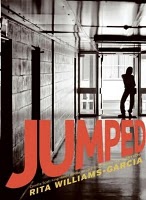
The Read In


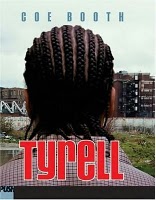
Doret of theHappyNappyBookseller and Ari of Reading in Color have put together an online Read In that celebrates African American authors.  The first step is to choose from 6 YA titles by African-American authors about African-American teens.  So head to Reading in Color to place your vote for the book you want to discuss and help pick a date for the Read In. 

I have a couple of favorites on the list, which made it difficult to choose.  Votes must be in by this Friday.  (Go Yummy!)

Books in the Home Make a Difference

I know that all of us who work in education and libraries know that access to books for children make a very big difference.  A new study from Nevada University supports what we already know.

It turns out that having as few as 20 books in the home for children can have a significant impact on their education.  The researchers studied more than 70,000 people from 27 countries to get their results.  The results affect all families irrespective of parental occupation or social class.  Here are some quotes from the article in the Telegraph:

It found that being raised in a household with a 500-book library would result in a child remaining in education for an average of three years longer than those with little access to literature.

The advantage to a child was just as great as being raised by university educated parents, as opposed to those with relatively poor schooling, the study found.

The study suggested that the impact was down to the “scholarly culture” of individual households.

Now, let’s see what type of impact access to a great school and public library will have on children!

Katherine Paterson on Books and Technology

Apple's iPad is no book-killer- Author says technology is a threat to reading we can overcome_1265055768920

As a librarian, we are hearing lots of people shouting that with the Kindle and now the iPad publishing and libraries are dead.  So it is wonderful and warming to read Katherine Paterson’s response to the iPad being called a “book-killer.” 

I’m storing this one away for those cloudy, bleak days when I tire of arguing that libraries and books will live on.  I consider it a battery charger for advocates.

Put It Down and Walk Away

I was captivated by Suzanne Munshower’s piece on half-read books in The Guardian.  I am a reader who is always stopping in the middle of a book, or just after starting it.  I am brutal.  If the book isn’t delighting me, intriguing me, or just interesting me, I simply don’t have the patience to wade through it.

Luckily for me, I review children’s and YA books, so a certain amount of interest at the start is necessary to get young readers to keep going.  But that is just my handy-dandy excuse.  I was equally brutal before becoming a reviewer and when I read mostly adult books.  It also doesn’t have to do with length for me.  I set down picture books that are 30 pages long if they are not doing it for me.  Opinionated, aren’t I?  😉

So how do you read?  Are you as snotty and brutal as I am?  Or are you one of those nice people who finish every book you read? 

I knew one person like that.  She insisted that so many books become worthwhile in their later stages that it was worth it.  She’s probably right, but I’m just not that type of reader. 

How do you read?

ScrollMotion Gets Juvenile

ScrollMotion will be launching an e-book reader for the iPhone that is specifically targeted to children and teens.  The company has already been successful in the adult market.  Readers can look forward to Beverly Cleary, Stephanie Meyer, Christopher Paolini and Neil Gaiman among others.

I’ve been watching for an app like this, since the Kindle does not do colored pictures and often fails at providing images and words in the right combinations on a page.  We will see what happens.  Reading to children will continue to be done with books for a good long time. 

Of course, I am completely biased towards the physical book.  I do wonder how it can possibly be good for children’s reading to force individuals to purchase all the books their children read.  I know families who literally read hundreds of picture books a month.  How can those super-reading families ever afford to support that reading habit? 

I also worry about families who do not have iPhones or other advanced phones or even computers in their homes.  Where does our swiftly moving to Kindles and e-books leave them?  Don’t we as parents and librarians need to make sure that everyone is reading?  I refuse to give up on that part of my passion for books, that they are an equalizer, a force for community, and a pleasurable way to learn.

Via PW
Getting Children to Read

The Telegraph has a great article about what schools need to do to inspire a love of reading in children. 

"This is my reading group," one of the teachers proudly explained to Rosen. After two prodigiously active years promoting a love of books, in schools and out, Rosen’s antennae are well tuned to a telling trend. "Wonderful," he thought. "But what are the others doing?"

"Between the ages of four and nine," he says, "reading books is regarded as optional. Some schools take it seriously, but others say there is no time and fall back on worksheets which are torn-up extracts of books. It is really dangerous. Children don’t even read the whole chapter. The idea of engaging with what happens, with the thoughts and feelings of a story, has disappeared.

"It is not built into most schools’ ethos. If we want children to have access to complex ideas then the most fruitful way is the reading of whole books."

I agree with this.  But don’t we also need to tell parents that it is their job to raise readers?  And how about librarians?  Isn’t it our job too to try to entice, entertain and encourage young readers?  I don’t think it’s a simple answer of if only teachers would do more.  I think it is a complicated formula of parents, teachers, librarians and great books that make the difference.

How about you?  What’s your reaction?

Books are Key

Professor Maria Nikolajeva gave a lecture at Cambridge University about the importance of children’s books.  She is featured in two online articles that pull from that speech. 

One Press Association article focuses on books being important for child development. 

The creative employment of language in children’s books give the child the power of expression…  By challenging the arbitrary rules of language, especially written language, children learnt to be critically thinking individuals.

I’d take that one step further and say that books also lead to connections between diverse people and a level of understanding simply from seeing the world through someone else’s eyes.

A Telegraph article focuses on the professor’s appreciation of puns, nonsense and made-up words. 

A lot of people presume that writing children’s literature is relatively simple, but in fact it demands great sophistication.

She uses many books to make her case, including Winnie-the-Pooh and its Heffalumps, Harry Potter and the magical language, Dr. Seuss, and Alice’s Adventures in Wonderland.