Christmas in Children’s Books–A Quiz!


The Guardian has a quiz about Christmas in children’s books!  The answers for some are easy, others had me pondering, and still others were utter guesses. 

I managed a 9 out of 10, though I’m not sure how.  My guesses must have paid off!

How will you do?

Spineless Classics–Art for Readers

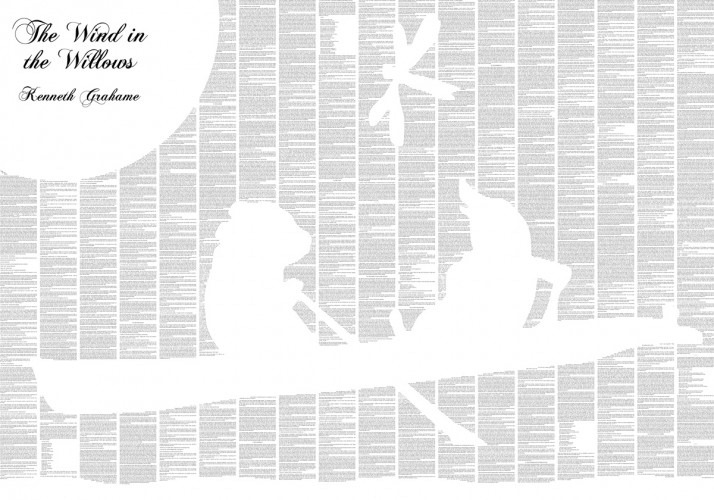
Spineless Classics is a company that creates posters out of the entire full text of a work.  Then a silhouette from the book is placed so that the words wrap around it.  The text is in 4 point font, tiny but legible.  For me, it is the beauty of the words and the silhouette that make me covet these.

Here is my favorite, The Wind in the Willows, but many others are lovely too:

The-Wind-in-the-Willows-_187260_h500

How Child Abuse Changes the Brain

wired science

Wired has a fascinating and haunting article on what happens to children’s brains when they are raised in violent households.  Their brains respond more like soldiers’ brains who have been exposed to warfare. 

In a study done by psychologist Eamon McCrory of University College London, 43 children who had been abused had their brains imaged by fMRI.  Their results were compared to 23 non-abused children who otherwise were comparable demographically.  The children were shown images of sad and angry faces and their brain reactions were observed. 

The children who were abused had a distinctive pattern of reaction to angry faces in the parts of the brain that process threat and pain. 

The hope is that these findings will help develop more effective treatments for the depression, aggression, and anxiety that plague those who have been abused. 

You may also want to read the Wired article on how poverty affects the brains of children.

Teen Brains–Not a New Zombie Novel

National Geographic has a cover story this month all about the process that teen brains undergo to move from a child’s brain to an adult’s.  The science is fascinating, including the tests that have been done to demonstrate the changes the teen brain undergoes.  Anyone working with teens, and especially those of us living with teens, should take a look at this. 

On their website, you can also see a photo gallery, take a quiz about your risk tolerance, and also a video about viewing teens positively.

Thanks to Free Technology for Teachers for the link.

So Many Computers in Libraries…Was a Mistake

librarycomputers

http://www.flickr.com/photos/librarycommission/5041211887/

The new Children’s Laureate in the UK, Julia Donaldson, has expressed concerns about the number of computers in public libraries. 

“I thought it was a shame when so many computers were brought into libraries – adults using them for playing card games, teenagers looking at [questionable] websites, I thought that was a mistake,” she told The Herald.

“At the time [as computers were being installed] I said we needed to have more children’s writing specialists.

“I might get into hot water by saying this, but I would love to see more [investment] going into stocking children’s titles, even at the expense of adult sections. But part of my job is to create a stink.”

Sigh. 

I do hope that eventually people understand that libraries are about far more than books.  Yes, books are important, vital to our world and communities, but to disparage the offering of computers by public libraries is not helpful.  We get people into our libraries because we offer computers, because we offer open access to information whatever format it may appear in.  We are working hard to get digital books into libraries in a way our patrons will respond to.  In this day to equate books with reading and computers with playing games is simply wrong.

I also sigh over her willingness to improve children’s collections in libraries at the expense of adult collections.  While that may be her focus as Children’s Laureate, I think it’s another naïve and damaging statement to make about libraries.  Libraries definitely focus on children’s services.  Right now, I am typing this down the hall from a children’s performer singing lively songs to an enormous group of preschoolers.  I see the need for strong children’s collections, and deep knowledge of reading and books among library staff, but let’s not pit adult reading vs. children’s reading.  Both are great!

So that’s my opinion as a public library administrator.  What about you?  Do you think there are too many computers in libraries?  Should we be funding children’s collections at the expense of adult? 

Gender Bias in Children’s Books

I don’t think that any children’s librarian is going to be surprised by the findings of a recent study of children’s books.  The most comprehensive study of 20th century children’s literature ever done, it revealed a bias towards books that feature boys and men.  Intriguingly, the bias was also present when the characters are animals.

Now, if you has asked me if more books featured boys or girls, I would have automatically answered boys.  I am surprised by the extent of the bias as well as the fact that it had not gotten any better towards the end of the 20th century.  In other words, we aren’t making much progress with gender in children’s books!

Science Daily has some bulleted points in their article about the study that I find particularly interesting:

  • Males are central characters in 57 percent of children’s books published per year, while only 31 percent have female central characters.
  • On average, 36.5 percent of books in each year studied include a male in the title, compared to 17.5 percent that include a female.

While I find the information interesting and important, even more important to me is what we do about it.  It seems to me that it is the same issue we have with all sorts of diversity in children’s books:  races, colors, sexual orientation.  So the question is universal about featuring children and adults in children’s books that speak to all levels of diversity.

What do we do as librarians who are cultivating collections for children? What do we do as book creators to get more girls and even women into our books?  How do we all take responsibility for what children in our world are reading and therefore learning about how society works?

Big thanks to Hedgehog Librarian for the link.

2010 America’s Most Challenged Books

ALA has announced the most challenged books of last year.  Interestingly, the ones I have read are favorites of mine.  I’m considering using the list as a recommended book list for my future reading.  Here are the books:

1. And Tango Makes Three by Peter Parnell and Justin Richardson

  • Reasons: Homosexuality, Religious Viewpoint, Unsuited to Age Group

2. The Absolutely True Diary of a Part-Time Indian by Sherman Alexie

  • Reasons: Offensive language, Racism, Sex Education, Sexually Explicit, Unsuited to Age Group, Violence

3. Brave New World by Aldous Huxley

  • Reasons: Insensitivity, Offensive Language, Racism, Sexually Explicit

4. Crank by Ellen Hopkins

  • Reasons: Drugs, Offensive Language, Sexually Explicit

5. The Hunger Games by Suzanne Collins

  • Reasons: Sexually Explicit, Unsuited to Age Group, Violence

6. Lush by Natasha Friend

  • Reasons: Drugs, Offensive Language, Sexually Explicit, Unsuited to Age Group

7. What My Mother Doesn’t Know by Sonya Sones

  • Reasons: Sexism, Sexually Explicit, Unsuited to Age Group

8. Nickel and Dimed: On (Not) Getting By in America by Barbara Ehrenreich

  • Reasons: Drugs, Inaccurate, Offensive Language, Political Viewpoint, Religious Viewpoint

9. Revolutionary Voices edited by Amy Sonnie

  • Reasons: Homosexuality, Sexually Explicit

10. Twilight by Stephanie Meyer

  • Reasons: Religious Viewpoint, Violence

Glorious Golden Book Gown

Designer Ryan Novelline has created a spectacular gown out of Golden Books.  You can visit the website for more photos of the gown as well as a look at the process that made it possible.

Via The Centered Librarian

Literacyhead Features Leo Lionni

Literacyhead, a biweekly online magazine, has just published an issue that is an author study of Leo Lionni.  They received permission to use over 60 of Lionni’s images on their site, making it a feast of Lionni goodness.  Each issue of their magazine offers a writing lesson and a read-aloud lesson that incorporate the visual arts.

The Leo Lionni issue will be available for free until October 5th.  Every current issue is available for free.  If you are interested in accessing back issues, you will need a membership.

The magazine is put together very nicely with a friendly interface, plenty of great graphics, and a real ease of use. 

Make sure you take a look at the Coaching Matters section where I hope you will be as delighted as I was to get a glimpse of Lionni’s baskets of mouse parts.