This Week’s Tweets and Pins

Here are the links I shared on my Twitter and Pinterest accounts that you might find interesting:

10 books to help boost young boys’ reading | The Guardian http://j.mp/xMmRR9 #kidlit #yalit

EarlyWord » BEAUTIFUL CREATURES Moves Closer to Screen http://j.mp/xup7He

Flavorwire » 10 Great Science Fiction Books for Girls (Frankly, great for everyone!) http://j.mp/wYNLEM

The Hunger Games: The new teen franchise with Twilight in its sights – The Independent http://j.mp/y5ZQYO

Rebecca Stead and Patricia Reilly Giff at the Voracious Reader: How Do You Get Kids to Read in a World of iDistraction…http://j.mp/A3eJce

Royal Mail Releases ‘Roald Dahl’ Stamps – Love it! http://j.mp/xEH4xm

Second Hunger Games Trailer! Enjoy! http://youtu.be/qoUT7q2iTbQ

This Week’s Tweets and Pins

Here are the links I shared on my Twitter and Pinterest accounts that you might find interesting:

Children’s books increasingly emphasize visual art http://j.mp/x9BrTa

Daniel Handler, aka Lemony Snicket, and "Why We Broke Up" | Artery http://j.mp/zn5Vyn

Harry Potter’s iPhone screen:

Hear an excerpt from Odyssey Award winner ROTTERS http://teachingbooks.net/ql4krcv #alayma #alamw12

Here is the petition for school libraries: http://bit.ly/zCjFU5 #alayma

Hobbies boost children’s academic skills – RTÉ News http://j.mp/w2RpIn

How to choose the best books for kids and teens – On Parenting – The Washington Post http://j.mp/xRwRx5

Hugo gets the most Oscar nominations in 2012. Why? – http://CSMonitor.com http://j.mp/vZUUVq

Interview: John Green http://j.mp/xku3ay

Is ‘The Hunger Games’ Building Too Much Buzz For Its Own Good? : Monkey See : NPR http://j.mp/xkMi1A

Just subscribed to the RSS feed of The Journal of Research on Libraries and Young Adults http://j.mp/yM8nCB

squeetus blog: the mighty librarian http://j.mp/w9x48F

Take Your Child to the Library Day Launches on February 4th! http://j.mp/wrK1ad

TED Blog | Harnessing the power of reading: Q&A with illustrator Elizabeth Zunon http://j.mp/zV8WfA

Trending in Youth Culture: The Best Blogs and Sites for Youth Advocates | VOYA http://j.mp/zFQCjx

YA market ripe for digital, say publishers | The Bookseller http://j.mp/zqctzn

The Last Week in Tweets and Pins

Here are the links I shared on my Twitter and Pinterest accounts that you might find interesting:

A 2012 Preview in Picture Books | Kirkus Book Reviews http://j.mp/wJJ9FX It looks like a great year ahead!

Ask Lorna: books to get 10- to 12-year-old boys reading – Telegraphhttp://j.mp/AhvroS

Best interactive iPad books of 2011 for kids of all ages – iPhone app recommendations – Lisa Caplan | Appolicious ™ iP… http://j.mp/wP1xHm

British PM: "I think that however busy you are in life, you should always try to read to your children."http://j.mp/xjEx8M

More proof that librarians rock! Beloved children’s books preserved thanks to retiring U librarian Karen Nelson Hoylehttp://j.mp/yswwui

Pinned this image of E.B. White writing in his boathouse:

Q&A: Shirley Hughes, children’s author and illustrator | The Guardian http://j.mp/ybpwyJ

YA novel readers clash with publishing establishment | Books |http://guardian.co.uk http://j.mp/xS41kn

The Week in Tweets and Pins

Here are some items of interest that I shared on my Twitter account and my Pinterest page that didn’t make it onto my blog:

The Many Benefits, for Kids, of Playing Video Games | Psychology Todayhttp://j.mp/xTTa4H – Considering lifting our screen limits at home.

The authors who are going it alone online – and winning http://j.mp/znB0H0  – Are other bloggers looking to change their reviewing policies?

‘Impossible love stories’ are teen favorites – Mat-Su Valley Frontiersman Schools http://j.mp/wcsBow

Choosing Just-Right Books for Your Childhttp://j.mp/xHmsZt

Parental supervision not required: the freedom of classic children’s fiction | Books | http://guardian.co.ukhttp://j.mp/Ab4U2w

Check this video out — The Joy of Bookshttp://www.youtube.com/watch?v=SKVcQnyEIT8&feature=share via@youtube

Labyrinth gets graphic novel prequel | Books | http://guardian.co.ukhttp://j.mp/ykDgkf

Children’s Book Week 2012 Bookmark by Lane Smith! http://s.smf.is/pXd (via@summify from @MrSchuReads, and@CBCBook)

And I’ll end with a very funny book bag:

Christmas in Children’s Books–A Quiz!


The Guardian has a quiz about Christmas in children’s books!  The answers for some are easy, others had me pondering, and still others were utter guesses. 

I managed a 9 out of 10, though I’m not sure how.  My guesses must have paid off!

How will you do?

Spineless Classics–Art for Readers

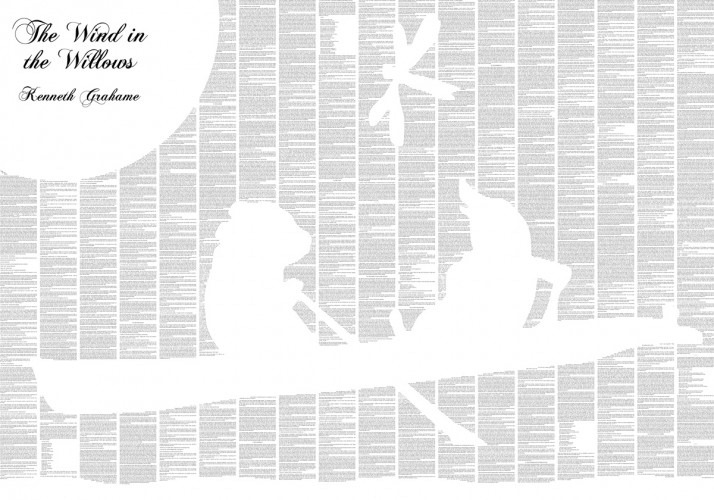
Spineless Classics is a company that creates posters out of the entire full text of a work.  Then a silhouette from the book is placed so that the words wrap around it.  The text is in 4 point font, tiny but legible.  For me, it is the beauty of the words and the silhouette that make me covet these.

Here is my favorite, The Wind in the Willows, but many others are lovely too:

The-Wind-in-the-Willows-_187260_h500

How Child Abuse Changes the Brain

wired science

Wired has a fascinating and haunting article on what happens to children’s brains when they are raised in violent households.  Their brains respond more like soldiers’ brains who have been exposed to warfare. 

In a study done by psychologist Eamon McCrory of University College London, 43 children who had been abused had their brains imaged by fMRI.  Their results were compared to 23 non-abused children who otherwise were comparable demographically.  The children were shown images of sad and angry faces and their brain reactions were observed. 

The children who were abused had a distinctive pattern of reaction to angry faces in the parts of the brain that process threat and pain. 

The hope is that these findings will help develop more effective treatments for the depression, aggression, and anxiety that plague those who have been abused. 

You may also want to read the Wired article on how poverty affects the brains of children.

Teen Brains–Not a New Zombie Novel

National Geographic has a cover story this month all about the process that teen brains undergo to move from a child’s brain to an adult’s.  The science is fascinating, including the tests that have been done to demonstrate the changes the teen brain undergoes.  Anyone working with teens, and especially those of us living with teens, should take a look at this. 

On their website, you can also see a photo gallery, take a quiz about your risk tolerance, and also a video about viewing teens positively.

Thanks to Free Technology for Teachers for the link.

So Many Computers in Libraries…Was a Mistake

librarycomputers

http://www.flickr.com/photos/librarycommission/5041211887/

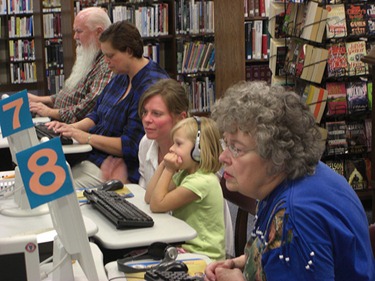
The new Children’s Laureate in the UK, Julia Donaldson, has expressed concerns about the number of computers in public libraries. 

“I thought it was a shame when so many computers were brought into libraries – adults using them for playing card games, teenagers looking at [questionable] websites, I thought that was a mistake,” she told The Herald.

“At the time [as computers were being installed] I said we needed to have more children’s writing specialists.

“I might get into hot water by saying this, but I would love to see more [investment] going into stocking children’s titles, even at the expense of adult sections. But part of my job is to create a stink.”

Sigh. 

I do hope that eventually people understand that libraries are about far more than books.  Yes, books are important, vital to our world and communities, but to disparage the offering of computers by public libraries is not helpful.  We get people into our libraries because we offer computers, because we offer open access to information whatever format it may appear in.  We are working hard to get digital books into libraries in a way our patrons will respond to.  In this day to equate books with reading and computers with playing games is simply wrong.

I also sigh over her willingness to improve children’s collections in libraries at the expense of adult collections.  While that may be her focus as Children’s Laureate, I think it’s another naïve and damaging statement to make about libraries.  Libraries definitely focus on children’s services.  Right now, I am typing this down the hall from a children’s performer singing lively songs to an enormous group of preschoolers.  I see the need for strong children’s collections, and deep knowledge of reading and books among library staff, but let’s not pit adult reading vs. children’s reading.  Both are great!

So that’s my opinion as a public library administrator.  What about you?  Do you think there are too many computers in libraries?  Should we be funding children’s collections at the expense of adult?