The Black Kids by Christina Hammonds Reed (9781534462724)
Set in Los Angeles in 1982 during the Rodney King riots, this teen novel deals directly with racism and class. Ashley lives in a wealthy part of LA, attends a private school, and has only white friends who she has known since childhood. They spend lots of time around the pool drinking, flirting and planning their prom. As the protests engulf LA though, race becomes a part of everyone’s focus, something that Ashley has tried to ignore, including all the comments one of her friends keeps making. Ashley finds herself becoming closer with LaShawn, a Black kid at school who is a star athlete and whose home is threatened by the protests. He has gotten into Stanford while Ashley has been placed on the waitlist. Ashley makes a comment about his new shoes to her white friends and suddenly becomes a rumor, leading to LaShawn punching another student and potentially losing his place at Stanford. Ashley must figure out how to make things right and also what side she is on.
Reed takes a historical moment in time that continues to resonate today. Remarkably, this is a debut novel. Written with such assurance and clarity, the book allows Ashley to find her own way, something that is often not clear as she continues to make mistakes based on her friends and her class. Reed keeps from becoming didactic at all, instead giving us the perfect character to learn alongside, to hope realizes what is truly happening, and to empathize with and get really angry at.
This book doesn’t duck away from anything. Reed takes on micro and macroaggressions around race and class. She explores how wealth does not protect Black Americans from being targeted, treated differently in our justice system, or stopped by police at gun point. She shows readers this with such power and straightforward honesty that it is impossible to rationalize it away.
Beautifully written, this historical novel is powerful and gripping. Appropriate for ages 14-18.
Reviewed from e-galley provided by Simon & Schuster.
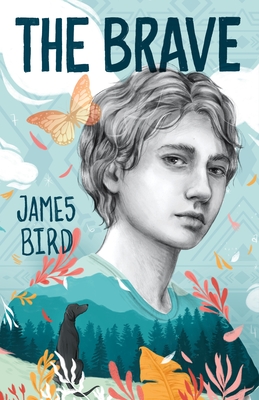
Collin’s compulsive need to count the letters in everything others say to him and say the number aloud makes it far too easy for bullies to target him at school. It also bothers his father. So when Collin is kicked out of another school, his father decides to send him to live with his mother, who he has never met. She is Ojibwe and lives on a reservation in Minnesota. Collin and his dog head across the county where he finds himself accepted and shown real displays of love for the first time in his life. Collin meets Orenda, the girl next door, who believes that she is transforming into a butterfly and works with Collin to find ways to battle his counting of letters. She lives in her treehouse, a space where Collins spends most of his time as he steadily falls in love with Orenda. But she is not sharing her own difficulties openly with Collin, who must figure out how to support her whether he understands or not.
Bird has drawn on his own Ojibwe heritage to write this debut novel. The book is a deep and rich mix of content that includes finding your real home, falling in love for the first time, and handling grief and loss. It is also about dealing with an OCD-like response, handling bullying, and discovering deeply who you really are inside and what you believe in. All of this is enriched by the Ojibwe culture that Collin experiences for the first time, allowing the reader to do the same by his side.
Bird’s writing is clear and strong. This novel creates a space for the character of Collin to really become himself, while experiencing some of the most important experiences in anyone’s life: love, grief and transformation. Collin himself is a marvelous character who is willing to dive right in and learn, open to new experiences and cultures.
This debut novel is full of courage and honesty. Appropriate for ages 11-13.
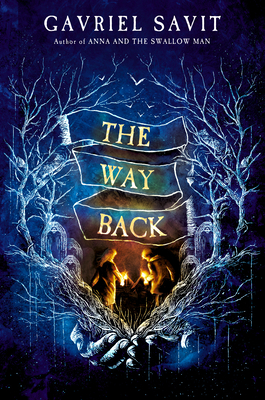
Yehuda and Bluma grew up near one another in the tiny village of Tupik. But their lives could not have been more different. Bluma was the daughter of the town baker, raised with plenty to eat and an ever-warm hearth. Yehuda spent his time figuring out where his next meal was coming from and trying to stay out of fights. The two find themselves transported to the Far Country. Yehuda is on a quest to find his father’s soul, which has been added to a demon’s collection. Bluma found herself in an endless cemetery, quickly scooped up by a female demon and her group of demon cat-women. Bluma has in her possession a very special object, the spoon that Death used to take her grandmother’s soul. Bluma found it after Death left her home. In the Far Country of the demons, there are different rules, pacts that are made and reworked, lies and truths. It is a world that shifts and changes right in front of Bluma and Yehuda who must find their own way through and back home.
So there is no way to actually summarize this book clearly at all. It is a great twisting and writhing story that the reader simply must give themselves up to and enjoy the journey. There are deaths and there is Death. There are demons who all manipulate and scheme, telling partial truths for their own gain. There are fathers who are trying to find sons and then sons trying to find fathers. There are spoons that cut and remove and libraries with endless knowledge and answers.
This book is less about the two main protagonists and more about the world they enter. Based on Jewish mythology and folklore, this world is full of jagged points, dangers and despair. But it is also basked in love, the joy of unexpected kindness, and the discovery of new old friends. It’s complicated and unique, a world that readers will likely never have visited before, and what a treat that is!
A delicious nightmare of a novel, this is one to make room for in your reading pile. Appropriate for ages 13-18.
Reviewed from e-galley provided by Knopf Books for Young Readers.
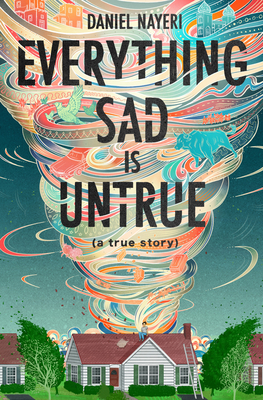
Khosrou answers his teacher’s writing prompts with stories of his extended Persian family. He and his older sister and mother immigrated to Oklahoma, often living in a motel while staying away from his mother’s abusive new husband, who she marries and divorces multiple times. The other kids in his class don’t believe his stories. They are full of blood and poop, told by a boy who doesn’t speak or think like them who is unpopular and hairy and whose lunch smells bad. Khosrou’s stories though reveal where he came from, a home with birds in the walls and a family of huge wealth. They show how his mother and sister found Christianity, putting their lives at risk in Iran and the resulting loss of his father, his nation and their status. The story moves between life in Oklahoma, full of bullies and violence to the amazing setting of Iran filled with the smell of jasmine, epic grandparents, and color.
Closely tied to Scheherazade’s story telling in One Thousand and One Nights, this novel is remarkable. Nayeri beautifully uses that framework of a series of stories that lead one to the next, hinting at future tales and never stopping as they move forward. He incorporates stories at so many levels, from poop humor that is a welcome relief (pun intended) to stories of his family in Iran to stories of immense bravery to stories of abuse and fear. It’s a world of stories that shows the tangled lives of immigrants, from what they have lost to what they discover as well.
Nayeri tells his own personal story here. It’s tie to his own childhood is clear, giving the stories an honesty that shines through even when the story is fantastic and wild. The book is like a woven Persian tapestry, though I don’t see the single fault that Nayeri has woven into it. It’s complete and marvelous, a rug of jewels that can still be walked on by us all.
A journey of a book that deeply shows the experience of an Iranian immigrant. Appropriate for ages 12-15.
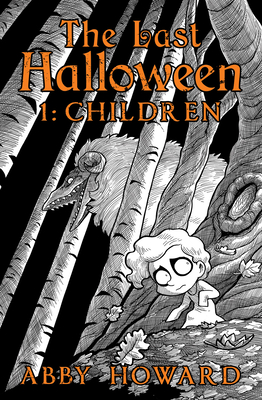
This marvelously creepy horror graphic novel starts with a man’s death by fire where a strange dog-like demon stays to witness and then reports back to a woman. That same woman has a teenager in the back of her car, hooded and kidnapped. Later at the hospital, it is clear that the man survived after all, but is terribly burned. The doctor helping him is surprised by a strange figure with two heads and a body sewn together who demands her help. With such strange things afoot, the story moves to Mona, a 10-year-old girl who gets caught up as the world turns to chaos around her. After being left home alone on Halloween, Mona discovers a huge horned creature on her couch. Running away, she tries to reach the police station and takes a short cut through the cemetery. It is there that she meets the others who will join her in her Halloween quest: a vampire, a ghoul, and a living doll. Halloween is just getting started!
A warning first of all, this is not a graphic novel for 10-year-olds, even though the protagonist is that young. Save this one for teenagers who will revel in its grotesque creatures and gore. The panels include maiming, death and dismemberment vividly shown, and often done with a sly sense of humor. This book offers a demon horde determined to take over the world with only a handful of teens and children to try to stop them and one rather inept mummy. The plot offers a satisfying adventure and hero’s journey through a landscape of horrors with pacing that adds to the humor as well as the fright.
Drawn in black and white, the illustrations are captivatingly macabre. Even the human characters like Mona have over-large heads, tiny bodies and eyes that look right at readers. Howard leans into the gross factor, creating gore in black ink that you swear is actually blood red. With a diverse cast of characters, including Mona’s parent who uses the pronouns they/them.
Perfect for teens who enjoy blood, gore and demons mixed with lots of humor. Appropriate for ages 13-17.
Reviewed from e-galley provided by Iron Circus Comics.
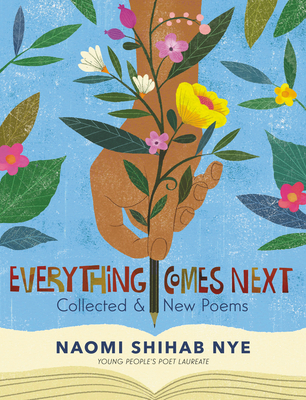
The current Young People’s Poet Laureate has compiled a collection of over 100 of her poems. It is a mixture of both previous published poems and new ones that have not been published before. Though some date back to the beginning of her stellar career and others are newer, there is a strong consistency across the collection with their eye towards hope combined with a strong sense of truth and honesty. Nye also has a way of focusing on the small and mundane in our lives and bringing out the wonder, including flour sifters, toddler comments, and cat food.
I bookmarked far too many of the poems, looking forward to returning to them again. While I had my distinct favorites (and lots of them) there were no poems in this collection that disappointed. The entire collection work both as a whole and as its separate parts. It provides a great introduction to Nye’s poetry.
Perhaps Nye’s greatest quality is her refusal to speak down to children or to simplify her poetry for them. She asks them to stretch to understand them, but not in confusing ways or using esoteric language. The concepts are fascinating, the poems leading the reader but not in a straight line, her poems more of a journey.
A gorgeous collection of poetry from one of the best. Appropriate for ages 12-15.
Reviewed from e-galley provided by Greenwillow Books.