Grandparents by Chema Heras

Grandparents by Chema Heras

Grandparents by Chema Heras, illustrated by Rosa Osuna (9781771645669)

When Grandfather hears an announcement of a party in the main square, he knows just who to invite. He rushes home to ask his wife, Manuela, to join him. But Manuela isn’t quite as eager as he is to head to a party. Grandfather picks Grandmother a flower and tells her how beautiful she is. Grandmother heads inside to put on eyeliner, then mascara, then skin cream, but each time Grandfather tells her that she is lovely just the way she is and to hurry up so they can go dancing! Lipstick, hair dye and a change of clothes are the next delays, but Grandfather is ready to cajole Grandmother along. Finally, the two of them go dancing together, and Grandmother realizes that Grandfather is just as beautiful as the moon too.

First published in Portuguese, this charming picture book explores the power of love and of being oneself. Heras uses a series of metaphors to describe Grandmother’s beauty. Her eyes are “as sad and beautiful as stars at night.” Her white hair is like “a midsummer cloud” and her skin is wrinkly like “nuts in a pie.” Grandmother herself uses negative metaphors to describe herself, but those are all countered by Grandfather’s love and adoration for her.

The illustrations are quirky and interesting, filled with surreal combinations of spaces and objects. As they are together in the house, the couple sometimes appear sideways or upside down as well as right-side-up nearby.

A warm and lovely look at love and self-esteem. Appropriate for ages 3-5.

Reviewed from e-galley provided by Greystone Kids.

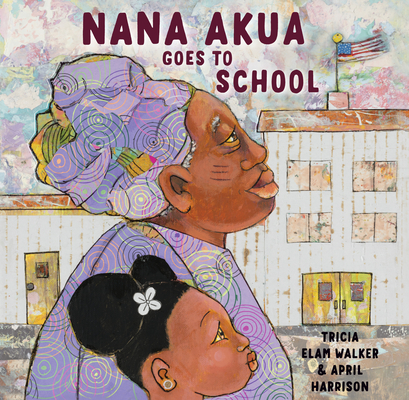
Nana Akua Goes to School by Tricia Elam Walker

Nana Akua Goes to School by Tricia Elam Walker

Nana Akua Goes to School by Tricia Elam Walker, illustrated by April Harrison (9780525581130)

When Zura’s teacher announces that next Monday is Grandparent’s Day, Zura isn’t as enthusiastic as her classmates about her grandmother visiting the class. Her grandmother, Nana Akua, is one of her favorite people on earth, but Zura was worried that the other children and families might laugh or be mean. Her grandmother looks different than most people in the United States. She has marks on her face representing her tribal family as well as beauty and confidence. When Zura admits to being worried for her grandmother, the two work together on a plan which involves bringing Zura’s quilt with its Adinkra symbols from Ghana. Monday arrives quickly and several other grandparents do their presentations. Zura introduces her grandmother who explains the marks on her face and the important tradition they represent. Then it’s the class’ turn to do their own marks in removable makeup.

Walker explains in her author’s note how she learned about the Adinkra symbols and the tradition of facial marks in Ghana. She uses these elements to tell the universal story of children of color whose parents or grandparents immigrated from another country and whose culture carries through in stories and traditions to the present day. Walker shows how such visible differences can cause pain and worries but also how they serve as a bridge to a deeper understanding as long as we take the time to listen and learn.

Harrison’s art is beautiful. She fills Zura’s classroom with children from a variety of races and cultures. She uses patterns and colors, almost creating the effect of stained glass on the page. The faces of her characters shine, sometimes looking right at the reader, as Nana Akua does when explaining her marks.

A celebration of diversity that show how openness to being different creates community. Appropriate for ages 4-6.

Reviewed from e-galley provided by Schwartz & Wade.

Review: Chirp by Kate Messner

Chirp by Kate Messner

Chirp by Kate Messner (9781547602810)

Mia is moving to Vermont where her grandmother has a cricket farm. Her arm is still recovering from being broken after a fall from a balance beam, but her mother insists that she go to summer camps. Mia chooses to attend a maker camp and also a warrior camp that will have her climbing rock walls and swinging from rings. As Mia makes new friends and finds new fans for her grandmother’s cricket treats, she is also helping by making a business plan for her grandmother’s farm. There are strange things happening at the farm though as disaster after disaster befalls the delicate crickets. Her grandmother insists that she is being sabotaged, but could her grandmother actually be losing her memory? Mia and her friends tackle the mystery, build up the business, and learn to speak out along the way too. 

Messner writes a middle grade novel that neatly embeds sexual harassment and abuse information into the story. In fact, that is at the heart of Mia’s injury and also at the heart of many women and girls that are in the book too. This book is deeply about survival as a girl, a woman and as a cricket. It’s about finding your voice, using your power and finding ways to get justice. It is also about the incredible bravery it takes to be a survivor, whether you have spoken out yet or not. 

Messner has written a compelling mystery to solve alongside the social justice. There are great suspects, more than one potential reason for the problems, and finally a dramatic resolution as well. Add in a science competition and you have one amazing Vermont summer filled with the crunch of crickets.

A great look at friendship, speaking out and taking back power. Appropriate for ages 9-12.

Reviewed from ARC provided by Bloomsbury Children’s Books.

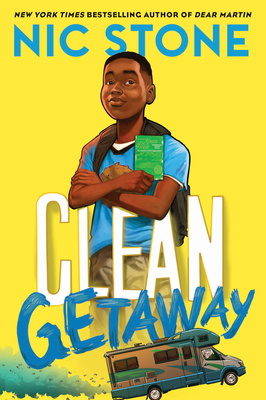
Review: Clean Getaway by Nic Stone

Clean Getaway by Nic Stone

Clean Getaway by Nic Stone (9781984892973)

In her first middle grade novel, Stone takes readers on a trip across the southern United States in an RV. Scoob’s spring break has been ruined by getting in trouble at school until his grandmother shows up in her new RV and offers to take him on a road trip. The two of them travel together, retracing the trip that Scoob’s grandmother and grandfather took together. The two of them had big plans, but were unable to visit many of the sights because of their interracial relationship, segregation and general prejudice and racism. Scoob has never met his grandfather who died in prison after being convicted of being a jewel thief. On their trip together, Scoob begins to notice that his grandmother’s memory is slipping, that sometimes she doesn’t know who he is, and that she just might be pocketing some gems herself! She is also switching the license plates on the Winnebago and not answering her phone. When Scoob sees himself on the news as being kidnapped, he knows that everything has gone wrong once again in his spring break plans. 

Stone’s skill as a writer really shows in this shorter format. She writes with a deep empathy for both grandchild and grandmother, giving them both a real humanity. Her book offers insight into Civil Rights history and looks specifically at racism towards interracial marriages and families. But it is the history of this family itself that makes the book special. Laced with guilt, memories and anger, the story is unique but also universal, though it likely has more sparkle than most family tales. 

Stone writes with a great sense of humor as well that will appeal to middle grade readers. There is a little mystery at play too, both about his grandmother’s role in the thefts but also about how Scoob got himself into trouble. The book sets a brisk pace, unlike the Winnebago itself. 

A modern look at social justice history, race and families. Appropriate for ages 9-12.

Reviewed from copy provided by Random House Children’s Books.

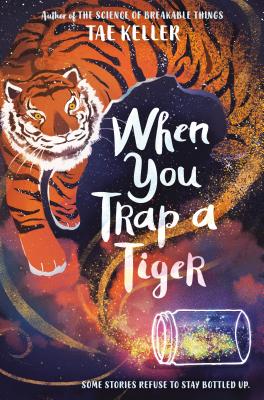
Review: When You Trap a Tiger by Tae Keller

When You Trap a Tiger by Tae Keller

When You Trap a Tiger by Tae Keller (9781524715700)

Lily, her mother and sister move in with her elderly Korean grandmother. In the small town, Lily soon discovers that everyone knows and loves her grandmother, who wears glamorous clothes and tries to offer advice and help to her community. Halmoni has always been special to Lily too, sharing stories of tigers, girls and stars with her and her sister. So when they are heading to Halmoni’s house and Lily sees a tiger out of the car window, she knows it’s from her grandmother’s tales and that tigers are tricksters. As Lily starts to understand that her grandmother is severely ill, she believes that she can help by working with the tiger to release the stories from her grandmother’s jars. The stories emerge and shine in the darkness, returning to the sky as stars and allowing Lily to hear some of the more difficult stories for the first time. Yet, Lily isn’t sure if the tiger is actually real and if the tiger is, can she be trusted to really help Halmoni?

Keller’s novel for middle grade readers explores the complexity of stories both in terms of folklore but also stories of previous generations in a family and the difficulties they faced in other countries and in traveling to the United States. The power of stories themselves is never in question here, shining through as each tale is shared. They connect, explain and inspire. But stories here are also hidden, carefully kept from others so that their pain need not be shared. This too speaks to their incredible power and the importance of them being told. So in the end, whether you believe in the tiger or not, you will believe in the stories themselves and their magic.

This novel is so beautifully written. Readers will experience it as a series of jars to be opened and released by them. The tales themselves are told in language and tones that really make them understood to be part of an oral tradition. The rest of the book, the story of Lily and her family, is layered and fascinating. All of the characters are complex and have multiple dimensions to their personalities. Lily is caught up in her own world of tiger traps and magical jars, but everyone else has their own perspectives on what is happening to Halmoni and their family.

A powerful book of stories, magic and tigers. Appropriate for ages 9-12.

Reviewed from e-galley provided by Random House Books for Young Readers.

Review: My Grandma and Me by Mina Javaherbin

My Grandma and Me by Mina Javaherbin

My Grandma and Me by Mina Javaherbin, illustrated by Lindsey Yankey (9780763694944)

The author tells the story of growing up in Iran at her grandmother’s side. Mina followed her grandmother everywhere. She woke with her at dawn when they prayed together. They bought bread from the delivery boy every morning by lowering baskets from their third-floor window. Mina’s best friend lived next door and their grandmothers were best friends too. The grandmothers prayed for one another to go to heaven at their respective mosque and church. Mina’s grandmother sewed all of her own chadors which Mina used to create a rocket ship when she draped them over the table. When her grandmother fasted for Ramadan, Mina was too little to fast for an entire day. So she joined her grandmother in eating at dawn and then after dusk too in addition to her regular meals. The love the two have for one another shines in this picture book.

Javaherbin opens the world of Iran to readers in the United States. Her memories of spending time with her grandmother are filled with moments of real connection, of quality time spent together side-by-side, of support and of true adoration for one another. The moments are beautifully small and everyday, showing how love is built throughout our lives, not in grand gestures but in the smallest ones.

The illustrations by Yankey are done in mixed media. They incorporate textiles and patterns. The warm glow on every page invites readers into a loving home. The illustrations are delicate and filled with details.

A beautiful look at the love of grandmother and grandchild. Appropriate for ages 3-5.

Reviewed from copy provided by Candlewick Press.

Review: With the Fire on High by Elizabeth Acevedo

With the Fire on High by Elizabeth Acevedo

With the Fire on High by Elizabeth Acevedo (9780062662835)

In her second novel, Acevedo cements her place as a master author for teen readers. Emoni’s life has not been easy, getting pregnant as a freshman in high school was not part of her plan. Now as a senior, her life is filled with work, caring for her daughter, and taking care of her Abuela. There is room too for her love of cooking, but not enough room for big dreams for her future. When a culinary class is offered for the first time at her school, Emoni hesitates to apply even though she longs to. The class includes a trip to Spain, which Emoni knows she will not be able to afford, nor could she leave her daughter or ask that of her grandmother. Still, she signs up for the class. It’s not easy, learning to not improvise in the kitchen but follow the rules and recipes. She can’t add the small touches that make her cooking magic. As Emoni opens herself up to new experiences, her life begins to open in other ways too, allowing herself to find romance and new connections.

In this novel, Acevedo gifts us with a story in prose where you can see her skill as a poet shining through often, taking words and making them dazzling. The fierceness of her first book is still here, with some of the short chapters taking on issues like racism and poverty. The entire work is such an incredible read. Emoni takes up a place in your heart and mind, insisting on being heard and believed.

The portrayal of a young mother who is ferociously caring and loving of her daughter, is something not seem often in our society. Emoni stands as a character speaking for women, a teen caring not only for her daughter but also standing alongside her grandmother as they care for one another. Throughout the book, there is a strong sense of community and extended family that are supportive of Emoni and her dreams.

A stellar and important read, let’s hope this one wins more awards and attention for Acevedo. Appropriate for ages 16-18.

Reviewed from e-galley provided by HarperTeen.

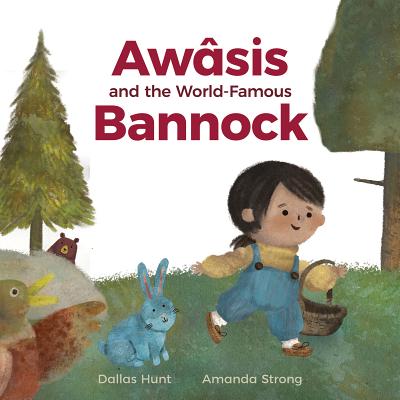
Review: Awâsis And The World-Famous Bannock by Dallas Hunt

Awâsis And The World-Famous Bannock by Dallas Hunt

Awâsis And The World-Famous Bannock by Dallas Hunt, illustrated by Amanda Strong (9781553797791)

When Awâsis accidentally loses her grandmother’s world-famous bannock as she is taking them to a relative, she starts to cry. When a duck hears her crying, the duck offers to help and gives her some tohtosapopimehkan or butter. A rabbit in the woods offers her some flour or askipahkwesikan. As Awâsis walks on, more animals offer her ingredients to make the bannock again. Readers will see a bear lingering nearby and wonder about what he is up to. When Awâsis returns home to her grandmother, she is still missing one key ingredient for the perfect bannock. Who will provide it?

Hunt skillfully integrates Cree words into his tale about a Cree girl, her grandmother and the animals who help her. In the author’s note, he also mentions that the story celebrates traditional indigenous storytelling methods and readers will notice the strong structure of the story and the way it reads aloud beautifully. A pronunciation guide and glossary of Cree words is provided as well as the recipe for world-famous bannock. The illustrations have a lovely softness to them that invites readers into a forest filled with helpful animals.

A marvelous picture book celebrating the Cree language, storytelling and food. Appropriate for ages 2-4.

Reviewed from e-galley provided by Highwater Press.

Review: The True History of Lyndie B. Hawkins

The True History of Lyndie B. Hawkins by Gail Shepherd

The True History of Lyndie B. Hawkins by Gail Shepherd (9780525428459)

Lyndie is definitely not a good Southern girl, much to her grandmother’s despair. She tends to find trouble easily and not make friends quickly. When her father loses his job, they move in with his parents. Lady, Lyndie’s grandmother, has specific ideas of how Lyndie should act and even creates a strict schedule for her that gives her no free time. But somehow on Lyndie’s first day of school, she finds an injured fawn on the way to school and ends up not making it to school that day. Lyndie’s best friend is a do-gooder whose family takes in a boy from a local juvenile detention facility. As Lyndie gets to know him, they become friends and share secrets with one another. When Lyndie chooses to put family before friends, she could lose everyone.

The voice in this novel is unique and confident. Set in 1985, the characters are grappling with the impact of the Vietnam War on the men in their community. The book looks at the results of the war and how one suicide can ripple through several families. Shepherd does not make this simple or easy, she allows it to stand in all of its complexity and gives us a young history buff to explore it with.

Shepherd creates an entire world in her writing, one that invites readers in to deeply feel for and cheer for Lyndie even as she makes plenty of mistakes and missteps. Lyndie is a champion though, and readers will completely understand her motivations as she chooses one direction or another. Happily, Lyndie is her own person, filling her days with the history of the region, exploring news on microfilm, and finding ways to live in a new home with rigid expectations.

An exceptional debut novel that invites readers to care just as deeply as Lyndie does. Appropriate for ages 9-12.

Reviewed from copy provided by Kathy Dawson Books.