Allergic by Megan Wagner Lloyd

Cover image.

Allergic by Megan Wagner Lloyd and Michelle Mee Nutter (9781338568912)

Maggie discovers that she has severe allergies that make her sneeze and also break out in hives when she interacts with any animals with fur or feathers. But Maggie is determined to find a pet that will work for her. She starts with a list of potential pets. The fish died too quickly, the lizard loved her brothers more, hedgehogs are illegal, and some animals just aren’t interesting. Meanwhile at home, they are expecting a new baby in a few months and Maggie often feels like the odd one out since her younger brothers are twins and always doing things together but without her. Then a new girl moves into the neighborhood. Maggie and Claire become close friends, until Claire gets a puppy of her own, the ultimate betrayal. Perhaps there’s a different solution, and all it will take is one mouse to test out!

There is so much empathy and heart in this middle-grade graphic novel. It captures the essence of being a middle grader, of not quite fitting in yet and feeling emotions deeply. Friendships are difficult, full of misunderstandings and possibilities. Add into that severe allergies and a growing family, and you have a book that is full of challenges to navigate. Maggie is a strong protagonist, full of ideas and a hope that her allergies can be overcome somehow.

The art by Nutter is colorful and inviting. It depicts a busy and loving family, Maggie’s physical allergy reactions, and then her newfound connections with people who just happen to be animals she can be around.

A sunny and welcome look at allergies, friendships and family. Appropriate for ages 8-12.

Reviewed from ARC provided by Scholastic.
Seaside Stroll by Charles Trevino

Cover image

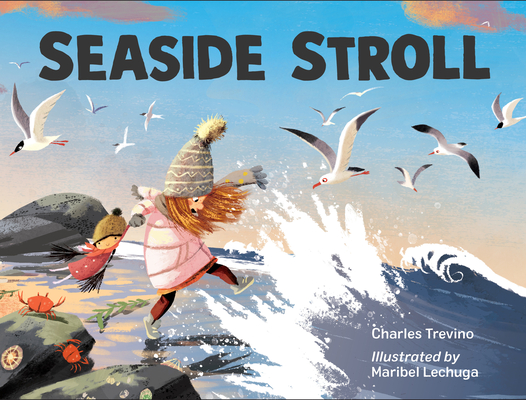
Seaside Stroll by Charles Trevino, illustrated by Maribel Lechuga (9781580899321)

Told with only words that begin with “s” this picture book is superbly surprising. A little girl and her mother bundle up for a winter visit to the seaside. The little girl brings along her doll, and they explore the snowy sand together. She finds a stick, swings it at the seagulls. There are shells, stones, seaweed and more to discover on the sand. She is surprised when a surge of water takes her doll away and into a tidepool. The doll is soaked and after the doll is saved, the little girl is sopping wet too. Cold and shivering, they leave the beach and head home for a hot shower and a cozy story before bed.

Trevino creates an entire story here, not just a series of words that begin with the same letter. Based on poetry designed in American Sign Language, his book is thoughtful and fascinating. Using clever and smart punctuation, he creates a world of snow and sand for readers to explore alongside his young character. Amazingly, the book reads aloud brilliantly and aloud shows the dynamic nature of language and letters.

The artwork tells much of the story, since the text is so focused and brief. The joy of exploring the cold seaside, the pleasure of discovery and the return home to cozy warmth, all are depicted with bright colors, sunshine and then warm firelight.

Something special. Appropriate for ages 2-4.

Reviewed from e-galley provided by Charlesbridge.

We Are the Ashes, We Are the Fire by Joy McCullough

Cover image

We Are the Ashes, We Are the Fire by Joy McCullough (9780525556053)

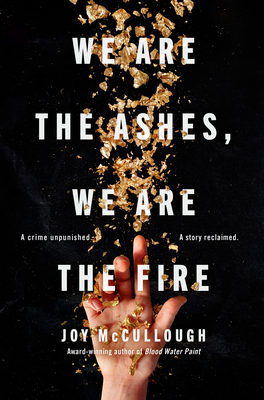
Em’s older sister was raped by another student at her college following a frat party. After reliving the trauma through the trial of her rapist, Em is incandescent with vindication when the jury finds the rapist guilty on all counts. Em has been an advocate for her sister through the process, becoming a social media figure in the #MeToo movement. Then the judge in the case rules that the rapist will serve no prison time. Once again Em’s entire family is thrown into chaos. Her sister must figure out how to continue going to school and where she can safely live. Her parents are fractured in their responses, smothering and avoiding. Em too must find a new way forward without the trial as her focus. Meanwhile, a clip of her after the trial saying she wants to learn “how to use a sword” has gone viral. As Em makes new friends over the summer, she learns to wield that sword both literally and figuratively as she discovers the life of a fifteenth-century French noblewoman who is a legendary figure who took justice into her own hands and at the point of her own sword.

McCullough’s writing here is just as fine as that of her debut novel Blood Water Paint. She writes such strong young women who deal with rape and derision and yet find a way to fight back in their own personal ways. For Em, her writing is a tool that allows her to cope. She gets caught up in the legend of Marguerite de Bressieux, writing at length, sharing it usually with a new friend who understands her need to stand up and be heard. Em’s writing is included in the book in verse, pairing beautifully with the prose and offering illuminated images alongside some of the poems.

Intelligent and raging, this book deeply looks at the impact of a rape on the survivor and her family. It’s interesting to have Em as the main character, a sister who feels powerless much of the time and must reclaim along with her sister what has been lost to the legal process and its clear biases. It is a look also at the power of art to express fury as well as hope.

Stunning, raw and gorgeous. Appropriate for ages 14-18.

Reviewed from copy provided by Dutton Books for Young Readers.

The Midnight Fair by Gideon Sterer

Cover image

The Midnight Fair by Gideon Sterer, illustrated by Mariachiara Di Giorgio (9781536211153)

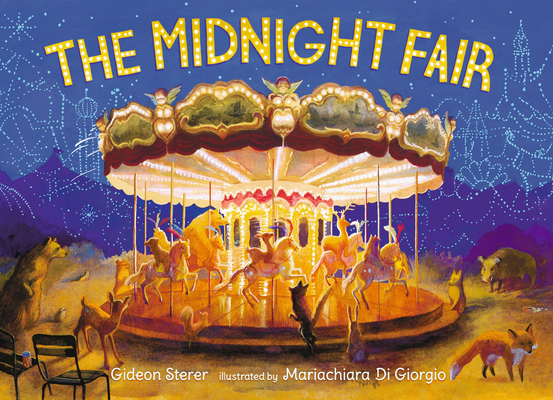
This wordless picture book tells the story of a county fair set up at the edge of a woods. From the woods, animals peek out at the lights and sounds of the fair as it is built and then filled with activity and people. At night, when the people leave, it’s time for the animals to have some fun. The raccoons sneak in a break in the fence and throw on the electricity. Soon the games, rides and food are open for business with payment in acorns, rocks and leaves. The animals ride the rides, staff the booths, share snacks and have a great time until dawn breaks. They tidy up and head back to the woods, but the surprised man who opens the fair finds plenty of evidence that something happened that night.

This book is so lovely. It takes the shared experience of a county fair for humans and turns it into something strange and wondrous. There are so many moments caught in the images here: a porcupine covered in sweets, a fawn managing to ride a carousel horse, a rabbit whizzing by on the swing ride, and a bear cub buying ice cream with acorns. One after another, the images are immediately iconic and touching without being saccharine. The golden light of the fair lights turns everything magical, just as it does when you go to a fair in person.

This visit to the fair is one that everyone should take, even if you don’t care for the rides. Appropriate for ages 2-4.

Reviewed from e-galley provided by Candlewick.

Try It!: How Frieda Caplan Changed the Way We Eat by Mara Rockliff

Cover image

Try It!: How Frieda Caplan Changed the Way We Eat by Mara Rockliff, illustrated by Giselle Potter (9781534460072)

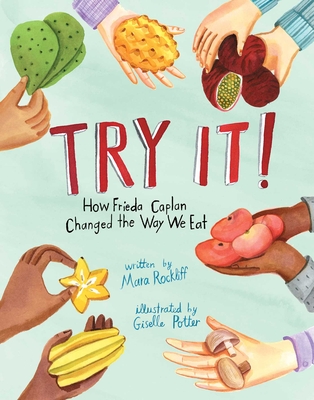
When Frieda Caplan started working at the Seventh Street produce market in Los Angeles, there were only potatoes, bananas, tomatoes and apples for sale. Caplan thought it might be work giving something new a try. So she started selling mushrooms. Soon she was known as the Mushroom Queen and had her own stall at the market. She became known as a person who would taste anything and started selling kiwis, jicama, blood oranges, Asian pears and much more. Over the years she introduced consumers to many new things, including seedless watermelons in 1962, horned melon in 1984, and fresh lychee in 2015. Caplan’s daughters now work with her in her produce stall, introducing finds of their own and offering their unique and informed view of what the next big thing might be.

Rockliff offers a dynamic look at the woman who changed how America eats fruits and vegetables. Her fearless approach to trying new things combined with a deep instinct about what will work for the market. Beautifully, the book focuses on Caplan herself but also richly shows the things that she introduced to American stores. Readers are sure to find new fruits and vegetables on the pages here, and perhaps be brave enough to try then when they make their way to supermarkets across the country.

Potter’s illustrations are richly colored and warm. They show Caplan in the 1950s when she started and then steadily move forward in time, nicely showing the time period through the clothing of the people. The fruits and vegetables are rainbow bright and nicely labeled with their name and the year that Caplan discovered them for the U.S. market.

Bright, intelligent and full of juicy details. Appropriate for ages 4-6.

Reviewed from copy provided by Simon & Schuster.

The Mysterious Disappearance of Aidan S. by David Levithan

Cover image

The Mysterious Disappearance of Aidan S. by David Levithan (9781984848598)

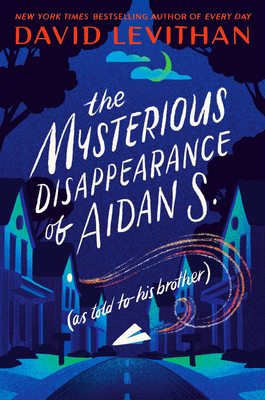
When Aidan disappears one day, Lucas and his family spend all their time searching for him. The police and the entire community come out, looking for Aidan. After six days of being gone, Aidan suddenly reappears in the attic of their house. He tells an incredible story of entering a fantasy world through the cupboard in the attic. Lucas, his younger brother, desperately wants to believe him. The two spend the darkness before they fall asleep talking about where Aidan was. But their parents don’t believe him at all and the police, while not pushing for him to tell the truth, clearly see his tale as a coping mechanism. When his story is accidentally released by the police, the entire school begins mocking Aidan. Lucas sticks by his brother’s side, though underneath is still not sure what to believe.

Levithan has published books for teens primarily and this time turns his talent to a book for middle graders. It’s a book that asks a lot of questions and allows them to linger, hanging in the air without resolution for some time. It’s a book that forces readers to ask themselves what they believe in, what they would do, what choices they would make in this situation. As always, Levithan’s prose is engaging and his pacing is skillful, something that is particularly important in a book like this, not allowing it to drag but carrying the book forward.

The central question of believing his brother places Lucas in a precarious position. He finds himself knowing more than anyone else about Aidan’s claimed experience and then also in the public having to not reveal all that he knows. He is a great younger brother, standing with his older sibling despite the mockery they both face. Told from Lucas’ viewpoint, the book relies on his take on what is happening, what he himself witnesses and his love for his brother.

An enticing book of fantasy and mystery. Appropriate for ages 9-12.

Reviewed from copy provided by Alfred A. Knopf.

Seeking an Aurora by Elizabeth Pulford

Cover image

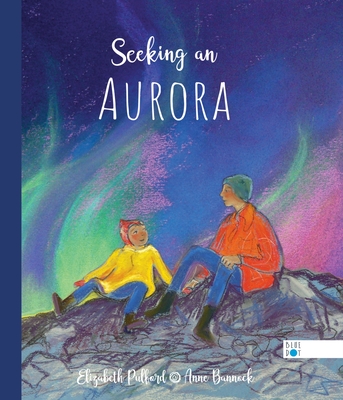
Seeking an Aurora by Elizabeth Pulford, illustrated by Anne Bannock (9781733121279)

A child is awoken by their father in the middle of the night. They head outside into the winter darkness, past the dogs and the cows. The father explains that they are going to see an Aurora, but the child doesn’t know what that means. Are stars in the Aurora? Is the moon? They head up the hill, their breath steaming in the icy air. They sit on the stony ground and look up, marveling together at the colors that streak the sky as the aurora borealis appears. They are silent until their walk back to the house, when the father shares what he knows about the aurora.

Originally published in New Zealand, this picture book is quiet and focused on a specific natural phenomenon. The book is told in very simple language, making it accessible for small children. The gender of the main character is never revealed, since the book is told from their point of view. The anticipation of discovering what the aurora is isn’t lessened by knowing about it ahead of time. The amazement and delight are infectious.

Bannock’s art is full of color even in the nighttime home. Warm reds, bright yellows, deep purples all fill the pages. The colors become more muted as they head outside, the night sky black above them and the stars vivid against it. The icy winter night is shown with a sickle of a moon, bare tree branches, and a layer of snow. The colors of the aurora are captured beautifully in a grand and stirring way that lifts the heart.

Quiet, personal and incredibly moving, this is a glimpse of a natural wonder. Appropriate for ages 3-5.

Reviewed from e-galley provided by Blue Dot.

Amber & Clay by Laura Amy Schlitz

Cover image

Amber & Clay by Laura Amy Schlitz, illustrated by Julia Iredale (9781536201222)

The Newbery-Medal winner brings us into the world of ancient Greece with her new novel. Rhaskos is a slave working in a Greek household where he spends his days picking up horse manure. He doesn’t mind the hard work, but he’d much rather be drawing the horses around him. He works in secret, steadily building his craft, inspired by a painting his master owns. Melisto is a girl hated by her mother, abused by her, but someone who has grown up used to wealth and luxury. She is precious, particularly for the connections she will make when she marries. She is selected to serve the goddess Artemis for a year, living wild and free for the first time in her life. By the time our two protagonists meet, one of them has died, though their destinies are entwined with one another.

Schlitz has created a masterpiece of a novel where she blends verse and prose, moving freely between the two. It is a complex novel with elements of Greek society explained, wars imminent and friendships being forged. Schlitz adds the voices of the god Hermes to the mix, also including the philosophical musings of Socrates who appears as himself in the novel. The book is marvelous, each of the elements working to support the whole and weaving together into a tantalizing tale that is surprising and fascinating.

Schlitz’s writing is exceptional. She explores ancient Greece along its dusty paths and roadways, showing readers how it felt to be these characters in these times. She speaks as Hermes and Socrates in voices that are unique to them and feel perfectly suited. The question of the value of a life runs throughout the book along with looking closely at suffering and pain. These deep questions and philosophies are ideally suited to the world Schlitz has created. They are enhanced by the illustrations that show various Greek artifacts and explain what they were used for.

Deep, dramatic and classical, this book is the best of historical fiction for children.

Reviewed from ARC provided by Candlewick Press.

We Wait for the Sun by Katie McCabe

Cover image

We Wait for the Sun by Katie McCabe, illustrated by Raissa Figueroa (9781250229021)

This picture book is based on one of Dovey Johnson Roundtree’s favorite stories of her childhood and her grandmother, Rachel Bryant Graham. Born over 100 years ago, Roundtree grew up to be a renowned civil rights attorney. She and her grandmother headed into the night in midsummer. They move through the darkness to the woods to gather blackberries. As they walk through the night, other women join them, silent in the dark. The darkness gets thicker as they move into the woods, and Dovey’s grandmother encourages her to hold onto her apron strings and let her eyes adjust. They reach the blackberry clearing and everyone gets to work but not before Dovey gets the first and best berry to eat. They pick berries, the women chatting, until the sky turns pink and at her grandmother’s command the sun rises over the horizon.

McCabe takes a powerful moment in Roundtree’s life and turns it into a picture book that invites children to explore the woods at night and not be afraid. There is a sense of adventure throughout the book illuminated with the wonder of being out in a summer night. The profound silence of the night and its darkness make for a book full of mystery with text that asks to be read in a hushed tone to share the moment with one another all the way through sunrise.

Figueroa’s illustrations are rich and beautiful. She takes the darkness and tinges it with blue, teal and purple to show paths, faces and the women walking together. She also sweeps the path with fireflies and glimmers, adding to the wonder of the book.

A story that serves as an allegory for resilience, going through the darkness and knowing the sun will rise. Appropriate for ages 3-5.

Reviewed from e-galley provided by Roaring Brook Press.