The Shadow Elephant by Nadine Robert

Cover image for The Shadow Elephant

The Shadow Elephant by Nadine Robert, illustrated by Valerio Vidali (9781592703128)

The elephant was staying in the shadows, not speaking or engaging with anyone. The other animals decide to try to cheer him up. First, the monkey told the funniest joke he knew, but the elephant didn’t even smile. The ostrich sisters did a dance, but elephant didn’t even move. The crocodile brought him a treat of acacia leaves, but the elephant just sighed. Then a small white mouse came up out of breath and asked to rest near the elephant. The elephant asked if the mouse was there to tell a story, but she just wanted to rest. So the two of them sat quietly together. The mouse eventually shared part of her story, making the elephant cry. The mouse cried too. Finally, when they were done crying, the elephant felt lighter and was able to stand up. The two headed off to find the mouse’s home together.

Translated from the French, this picture book about emotions and sadness shows how separate these blue emotions can make us feel. The elephant remains in the shadows, silent and sad, not even able to weep. Then the smallest of creatures with the simplest of gestures shows empathy. It’s that shared experience, the silence together, the moments taken, not to distract but to be with one another. The power of that, shown in such simple ways, resonates throughout the book.

The illustrations are full of contrasts. The pages with the elephant glow with blues and lurk with dark shadows. The elephant is almost a mountain at night, large and unmoving. The other animals are bright and colorful, the sky a beaming blue and the ground a neon yellow-green. The mouse arrives as the sun is lowering in the sky, creating a synergy between her side of the page and the elephant’s that shows their growing connection as well.

A deep look at sadness and the power of empathy to overcome it. Appropriate for ages 3-5.

Reviewed from copy provided by Enchanted Lion.

My Rainbow by Trinity and DeShanna Neal

Cover image for My Rainbow

My Rainbow by Trinity and DeShanna Neal, illustrated by Art Twink (9781984814609)

A mother-daughter team tells this story of being a transgender Black girl. After playing dolls with her sister, Trinity started to think about the doll’s long hair. Trinity had short hair because due to her autism she struggled with how itchy it got as it grew longer. Trinity also knew though, that as a transgender girl she needed long hair. Her mother was at a loss until her older brother had an idea. Visiting a beauty parlor, they browsed the wigs, but none of them were quite right. That’s when they decided to create Trinity her own rainbow wig. Her mother spent the night creating the wig, the first one she had ever made. Using strands of purples, pinks and blues, she created a one-of-a-kind wig with lots of spring. It was a rainbow just for Trinity.

The creators of this book are advocates for black and transgender rights. This book is about a little girl who clearly knows who she is. I appreciate that it is not a coming out story, but instead continues the story of one child’s transition to who she is, giving her the space to speak for herself and also a way forward supported by her entire family. The book exudes acceptance, warmth and love.

Twink’s art is bold and bright. They have included a family pig, who joins the family in all of the brainstorming and shopping, even trying out some nail polish in the store. This added touch of whimsy joins a strong Black family depiction full of modern elements and a real sense of home.

A great picture book that demonstrates intersectionality, acceptance and love on every page. Appropriate for ages 4-6.

Reviewed from e-galley provided by Kokila.

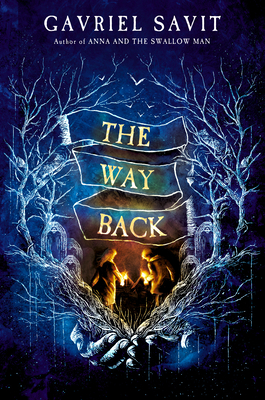
The Way Back by Gavriel Savit

Cover image for The Way Back

The Way Back by Gavriel Savit (9781984894625)

Yehuda and Bluma grew up near one another in the tiny village of Tupik. But their lives could not have been more different. Bluma was the daughter of the town baker, raised with plenty to eat and an ever-warm hearth. Yehuda spent his time figuring out where his next meal was coming from and trying to stay out of fights. The two find themselves transported to the Far Country. Yehuda is on a quest to find his father’s soul, which has been added to a demon’s collection. Bluma found herself in an endless cemetery, quickly scooped up by a female demon and her group of demon cat-women. Bluma has in her possession a very special object, the spoon that Death used to take her grandmother’s soul. Bluma found it after Death left her home. In the Far Country of the demons, there are different rules, pacts that are made and reworked, lies and truths. It is a world that shifts and changes right in front of Bluma and Yehuda who must find their own way through and back home.

So there is no way to actually summarize this book clearly at all. It is a great twisting and writhing story that the reader simply must give themselves up to and enjoy the journey. There are deaths and there is Death. There are demons who all manipulate and scheme, telling partial truths for their own gain. There are fathers who are trying to find sons and then sons trying to find fathers. There are spoons that cut and remove and libraries with endless knowledge and answers.

This book is less about the two main protagonists and more about the world they enter. Based on Jewish mythology and folklore, this world is full of jagged points, dangers and despair. But it is also basked in love, the joy of unexpected kindness, and the discovery of new old friends. It’s complicated and unique, a world that readers will likely never have visited before, and what a treat that is!

A delicious nightmare of a novel, this is one to make room for in your reading pile. Appropriate for ages 13-18.

Reviewed from e-galley provided by Knopf Books for Young Readers.

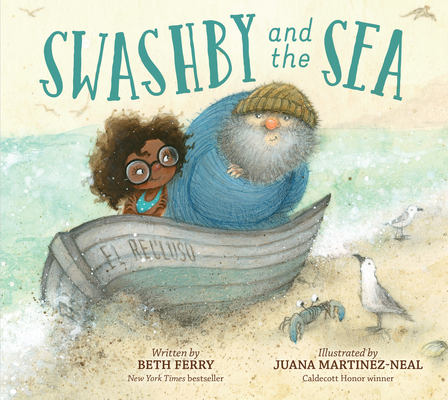
Swashby and the Sea by Beth Ferry

Cover image for Swashby and the Sea

Swashby and the Sea by Beth Ferry, illustrated by Juana Martinez-Neal (9780544707375)

Swashby spent all of his time on the sea. He loved the sea, and the sea understood him better than anyone else. He lived as close to the sea as he could in a small house. His life was just how he liked it: simple and serene. That is until one day a little girl moved in next door. Swashby shut himself in his house, fed their gift of cookies to the seagulls, and wrote a message in the sand: NO TRESPASSING. But the sea changed it a little, leaving only SING, which the little girl proceeded to do while dancing on Swashby’s deck. The next message is turned into W-ISH, and when the little girl decides to wish on a starfish, Swashby comes out to show her how to do it properly. The next message has her playing on the beach, and Swashby find himself showing her how to make sandcastles that won’t topple. After Swashby again retreated, the water didn’t and soon the sea had pulled the little girl out with it. The choice was clear for Swashby.

This picture book is a stellar marriage of story and illustrations. Ferry offers two great characters here, the solitary seaman and the charming little girl. Oh and one more, the sea herself, who plays such a role in the story with both her support of Swashby and in her meddling with his messages. The text is just the right length, robust enough to create a full story to tell and short enough to read aloud well. The fiddling of the sea is just right, not quite easily guessed by the reader and very cleverly done.

The illustrations are marvelous. Done in acrylics, colored pencil and graphite, they capture the bright seaside where the sea fizzes along the beach. Swashby is pure prickles from his bristly beard to his scratchy sweater. Meanwhile the little girl is colorful and soft. The two together on the page make for a study in contrasts that is sure to please.

Satisfying sea fare. Appropriate for ages 3-5.

Reviewed from library copy.

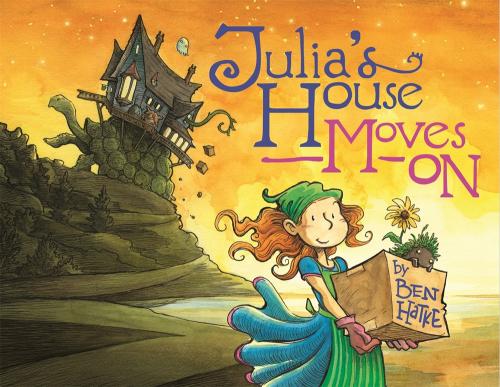
Julia’s House Moves On by Ben Hatke

Cover image for Julia’s House Moves On

Julia’s House Moves On by Ben Hatke (9781250191373)

This sequel to Julia’s House for Lost Creatures carries readers back to the marvels of the Julia’s unusual house and the creatures she shares it with. Julia’s house was getting restless and all of the different creatures who lived there could feel it and started to act out too. Luckily, Julia had a plan for moving them, she even knew just the spot in the mountains for them. But then, the turtle whose back carried the house decided to move right then, down into the ocean. Now the house was tattered and barely afloat. Julia though had a plan filled with paddling and pushing but the house sunk faster and sharks were circling. She went to her other plan, and blew on Triton’s Horn but that didn’t work out either. With her house sinking, the creatures floated off away from Julia. All was lost. Or perhaps they had their own plan!

Written just for compulsive planners like myself, this picture book is funny and full of dynamic moments. Hatke, the creator of graphic novels like Zita the Spacegirl, is just as at home in the picture book format. His pacing is brisk, never letting poor Julia linger for long in her new spot of trouble. Julia’s plans are feats in themselves, constantly figuring out what to do, and show real resilience in dire situations.

As with all of Hatke’s art, he creates characters who are fascinating, friendly and full of life. Here he gets to delve into all sorts of strange creatures too who liven up the story. His illustrations are worth lingering over, with small touches that make Julia’s house come alive (literally).

Perhaps the perfect COVID fantasy read that shows how communities can work to save one another. Appropriate for ages 4-6.

Reviewed from e-galley provided by First Second.

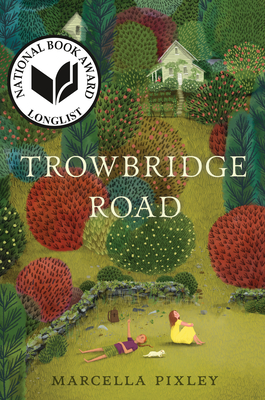
Trowbridge Road by Marcella Pixley

Cover image for Trowbridge Road

Trowbridge Road by Marcella Pixley (9781536207507)

June Bug lives with her mother in the house on Trowbridge Road that everyone thinks is haunted. Her father died of AIDS, leaving June Bug with her mother who is scared of germs and obsessed with being clean. That means that she never leaves the house and food can be scarce. June Bug’s uncle brings her food once a week, limited because her mother won’t allow him to come more often, so she is often hungry as the supplies run out. Then Ziggy arrives to live with his grandmother down the road. June Bug watches them from a nearby tree, dreaming of being friends and sharing the food that his grandmother prepares for him throughout the day. Ziggy too has experienced his own troubles, immediately getting the attention of the local bullies. As June Bug and Ziggy meet and become friends, their troubles mount, but they have one another as a safe place to share and heal, because at times home is not that place at all.

Set in the mid-80’s, this novel for middle graders is written with such beauty. Pixley creates a neighborhood that is lovingly shown as a mix of safety, imaginative play and also reveals the harshness of reality too. From the foundations of a fallen house where magic blossoms to the shelter of a large tree that can be scrambled up and down, this is a neighborhood seen through the eyes of two creative children who create their own reality together to care for one another.

The two protagonists are children who have experience abuse of various kinds and find kindred spirits in one another. They have both been hungry, both been physically hurt, and both lived with emotional abuse. They are both survivors, using their imagination and the neighborhood itself as places to escape to together. The power of love soars through this book, in extended families who offer care and shelter, in neighbors who reach out and take action. It’s a book about being able to ask for help and the positive change that can come when aid arrives.

Wrenching, powerful and filled with hope, this book is exceptional. Appropriate for ages 11-14.

Reviewed from copy provided by Candlewick.

The Boy and the Gorilla by Jackie Azúa Kramer

Cover image for The Boy and the Gorilla

The Boy and the Gorilla by Jackie Azúa Kramer, illustrated by Cindy Derby (9780763698324)

In a sad, gray world, a huge gorilla appears. He joins a boy out in his mother’s garden. The two talk about the death of his mother, about how you know when someone is dead. The two spend time together, coloring, flying kites on the beach. The beach was one of his mother’s favorite places. The boy misses his mother’s pancakes and her reading books at bedtime. Sometimes he just wants to be alone. Other times, he wants to climb high into trees to see if he can reach his mother. The gorilla stays at his side throughout, while baking Mom’s special cookies, picking daisies in her garden and playing baseball. Eventually, the boy reached out to his father about how much he misses his mother. After holding father and son close, the gorilla moved off, heading elsewhere.

Kramer tells a gentle and sorrowful story here, where sadness and loss is embodied in a huge, purple and black gorilla. That gorilla shows such tenderness and such attention to the boy, keeping silent when needed, dashing up trees together, sitting and lingering with one another. The gorilla becomes more than loss, he becomes care and healing without pressure or timetable. The book reads in a series of linked scenes, the process not linear but complex with motion forward and back. It is not until the boy connects more with his father that progress is made, a new team formed.

The art by Derby is instrumental here. Her huge and furry gorilla appears out of the gray, his black and purple dark against the fog of loss. Color tones are used very effectively through her watercolors in the book, moving from the initial grays to more blues, eventually having touches of red and yellow, sunshine nearby. Towards the end of the book, the pages are aglow with light and hope.

A lovely and touching look at loss. Appropriate for ages 4-6.

Reviewed from e-galley provided by Candlewick.

This Is Your Time by Ruby Bridges

Cover image for This Is Your Time

This Is Your Time by Ruby Bridges (9780593378526)

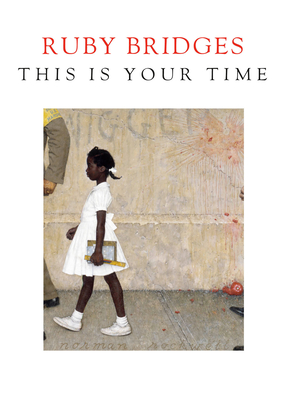
At age six, Ruby Bridges was the first Black child to attend an all-white elementary school in New Orleans. She had to be escorted to school by federal marshals, leading to iconic photographs of her small size and the screaming, threatening crowds. In this book for children, Bridges tells the story of her harrowing time attending school, how she was taught in a classroom all by herself with a teacher who made her feel safe and loved, and how it felt to be that little girl. Filled with historical photographs, the book shows and explains the battle for desegregation across the country and also the modern fights for equity, inclusion and antiracism.

This is one of those books that gives chills. It is a profoundly moving read as Bridges shares photos that demonstrate the intensity of the battle, the danger she was in, and the bravery that it took her and her family to take such a public stand for change. As Bridges moves into talking about modern youth and their battles, she maintains the same tone, challenging all of us to join us in the fight for civil rights and social justice.

The photographs and the iconic Norman Rockwell picture add a deep resonance to this book, taking Bridges’ beautifully written words and elevating them. The photo selection is done for the most impact, at times mixing modern and historical photographs together to show how little has changed but also how important the fight is.

One of the most important books of the year, this brings history and future together in one cry for justice. Appropriate for ages 9-12.

Reviewed from e-galley provided by Random House Children’s Books.

Butterflies Belong Here by Deborah Hopkinson

Butterflies Belong Here by Deborah Hopkinson

Butterflies Belong Here by Deborah Hopkinson, illustrated by Meilo So (9781452176802)

A Latina little girl has moved to the United States, discovering that she acts like a caterpillar and hides in the back of the class since she can’t speak English. In the summer, she looks for monarch butterflies, but can’t find any even in the community garden. In fall, she finishes her book about monarch butterflies. Able to read better now, she learns that the monarchs need milkweed to survive. Encouraged by her school librarian and inspired by the monarch’s migration, she forms a plan that she presents to her class. It’s hard to stand in front of the class and speak in English, but she really wants to plant a migration station for the monarch butterflies. Soon they are all working together, led by her, to create the station. She feels herself evolving now, into a citizen activist who stands at the front of the crowd.

The parallels between the narrator’s experience and that of the monarch butterfly offers a great framework for this picture book. Those connections are not overplayed, rather they form the reason that this little girl finds solace in studying butterflies. Interspersed throughout the book are excerpts from the nonfiction book on butterflies that she is reading. It’s a clever way to offer information in a separate and clear way.

The illustrations show a girl finding her way in a new country and a new city. The transformation in her body language as she becomes more confident and finds her voice is profound in the illustrations. By the end, she glows on the page alongside her garden.

An inspiring look at how to help butterflies but also how to find your voice. Appropriate for ages 5-7.

Reviewed from copy provided by Chronicle Books.