Review: Irises by Francisco X. Stork

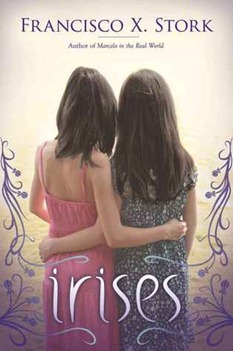
irises

Irises by Francisco X. Stork

Stork explores the complicated relationship of sisters and family in his latest book for teens. Teenage sisters Mary and Kate are very different, though they have been raised in the same sheltered way.  Kate is planning to be a doctor and attend Stanford.  Mary is an artist, a painter, who has already received acclaim for her work.  But their plans are thrown into disarray when their father dies, leaving them only their mother who has been in a vegetative state for years.  While their father was loving, he was also very strict.  The girls are now free of his repressive ways, and they each respond to the new freedom in differently.  The freedom though comes with a cost of new worries, new relationships, and new pressures.  There are many decisions that have to be made, including one that is particularly heart wrenching. 

This is a complicated novel that does not summarize easily.  The characters are well developed and complex themselves, though I summarized each in a sentence, they are much more than that.  These girls are different from one another but far from opposites.  They are linked, closely and forever, together in sisterhood, a tie that strangles, binds and frees. 

Stork also looks closely at family in this book.  The cost of letting a family member go, the ways people deal with loss, and the process of recovery and reinvention are exposed here.  He weaves the lives of the girls with unexpected characters, including a gang-member who is also an artist and a young minister who has no shortage of ambition.  These characters too are complex and intriguing.

The minister is one of the pivotal characters in the book.  His ambition mirrors Kate’s and the two find themselves drawn to one another.  His logic about ambition and watching out for yourself rings true for a long time, until it changes and becomes hollow and crass.  The writing to take a character’s message and transform the way it sounds over the course of a novel without changing the tone or message itself is beautifully done, masterful.

This compelling novel is quiet, desperate, and riveting.  Appropriate for ages 15-17.

Reviewed from ARC received from Arthur A. Levine Books.

Also reviewed by:
Review: Anna Hibiscus’ Song by Atinuke

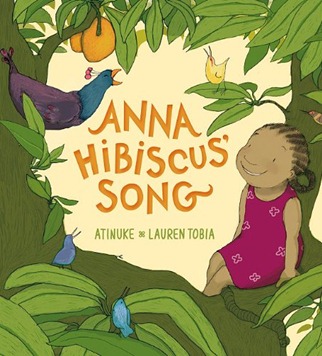
anna hibiscus song

Anna Hibiscus’ Song by Atinuke, illustrated by Lauren Tobia

Anna Hibiscus returns in a picture book!  Anna Hibiscus lives in Africa with her extended family and they are very happy.  In fact, Anna Hibiscus is so happy that she almost floats out of the mango tree she is sitting in.  She doesn’t know what to do with herself, so she asks her grandparents, aunties, uncle, cousins and parents what they do when they feel so very happy.  Though Anna Hibiscus tries their techniques, she has to figure out what her own reaction to pure happiness is. 

This jolly picture book captures the essence of the chapter books featuring Anna Hibiscus.  Though the story is by necessity less detailed and shorter, it does a good job of setting the African stage for the story and revealing the deep love and connection that this family has.  The character of Anna Hibiscus is also shown clearly and concisely, neatly packaging her in a smaller form but losing none of her charm and wit.

Tobia’s illustrations also echo the chapter books closely.  They celebrate the African setting and the warmth of this home.  They also embrace the different skin colors of members of the family.  In the entire series, I have appreciated how frankly and naturally this is handled. 

This happy, merry story would be a great addition to units on emotions or a joyful read in any story time.  Appropriate for ages 3-5.

Reviewed from copy received from Kane Miller.

Also reviewed by The Artful Parent and Jean Little Library.

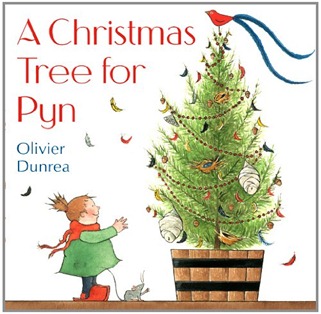
Review: A Christmas Tree for Pyn by Olivier Dunrea

christmas tree for pyn

A Christmas Tree for Pyn by Olivier Dunrea

Little Pyn dreams of having a Christmas tree of their own, but her gruff Papa (who insists that she call him Oother) refuses to have one.  While her father works outside in the woods all day, Pyn tidies up the house.  Through it all, she thinks about a Christmas tree.  When Oother continues to say no to a tree, Pyn decides to handle matters herself.  She waits until her father heads out to work and then dresses herself in warm clothes and takes a small hatchet along with her.  But before she gets far at all, she is up to her waist in snow with more tumbled down and burying her.  Oother rescues her at once, sweeping her up onto his shoulders.  Together the two of them find the perfect tree and bring it home, where Pyn decorates it with all sorts of natural treasures she has saved.  Oother too has something to add to the tree, that speaks to the memory of Pyn’s mother.

Dunrea has managed to create a gruff bear of a father who has trouble expressing his love for his tiny daughter, but that children will understand easily.  There is a palpable love between the two characters though both have trouble voicing it.  It is the warmth in the story, the glue of their small family.  Towards the end of the book, the sorrow of the loss of Pyn’s mother is tangible too.  It is almost achingly there, a physical presence that explains the strained relationship and the reason a Christmas tree is vitally important to them both.

Dunrea’s art is beautifully done with his signature white backgrounds upon which his characters build their lives.  The book is filled with small touches that show the snugness and warmth of their home.  The huge stone fireplace, the cozy slippers, and the steam rising from pots and bowls.  It all creates a family and home.

This book speaks to the heart of the Christmas season, where families grow closer, memories are shared, and a tree becomes more than it could ever seem to be.  Appropriate for ages 4-6.

Reviewed from copy received from Penguin Young Readers Group.

Review: The House Baba Built by Ed Young

house baba built

The House Baba Built: An Artist’s Childhood in China by Ed Young

Illustrator Ed Young grew up in Shanghai during World War II.  His father managed to get them a house that was safe because he built it himself.  He made a deal with the landowner that he would build a house and after 20 years, the landowner would get it free and clear.  But in those 20 years, Ed Young’s family lived there.  It was a huge home with a swimming pool, space to roller skate on the roof, staircases to slide down, and lots of other places to play.  This is the story of growing up in that house with the war raging around them, but also feeling very safe as a family because of the house.  It is the story of welcoming people beyond their family to stay with them, giving refuge and forming a larger family unit.  It is the story of years of playfulness and joy together despite the outside forces because his father thought brilliantly and quickly.

It will come as no surprise to those who know Young’s work that this is a beautifully designed book.  Young weaves together paper cutting, sketches, painting and photographs into a dreamlike world of his childhood where some things stand out crystal clear and others are fogged by time.  It is like looking into someone else’s memories along with them.  They are beautiful and mesmerizing.

This book may have trouble finding an audience.  While the illustrations are gorgeous, the story is told in vignettes rather than one large story.  This technique will resonate more with slightly older readers than usual picture book preschoolers.  On the other hand, teachers looking for a book to inspire telling a biography in more than words will delight in this book.  It will share aloud well and the illustrations will invite readers into Young’s world.

A book for older elementary school readers who may take some encouragement to pick it up.  Once they do, they will be transported to Shanghai in the 1930s and 40s.  Pair this with Drawing from Memory by Allen Say for two artist’s childhoods in Asia.  Appropriate for ages 7-10.

Reviewed from ARC received from Little, Brown.

Review: Lighthouse Christmas by Toni Buzzeo

lighthouse christmas

Lighthouse Christmas by Toni Buzzeo, illustrated by Nancy Carpenter

Frances and her little brother live with their father on the remote island lighthouse of Ledge Light.  Christmas is coming and neither of them are sure that Santa is going to find them there.  So when the children get offered a boat to the mainland to spend Christmas with their relatives there, they have to think about it.  It does mean a Christmas filled with family and holiday spirit.  But on the other hand, they have to leave their father behind to man the lighthouse.  When a nor’easter blows in though, all of their plans have to be set aside.  The storm blows in a stranger also trapped by the weather.  Now the small family have to create their own Christmas together, with a little help from a plane overhead.

This book is based on the true story of the Flying Santa Service, which still continues today to serve the isolated islands in Maine’s Penobscot Bay.   The story has a wonderful, warm feeling of home.  It touches on Christmases spent after losing a loved one as well as Christmases in new homes.  The story also moves from the quiet of the family life to the drama of the storm and then the clearing after the storm passes.  It makes for a pleasing story arc. 

Carpenter’s illustrations help create the warmth of the book.  Done in a traditional style, they work well to also emphasize the story arc.  The story is obviously set in the earlier part of the 20th century, thanks to the clothing and the furniture.  Delicate lines and color washes add to the vintage feel of the illustrations.

An old-fashioned Christmas story, this is a great pick for those looking for an emphasis on family and reality rather than Santa and elves.  Appropriate for ages 5-8.

Reviewed from copy received from Dial Books for Young Readers.

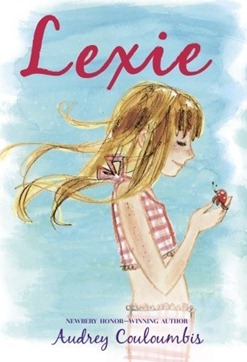
Review: Lexie by Audrey Couloumbis

lexie

Lexie by Audrey Couloumbis

The shore has always been one of ten-year-old Lexie’s favorite places in the world.  She would spend the summer there with her parents, playing on the beach, finding treasures in the sand, and reading picture books.  Now though, her parents are divorced.  So her mother isn’t going to be going to the shore at all.  Lexie is spending a week there with just her dad.  Or so she thinks!  On the way there, her father announces that his new girlfriend will be joining them, and her two sons too.  Lexie is pushed out of her usual bedroom into one that is as tiny as a closet.  Teenage Ben is also not enthusiastic about being stuck together.  Little Harris is messy and doesn’t even want to head outside at first.  As the two families try to live together, Lexie discovers that connections can be created over the smallest things and that there is still room for everyone even if the house is a lot more crowded.

This is a book that takes a moment in time, a week at the shore, and creates a world out of it.  Couloumbis writes with a voice that celebrates the small things, yet doesn’t wander.  The characters are real, each written with an honesty that is surprising.  The adults have faults, make mistakes.  The young people are struggling with this new situation, facing it with various emotions that all read as true.

Lexie is child who can see past her love for her father and see him through the others’ eyes.  At the same time though, she has to spend time with the others to understand them as deeply.  It all works well as the reader is also learning about these characters.  When truths are revealed is a crux of the story.  Throughout the book, honesty is explored.  Lexie struggles with trying to be kind and then finding herself in situations where it may have been better all along to tell the truth.  The situation with the adults mirrors this as well.

This is a radiant read that explores deep issues of divroce and truth while never losing the sunshine of the shore.  It would make an intriguing pairing with Junonia by Kevin Henkes which is for a similar age and also is set on the beach. Appropriate for ages 8-11.

Reviewed from copy received from Random House.

Also reviewed by:

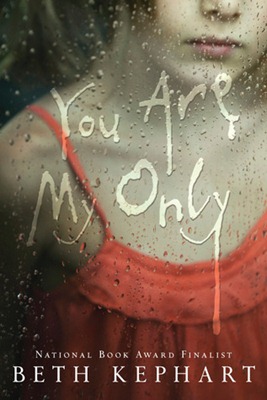
Review: You Are My Only by Beth Kephart

you are my only

You Are My Only by Beth Kephart

Emmy had one joy in life and that was Baby.  Otherwise she was trapped in a violent marriage at age 20.  So when Baby disappeared so did Emmy’s reason to live.  After she is saved from committing suicide by standing on the train tracks, she is committed to a state institution because of her breakdown.  Sophie is a teen who is kept hidden in her home by her mother.  They have moved often, running away from the No Good.  But as she looks out the window and meets Joey, his big dog, and his loving aunts, she is tempted to visit them for real.  Once there, she finds a home that is filled with warmth, love, sweet treats, good books, and everything that is missing from her own.  As their stories continue, readers will find themselves captured by the stories of a mother and daughter who lost each other long ago and are trying to find their way back to one another.

Kephart’s writing is breathtaking.  She uses language that breaks through, explains, dances and delights.  She can also use her words to create such sorrow, to build angst and amplify emotion until the reader is feeling it directly in their own skin.  Here is one such paragraph on Page 13 just after Baby has been stolen:

My baby is gone.  My baby is gone, and I should have called the police first thing.  I should have had a decent, right-thinking thought in my head instead of growing desperate in the trees, draining the day of precious daylight with my every failing footstep.  Peter came home to the red circle of the law’s lights, to the house torn inside out and bright with every watt we own.  To dogs in the woods and yellow rivers of light.  They told Peter right at the end of his second shift.  He smells like refinery and trouble, like the smoke up and down the Delaware River.

She also builds characters in the same way, allowing us to see inside them and to understand them more deeply than they do themselves.  The two female characters are both fragile to the point of fracturing, but also immensely strong in a way that is compelling and never tough.  Their stories parallel one another, both being held against their will, both unsure of what the future will bring, and both of them recovering from loss.

I must also mention the wonderful characters of Miss Cloris and Miss Helen.  At first they are assumed to be two sisters, but they are actually a lesbian couple.  It is a story of love that is told in small moments, gentle connections, and the brilliance of their adoration for one another.  It is also a lifetime of love, because they are both elderly and one is nearing death.  They are exactly the sort of gay characters we need in our teen literature.  They are beautiful, warm, nurturing and normal.

Teens will pick this book up for the story of a stolen baby and the tension of the mother and daughter finding one another.  On the way, they will read a phenomenal book of loss, love, imprisonment and freedom.  Mostly freedom.  Appropriate for ages 13-15.

Reviewed from ARC received from Egmont.

Also reviewed by:

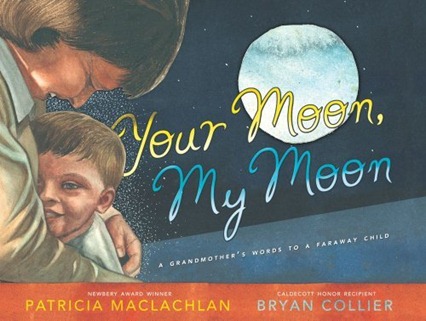
Review: Your Moon, My Moon by Patricia MacLachlan

your moon my moon

Your Moon, My Moon by Patricia MacLachlan, illustrated by Brian Collier

In her signature poetic text, MacLachlan has created a picture book that celebrates the continued connection between family members who are apart.  Here, a grandmother lives in a cold area of the world, while her grandchild lives far away in Africa.  She watches the snow start to fall while he is in the hot sun.  She wishes they were together to ice skate or together to swim in the lake where he lives.  There are many things that connect them, from the dogs in both places to the sun, but especially the moon, which shines on them both.

MacLachlan weaves two very different places together into one story filled with a poignancy and longing but also a story of love and connection.  For both settings, she pulls the best out of them, celebrating their differences and their similarities at the same time with great skill.  She invites us into memories, special moments, and also into the day-to-day of lives. 

Collier’s illustrations elevate this book further.  Their watercolor and collage use the color of the light to great effect as it moves from African gold to the cool of a northern winter.  People of all colors fill the pages, making it feel all the more inclusive and global.  Collier also uses lines to great effect, sometimes swirling and creating color or intensity changes in the illustrations, otherwise showing currents, mountains or forest. 

Beautifully written and illustrated, this book may be specifically about grandparents and grandchildren, but could also be used for any adult being away from a child they love.  Appropriate for ages 4-6.

Reviewed from copy received from Simon & Schuster Books for Young Readers.

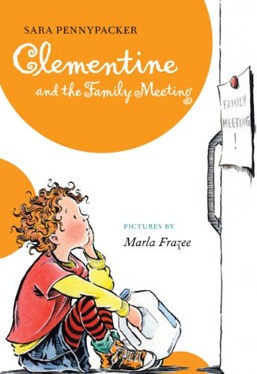
Review: Clementine and the Family Meeting by Sara Pennypacker

clementine and the family meeting

Clementine and the Family Meeting by Sara Pennypacker, illustrated by Marla Frazee

This is the fifth book in the wonderful Clementine series.  In this book, Clementine is very worried because the Family Meeting sign is hung up at home.  She just knows that she has done something wrong again.  So she goes out of her way to demonstrate how kind she is to her little brother, how neat she can be, and how she eats healthy foods.  Clementine is surprised to find out that none of those things are on the agenda, instead their family will have a new addition.  And it’s not the gorilla that Clementine has been asking for.  It’s a new baby!  Clementine knows how she feels about that.  She is not happy at all.  How in the world will their family ever be able to change from the perfection of four people into the odd number of five?

Pennypacker writes Clementine with such a surety and steadiness that readers who have enjoyed the previous books will immediately feel at home between the covers.  Clementine’s family may be changing in numbers, but readers who enjoy the deft parenting, the clever comments, and Clementine herself will be thrilled to know that those things have not changed at all.  In this book, Clementine’s relationship with her younger brother is shown as one of the growth points.  She continues to call him by vegetable names, but their relationship changes and matures too.

Frazee continues to depict a warm and wonderful family that embraces the quirkiness of one another.  From the springing curls on Clementine’s head to the ferocious scowl she gets on her face, Clementine is a vivacious and wonderful character.  My favorite image from the book is where Clementine’s mother and brother are asleep together on the couch with all of his trucks parked around them.  Perfection.

Another stellar addition to the Clementine series.  This is one series that you will want to read in its entirety, because everyone needs a Clementine in their lives.  Appropriate for ages 7-10.

Reviewed from library copy.

Also reviewed by: