Review: The Princess and the Peanut by Sue Ganz-Schmitt

princess and the peanut

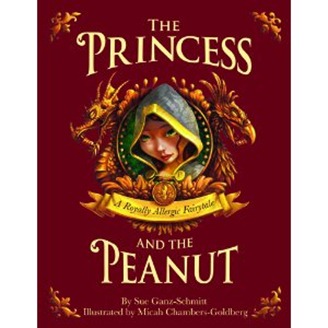
The Princess and the Peanut by Sue Ganz-Schmitt, illustrated by Micah Chambers-Goldberg

Food allergies are booming in children today with nearly six million children in the U.S. suffering from food-related allergies.  Here allergies are merged into a fairy tale world to nice effect.  When a prince despairs of finding his perfect princess, a princess appears on his doorstep looking for shelter from the storm.  To test to see if the princess is indeed real, the queen places a peanut between her tower of mattresses.  But this princess doesn’t have trouble sleeping, instead she awakens with an allergic reaction!

Following the storyline of The Princess and the Pea, this book skillfully and with effective humor tells the story of having an allergic reaction and what should be done.  It is a book that reflects what children today are dealing with and also supports children who have allergies.  The book also has a question and answer section on allergies for adults and a glossary for kids.

The illustrations have the feel of an animated film with dramatic lighting, interesting perspectives, and touches of humor.  They will be an inviting style for children, who will enjoy the juxtaposition of modern allergies and fairy tale themes.

Make sure to check out Ganz-Schmitt’s first book that was about diabetes: Even Superheroes Get Diabetes.  Both books have a charm and an honesty about medical situations that children are dealing with.  Appropriate for ages 4-7.

Reviewed from copy received from Raab Associates.

Review: Do You Know Which Ones Will Grow? by Susan A. Shea

do you know which ones will grow

Do You Know Which Ones Will Grow? by Susan A. Shea, illustrated by Tom Slaughter

This interactive and engaging book will have children eagerly answering the questions inside.  The book is all about whether something is alive or not, whether it will grow or not.  Told in rhyming sets of questions, the final rhyme and answer is hidden beneath another flip-out page that makes it into a guessing game for the rhyme.  So in the first pages, “If a ducking grows and becomes a duck, can a car grow and become…”  Turn the page and you find “a truck?”  The flaps also have die cut holes in them that add to the appeal.  It’s a game and a book that will intrigue and fascinate young readers.

A large part of the appeal of this book is the rhyming couplets that create the guessing game.  Pairing living creatures and inanimate objects make for an appealing educational book.  Adding the rhyming guessing game takes it to another level.  The rhymes have a great humor to them, and will have children giggling at the thought that a stool could grow into a a chair or a sweater into a coat.

Slaughter’s illustrations are bright and graphic.  Using bold color combinations and strong lines, the cut-paper illustrations are very effective.  They have an colorful and inviting tone that is modern and striking.

Ideal for classroom use or in any library, this book should be enjoyed by many children.  The flap structure is large and sturdy, meaning it will work well for public or school libraries.  This book tackles a subject I haven’t seen in many picture books too, adding to the appeal. Appropriate for ages 3-5.

Reviewed from library copy.

Also reviewed by:

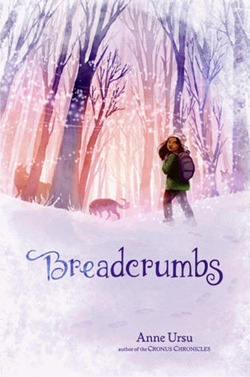
Review: Breadcrumbs by Anne Ursu

breadcrumbs

Breadcrumbs by Anne Ursu

Hazel and Jack have been best friends for almost their entire lives.   They share a love of Harry Potter, Narnia, and comics.  But now Jack spends a lot of time with his friends who are also boys.  He still does special things with Hazel, but it seems like less and less.  Then one day, something horrible happened and Jack stopped being friends with Hazel.  He was rude and mean.  Soon after that, Jack disappeared.  His parents weren’t worried.  They insisted he had been sent to care for an elderly aunt, but Hazel felt that something was really wrong.  When Tyler, a boy Jack was friends with, told her that he had seen a strange woman take Jack into the woods, Hazel set out to find Jack and bring him back.  But even her love of books can’t prepare Hazel for the twisted world she finds in the woods and the hazards she will have to face to find her best friend.

Ursu writes with a tone of wonder and discovery.  She puts things in ways that they have not been said before, creating new ways of expressing emotion and attachment.  She takes her time, building a way of seeing the world that is quirky and compelling at the same time.  Here is a paragraph from page 44 which shows the care with which she has created her world:

There were some days, ever since the summer, when the whole feel of Jack seemed to change.  Like suddenly, instead of being made of baseball and castles and superheroes and Jack-ness, he was made of something scratchy and thick.  Hazel could tell, because he had been her best friend for four years, and you can tell when your best friend is suddenly made of something else.  And all she could do was try to remind him what he was really made of.

The two main characters are exceptional.  Jack is a boy dealing with a mother fighting severe depression, someone who has already been lost to the emptiness and cold.  Hazel is a girl who never sees her father any more, who has a mother who wants her to make new friends beyond Jack, and who loves her friend beyond bravery. 

Everything in this book just works.  The background of the two protagonists clicks into what they do in reaction to the magic that enters their world.  Jack embraces the cold and emptiness.  Hazel has been abandoned by her father and will not abandon her best friend.  It is all simply cohesive.

This is a magical, amazing, lovely read that will appeal most to readers who also love Narnia and The Snow Queen.  Appropriate for ages 9-12.

Reviewed from ARC received from Walden Pond Press.

Also reviewed by:

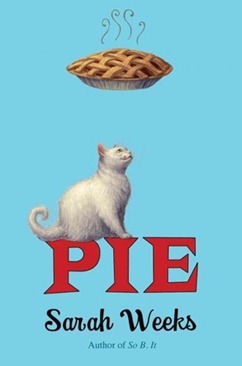
Review: Pie by Sarah Weeks

pie

Pie by Sarah Weeks

When Alice’s Aunt Polly dies, the entire community of Ipswitch feels the loss.  Polly, the Pie Queen, left behind quite a void, one that had been filled by her pie shop and her incredible gift for baking pies.  Every resident had a favorite and with her death, they knew they would never taste them again.  But for Alice it is much worse, she has lost one of her dearest friends as well as the shop where she spent much of her time.  Her Aunt Polly left the recipe for her award-winning pie crust to Lardo, her ornery cat, and she left Lardo to Alice.  No one is really sure how someone can leave a recipe to a cat.  As the days pass, strange things start happening, but only Alice seems to notice.  She knows there is someone out there trying to get their hands on the recipe.  With her new friend, Charlie, Alice is determined to solve the mystery.

Weeks has written a book as light as meringue but that has plenty of depth as well.  The story is great fun to read.  It has the tang of a mystery combined with the sweetness of pie.   The pie recipes shared at the beginning of each chapter will have you drooling and determined to see if you could maybe be the next Blueberry Award winner.

Notice how that rhymes with Newbery Award winner?  Weeks has a lot of fun with her brief description of how the Blueberry Award is announced.  It closely resembles the Newbery Award process and had me giggling.  It’s a great insider joke to have in a children’s book.

Alice is a strong character, struggling with the loss of her aunt.  She is determined, creative and imaginative, singing little songs to herself all the time.   These are the things her aunt supported in her, but that her own mother doesn’t understand.  The family dynamic is an important piece of the entire book and is written with great honesty.

A delicious, fun read, this book of pie and mystery is a treat whether read with alamode or alone.  It’s an ideal book for classroom sharing as well, after all who doesn’t like pie?  Appropriate for ages 9-12.

Reviewed from ARC received from Scholastic Press.

Also reviewed by:

Dr. Seuss Movie

And I’m not talking a movie based on one of his books, but instead a film based on his life.  The Hollywood Reporter has the news that Illumination Entertainment and Infinitum Nihil are developing a film about the life of Theodor Geisel. 

The other big news is that Johnny Depp will be producing with the potential of him starring as Dr. Seuss as well.

Review: Blue Chicken by Deborah Freedman

blue chicken

Blue Chicken by Deborah Freedman

This vibrant picture book plays with color and perspective as well as characters who leave the flat page and enter the real world.  The picture is almost finished when one of the chickens in the picture pops her head out.  She then stands up and walks over to the paint pots that are waiting to finish the picture.  When the chicken peeks into the blue paint, she accidentally tips it over and ends up painting herself.  She is joined by a little duckling and then more who splash around in the new blue puddle, turning themselves and the cat who walked past blue.  Soon all of the animals are blue.  Now what can be done to turn them all back to normal?

There is a wonderful playfulness about this title.  Even the grumpy animals end up enjoying the escapade.  At the same time, there are lots of options to discuss colors, perspective, and art.  The book has real depth to it, allowing it to be read just as a cute story, or used more seriously with children. 

The words are simple and try to stay out of the way, allowing the art to really shine here.  And shine it certainly does.  It dazzles and glows, inviting young readers into the humor of the book and revealing a magical quality that is lovely.  From the freshness of the first spill of the blue to the sogginess and flatness that results, there is an exploration of the media here right on the page. 

Highly recommended, this is one of my favorite picture books of the year.  It is a charming jewel of a picture book that is fun, silly, yet offers plenty to learn.  Appropriate for ages 3-6.

Reviewed from copy received from Viking Books.

Also reviewed by Fuse #8.

Patrick Ness Blog Tour!

monster calls

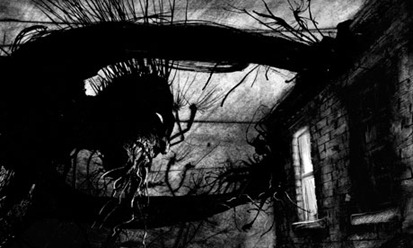
I was honored to be asked to participate in Patrick Ness’ blog tour that features his new book: A Monster Calls.  You can see my glowing review here

Here is our conversation about his writing:
The-tree-monster-from-A-M-007

Monsters are a primary theme in both your Chaos Walking trilogy and A Monster Calls. They contain different types of “monsters.” Which monsters do you find most frightening? Which do you enjoy writing more?

Ah, it’s an eternal question, isn’t it – and one I find endlessly interesting in writing – is whether there are actual monsters or whether there are just people who act monstrously (and who can therefore, theoretically, also act otherwise). Redemption is such a powerful theme for me, I think, both in writing and reading, and so the "monster" in Chaos Walking for example was tremendously good fun to write in the character of the Mayor. Because he was so polite and so clear-speaking and yet did such horrible, horrible things, which is gleeful in a way. But more interesting for me was that there was always the question hanging, could he be redeemed?

And then you get something like the monster in A Monster Calls. There’s the actual big monster, of course, who’s got monstrousness written all over him and who was also tremendously fun to write because he refuses to settle down into something easily explainable, even when he’s being nice. But isn’t the real monster the unnamed thing that Conor’s afraid of? Isn’t that the scarier monster? The one we can’t face, the one we can’t even imagine as a physical presence? I think that’s probably the scariest thing. The monster we fear inside us, so much so we can’t even look at it. Even though the mere act of looking is often enough to slay it.

A-Monster-Calls-Illustration

Another universal theme of your writing is the idea of “truth.” From the Noise of Chaos Walkingto the important truth that must be spoken in A Monster Calls, truth is central to both stories. Tell me about why truth is such a vital subject in your work.

For me it’s a way of trying to deal with the complexity of people. We’re never, ever just one thing. Be it all the mess of the Noise or the incredible contradiction in Conor that he’s trying to live with that’s causing him such pain, for me it’s just trying to embrace that we’re more than a single idea or a single thought. We can believe opposite things to be true at the same instant. It’s what makes us human, and I suppose what’s important to me about the idea of truth is that, if we can be truthful about our complexity, about our contradictions, then they don’t have to be such a burden. We’re all in our own thicket-filled forests, trying to find our paths; wouldn’t it be nice to share the journey? I think truth does that for us. I hope so, anyway.

tumblr_lkbin64Wag1qb0j8no1_400

There has been a lot of talk and news coverage lately in the U.S. about the darkness present in books for children and teens, and viewing it in a negative way. As an author who writes books that contain darkness and violence, why do you see it as an appropriate subject for young readers?

My answer to this is always a very simple one: have you seen what teenagers write? I’ve judged teenage writing contests and the entries are beyond harrowing, darkness without relief past anything I or any other YA writer comes up with. Because that’s what being a teenager FEELS like, so what on earth would be the point in writing a book that says, "No, you don’t really feel that way." I never wanted to read that when I was a teenager, so why would I expect any teenager to want to read it now?

BUT, if you do tell the truth about the darkness of things (which they know already) then when you ALSO tell the truth about lightness, about love and hope, about connection with another human being, about the possibilities of redemption and healing, well, then those things tend to feel more true because you haven’t lied about the darkness. I’ve said it before, but to not write about darkness and serious issues is, in one way, abandoning your teenage reader to face the darkness alone. And there’s just no way I’m ever going to do that.

Huge thanks to Mr. Ness for participating and answering my questions so fully.  My favorite answer is his last and one that I will use in the future as a librarian when I am asked why we have such dark books on the shelves for teens. 

Check out the rest of the tour, of which I am the caboose:
Review: Mr. Putter and Tabby Ring the Bell by Cynthia Rylant

ring the bell

Mr. Putter and Tabby Ring the Bell by Cynthia Rylant, illustrated by Arthur Howard

When autumn arrives with apples, falling leaves and cool wind, Mr. Putter finds that he is missing school.  He wishes that he could return if only for one day.  Then he comes up with a solution:  visit a classroom along with Mrs. Teaberry and have Tabby and Zeke do tricks!  The only problem is that Tabby and Zeke really don’t do tricks.  But Mr. Putter is sure that they can be taught in time.  Unfortunately, it doesn’t all work out as Mr. Putter thinks it will.  It’s a complete disaster: but also completely funny. 

I have been a fan of Mr. Putter and Tabby for years.  They are at that reading level that is so hard, where the children are reaching towards chapter books but not quite there yet.  Rylant has taken a very unlikely character in Mr. Putter and turned him into a man that children will happily relate to.  Tabby on the other hand is easily beloved by young readers.

Howard’s illustrations are equally appealing, filled with plenty of color, lots of action, and more than a touch of silliness.  Readers from a broad range of ages will enjoy this new edition to the popular series. 

A great pick for when children are back at school, this book reads aloud well but works best when young readers tackle it themselves.  Look for the whole series and enjoy them all!  Appropriate for ages 4-6.

Reviewed from library copy.

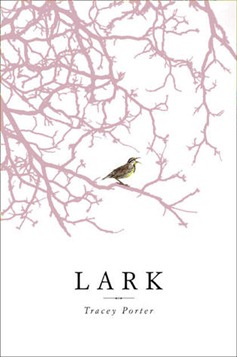
Review: Lark by Tracey Porter

lark

Lark by Tracey Porter

Sixteen-year-old Lark is kidnapped, raped and left to die in a snowy woods.  The story is told in alternating chapters by Lark and two of her friends.  There is Eve, a girl who used to be Lark’s best friend until one argument destroyed their friendship.  Finally, there is Nyetta, who struggles with being able to see and hear the ghost of Lark.  She is tasked by Lark to save her from being bound into a tree.  Nyetta is put into therapy because of this.  While the book is certainly centered around the tragedy of Lark’s murder, it is also about the two living girls and their need to be believed, cherished and understood. 

Porter’s writing is art.  She has created a book that has only 192 pages, but is a book that also requires careful reading and has depth and darkness as well.  Her writing verges on verse at times, thanks to it being spare but also filled with images.  She plays with magical realism here, speaking definitely to the real-life issues but imbuing them also with a certain symbolism that reaches beyond the actual.  This lends a real depth to the story, creating a book that is worthy of discussion and thought.

The three lead characters are differentiated well, each a solid character with her own personality and problems.  One issue that is woven into the story is sexuality and molestation with two of the girls having experienced molestation or rape.  The book teases readers with reading too much into what the girls were wearing or what they looked like, but then firmly says that that is not why girls are molested or raped.  It is well written, clear and reassuring. 

This is a short book that is a deep read.   The darkness will appeal to some teen readers and the magical realism to others.  Appropriate for ages 15-17.

Reviewed from library copy.